
Introduction
Finding a dermatologist in Toronto can involve several routes, depending on the type of skin problem and how quickly you need care. For medically necessary conditions, most Ontario residents use the publicly funded pathway through OHIP, usually starting with a family doctor, nurse practitioner or another primary care provider who can arrange a referral.
Toronto also has private and self-pay skin clinics, particularly for cosmetic procedures and services that are not insured by OHIP. Availability, referral requirements and fees vary between clinics, so private care does not automatically mean that every medical dermatology service can be booked directly.
For a suspicious mole, persistent rash, acne, eczema or another changing skin problem, an initial assessment can help determine whether you need a dermatologist, primary care treatment or more urgent evaluation. Online services and skin analysis tools can also be useful for initial screening and monitoring while you wait for an appointment.
👉 How to see a dermatologist in Canada — practical guide
When should you see a dermatologist?
Common skin conditions
You should consider seeing a skin specialist in Toronto if you experience ongoing or worsening skin problems. Dermatologists diagnose and treat a wide range of conditions, including:
- Acne (persistent or adult acne)
- Eczema (dry, inflamed, itchy skin)
- Psoriasis (chronic inflammatory skin condition)
- Rosacea (redness and visible blood vessels)
- Skin infections (bacterial, viral, or fungal)
- Pigmentation disorders (dark spots, melasma)
A family doctor or nurse practitioner can manage many mild skin conditions and determine whether specialist care is necessary. A referral to a dermatologist in Toronto may be appropriate when symptoms persist despite treatment, the diagnosis is uncertain or specialist procedures are required.
Warning signs
A changing mole or unusual skin lesion deserves particular attention. Arrange a medical assessment if a spot changes noticeably in size, shape or colour, repeatedly bleeds, develops an irregular border or does not heal.
A mole check is especially important if you notice a new or changing pigmented lesion. These changes do not automatically mean melanoma, but suspicious lesions should be assessed by an appropriate healthcare professional rather than monitored indefinitely at home.
Check your skin before visiting a doctor
Skin analysis with Skinive
Skinive can be used as a first step when you notice a new skin concern and are unsure what to do next. The app uses AI-based image analysis to assess visible skin lesions and provides information that can help users decide whether further medical evaluation should be considered.
Skinive is CE-marked medical software and is available 24/7. It can also support regular mole monitoring, which can make it easier to notice visible changes over time.
Key benefits include:
- Instant mole and skin analysis
- Ability to track changes over time
- Support for early detection of suspicious lesions
- Convenient access from home
The app is not a replacement for a dermatologist, biopsy, laboratory test or professional diagnosis. If a lesion appears suspicious, changes rapidly or causes concerning symptoms, arrange an in-person medical assessment.
How dermatology works in Canada
Canada does not have one identical dermatology pathway across the country. Healthcare is administered provincially and territorially, and Toronto residents use Ontario’s system.
Publicly funded dermatology in Ontario
For residents with valid Ontario Health Insurance Plan coverage, medically necessary physician services are generally covered by OHIP. In practice, access to a dermatologist in Toronto commonly begins with a family doctor, nurse practitioner or other appropriate healthcare provider.
The provider evaluates the problem and, when specialist care is appropriate, sends a referral. The dermatology clinic then triages the referral according to factors such as the suspected diagnosis, severity and urgency.
This pathway can provide access to hospital dermatology departments and community specialists without paying privately for an insured physician service. The main disadvantage can be waiting time, particularly for routine or non-urgent conditions.
Patients without a regular family doctor may be able to start through another primary care option, such as a walk-in clinic or nurse practitioner, depending on local availability.
Private dermatologists and self-pay services
Private dermatology in Ontario requires more explanation than simply “pay and see a specialist immediately.” Some clinics provide cosmetic, aesthetic or other uninsured services that patients can book and pay for themselves, while medically necessary specialist care may still operate within the OHIP and referral framework.
Self-pay services can provide greater scheduling flexibility for procedures or assessments that are not publicly insured. Cosmetic treatments such as certain laser procedures, injectables, elective lesion removal and aesthetic consultations are common examples.
Always confirm whether a referral is required, whether the requested service is insured by OHIP and what the clinic will charge before booking a private dermatologist in Toronto.
Dermatology clinics in Toronto
Toronto has one of Canada’s largest concentrations of academic and specialist dermatology services. Major teaching hospitals provide general dermatology as well as subspecialty care for complex inflammatory disease, skin cancer and other conditions.
| Clinic | Location | Services | Price |
|---|---|---|---|
| Women’s College Hospital – Dermatology | Toronto | General dermatology, skin cancer, Mohs surgery, phototherapy, complex dermatology | Insurance coverage |
| Sunnybrook Health Sciences Centre – Dermatology | Toronto | General dermatology, complex medical dermatology, skin cancer, patch testing, cosmetic dermatology | Insurance coverage |
| Toronto Western Hospital – Dermatology Clinic | Toronto | General and complex medical dermatology, psoriasis, eczema, autoimmune skin disease | Insurance coverage |
| Canadian Dermatology Centre | Toronto | Medical dermatology, skin assessments and procedural/cosmetic services | 250–350 CAD |
| Sage Dermatology | Toronto | Dermatologist | 250–350 CAD |
For hospital-based medical dermatology, patients should expect referral requirements rather than direct self-booking. If your primary care provider sends a referral, ask where it was sent and how you will be informed about the appointment.
Private dermatologists in Toronto
People searching for a private dermatologist in Toronto are often trying to avoid a long specialist wait. Private and self-pay clinics can be useful, but the fastest option depends heavily on what you actually need.
Cosmetic and uninsured services generally provide more direct self-pay options than medically necessary specialist care. A clinic may offer both insured and uninsured services under different booking rules.
| Clinic | Services | Location | Price |
|---|---|---|---|
| Canadian Dermatology Centre | Medical and cosmetic dermatology, procedures | Toronto | 250–350 CAD |
| Toronto Dermatology Centre | Medical, procedural and cosmetic dermatology | Toronto | 250–350 CAD |
| AvantDerm | Dermatology and skin-related procedures | Toronto | 250–350 CAD |
| Dr. Kucy Pon | Dermatologist | Toronto | 250–350 CAD |
| Sage Dermatology | Dermatologist | Toronto | 250–350 CAD |
Before paying privately, ask whether the appointment is with a dermatologist, whether your concern requires a referral and whether the consultation or procedure is covered by OHIP. This prevents confusion between medical dermatology, cosmetic dermatology and non-physician skin services.
Dermatologists near Toronto
Toronto has extensive specialist capacity, but travelling within the Greater Toronto Area can sometimes give patients additional options. Availability still depends on referral acceptance, clinical urgency and the type of dermatology service required.
Dermatologist in Mississauga
Patients looking for a dermatologist in Mississauga can access specialists through community practices and the broader Trillium Health Partners network. Mississauga is directly west of Toronto and is practical for patients living in Etobicoke or the western GTA.
Publicly funded specialist care generally follows the Ontario referral pathway. For medically necessary dermatology, a primary care provider can send a referral to an appropriate specialist, while cosmetic and other uninsured services may be available through private skin clinics.
Trillium Health Partners includes Credit Valley Hospital, Mississauga Hospital and Queensway Health Centre. Not every hospital site operates a general walk-in dermatology service, so patients should not assume they can simply arrive for a mole check.
For Toronto residents, Mississauga can be worth considering when a referring provider identifies a specialist accepting appropriate referrals there.
Dermatologist in Vaughan
Vaughan is a convenient alternative for patients in North York and northern Toronto. A dermatologist in Vaughan may practise in a community specialist clinic, medical centre or a clinic offering both medical and cosmetic services.
Cortellucci Vaughan Hospital is the city’s major hospital, while additional specialist care is available across York Region. Patients may also be referred to Mackenzie Richmond Hill Hospital or Toronto academic centres when the required expertise is not available locally.
The same OHIP principles apply because Vaughan is also in Ontario. Medically necessary physician care may be publicly insured, whereas cosmetic and other uninsured procedures can require payment.
Travelling to Vaughan does not guarantee a shorter wait, so ask your referring provider whether alternative clinics have appropriate expertise and are accepting referrals.
Dermatologist in Markham
A dermatologist in Markham can be an alternative for people living in Scarborough, North York and the eastern GTA. Markham has community dermatology practices as well as access to specialist services through the regional healthcare network.
Oak Valley Health’s Markham Stouffville Hospital is the principal hospital serving the area. Patients may also access services elsewhere in York Region or be referred into Toronto for more complex dermatological conditions.
OHIP coverage does not change when a Toronto resident receives eligible care elsewhere in Ontario. Referral requirements, however, depend on the clinic and service.
Private skin clinics in Markham may offer cosmetic consultations, laser procedures and other uninsured treatments. Confirm whether you are booking medical dermatology or an aesthetic service before paying.
Dermatologist in Richmond Hill
Richmond Hill is another option for residents north of Toronto. Patients seeking a dermatologist in Richmond Hill can find community specialists and private skin clinics, while Mackenzie Richmond Hill Hospital provides regional hospital care.
Complex cases may still be referred to academic centres such as Sunnybrook, Women’s College Hospital or Toronto Western, particularly when subspecialty expertise is required.
For routine medical dermatology, ask your primary care provider whether a Richmond Hill specialist is an appropriate alternative to a downtown Toronto referral. Geographic flexibility can increase the number of clinics available to you, although it does not guarantee a faster appointment.
Self-pay cosmetic services are also available locally and should be distinguished from OHIP-insured medical treatment.
Dermatologist in Brampton
People looking for a dermatologist in Brampton generally use the same family doctor or primary care referral pathway as patients elsewhere in Ontario. Community specialists provide dermatological care, while William Osler Health System operates major regional hospital services.
Brampton Civic Hospital is the city’s principal acute-care hospital, with additional William Osler services available at Peel Memorial and Etobicoke General Hospital nearby.
For patients in northwest Toronto, Brampton can be geographically practical. A referral to a dermatologist in Brampton may be considered when a suitable specialist is accepting patients and the location is manageable.
Private clinics may provide cosmetic or uninsured skin services without the same pathway used for OHIP-insured specialist consultations. Ask about both referral requirements and fees before booking.
Dermatologist in Oakville
A dermatologist in Oakville can be relevant for patients willing to travel west from Toronto, particularly those living in Etobicoke or Mississauga.
Oakville Trafalgar Memorial Hospital is the city’s major hospital and forms part of Halton Healthcare. Nearby Milton District Hospital and Georgetown Hospital provide additional regional hospital services, although specific dermatology availability varies.
Medical specialist care generally follows Ontario’s referral system. Your primary care provider can decide whether an Oakville dermatologist is appropriate and send the necessary clinical information.
Oakville also has a substantial private cosmetic and skin-care sector. Self-pay availability may be faster for uninsured services, but it should not be confused with publicly funded specialist dermatology.
Dermatologist in Pickering
Pickering can be an alternative for residents of Scarborough and eastern Toronto. Community medical practices and clinics serve the area, while hospital services are available through the broader Durham Region network.
Patients searching for a dermatologist in Pickering may also be referred to specialists in Ajax, Whitby or Oshawa. Nearby hospitals include Ajax Pickering Hospital, Oshawa Hospital and Bowmanville Hospital within the regional system.
For an OHIP-covered specialist assessment, a referral may still be required. Cosmetic and other uninsured skin services operate separately and may involve direct payment.
If Toronto waiting times are a concern, ask whether your referral can be directed to an appropriate dermatologist elsewhere in the GTA rather than assuming that only downtown clinics are available.
Online dermatologists in Canada
Online dermatology can be useful when travel is difficult, you need initial guidance or you want to document a skin problem before an in-person appointment.
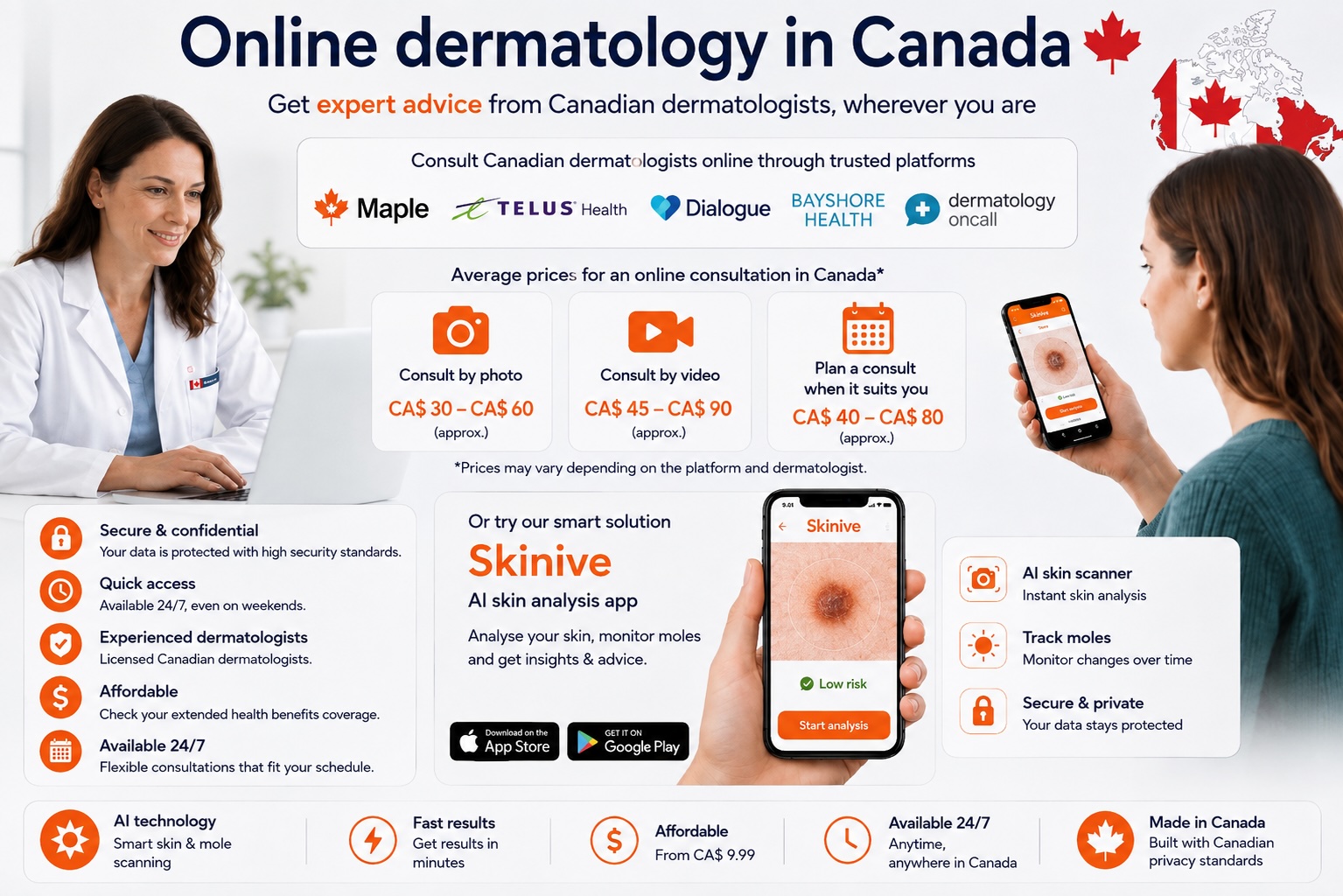
Virtual care does not eliminate the need for physical examination, dermoscopy or biopsy when these are clinically necessary.
| Platform | Services | Availability | Price |
|---|---|---|---|
| Skinive | AI skin analysis and mole monitoring | 24/7 | App-based; plan-dependent |
| Ontario virtual primary care options | Initial medical assessment and possible referral | Depends on provider and eligibility | May be OHIP-covered when eligibility and billing requirements are met |
| Maple | Virtual medical consultations and selected specialist services | Online | Self-pay or eligible benefit coverage depending on service |
| TELUS Health virtual services | Virtual healthcare through participating programs | Depends on plan/provider | Coverage varies |
| Private teledermatology providers | Image-based or video skin consultations | Varies across Canada | Self-pay fees vary |
Online assessment is particularly useful for triage, follow-up of visible changes and deciding what level of care to seek. A dermatologist may still request an in-person visit if the diagnosis depends on palpation, dermoscopy, laboratory testing or biopsy.
👉 Online dermatologists in Canada — full guide
How to get a dermatology consultation online for free or at a lower cost
Publicly funded options
Ontario permits medically necessary virtual physician care within its insured healthcare framework when applicable requirements are met. However, that does not mean every commercial virtual dermatology service is free or OHIP-covered.
A practical first step is to ask your family doctor or primary care provider whether your concern can initially be assessed virtually. They may be able to treat the condition directly, arrange photographs or refer you to a dermatologist in Toronto.
AI tools and initial screening
An AI skin analysis tool such as Skinive can provide an immediate first assessment without waiting for a specialist appointment. This can be particularly useful for documenting a mole or other visible lesion and monitoring changes.
AI analysis cannot confirm melanoma or replace pathology. Treat it as a screening and monitoring tool rather than a definitive diagnosis.
Affordable telemedicine
A paid virtual consultation can sometimes cost less than certain self-pay in-person services, particularly when the main goal is an initial assessment or second opinion.
Before paying, check who will review your case. “Online skin consultation” can refer to a dermatologist, another physician, a nurse practitioner or a non-medical skin service, and these are not interchangeable.
International second opinions
International teledermatology services may offer second opinions, but Ontario residents should consider what happens after the consultation. A foreign clinician may not be able to prescribe locally, arrange an OHIP referral or perform a required biopsy in Toronto.
For that reason, international services are usually more useful for additional information than as a replacement for local care.
A practical approach
For a non-emergency visible concern, a useful sequence can be:
Skinive → primary or virtual assessment → dermatologist when indicated → in-person examination or biopsy if required.
If the lesion is rapidly changing, bleeding heavily or otherwise urgent, skip the digital monitoring stage and seek medical care.
Dermatologist waiting times in Toronto
There is no single waiting time for every dermatologist in Toronto. Waits vary considerably according to urgency, diagnosis, clinic, specialist capacity and whether a referral is directed to a general or subspecialty service.
| Type | Typical access pattern |
|---|---|
| OHIP-funded referred dermatologist | Can range from weeks to several months depending on urgency and clinic |
| Urgent suspected serious condition | Usually triaged more quickly when clinical information supports urgency |
| Private/self-pay uninsured service | Often faster, depending on clinic and procedure |
| Online consultation | Same day to several days may be possible with some services |
| AI skin analysis | Available immediately/24-7 |
If your referral is routine and the proposed wait is long, ask your family doctor whether another dermatologist or clinic can see the same condition sooner. You can also ask to be placed on a cancellation list.
Good referral information matters. Clear photographs, pathology results, previous treatment history and a description of significant changes can help the receiving clinic triage the case appropriately.
Do not pay for a cosmetic consultation simply because you assume it will provide faster access to an OHIP-covered medical service. Confirm exactly what the clinic offers first.
Cost of a dermatologist in Toronto
The answer to “how much does a dermatologist cost in Toronto?” depends primarily on whether the service is medically necessary and insured by OHIP or is an uninsured service.
Eligible Ontario residents generally do not pay the dermatologist directly for medically necessary physician services covered by OHIP. Cosmetic procedures and other uninsured services are different and may be charged directly to the patient.
| Service | Approximate patient cost |
|---|---|
| Eligible medically necessary dermatologist consultation | Generally CA$0 directly to patient with valid OHIP coverage |
| Cosmetic dermatology consultation | Often approximately CA$100–CA$300+, depending on clinic |
| Cosmetic mole or benign lesion removal | Often CA$100–CA$500+ depending on lesion, technique and number |
| Laser treatment | Often CA$150–CA$600+ per session depending on treatment |
| Private/virtual skin consultation | Commonly CA$50–CA$300+, depending on provider and service |
| AI skin analysis | Depends on app or subscription plan |
These figures are indicative rather than fixed prices. Toronto clinics set their own fees for uninsured services, and the total can change substantially depending on the procedure, number of lesions and whether pathology or follow-up is required.
Before booking, ask for the consultation fee, procedure fee, applicable taxes and any additional charges. Also ask whether part of the service is medically necessary and potentially insured rather than assuming the entire visit must be self-pay.
Melanoma symptoms and suspicious moles
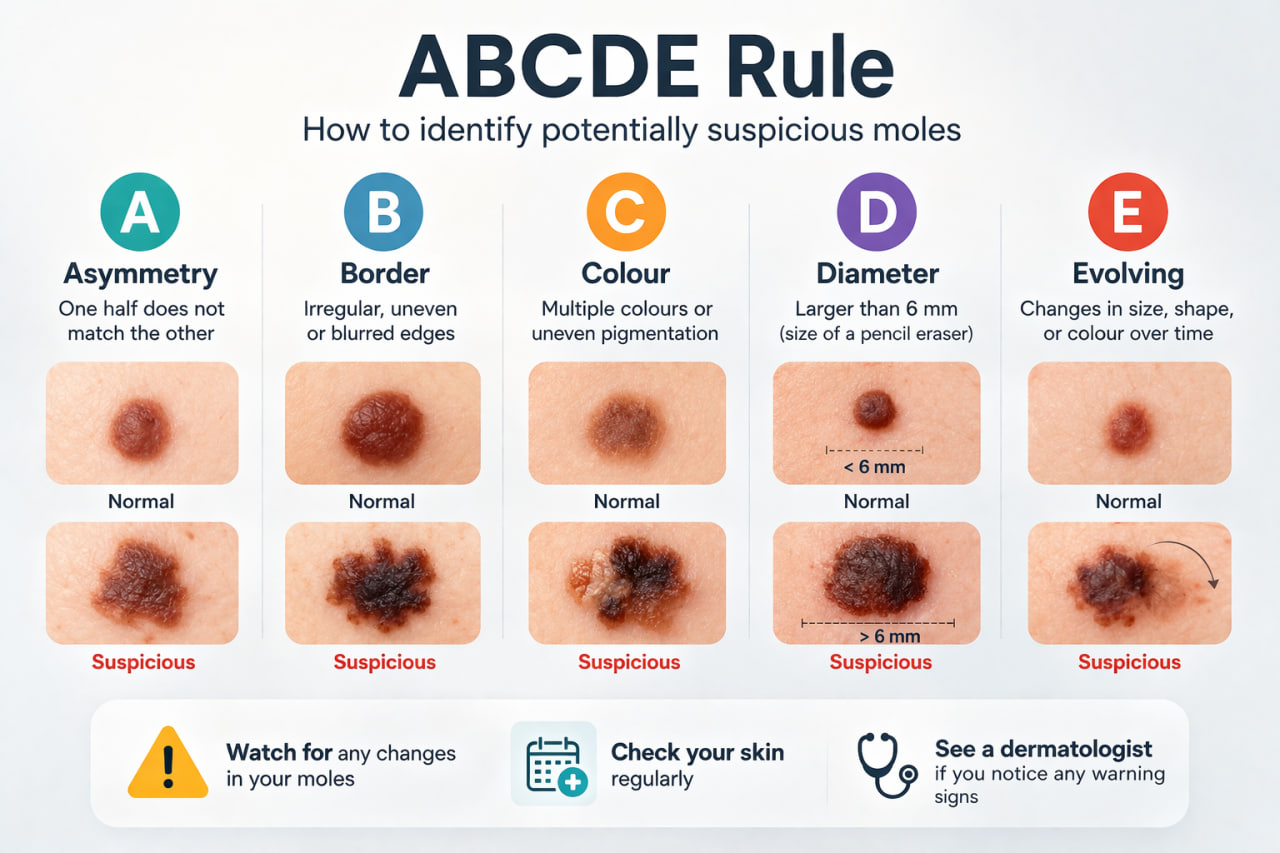
When is a skin problem urgent?
Most dermatological problems are not medical emergencies. Acne, stable eczema and longstanding benign-looking moles can generally follow the normal primary care and referral pathway.
Seek prompt medical assessment for a rapidly changing or repeatedly bleeding lesion, a serious widespread skin reaction, rapidly spreading redness with systemic illness, severe blistering or a skin problem accompanied by significant fever or deterioration.
A suspicious lesion does not necessarily mean melanoma. However, delaying assessment for months because you are waiting to see whether it changes further is not a good strategy when warning signs are already present.
If you already have a referral to a dermatologist in Toronto and the condition becomes significantly worse, contact the referring provider. Updated clinical information may affect how the referral is triaged.
FAQ — Dermatologist in Toronto
Do I need a referral to see a dermatologist in Toronto?
For many medically necessary specialist dermatology services covered through Ontario’s public system, a referral from a physician, nurse practitioner or another eligible referring provider is typically required. Major Toronto academic dermatology clinics use referral-based pathways.
Some cosmetic and uninsured services can be booked directly. Always ask the clinic whether your specific appointment requires a referral rather than assuming that “private” means direct access.
How long does it take to see a dermatologist in Toronto?
There is no standard waiting period. Routine referrals can take weeks or months, while cases considered clinically urgent may be triaged faster.
If the wait is excessive, ask your referring provider about another dermatologist in Toronto or elsewhere in the GTA. Cancellation lists and alternative clinics can sometimes provide earlier access.
Is a dermatologist covered by OHIP?
Medically necessary physician services provided to eligible Ontario residents are generally covered by OHIP when the applicable requirements are met. This includes many medical dermatology consultations and treatments.
Cosmetic procedures and other uninsured services are not automatically covered. Ask whether the specific consultation or treatment is an insured service before booking.
How much does a private dermatologist in Toronto cost?
There is no universal private dermatology fee. Cosmetic consultations can cost around CA$100–CA$300 or more, while procedures can range from relatively inexpensive lesion treatments to several hundred dollars or more per session.
The important distinction is between an uninsured service and an OHIP-insured medical service. Request a written or clearly explained fee schedule from the clinic before treatment.
Can I see an online dermatologist in Canada?
Yes. Virtual dermatology and other online skin services are available in Canada, although availability, provider type, cost and provincial coverage vary.
Online care is useful for visible conditions and triage, but some problems still require physical examination, dermoscopy, testing or biopsy. Check whether the person reviewing your case is a dermatologist or another healthcare provider.
Where can I get a mole check in Toronto?
A family doctor, nurse practitioner or other appropriate healthcare provider can be a practical starting point. If the lesion requires specialist assessment, they can arrange referral to a dermatologist in Toronto.
Hospital dermatology departments and community specialists also evaluate suspicious lesions through their referral pathways. Cosmetic mole-removal services should not be treated as a substitute for appropriate medical evaluation of a suspicious mole.
Can Skinive tell me whether a mole is melanoma?
Skinive uses AI-based image analysis to assess visible skin lesions and can support monitoring and early detection efforts. It can help identify situations in which further attention may be appropriate.
It cannot confirm or exclude melanoma. Definitive assessment may require a clinician’s examination, dermoscopy and, when indicated, biopsy and pathology.
How can I see a dermatologist faster in Toronto?
Start by asking your primary care provider whether referrals can be sent to clinics with shorter waits or whether you can be added to a cancellation list. Being willing to travel to Mississauga, Vaughan, Markham, Richmond Hill or another GTA community can increase the number of possible providers.
Virtual assessment can also help with initial triage. Private/self-pay options may provide faster access for some uninsured services, but they are not a universal shortcut around Ontario’s referral system.
Conclusion
For most medically necessary skin problems, the most straightforward route is primary care followed by an OHIP-covered dermatology referral when specialist treatment is needed.
If you are seeking cosmetic treatment or another uninsured service, Toronto has extensive private and self-pay options. Compare services rather than simply searching for the fastest private dermatologist in Toronto, because clinic type, physician qualifications and referral requirements can differ.
Online care can fill the gap between these routes. It is particularly useful for initial triage, documenting visible symptoms and deciding whether an in-person appointment should be prioritized.
Skinive can serve as a first step when you notice a mole or another visible skin concern. Use the result as additional information, continue monitoring when appropriate and seek professional medical care whenever symptoms or visible changes warrant it.