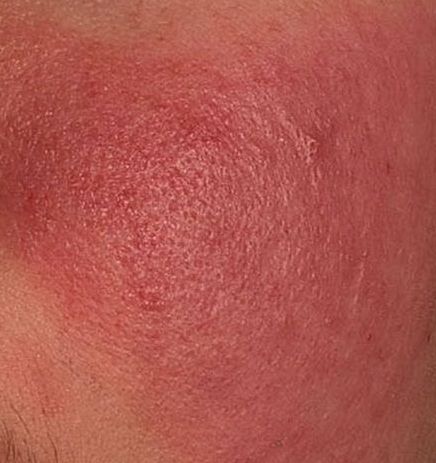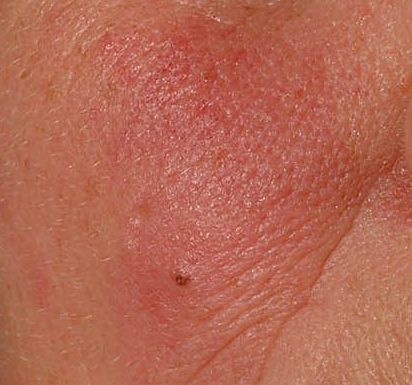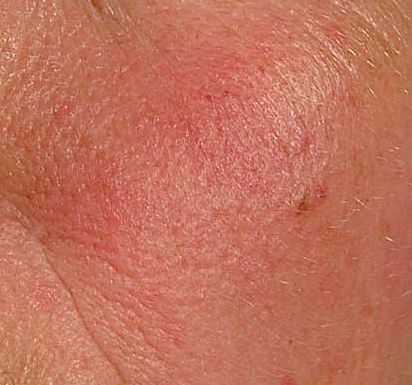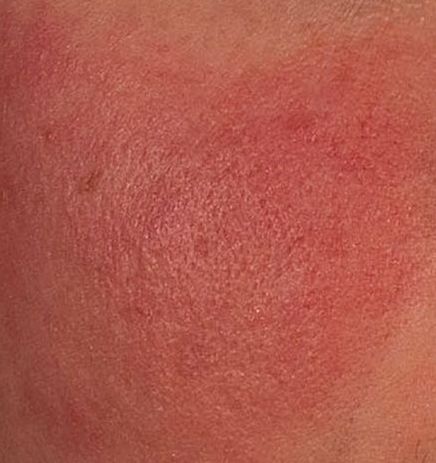
Rosacea is a chronic facial skin condition characterized by persistent redness, visible blood vessels, and acne-like breakouts. It most commonly affects the cheeks, nose, forehead, and chin.
The main signs include facial flushing, visible capillaries, and pimple-like lesions. Rosacea is not contagious and cannot be transmitted from person to person.
The condition develops gradually and may persist for years with periods of flare-ups and remission. In most cases, it can be effectively managed with proper skincare and treatment.
What to do if you suspect it
If you notice persistent facial redness, visible vessels, or breakouts, it is important to consult a dermatologist.
Additionally:
- if you experience frequent facial flushing, pay attention to possible triggers
- if breakouts appear, do not treat them as regular acne
- if there is burning, itching, or discomfort, do not delay consultation
It is important not to self-medicate. Rosacea can easily be mistaken for acne or dermatitis, but treatment approaches differ.
Early evaluation helps slow disease progression and reduce complications.
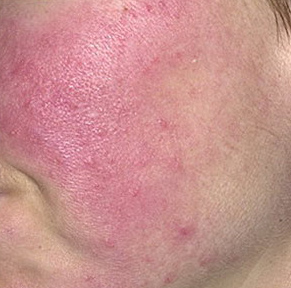
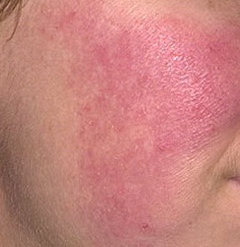
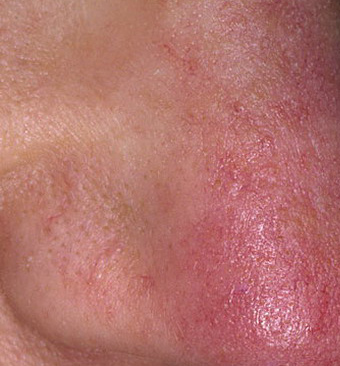
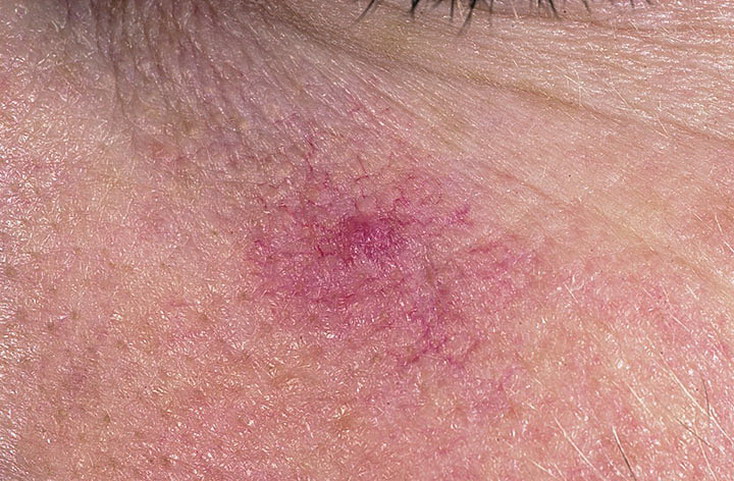
What it looks like
Rosacea can vary depending on the stage.
Common signs include:
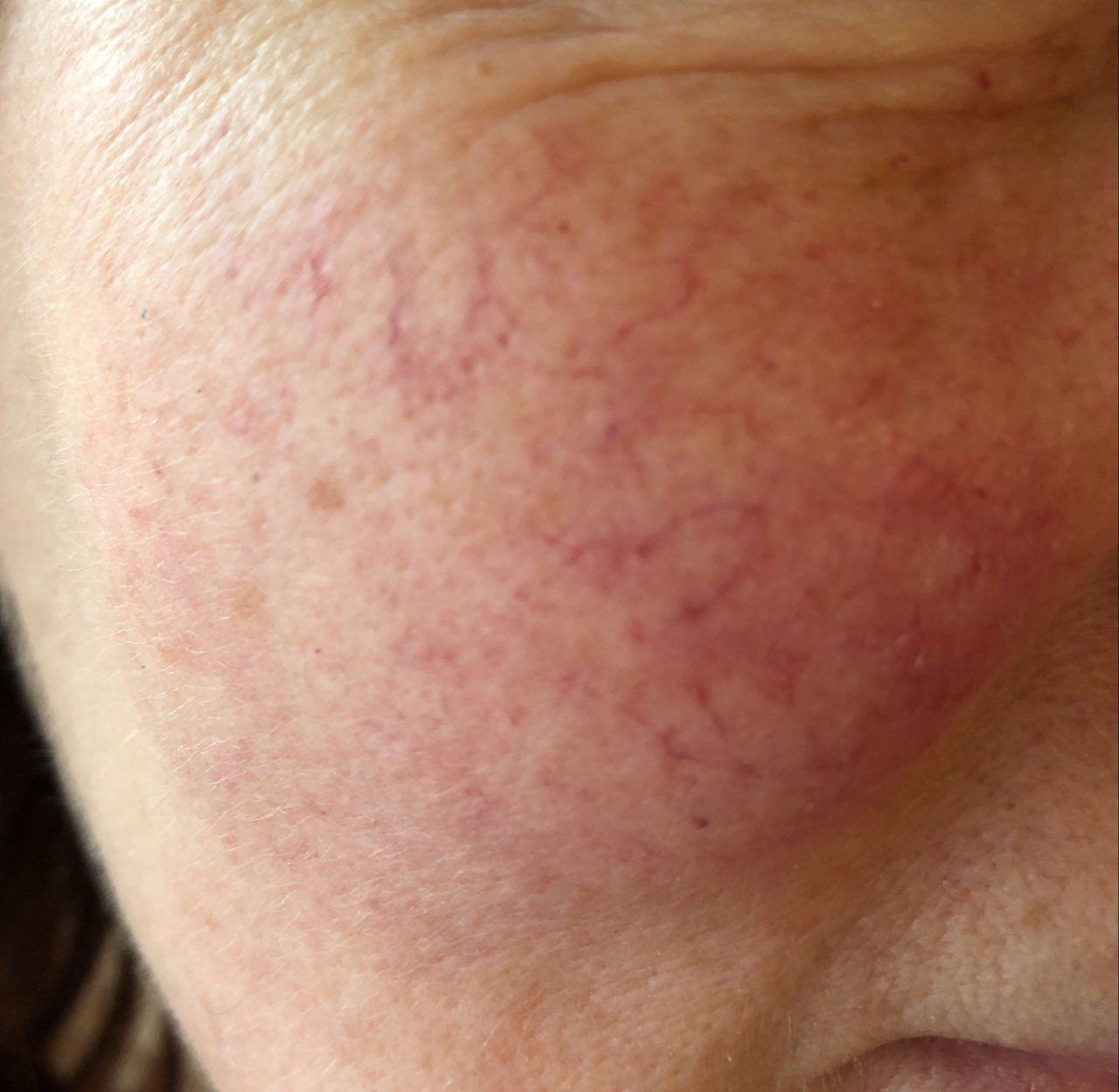
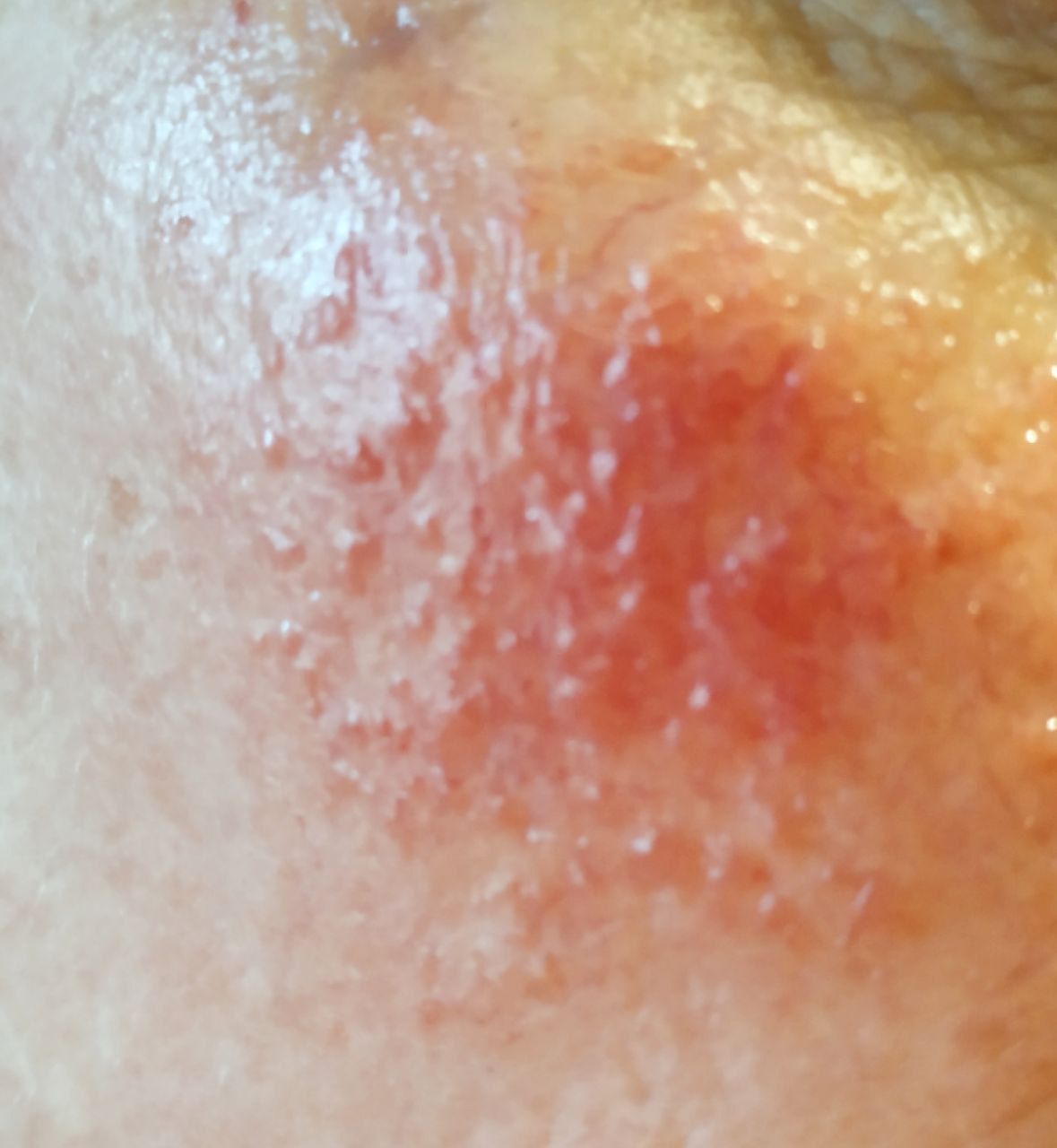
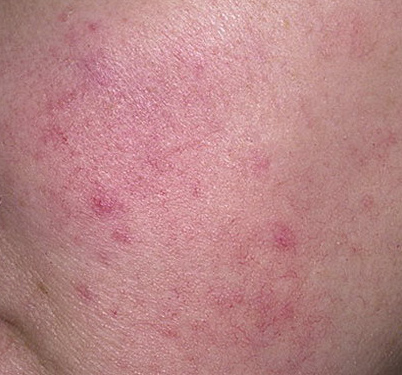
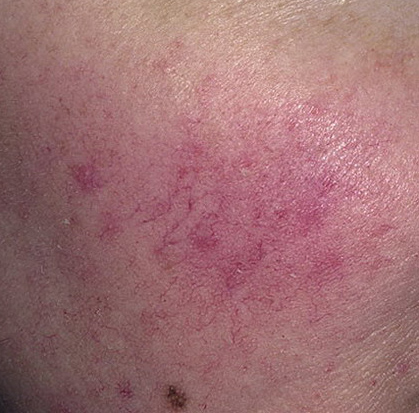
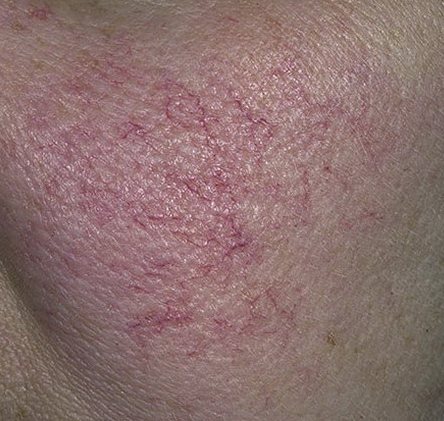
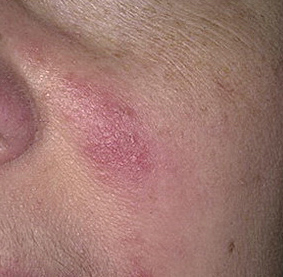
- facial redness
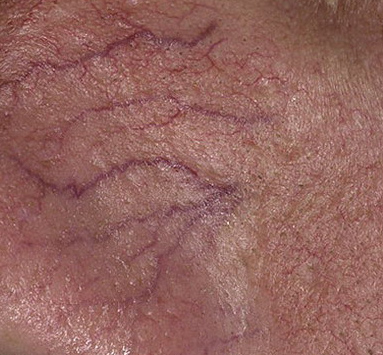
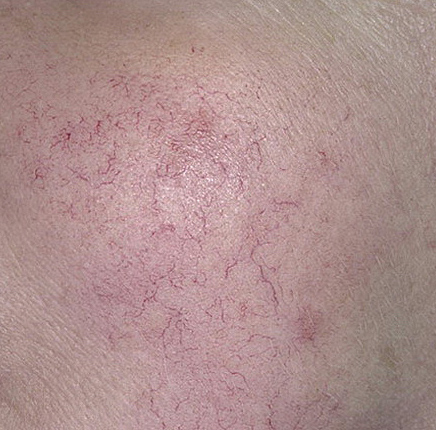
- visible small blood vessels (a “spider vein” pattern)
- acne-like lesions
- skin thickening (in severe cases)
Redness may initially appear temporarily (e.g., after heat or stress), but over time it can become persistent.
Breakouts may resemble acne, but blackheads are usually absent.
Below in the article you can view real photos to better understand how the condition looks.
Main symptoms
Symptoms vary depending on the form, but commonly include:
- persistent or intermittent facial redness
- feeling of heat or flushing
- visible blood vessels on the skin
- papules and pustules (acne-like lesions)
- skin sensitivity, burning, or tingling
In some cases, the eyes may be affected, leading to dryness, irritation, and a “gritty” sensation.
Causes
The exact cause of rosacea is unknown. It is believed to result from multiple contributing factors.
A key role is played by increased sensitivity of facial blood vessels, which overreact to triggers and remain dilated longer than normal.
Possible factors include:
External factors:
- sun exposure, heat, cold
- hot drinks and spicy food
- stress
- harsh skincare products
Internal factors:
- genetic predisposition
- hormonal changes
- immune system sensitivity
- gastrointestinal factors
Changes in skin microbiota may also contribute, including the presence of microscopic mites.
How it develops
In rosacea, facial blood vessels become overly reactive.
In response to triggers:
- blood vessels dilate
- blood flow becomes slower
- oxygen delivery to the skin is reduced
This creates conditions for inflammation and breakouts.
Over time, redness may become permanent, and visible vessels and inflammatory lesions may develop.
Forms and types
Main forms of rosacea include:
- Erythematotelangiectatic — redness and visible vessels dominate
- Papulopustular — acne-like bumps and pustules appear
- Phymatous — skin thickening, often on the nose
- Ocular rosacea — affects the eyes and surrounding area
These forms may overlap.
When to see a doctor
You should see a dermatologist if:
- redness does not go away
- visible vessels or breakouts appear
- symptoms worsen over time
- there is burning or discomfort
Medical attention is especially important if eye symptoms occur, such as dryness, redness, or irritation.
Treatment
Treatment is always individualized and depends on severity and form.
Main principles:
Skincare
Gentle, non-irritating products that support the skin barrier.
Trigger avoidance
Identifying and avoiding factors that cause flare-ups.
Topical treatment
Anti-inflammatory medications and skin-normalizing agents.
Systemic treatment
Oral medications may be prescribed in more severe cases.
Procedural options
Laser and other device-based therapies can reduce visible blood vessels.
Rosacea is a chronic condition. It is usually not curable permanently, but it can be well controlled long-term.
Q&A
Can rosacea be completely cured?
Usually not, but symptoms can be effectively controlled and significantly reduced.
Can I use acne treatments?
Not always. Some acne products can irritate the skin and worsen rosacea.
Should mild rosacea be treated?
Yes. Early treatment helps slow progression.
Why does the face turn red?
Because blood vessels overreact and remain dilated longer than normal.
Is rosacea dangerous?
Usually not, but it can worsen without treatment and lead to visible skin changes.
Can I sunbathe with rosacea?
Excess sun exposure often worsens symptoms, so protection is important.
Is rosacea linked to diet?
Yes, certain foods may trigger flare-ups in some people.
Why do “spider veins” appear?
They are dilated small blood vessels that become visible on the skin surface.
Check Your Skin Instantly
Use the Skin Scanner app -Skinive AI to take a photo of a skin lesion and get an AI-based risk assessment. It helps determine whether professional consultation is recommended, giving you fast guidance and peace of mind.
Medical sources and references
- American Academy of Dermatology (AAD)
- European Academy of Dermatology and Venereology (EADV)
- Fitzpatrick’s Dermatology
- Journal of the American Academy of Dermatology (JAAD)
- British Journal of Dermatology
🇬🇧 Rosacea: Diagnosis and Treatment in the UK
If you notice rosacea (chronic facial redness, flushing, or visible blood vessels), it’s important to get a professional opinion. In the UK, you can access dermatology care via the NHS, private clinics, or online dermatology consultations.
👉 How to See a Dermatologist in the UK NHS – This main guide explains how NHS referrals work, what to expect from specialist dermatology services, and how to choose between public and private care.
Dermatologists in Major UK Cities:
- Dermatologist in London
- Dermatologist in Manchester
- Dermatologist in Liverpool
- Dermatologist in Birmingham
- Dermatologist in Leeds
- Dermatologists in Other UK cities
Online Dermatology
If you prefer remote care or faster access, try online dermatology consultations. They allow dermatologists to review images, provide advice, and guide next steps without visiting a clinic. Read more in this article: Online Dermatologists in UK.
🇦🇺 Rosacea: Diagnosis and Treatment in Australia
If you notice rosacea (chronic facial redness, flushing, or visible blood vessels), it’s important to get a professional opinion. In Australia, dermatology care is available via Medicare (public system), private clinics, or online consultations.
👉 How to See a Dermatologist in Australia – This main guide explains how referrals work through GPs and public clinics, what to expect from specialist dermatology services, and how to choose between public and private care.
Dermatologists in Major Australian Cities:
- Dermatologist in Sydney
- Dermatologist in Melbourne
- Dermatologist in Brisbane
- Dermatologist in Perth
- Dermatologist in Adelaide
- Dermatologists in other Australian cities
Online Dermatology
For faster access or remote care, online dermatology consultations allow dermatologists to review images, provide advice, and guide next steps without visiting a clinic. Read more in this article: Online Dermatologists in Australia.
Images of rosacea: