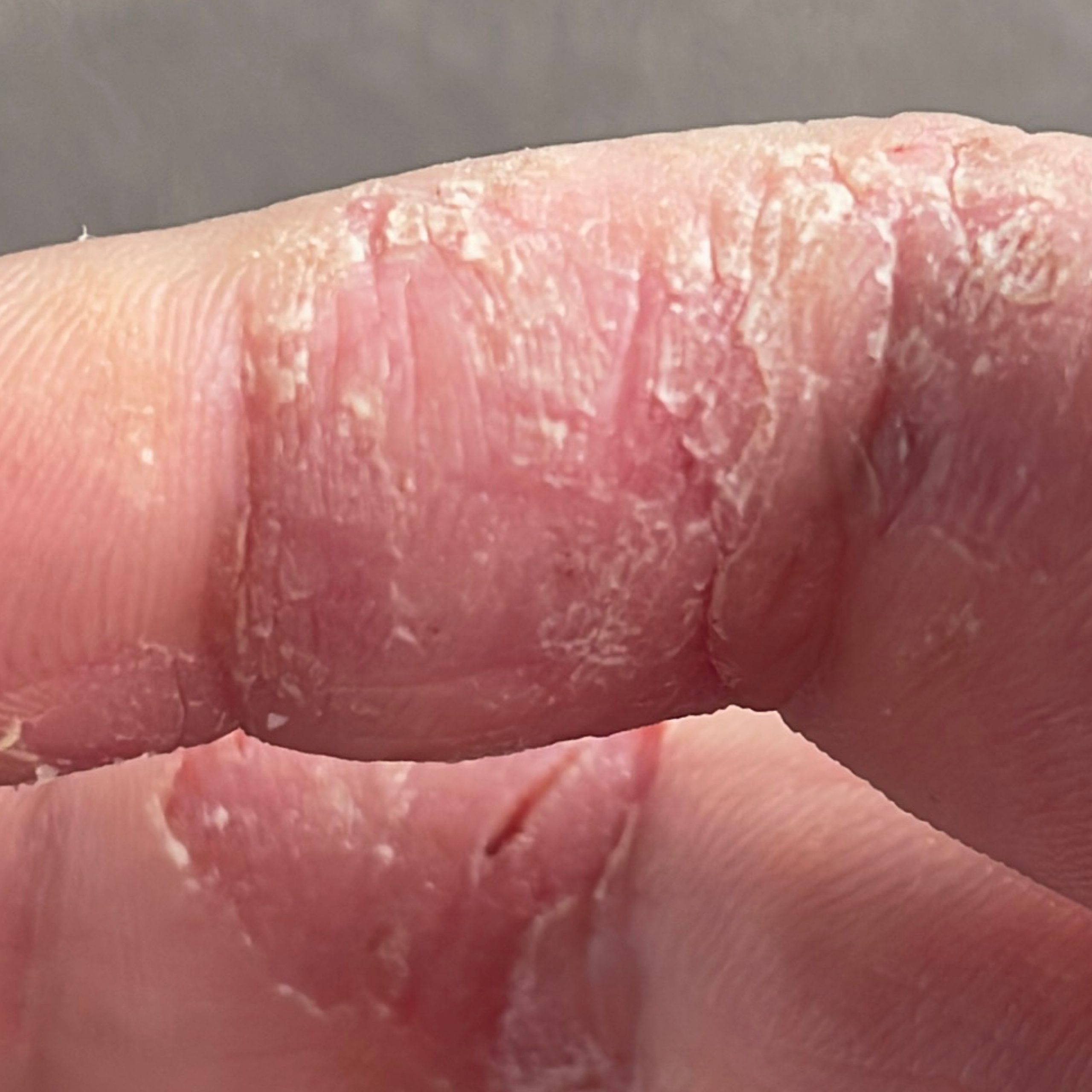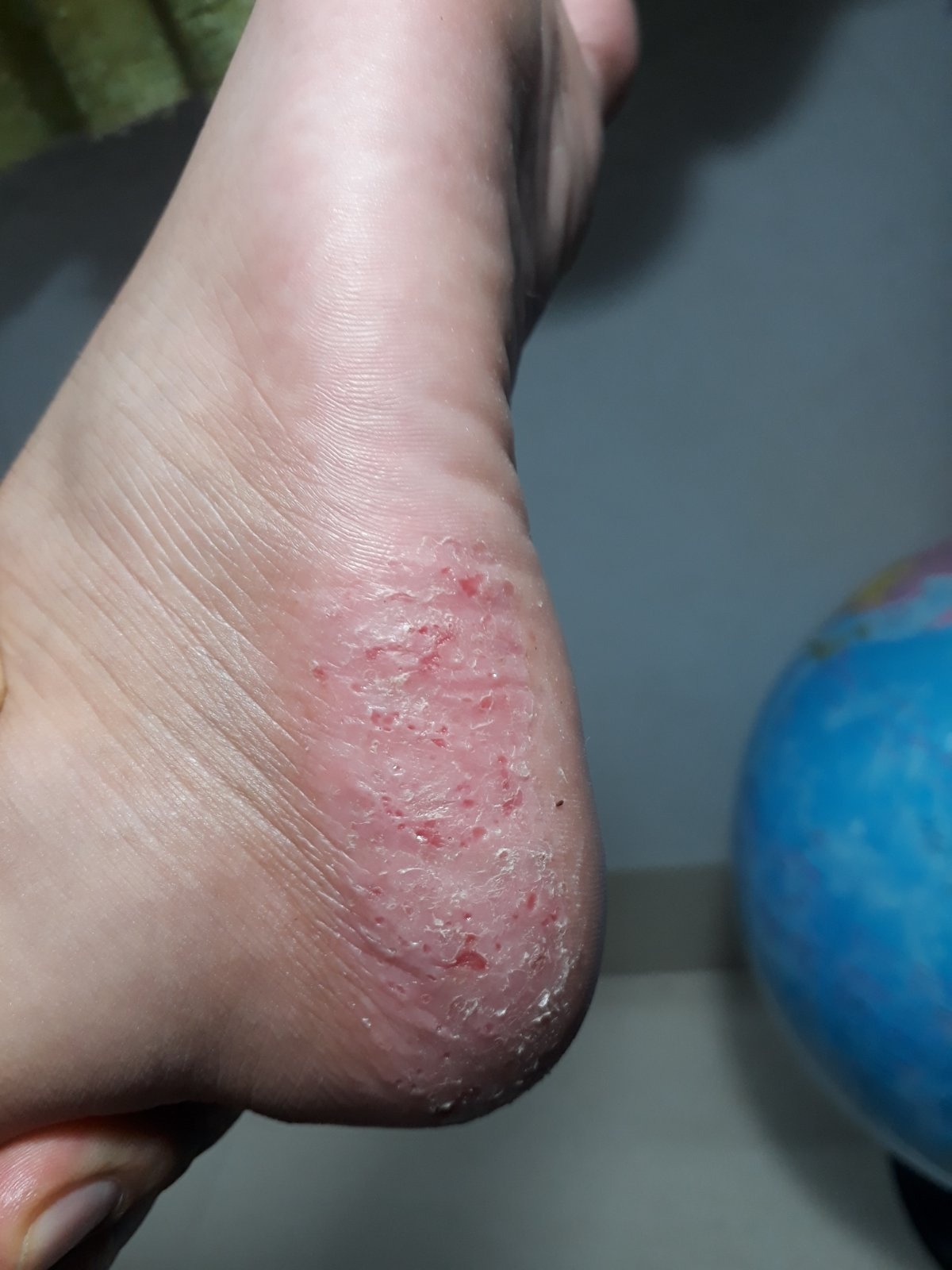
Eczema is a group of inflammatory skin diseases in which redness, itching, dryness, and rashes appear. The skin may become scaly or, in some cases, moist and “weeping”.
The main symptoms are severe itching, redness, and irritation of the skin, sometimes with blisters or cracks. Eczema is not contagious and is not transmitted from person to person.
The disease can be acute or chronic, with periods of improvement and flare-ups. In many people, symptoms worsen during cold weather when the skin becomes drier.
What to do if suspected
If you notice itching, redness, scaling, or skin eruptions, it is important to consult a dermatologist.
The first step is a consultation with a specialist. The doctor will assess the skin condition and help distinguish eczema from other diseases such as psoriasis, fungal infection, or allergic dermatitis.
Additional tests or consultations with other specialists may be required if there are associated conditions.
It is important not to scratch the skin and not to use random ointments or harsh products. This may increase inflammation and lead to complications, such as secondary infection.
How the disease looks
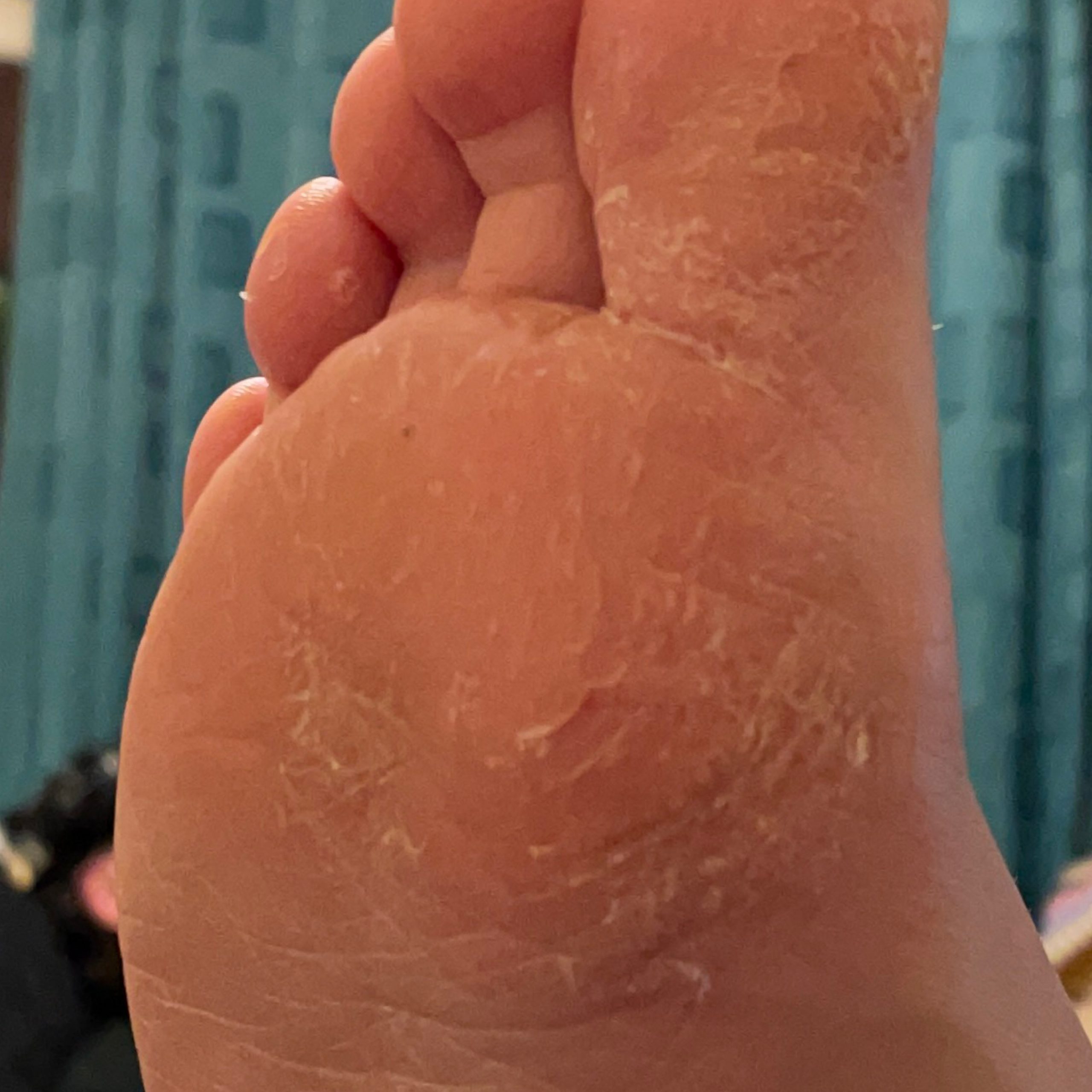
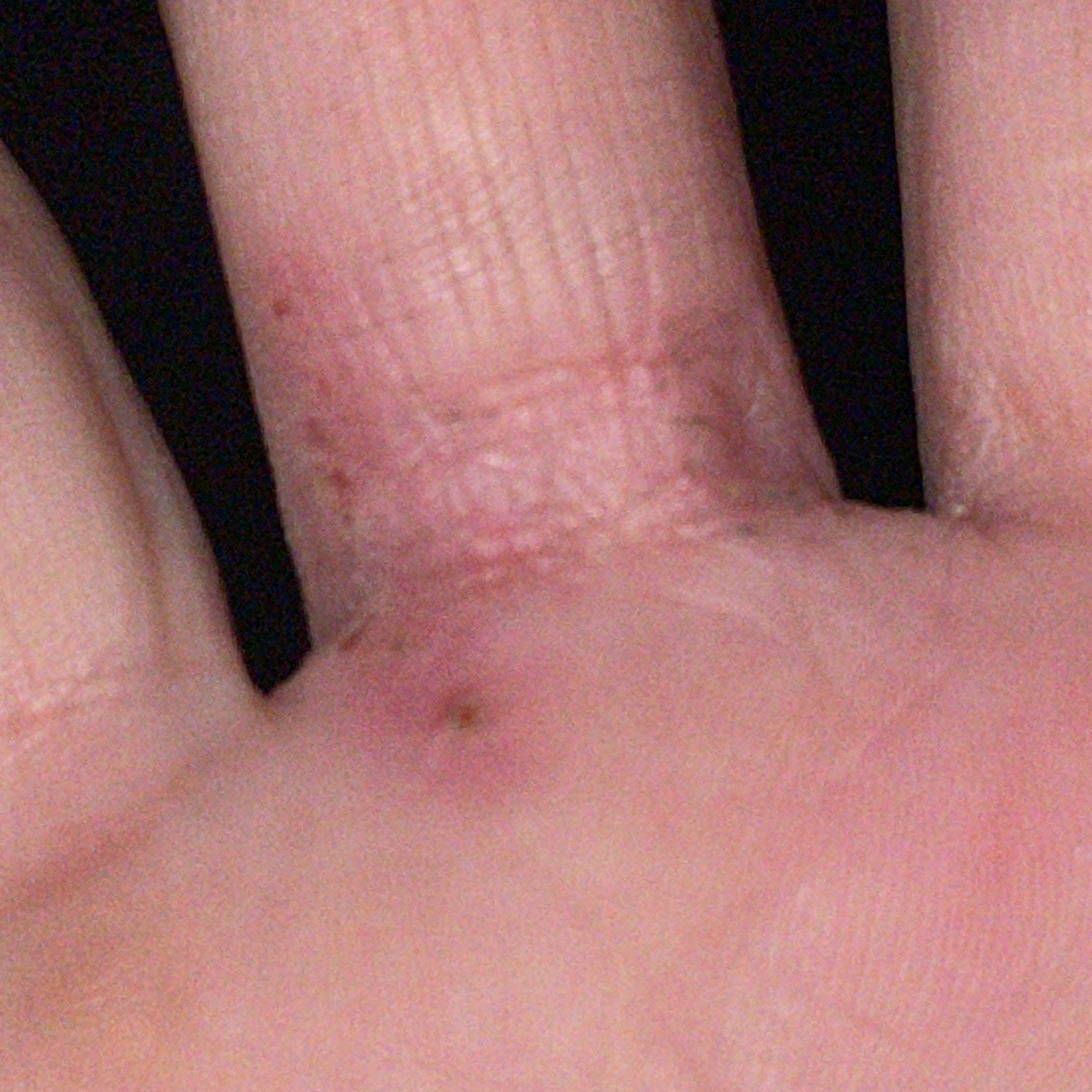
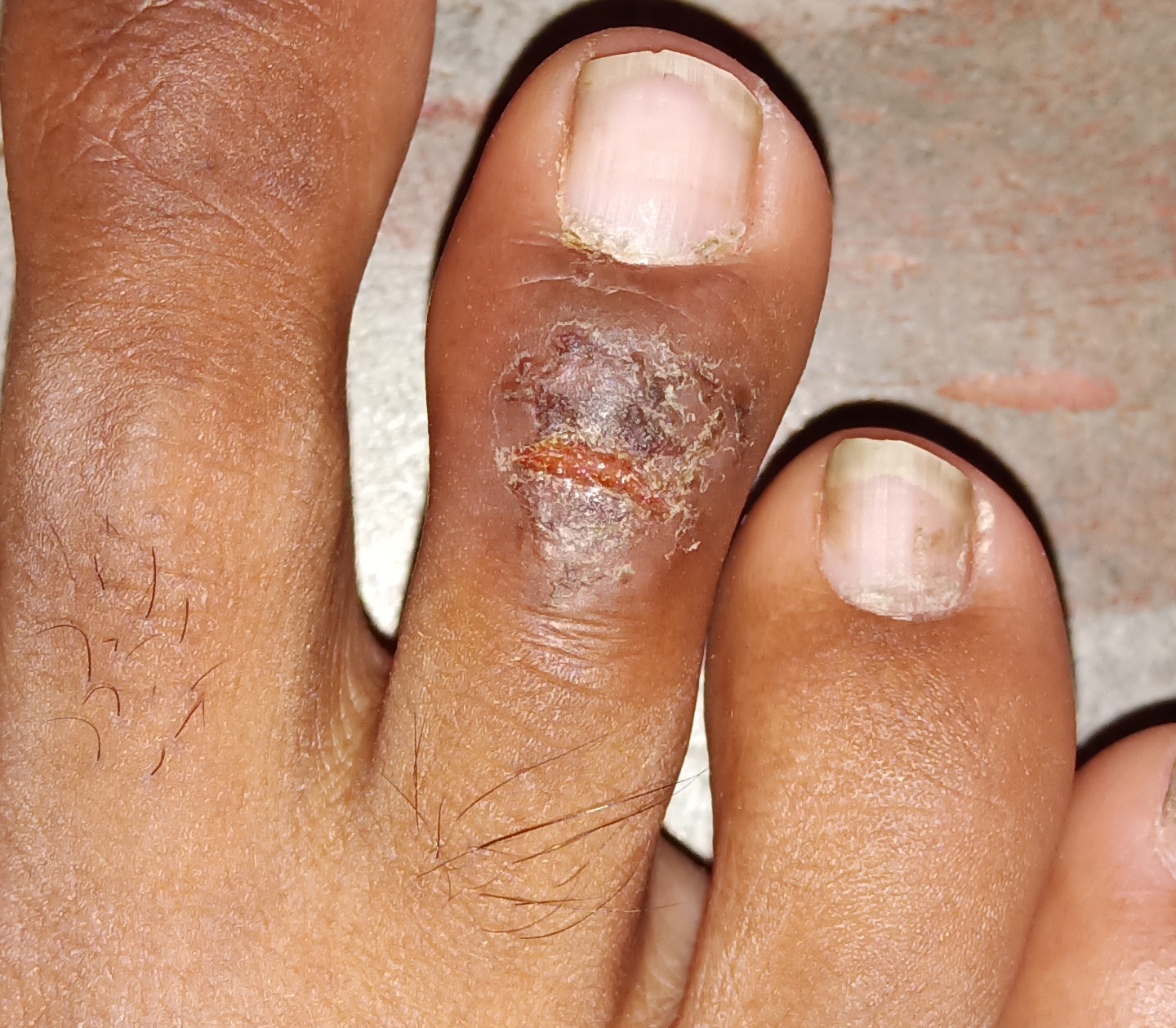
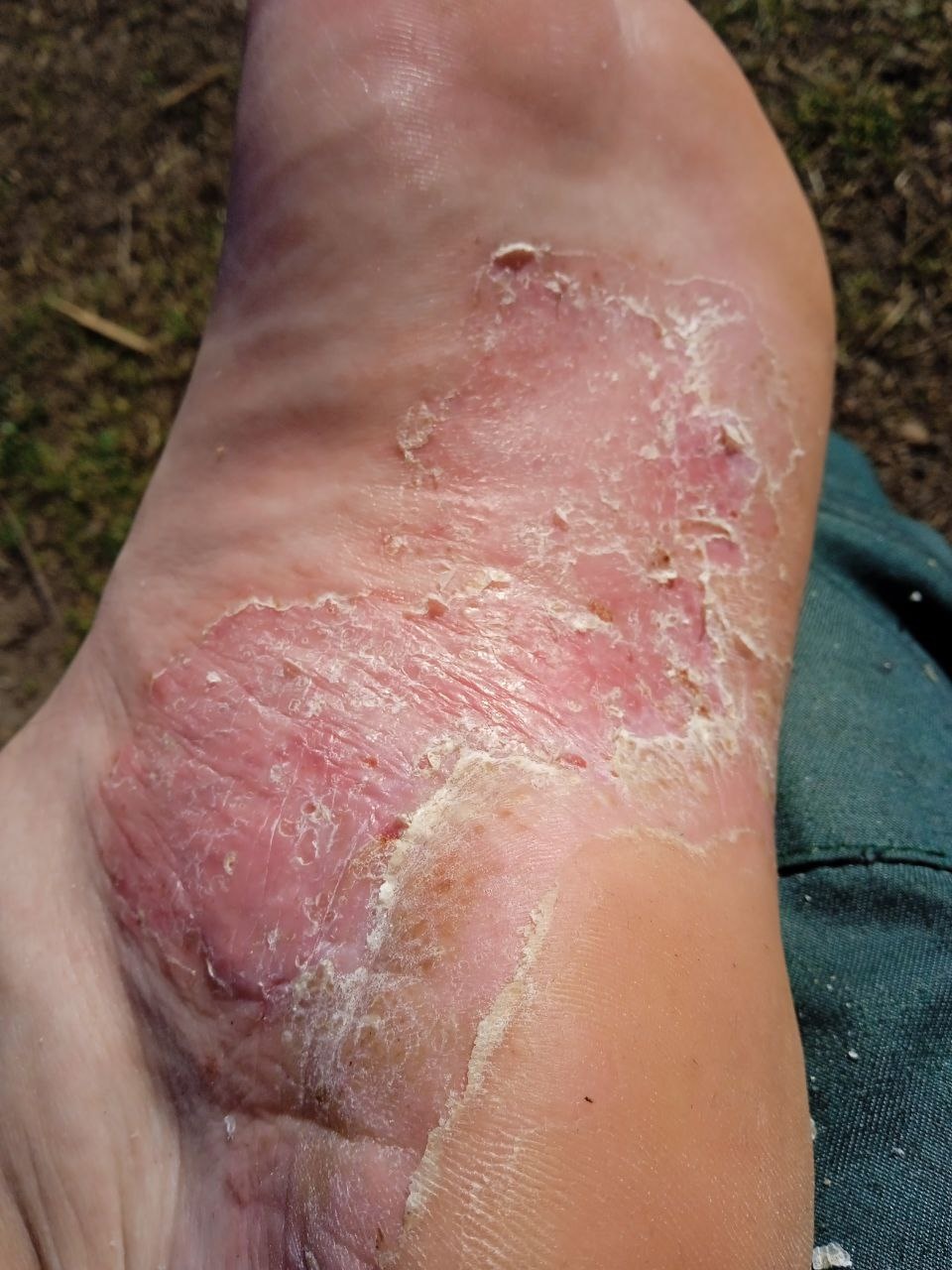
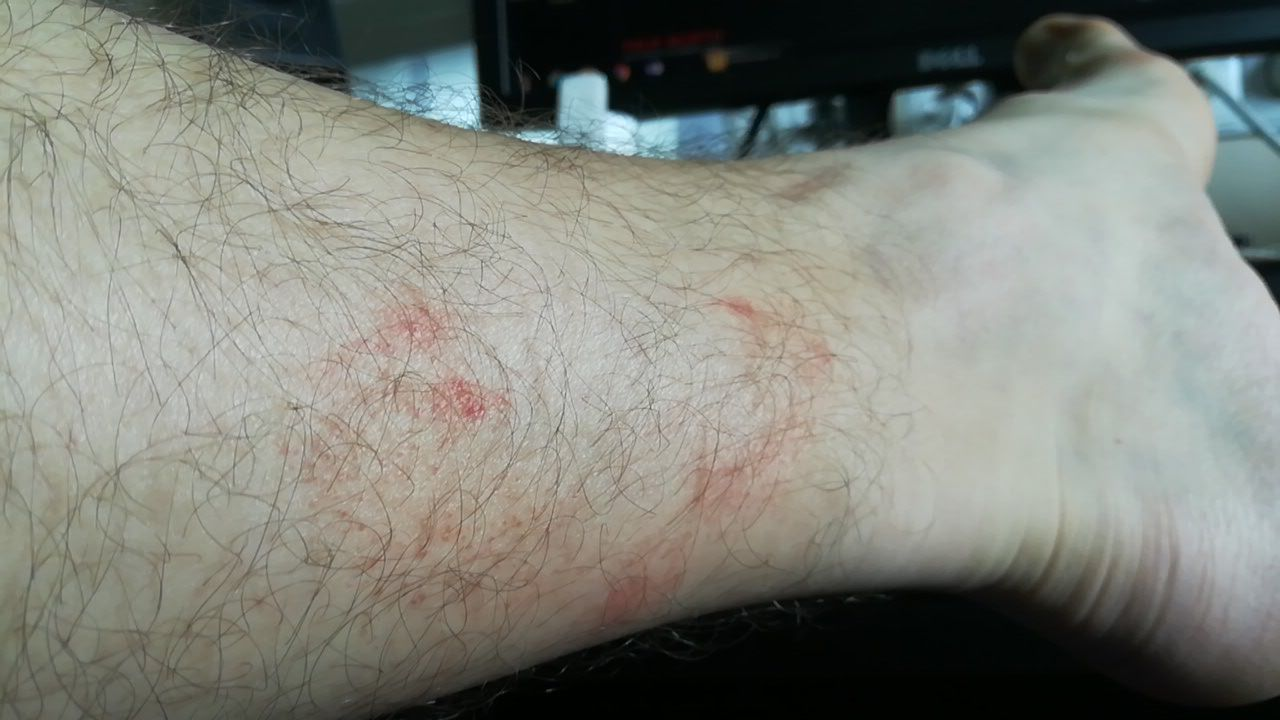
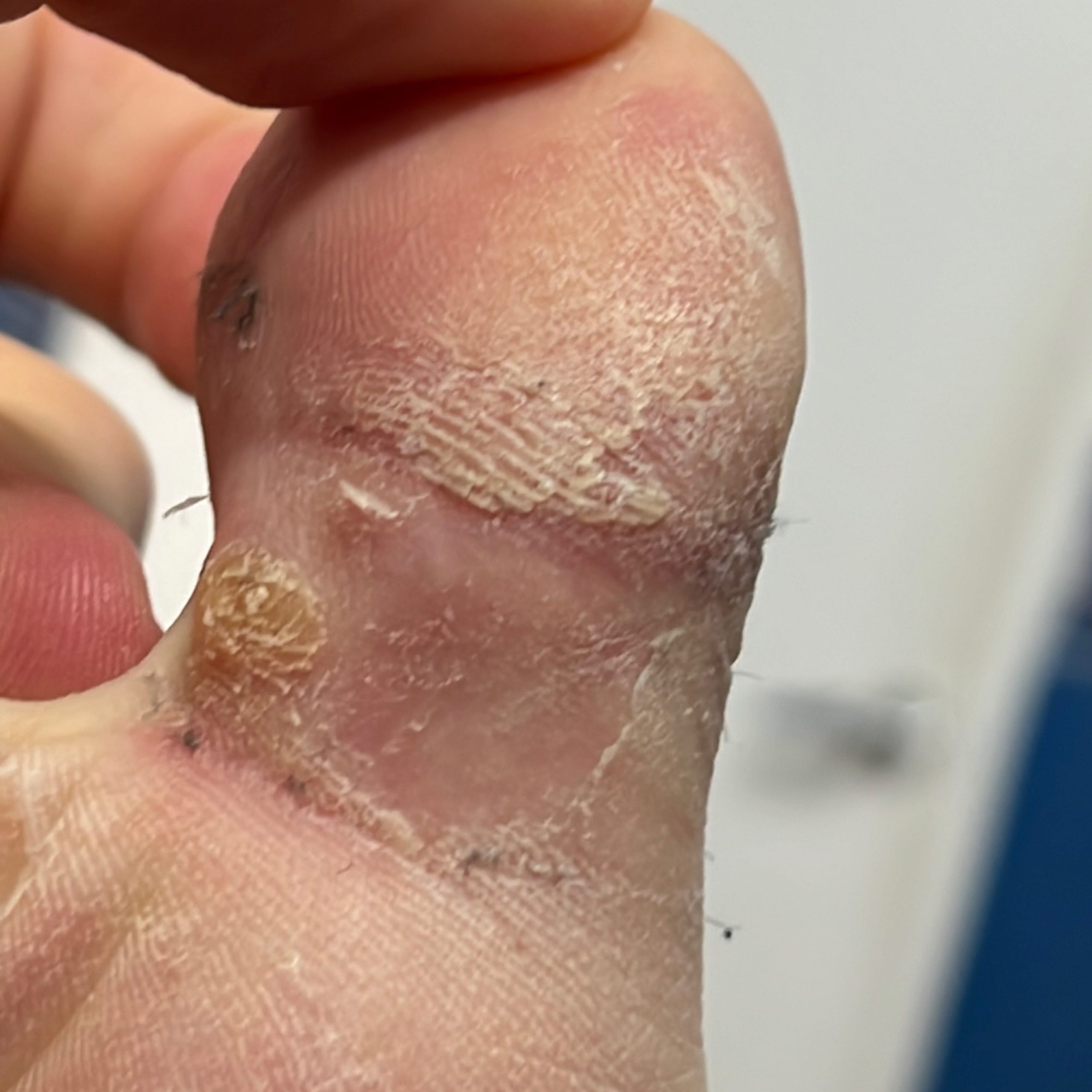
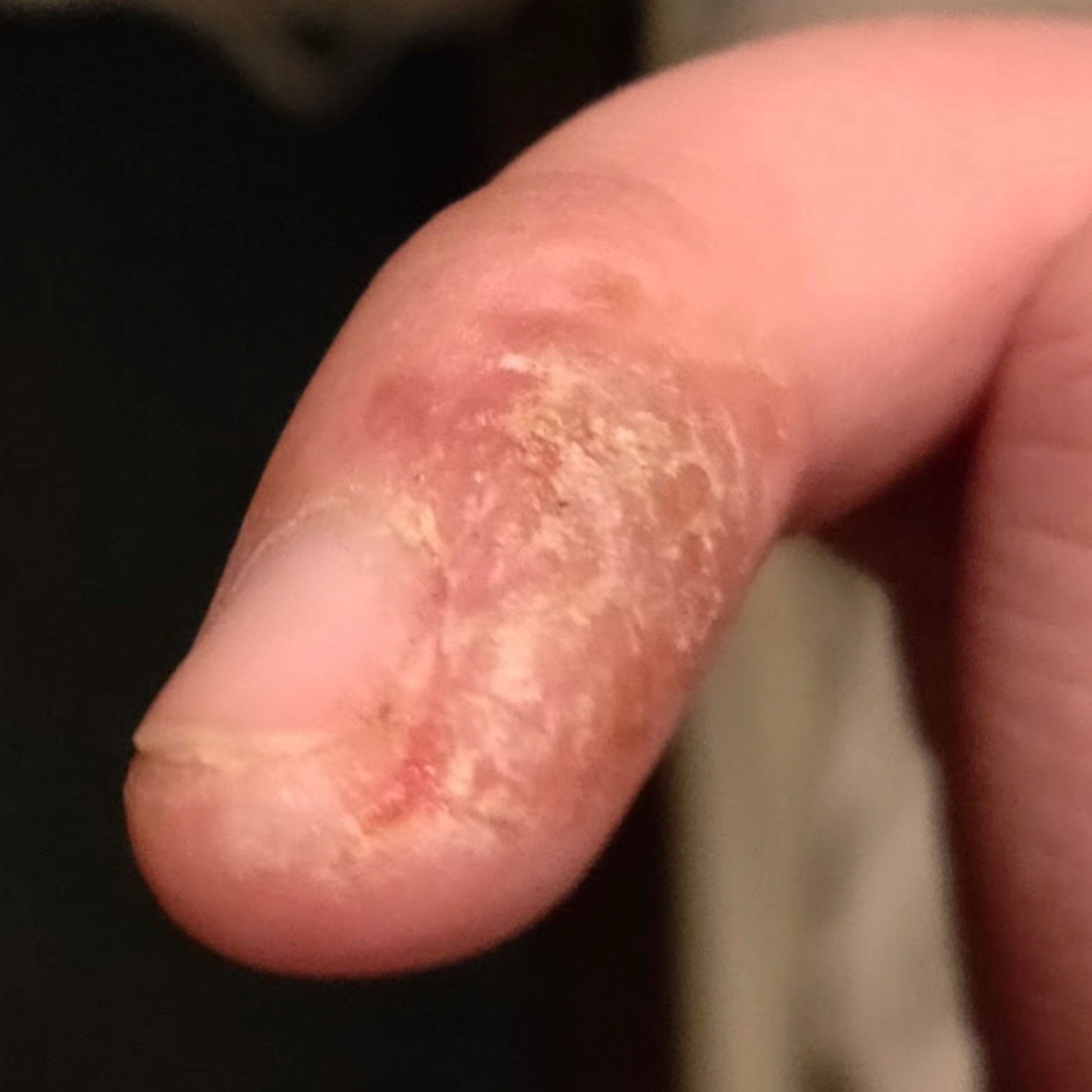
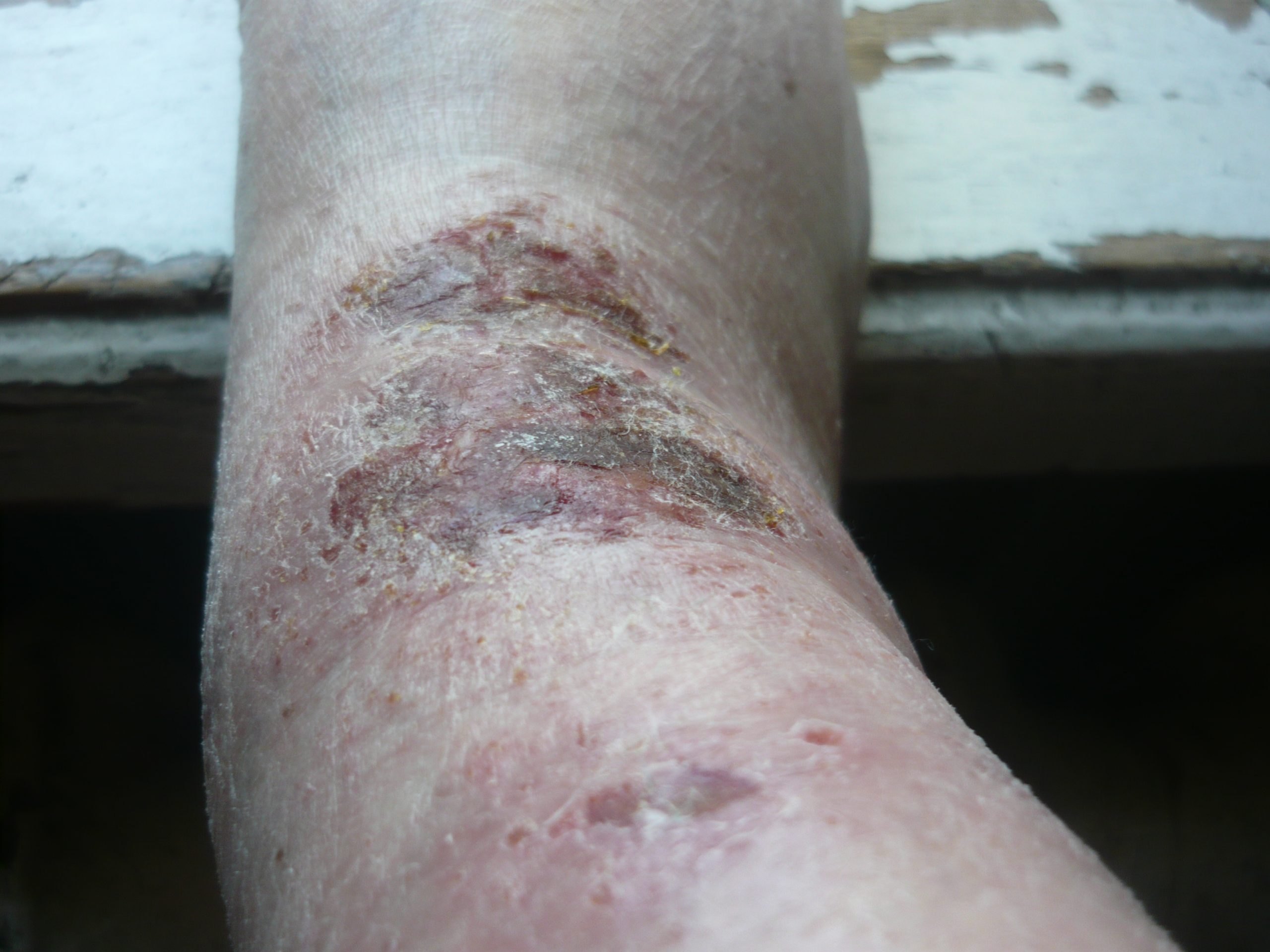
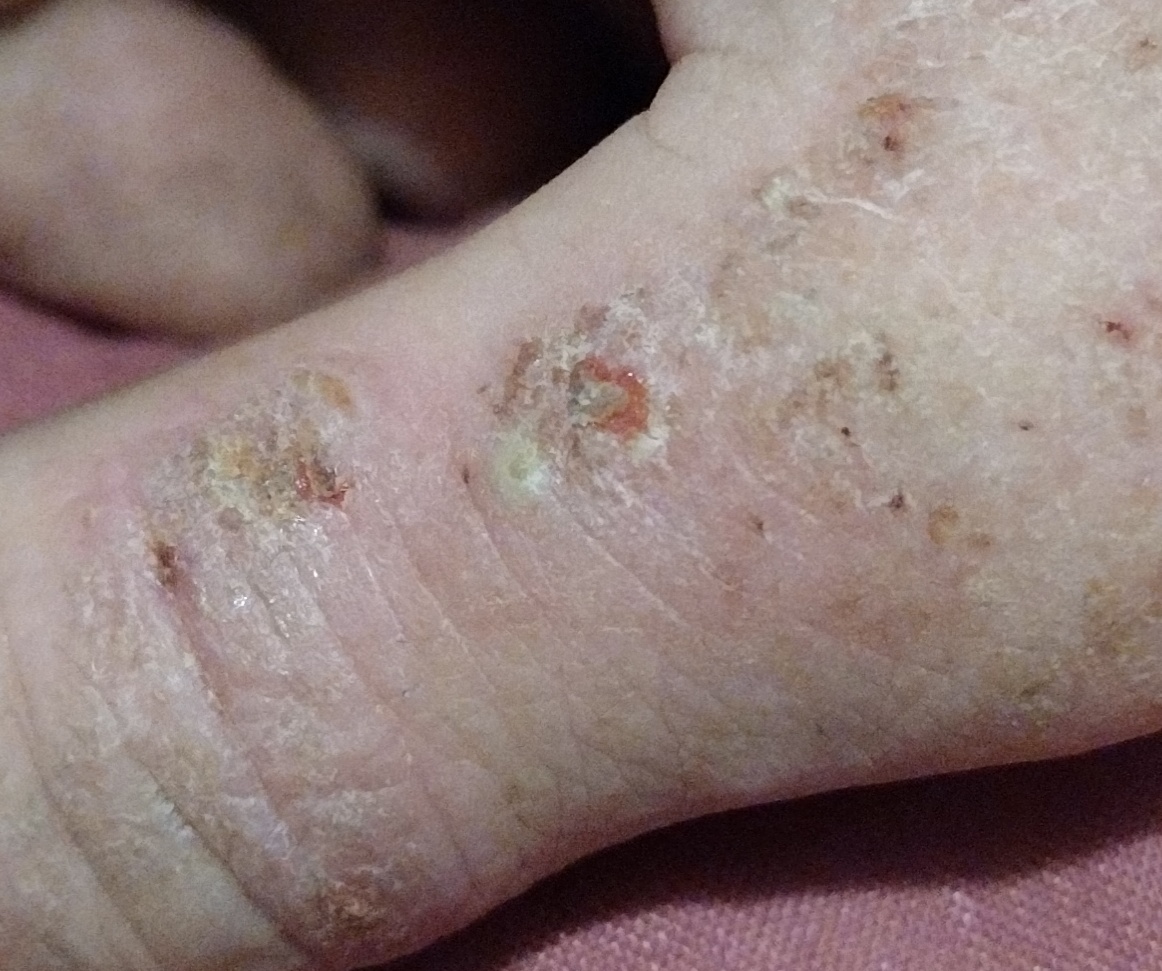
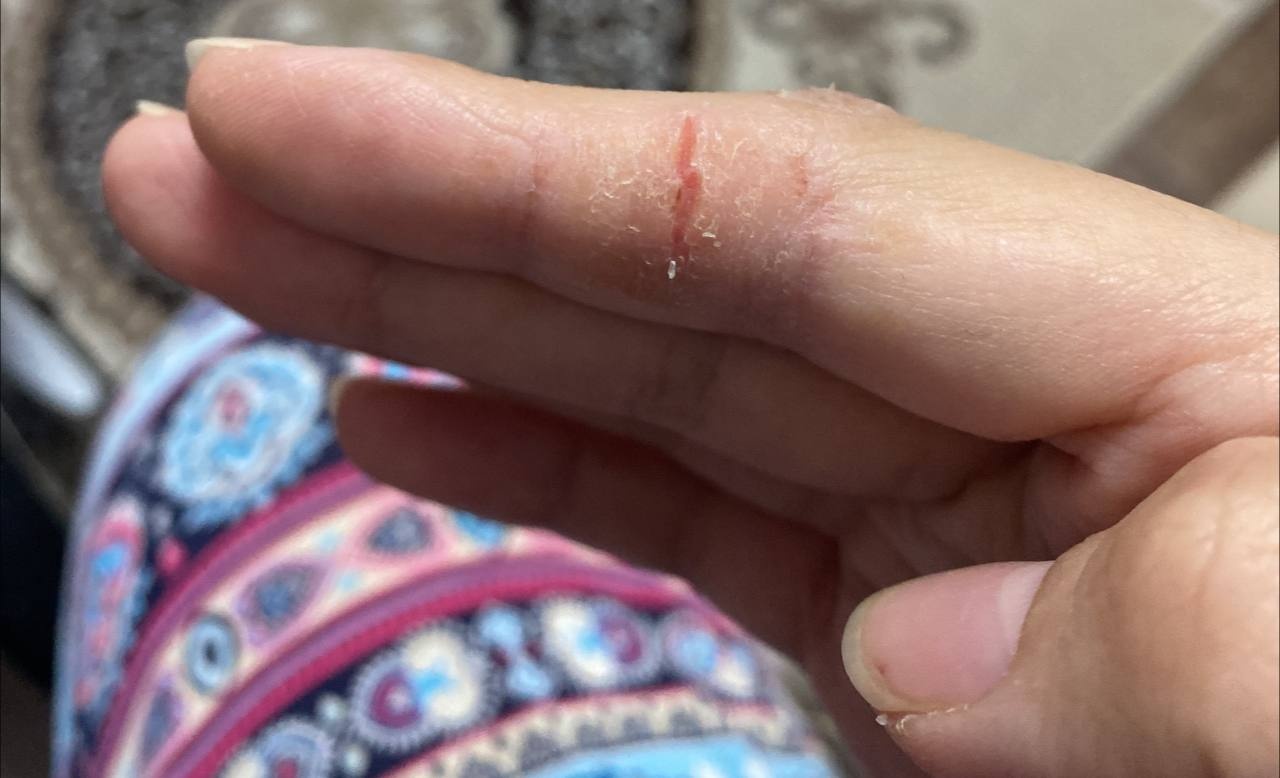
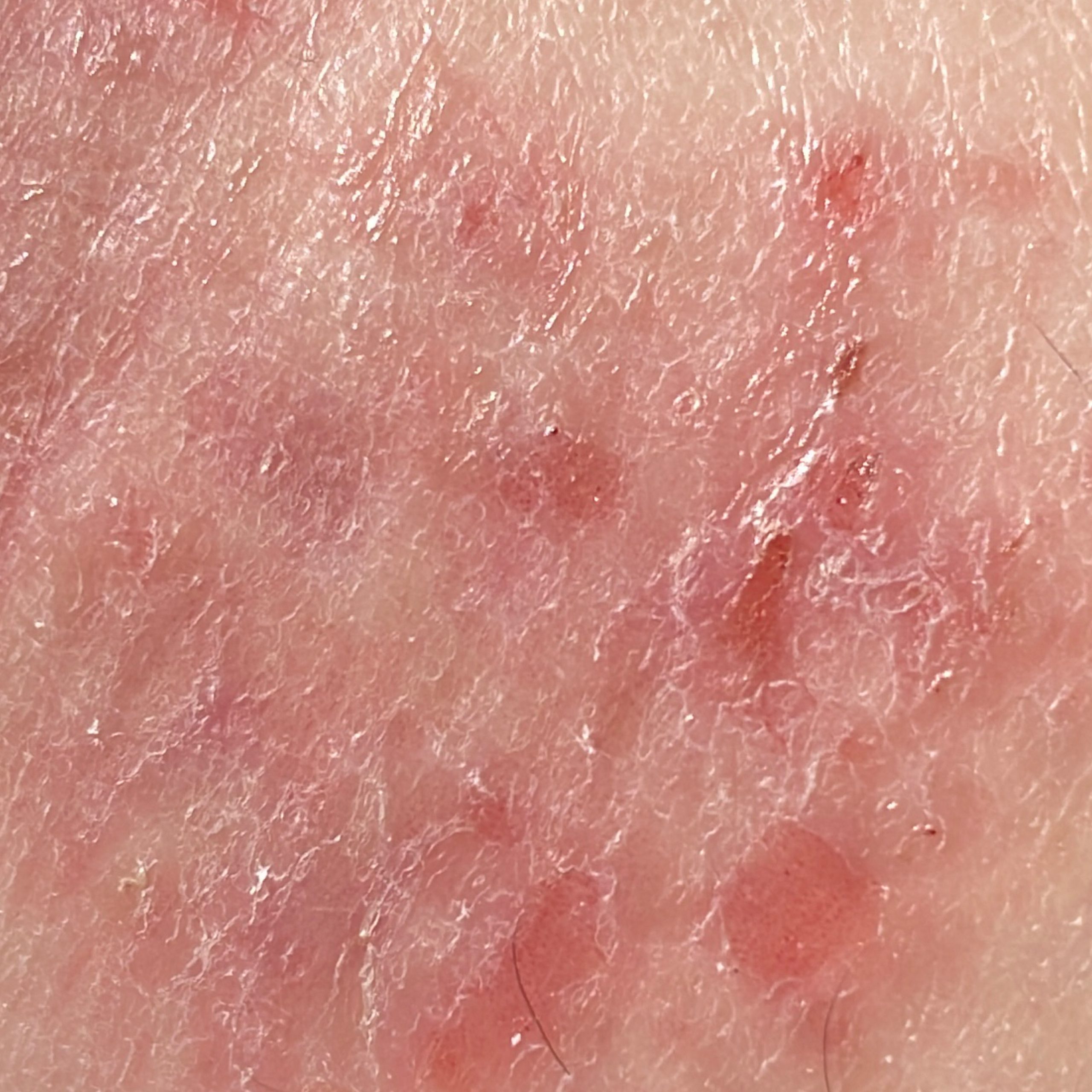
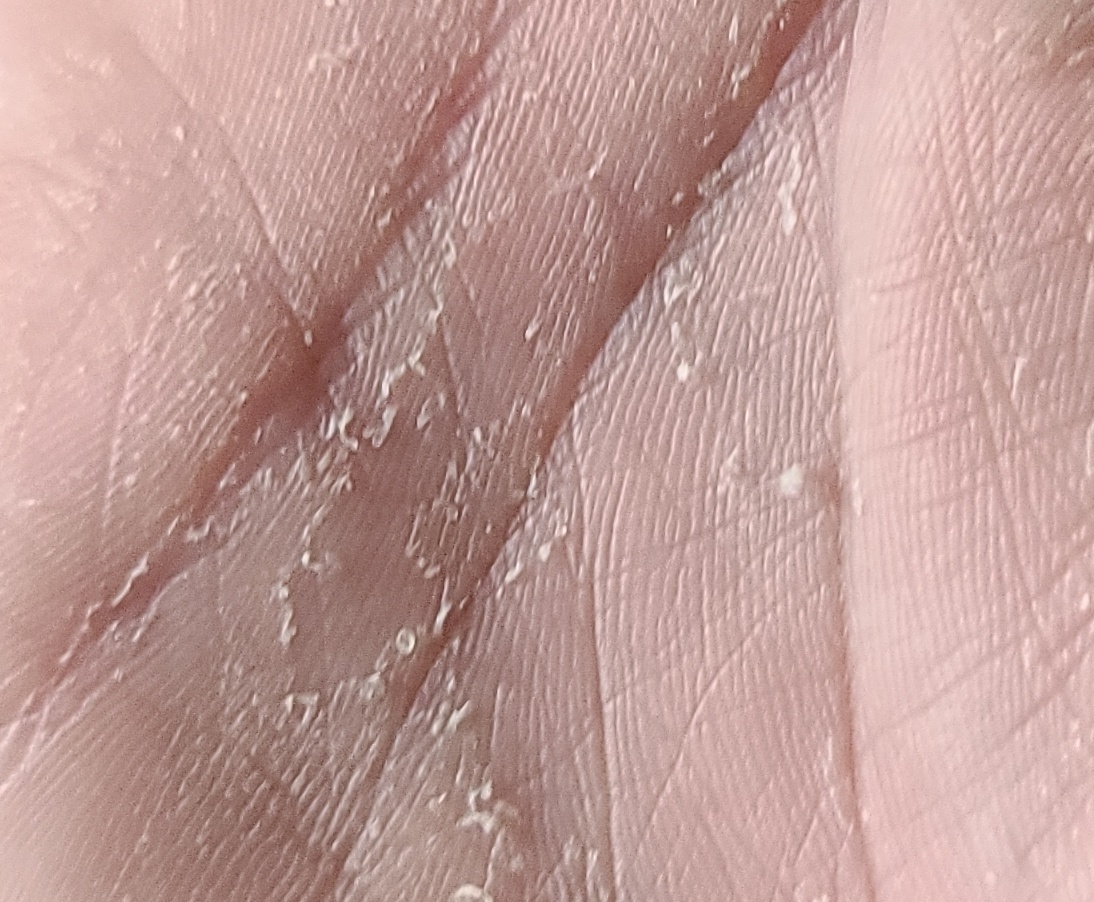
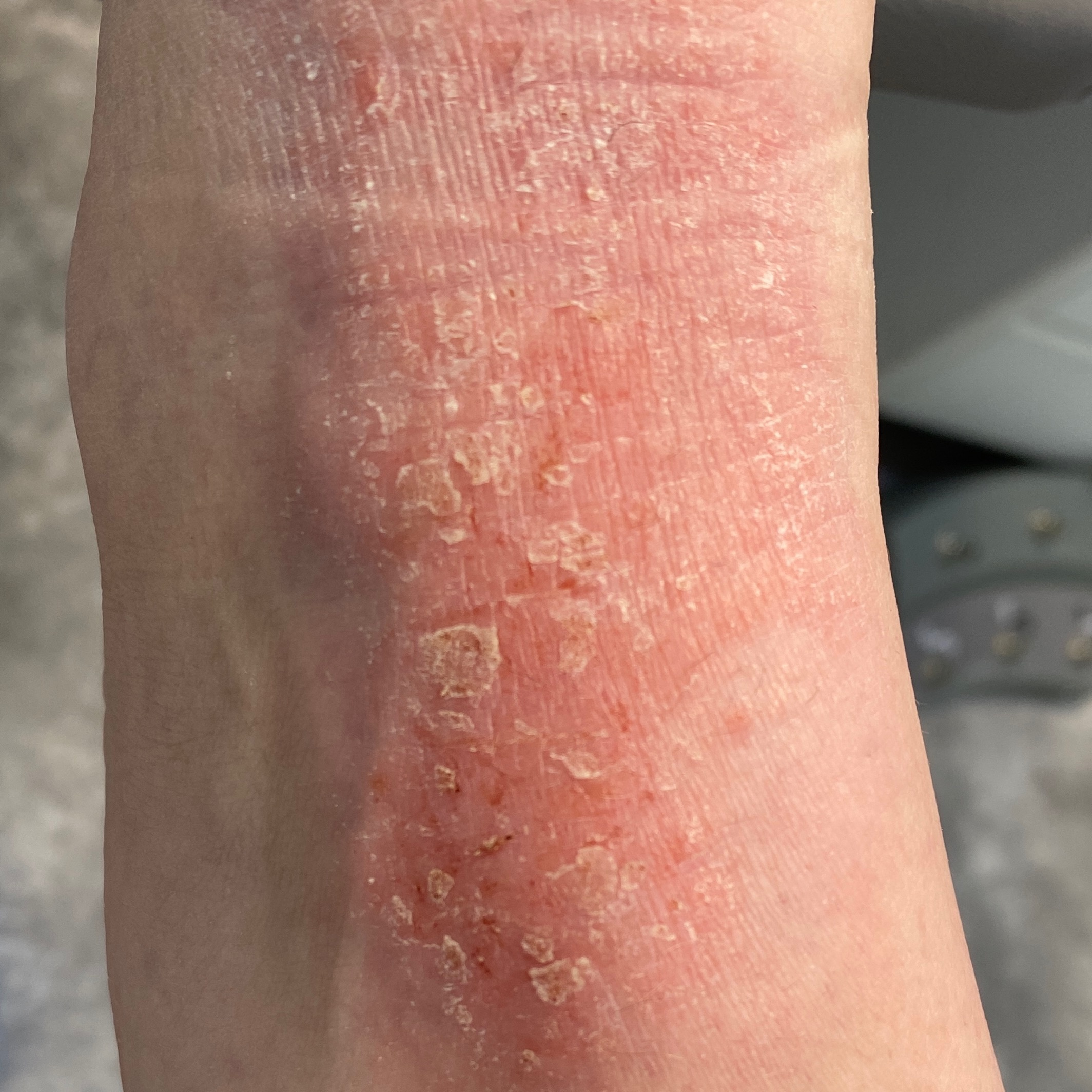
Eczema may look different, but most often it appears as reddened skin areas with scaling and scratch marks.
In acute inflammation, small fluid-filled blisters may appear. After they rupture, the skin becomes moist and then covered with crusts.
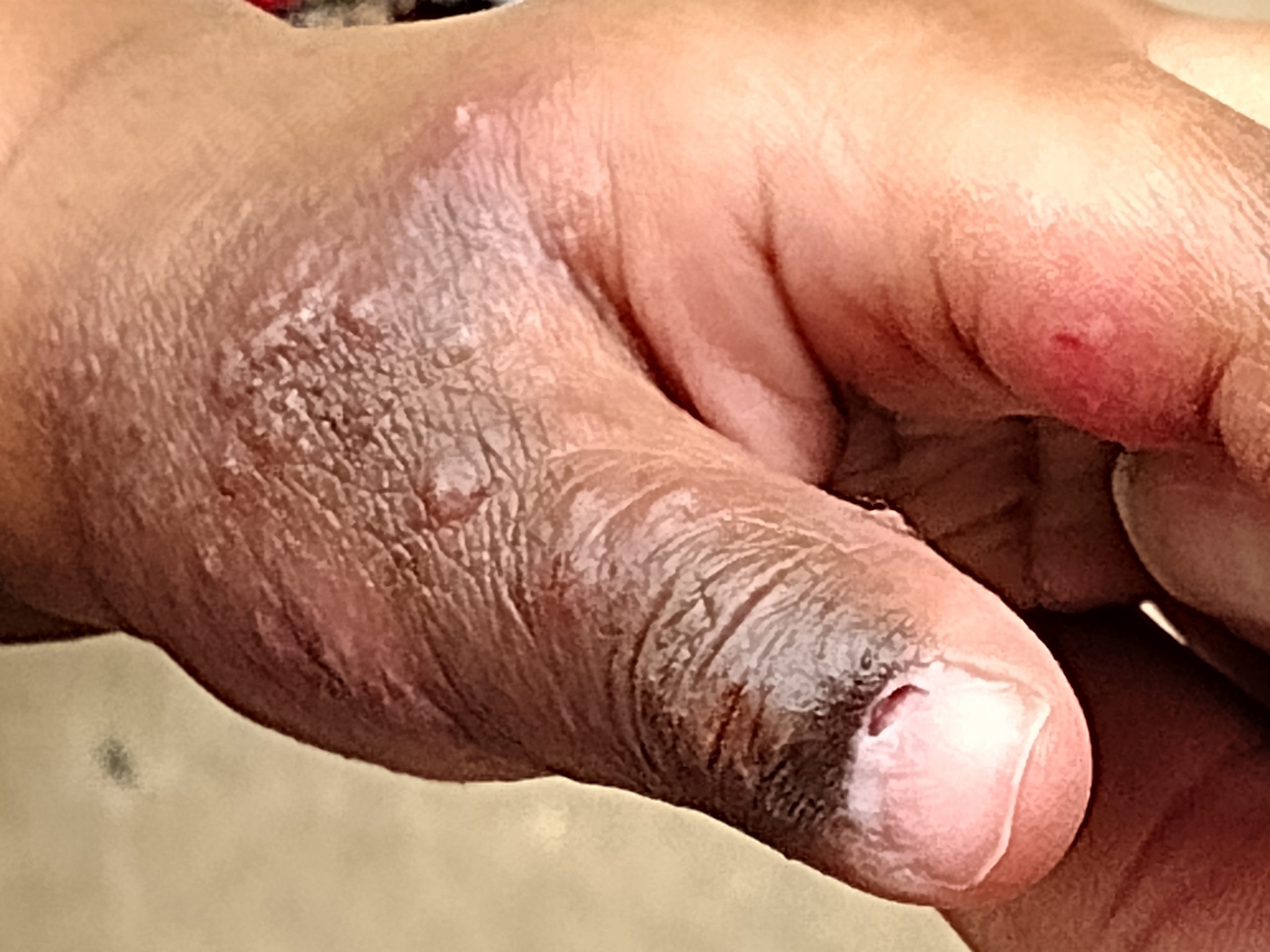
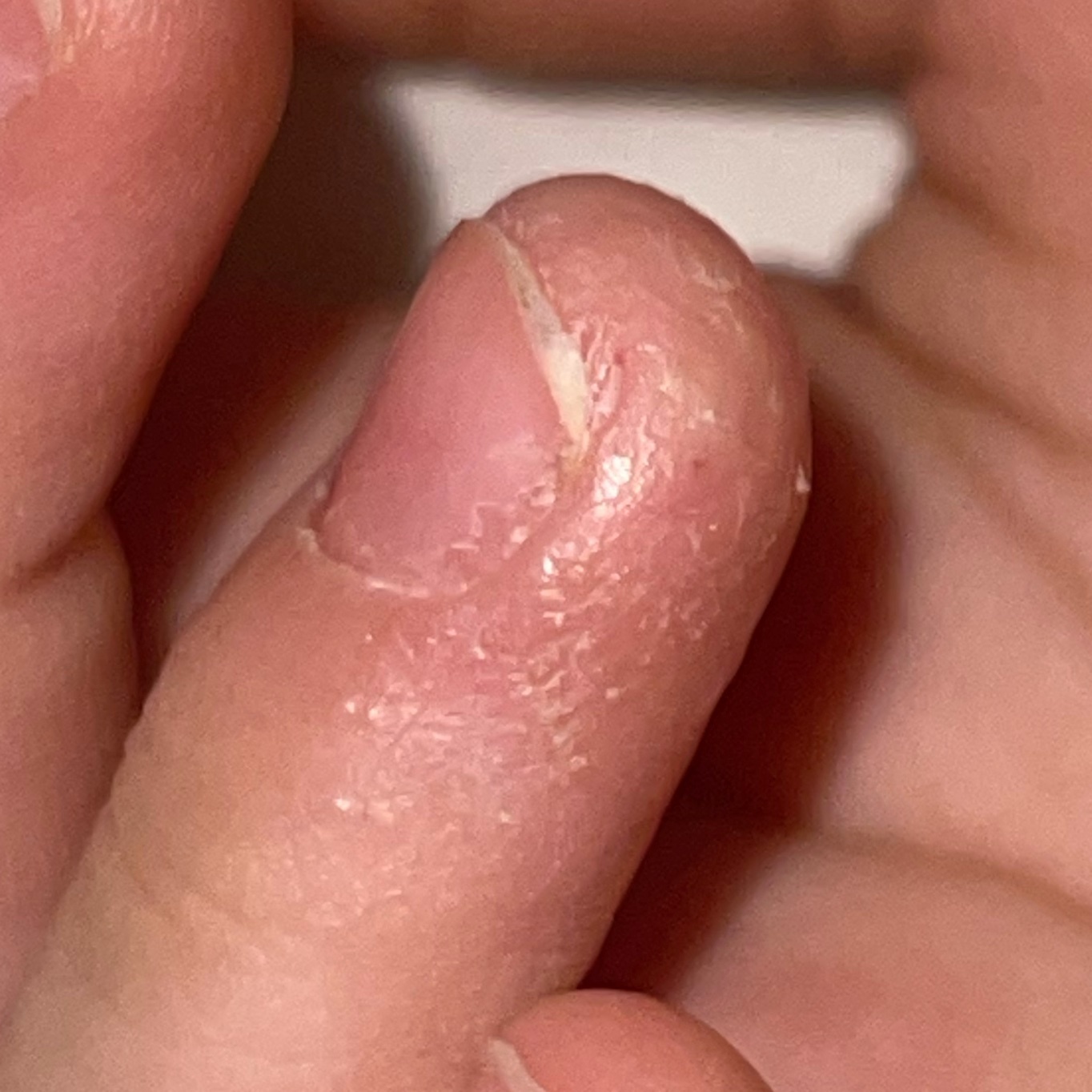
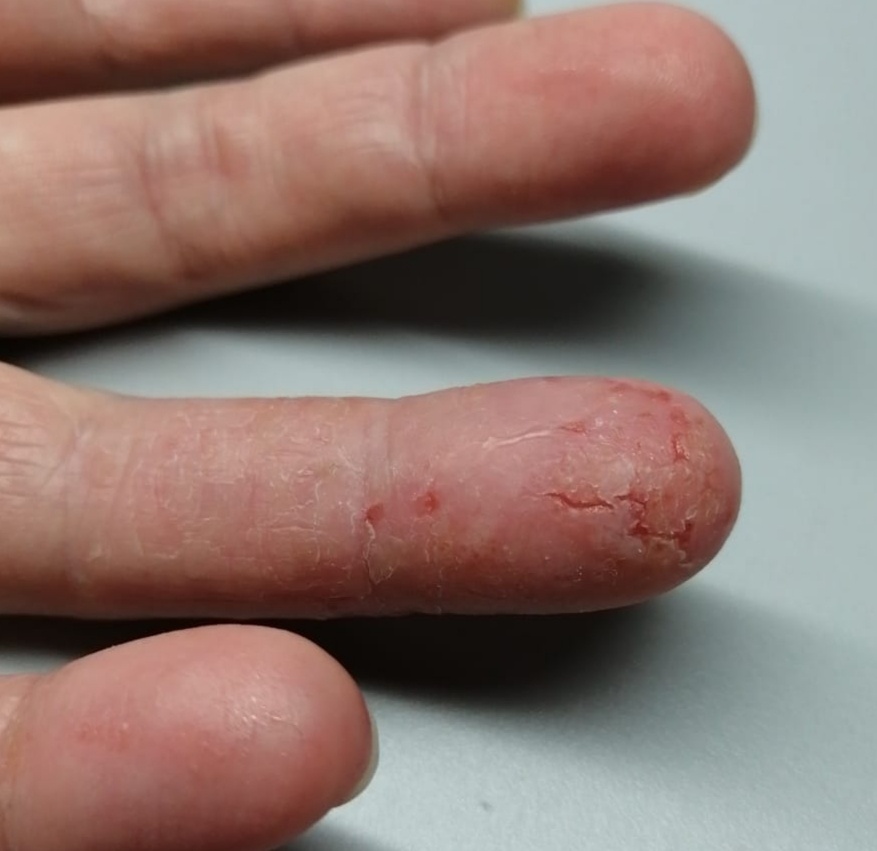
In chronic cases, the skin becomes thickened, rough, and develops cracks with pronounced scaling.
Rashes can appear on the face, hands, legs, skin folds, and other areas of the body. The appearance often changes over time.
Below in the article you can view real photos to better understand how the disease looks.
Main symptoms
The main symptom is itching, which can be severe and interfere with daily life.
Also characteristic are:
- redness of the skin
- dryness and scaling
- blisters or weeping areas
- cracks and pain
- thickened skin in long-term cases
Scratching easily damages the skin and may lead to infection.
Causes of the disease
Eczema develops due to a combination of several factors.
The main ones include:
- internal factors — genetic predisposition, immune system characteristics, impaired skin barrier function (the skin retains less moisture and becomes more easily irritated),
- external factors — stress, contact with irritants, climate, infections, and associated diseases.
Often the disease develops due to a combination of multiple factors rather than a single cause.
How the disease develops
Eczema is based on inflammation of the skin and disruption of its protective barrier.
The skin loses moisture, becomes dry and sensitive. The immune system reacts more strongly than normal to irritants, leading to inflammation.
Itching worsens the condition: scratching damages the skin, which maintains and increases inflammation.
Forms and types
There are several forms of eczema that differ in causes and appearance.
Most common types include:
- true — with intense itching, blisters, and a tendency to chronic course,
- seborrheic — occurs in areas with active sebaceous glands (scalp, face),
- dyshidrotic — affects palms and soles, with blisters and burning,
- microbial — develops around wounds or damaged skin,
- varicose — occurs on the legs due to impaired blood circulation,
- occupational — caused by exposure to chemical substances.
Despite differences, all forms share inflammation, itching, and skin damage.
When to see a doctor
You should see a dermatologist if:
- itching becomes severe and affects daily life
- rash spreads or does not improve
- cracks, oozing, or signs of infection appear
- flare-ups occur frequently
- self-care does not help
Early consultation helps bring the condition under control faster.
Treatment
Eczema is a chronic condition, but in most cases it can be controlled.
Treatment focuses on reducing inflammation, restoring the skin barrier, and eliminating triggers.
Topical creams and ointments are commonly used to reduce inflammation and support skin healing.
Skin care plays an important role:
- regular moisturizing
- use of gentle cleansers
- protection from irritants
If necessary, a doctor may prescribe additional treatments, including systemic medications.
It is important to identify and avoid triggers such as stress, chemicals, or underlying conditions.
Treatment is always individual, and following medical recommendations helps achieve long-term improvement.
Q&A
Is eczema contagious?
No, eczema is not contagious and cannot spread between people.
Can eczema be completely cured?
Not always, but in most cases it can be well controlled.
How is eczema treated?
Treatment includes skin care, topical medications, and elimination of triggers under medical supervision.
Why does eczema worsen in winter?
Cold and dry air reduces skin moisture, making symptoms more severe.
Can I wash with eczema?
Yes, but use gentle products and avoid hot water.
Can I scratch the skin?
No, scratching worsens inflammation and may lead to infection.
Do I need a special diet?
Not always. It depends on individual triggers.
Can eczema go away on its own?
Sometimes symptoms improve, but without care it often returns.
Check Your Skin Instantly
Use the Rash identifier app – Skinive AI to take a photo of a skin lesion and get an AI-based risk assessment. It helps determine whether professional consultation is recommended, giving you fast guidance and peace of mind.
Sources
- Clinical guidelines in dermatology
- American Academy of Dermatology (AAD)
- European Academy of Dermatology and Venereology (EADV)
- World Health Organization (WHO)
🇬🇧 Eczema: Diagnosis and Treatment in the UK
If you notice eczema (atopic dermatitis)—such as itchy, inflamed, or dry patches of skin—it’s important to get a professional opinion. In the UK, you can access dermatology care via the NHS, private clinics, or online dermatology consultations.
👉 How to See a Dermatologist in the UK NHS – This main guide explains how NHS referrals work, what to expect from specialist dermatology services, and how to choose between public and private care.
Dermatologists in Major UK Cities:
- Dermatologist in London
- Dermatologist in Manchester
- Dermatologist in Liverpool
- Dermatologist in Birmingham
- Dermatologist in Leeds
- Dermatologists in Other UK cities
Online Dermatology
If you prefer remote care or faster access, try online dermatology consultations. They allow dermatologists to review images, provide advice, and guide next steps without visiting a clinic. Read more in this article: Online Dermatologists in UK.
🇦🇺 Eczema: Diagnosis and Treatment in Australia
If you notice eczema (atopic dermatitis)—such as itchy, inflamed, or dry patches of skin of the skin, it’s important to get a professional opinion. In Australia, dermatology care is available via Medicare (public system), private clinics, or online consultations.
👉 How to See a Dermatologist in Australia – This main guide explains how referrals work through GPs and public clinics, what to expect from specialist dermatology services, and how to choose between public and private care.
Dermatologists in Major Australian Cities:
- Dermatologist in Sydney
- Dermatologist in Melbourne
- Dermatologist in Brisbane
- Dermatologist in Perth
- Dermatologist in Adelaide
- Dermatologists in other Australian cities
Online Dermatology
For faster access or remote care, online dermatology consultations allow dermatologists to review images, provide advice, and guide next steps without visiting a clinic. Read more in this article: Online Dermatologists in Australia.
Images of eczema: