
Pimple Monitoring powered by AI



AcneTracker & Monitor App
Analyse Visible Acne & pimples, Explore Different Acne Types & Track Your Skin Progress
Understanding your acne is the first step towards making more informed skincare decisions. With the Skinive AI Acne Tracker & Analysis App, you can analyse visible skin concerns like acne, spots, rash using artificial intelligence, explore characteristics associated with different forms of acne, and monitor changes in your skin over time.
Skinive is a free-to-use acne & pimple tracker app for iPhone and Android. It analyses skin photos for visual characteristics associated with acne vulgaris, blackheads, whiteheads, pustular and cystic acne, and related skin conditions. Users can save assessments, monitor visible changes over time, and start with three free AI skin scans.
Whether you’re experiencing occasional pimples, persistent breakouts, blackheads, whiteheads, or more pronounced inflammatory acne, Skinive provides an accessible way to learn more about your skin and keep track of its appearance.
Powered by AI dermatology technology and informed by millions of real-world skin analyses, Skinive combines image-based skin assessment, educational insights, and personal skin monitoring in one mobile application.
(Available for iPhone and Android)
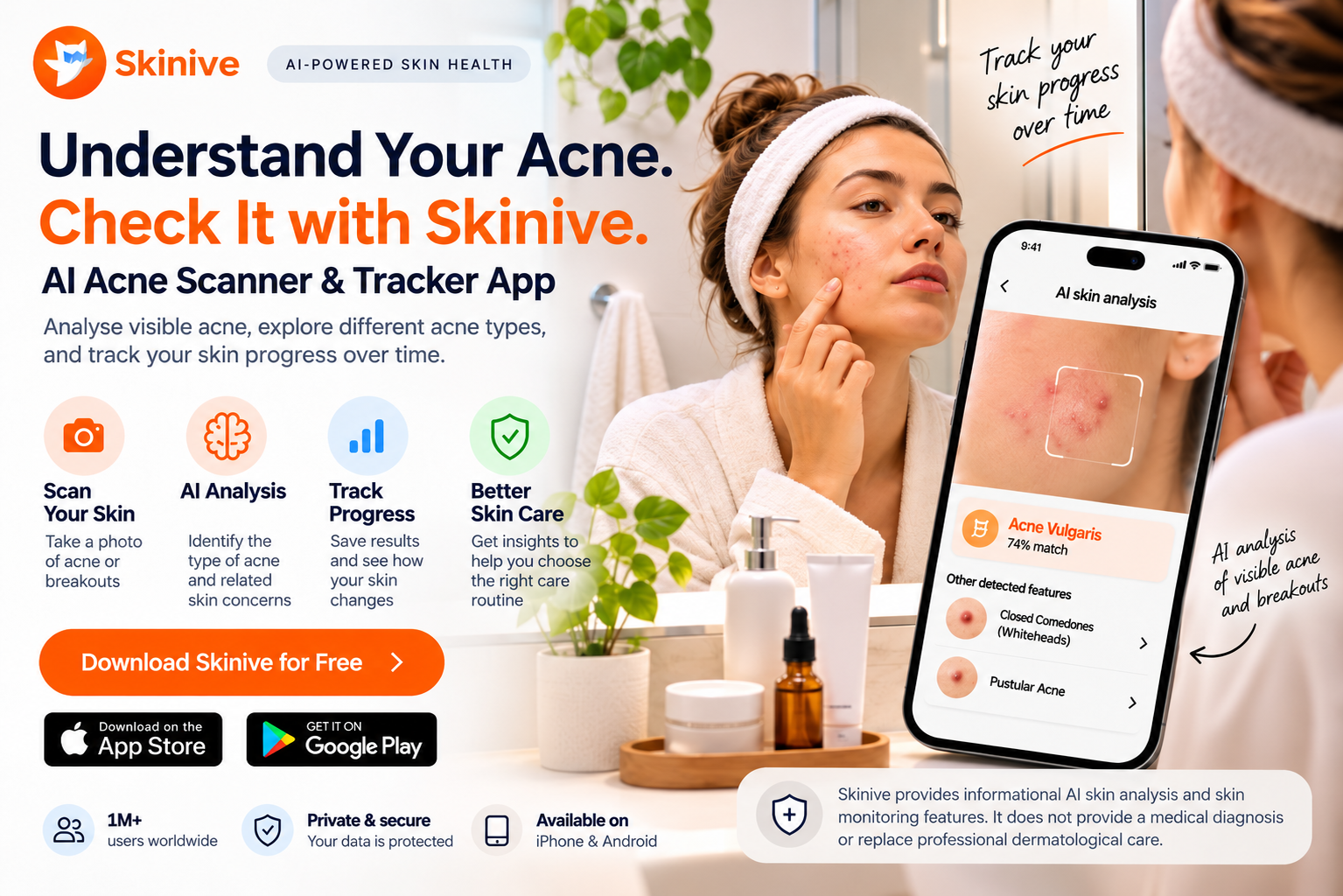
Why Understanding Your Acne Type Matters?
Acne is one of the most widespread dermatological conditions worldwide. According to research published in the British Journal of Dermatology, the Global Burden of Disease project estimated that acne affected approximately 9.4% of the world’s population, making it the eighth most prevalent disease globally in the period studied.
Although acne is particularly common during adolescence, it also affects adults and can persist for many years. Its appearance varies considerably, ranging from occasional blackheads and whiteheads to painful inflammatory lesions that may cause permanent scarring.
Not all acne is the same, and understanding the differences matters. Mild comedonal acne, inflammatory pustules, and deeper nodular or cystic lesions may require different approaches to skincare and medical treatment.
For example, some people with mild acne may benefit from appropriate skincare products and over-the-counter acne treatments. More persistent inflammatory acne may require prescription topical medication, while severe nodular or cystic acne often needs assessment by a dermatologist and may require systemic treatment.
Identifying the visible characteristics of acne can therefore be a useful starting point for understanding the condition and discussing appropriate care options. However, determining its underlying causes, clinical severity, and suitable treatment requires consideration of factors that cannot always be assessed from a photograph.
This is where AI-powered skin analysis can provide additional information.
Skinive helps users explore visual characteristics associated with different acne presentations, making skin monitoring more accessible and helping them prepare for informed conversations with healthcare professionals.
Scientific reference: JAMA Dermatology — Global Burden of Acne, 2026. Tan JKL, Bhate K. (2015). A global perspective on the epidemiology of acne. British Journal of Dermatology.
Built on 7 Million Skin Analyses: Skinive’s Experience with Acne
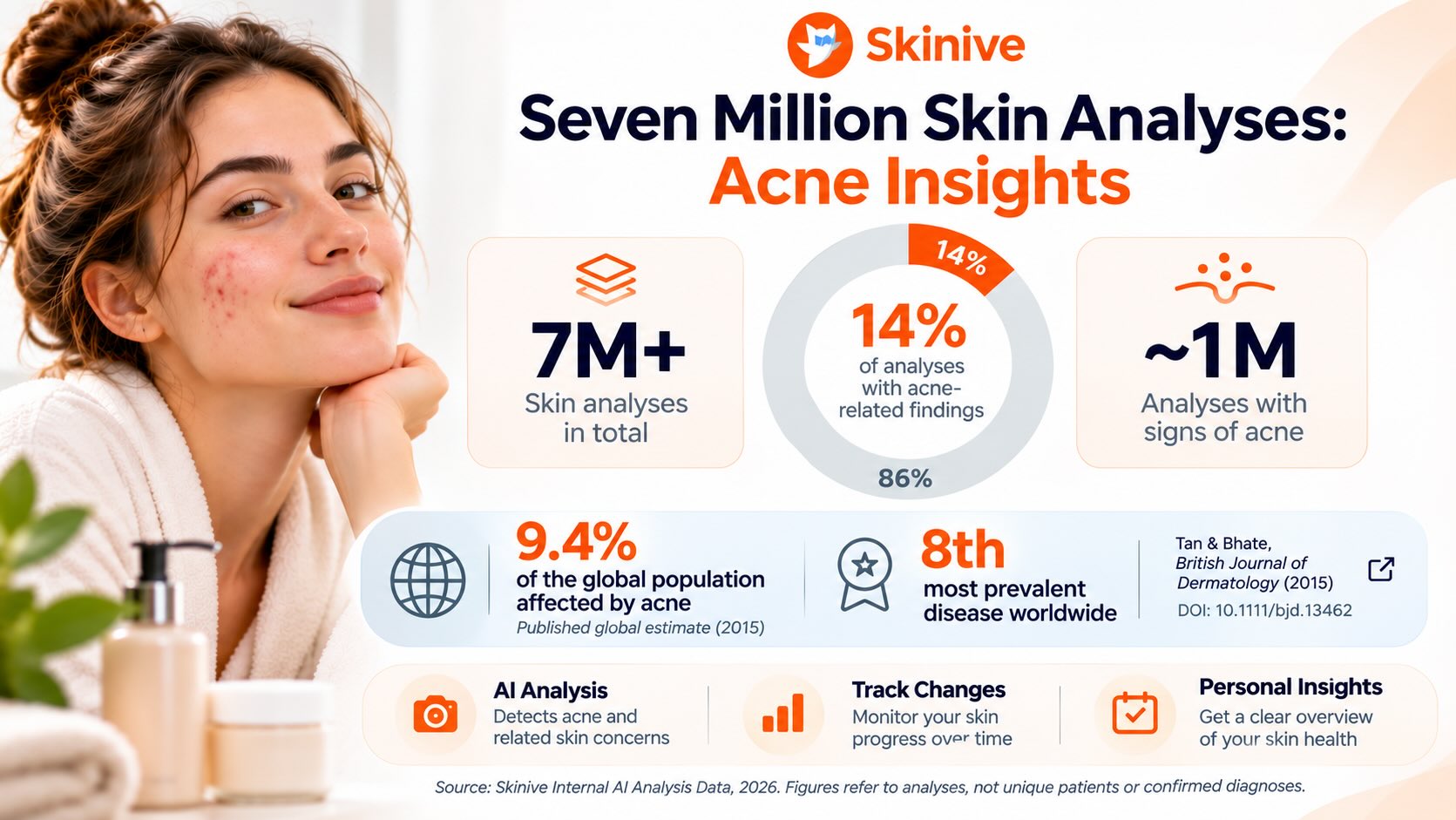
Real-World AI Dermatology Experience
Skinive is a specialised AI dermatology technology developed to analyse photographs of human skin and recognise visual characteristics associated with a wide range of dermatological conditions.
As of 2026, Skinive technology has performed approximately 7 million skin image analyses. Acne-related findings were identified by the AI system in nearly 1 million analyses, representing approximately 14% of all analysed images.
These figures highlight how frequently users turn to digital skin analysis tools with concerns related to acne and breakouts.
Skinive in Numbers
7M+ Skin Image Analyses
Real-world skin image assessments performed using Skinive technology.
~1M Acne-Related Findings
Analyses in which the AI system identified visual characteristics associated with acne.
~14% of All Analyses
The approximate proportion of Skinive analyses involving acne-related AI findings.
Unlike general-purpose beauty filters or selfie enhancement tools, Skinive focuses on dermatological image analysis and skin awareness. Its technology is designed to recognise visual patterns associated with multiple skin conditions, including acne and other follicular disorders.
This experience supports Skinive’s approach to making AI-powered skin monitoring more accessible to consumers.
Source: Skinive internal aggregated analysis statistics, 2026. Figures represent image analyses rather than unique individuals. AI-identified findings are not equivalent to clinically confirmed diagnoses, and these figures do not establish diagnostic accuracy.
Learn more about the technology, published research, and available validation evidence in the Skinive Clinical Evidence Hub & Real world insights from 6.5M skin analyses.
What Is an AI Acne Scanner App?
An AI acne scanner app is a mobile application that uses artificial intelligence to examine photographs of the skin and identify visual patterns that may be associated with acne or other skin concerns.
Unlike a standard smartphone camera, an AI skin scanner processes the captured image using a computer vision model trained to recognise dermatological features.
Skinive allows users to photograph areas of concern, receive informational AI analysis, and maintain a history of previous skin assessments. This makes it useful both for exploring current skin concerns and for monitoring visible changes over time.
The app can support skin awareness by helping users recognise patterns associated with common skin conditions. However, it cannot determine every underlying cause of acne, guarantee that a particular lesion has been correctly classified, or replace a dermatologist’s clinical examination.
Real-Time AI Acne Scanner: Check Your Skin with Your Phone Camera
Unlike many web-based acne checkers that require uploading a photo, Skinive offers a real-time AI skin scanner directly within its mobile app. Simply point your smartphone camera at the area of concern to receive instant visual feedback, helping you capture a suitable image for AI analysis.
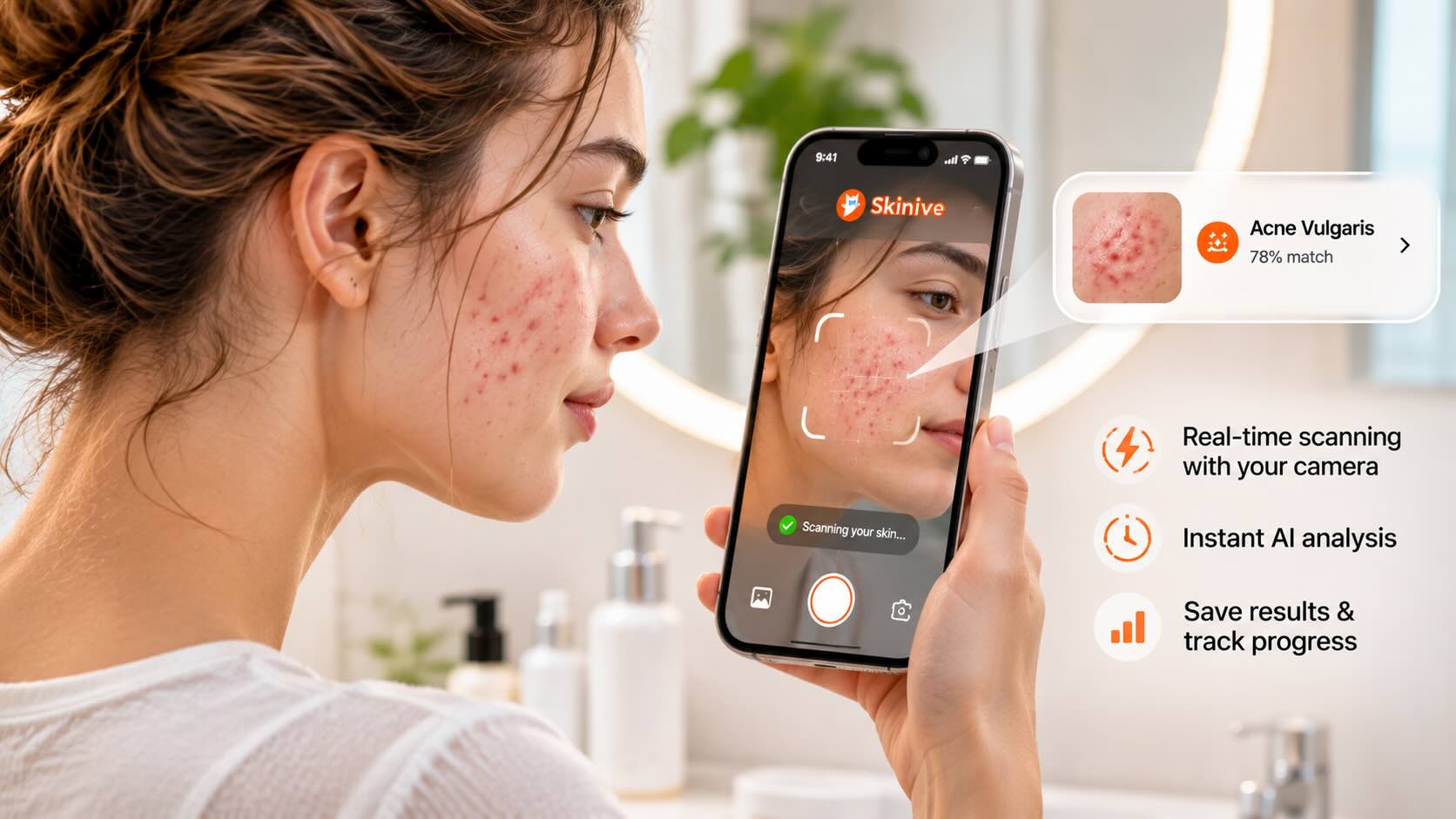
This camera-based experience makes checking visible acne and other skin concerns quick and convenient, without repeatedly uploading photos through a browser. Once an image is captured and analysed, you can review the AI findings, save your results, and track visible skin changes over time.
From real-time scanning to long-term acne tracking — Skinive brings both experiences together in one mobile app.
How Does Skinive’s AI Acne Scanner Work?
Using Skinive is straightforward. Open the app, capture a clear photograph of the affected skin area, and submit the image for AI analysis. The technology evaluates visible image characteristics and provides an informational assessment based on recognised dermatological patterns.
Users can review the results, explore educational information about relevant skin conditions, and save assessments for future reference.
For the best image quality, photograph the skin in good natural or even lighting, avoid beauty filters, and ensure that the affected area is clearly visible.
Skin Scanner app – Try now
Which Types of Acne Can Skinive Analyse?
AI Recognition of Acne and Related Skin Conditions
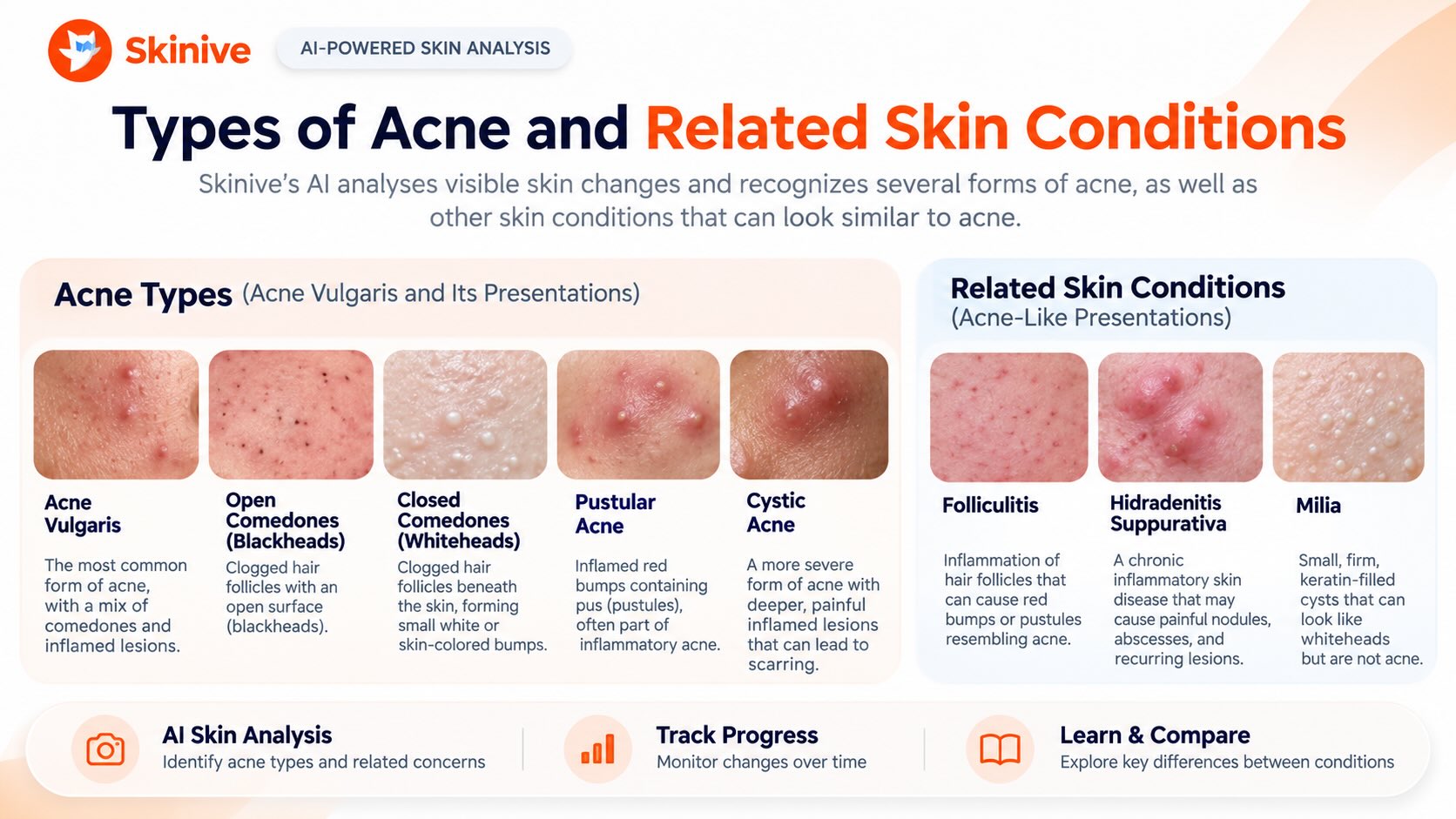
Acne can appear in several forms, and different skin conditions may produce similar-looking bumps, spots, or inflammatory lesions. Skinive’s dermatological AI covers visual patterns associated with several acne presentations and related follicular disorders. Understanding these categories can help users interpret their skin concerns more accurately and recognise when professional medical advice may be appropriate.
Acne Vulgaris
Acne vulgaris is the most common form of acne. It develops when hair follicles become blocked by sebum and dead skin cells, with inflammation contributing to the formation of various lesions. It commonly affects the face, chest, shoulders, and back. Depending on the individual, acne vulgaris may involve comedones, papules, pustules, or deeper inflammatory lesions. Skinive provides AI-powered information about visual characteristics associated with acne vulgaris and allows users to document their skin’s appearance over time.
Blackheads and Whiteheads (Open Comedones & Closed Comedones)
Comedones are among the most recognisable manifestations of acne. Open comedones, commonly called blackheads, appear as small dark spots where the follicular opening remains exposed. Their dark colour results primarily from oxidation of material within the follicle rather than dirt.
Closed comedones, or whiteheads, form when the follicular opening is blocked, creating small, skin-coloured or whitish bumps beneath the surface.
Comedonal acne is often less inflamed than other acne presentations, but persistent cases may still benefit from medical treatment. Recognising these visible differences can help users better understand their skin and discuss suitable care options.
Pustular Acne
Pustular acne is characterised by inflamed lesions containing visible pus. These often appear as red bumps with a white or yellow centre and may occur alongside papules and comedones. Pustules are associated with inflammatory acne and can vary in number and distribution. Persistent or extensive inflammatory acne may require treatment beyond routine cosmetic skincare. Skinive can provide informational image analysis of visual characteristics associated with pustular acne, helping users document these concerns and monitor changes.
Cystic Acne
Cystic acne is commonly used to describe severe inflammatory acne involving deep, painful lesions beneath the skin. In clinical practice, nodules and cyst-like lesions may require careful differentiation. These forms of acne can be associated with a higher risk of scarring and often require professional medical treatment. An AI acne scanner may recognise visual patterns associated with severe inflammatory acne, but it cannot reliably assess the depth of a lesion or establish its diagnosis from a photograph alone.
If you experience painful, deep, persistent, or scarring acne, consult a dermatologist rather than relying on self-monitoring.
Other Skin Conditions That Can Look Like Acne
Why Not Every Pimple Is Acne
One of the challenges of assessing skin concerns from photographs is that several dermatological conditions can resemble acne. Skinive’s AI technology covers visual patterns associated with additional follicular and skin conditions, including folliculitis, hidradenitis suppurativa, and milia.
- Folliculitis is inflammation of the hair follicles. It may produce small red bumps or pustules resembling acne, but its causes and management can differ.
- Hidradenitis suppurativa is a chronic inflammatory skin disease that may cause painful nodules, abscesses, and recurrent lesions, particularly in areas where skin rubs together. It is not a form of ordinary acne and requires appropriate medical assessment.
- Milia are small keratin-filled cysts that commonly appear as firm white or yellowish bumps. They can resemble whiteheads but are not the same condition.
These distinctions illustrate why identifying a visible bump as simply a pimple may not provide enough information. Skinive offers educational AI image analysis across multiple dermatological categories, helping users explore possible visual similarities while recognising that clinical confirmation may be necessary.
Acne Management App: Understand Your Skin Before Choosing a Care Routine
Why Different Acne Presentations May Need Different Approaches
An acne analysis app can help users explore visible characteristics associated with acne and maintain a record of skin concerns. This information may be useful when discussing skincare products or treatment options with a qualified professional.
Acne management is not identical for everyone. The appropriate approach depends on lesion types, severity, skin sensitivity, medical history, and other factors.
|
Acne Presentation |
Common Characteristics |
General Care Considerations |
|---|---|---|
|
Comedonal acne |
Blackheads and whiteheads |
Suitable skincare and, when appropriate, topical acne treatments |
|
Mild inflammatory acne |
Small papules and occasional pustules |
Gentle skincare and evidence-based topical treatments |
|
Moderate inflammatory acne |
More numerous inflamed lesions |
Medical assessment may be appropriate; prescription treatment is sometimes needed |
|
Severe nodular or cystic acne |
Deep, painful inflammatory lesions |
Dermatological assessment and potentially systemic medication |
|
Acne-like follicular disorders |
Bumps or pustules resembling acne |
Different causes may require different medical approaches |
For example, skincare products designed for oily or acne-prone skin may help support a routine, but cosmetic products alone are not always sufficient to manage inflammatory acne. Conversely, severe acne should not be treated as a purely cosmetic concern.
Skinive does not prescribe medications or recommend an individual treatment plan. Its role is to support visual skin awareness and help users document information that may be useful when seeking professional advice.
Can AI Identify What Causes Acne?
Acne develops through several interacting biological processes, including changes in sebum production, follicular blockage, inflammation, and the activity of skin microorganisms. Hormonal factors, genetics, certain medications, and other influences may also contribute.
Although AI can analyse visible features in photographs, a skin image alone cannot reliably determine the underlying cause of acne.
A dermatologist may consider the distribution of lesions, medical history, age, hormonal factors, current skincare products, and other clinical information before recommending treatment.
Acne Tracker App: Monitor Your Skin Progress Over Time
See How Your Skin Changes, Not Just How It Looks Today
Acne is often a recurring condition. Breakouts may improve, return, or change in appearance over weeks and months, making it difficult to remember exactly how your skin looked at different stages.
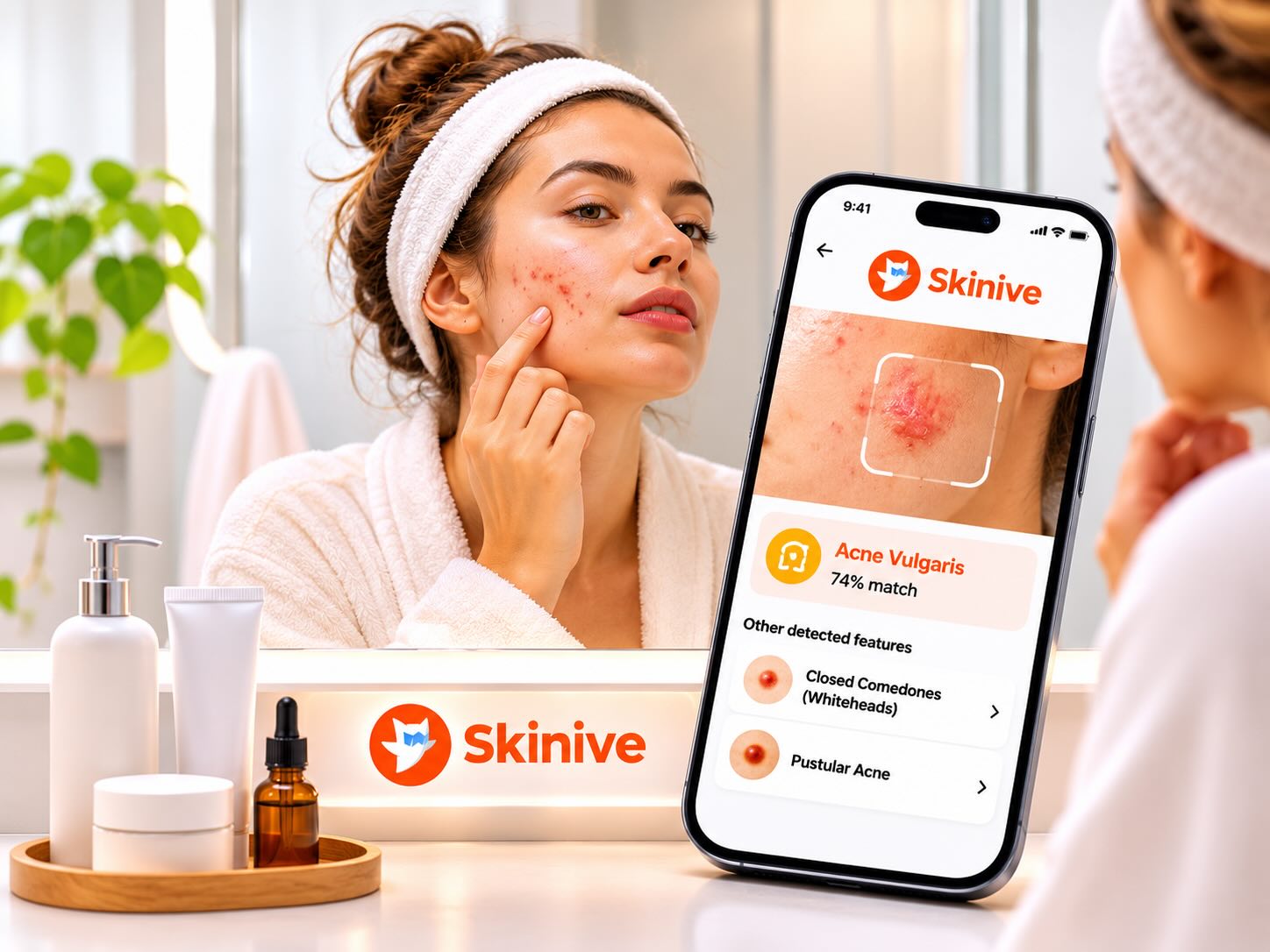
An acne tracker app helps users maintain a more consistent photographic record of their skin.
With Skinive, you can save previous skin assessments and return to them when you want to review your skin’s history. Instead of relying entirely on memory or scattered smartphone photographs, you can keep your skin monitoring information within one application.
Why Track Acne with Photos?
Photographic monitoring can be useful when you want to observe whether visible breakouts are changing, document new areas of concern, or explain your skin history during a dermatology consultation.
For more consistent photographs, try to use similar lighting, camera angles, and distances. Changes in lighting, makeup, camera processing, and skin positioning can make comparisons misleading.
A photo history may help you document visible changes, but it cannot establish whether a skincare product or medical treatment is effective. Treatment outcomes should be evaluated using appropriate clinical criteria.
Track Your Skin with Skinive AI app
Acne Monitoring App: Build a More Consistent Skin Check Routine
Keep Your Skin History in One Place
An acne monitoring app supports regular observation rather than a single skin check. This can be particularly useful for people who experience recurring breakouts or want to document changes while following a skincare routine.

Skinive combines AI-powered image analysis with personal skin assessment history, allowing users to revisit previous checks and monitor visible concerns over time.
A practical skin monitoring routine begins with a clear baseline photograph. Subsequent photographs can then be taken periodically, preferably under similar conditions, to maintain a useful record.
The purpose is not to examine every small blemish repeatedly, but to develop a consistent understanding of meaningful skin changes.
If acne becomes painful, spreads rapidly, causes scarring, or significantly affects your quality of life, seek professional medical advice rather than waiting for further changes to appear in your photo history.
Why Choose Skinive as Your Acne Scanner & Tracker App?
Specialised AI Dermatology Technology in Your Pocket
Skinive combines several capabilities that make it useful for people interested in acne analysis and skin monitoring.
AI-Powered Skin Analysis. Explore visible skin characteristics using technology developed specifically for dermatological image analysis.
Multiple Dermatological Categories. Skinive covers visual patterns associated with acne vulgaris, comedones, pustular and cystic acne, and several acne-like skin conditions.
Personal Skin History. Save and revisit previous skin assessments to support ongoing monitoring.
Educational Information. Learn about skin conditions and understand why different presentations may require different approaches to care.
Accessible Mobile Experience. Use your smartphone to capture skin photographs and review informational AI results.
Three Free Skin Scans. New users can explore Skinive’s AI skin analysis capabilities before choosing a paid subscription.
Skinive’s technology is supported by ongoing AI development and a growing body of research and evaluation. Additional information about the company’s scientific publications and clinical evidence is available through the Skinive Clinical Evidence Hub.
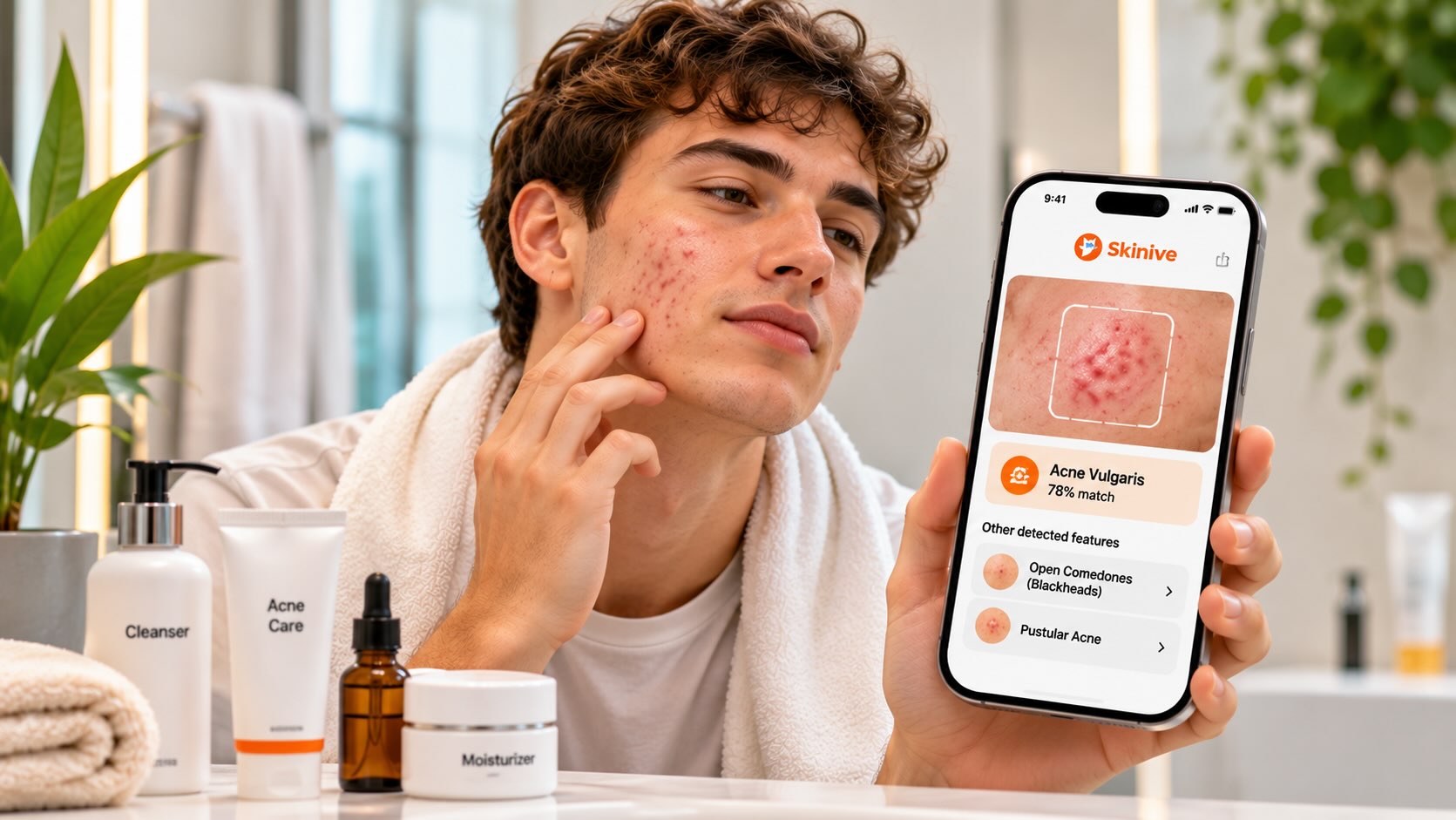
How to Use the Skinive Acne Scanner App
Four Simple Steps to Get Started
1. Download the Skinive App. Install Skinive on your iPhone or Android smartphone and create an account.
2. Capture a Clear Skin Photo. Photograph the area you want to analyse. Good lighting and image clarity are important for obtaining a useful result.
3. Review Your AI Skin Analysis. Skinive evaluates visible image characteristics and provides informational results, including relevant dermatological categories where supported by the model.
4. Save and Monitor Your Skin. Keep your assessment for future reference and return to the app when you want to document visible changes.
Skinive provides 3 free AI skin scans for new users, making it easy to explore its capabilities before subscribing.
Acne Scanner vs Acne Tracker vs Acne Monitoring App
Although these terms are closely related, they describe different aspects of digital skin assessment.
|
App Function |
Main Purpose |
How Skinive Helps |
|---|---|---|
|
Acne Scanner |
Examine the current appearance of the skin |
AI-powered image analysis |
|
Acne Analysis |
Explore visible characteristics associated with acne |
Informational assessment and dermatological education |
|
Acne Tracker |
Keep a history of skin changes |
Saved photographs and previous assessments |
|
Acne Monitoring |
Observe skin concerns over time |
Ongoing photographic skin checks and assessment history |
Learn More About Acne in the Skinive Dermatology Atlas
Skinive provides educational resources about acne and other skin conditions through its Dermatology Atlas.
The atlas includes information about acne vulgaris, blackheads, whiteheads, pustular acne, cystic acne, and several conditions that may resemble acne.
Each educational article explains characteristic symptoms and visual appearances, helping users explore the differences between dermatological conditions.
You can learn more about:
- Acne Vulgaris.
- Open Comedones (Blackheads).
- Closed Comedones (Whiteheads).
- Pustular Acne.
- Cystic Acne.
- Folliculitis.
- Hidradenitis Suppurativa.
- Milia.
Explore Acne Types in the Skinive Dermatology Atlas
These resources are intended for education and skin awareness, not self-diagnosis.