
A milium is a small superficial skin cyst that appears as a firm white bump. In simple terms, it is a “white dot” under the skin filled with keratin (a protein that makes up the skin) and sebum.
Unlike acne, milia are not related to pore blockage and are not inflammatory. They do not become red, do not hurt, and do not contain pus.
This condition is not contagious. Milia are common in newborns (where they often disappear on their own) as well as in teenagers and adults. Many people may develop them intermittently.
What to do if you suspect it
If you notice small white bumps on the skin that do not become inflamed and do not go away, it is worth showing them to a specialist.
The first step is to see a dermatologist. The doctor will confirm the diagnosis and advise whether treatment is needed.
Additionally:
- if there is significant cosmetic concern, a cosmetologist may be consulted
- if there are multiple lesions, internal factors (hormones, metabolism) may sometimes be evaluated
Important:
- do not try to remove milia yourself
- do not prick or squeeze them
- do not use harsh products
Self-removal attempts may damage the skin and lead to scarring.
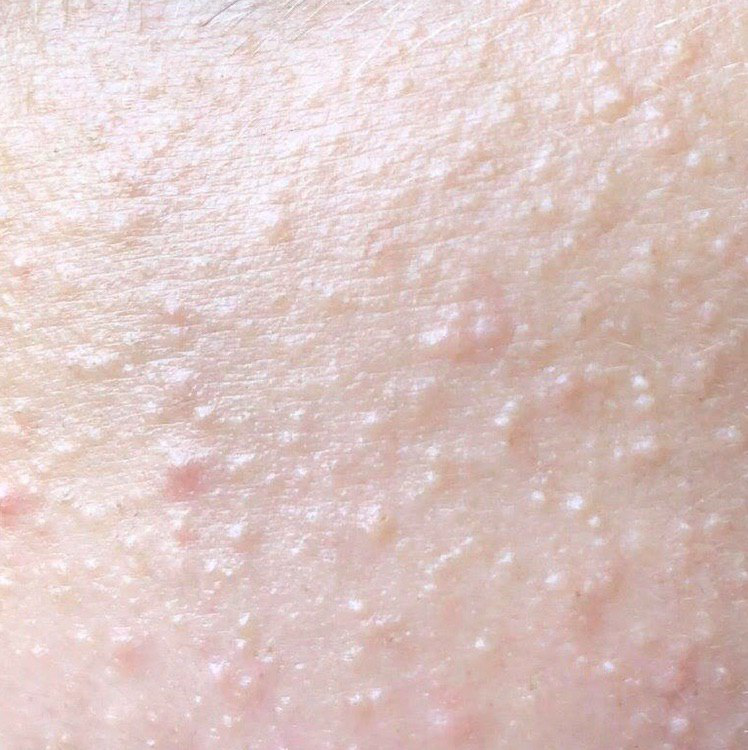
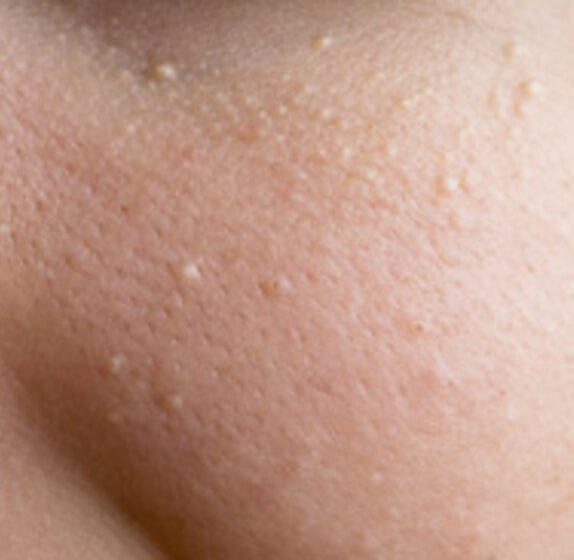
What it looks like
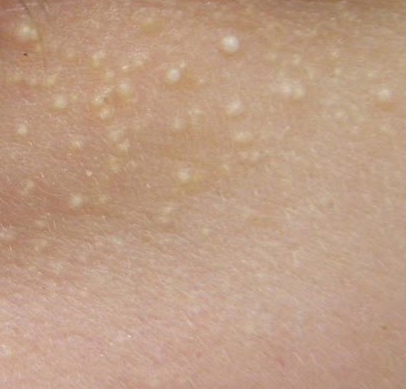
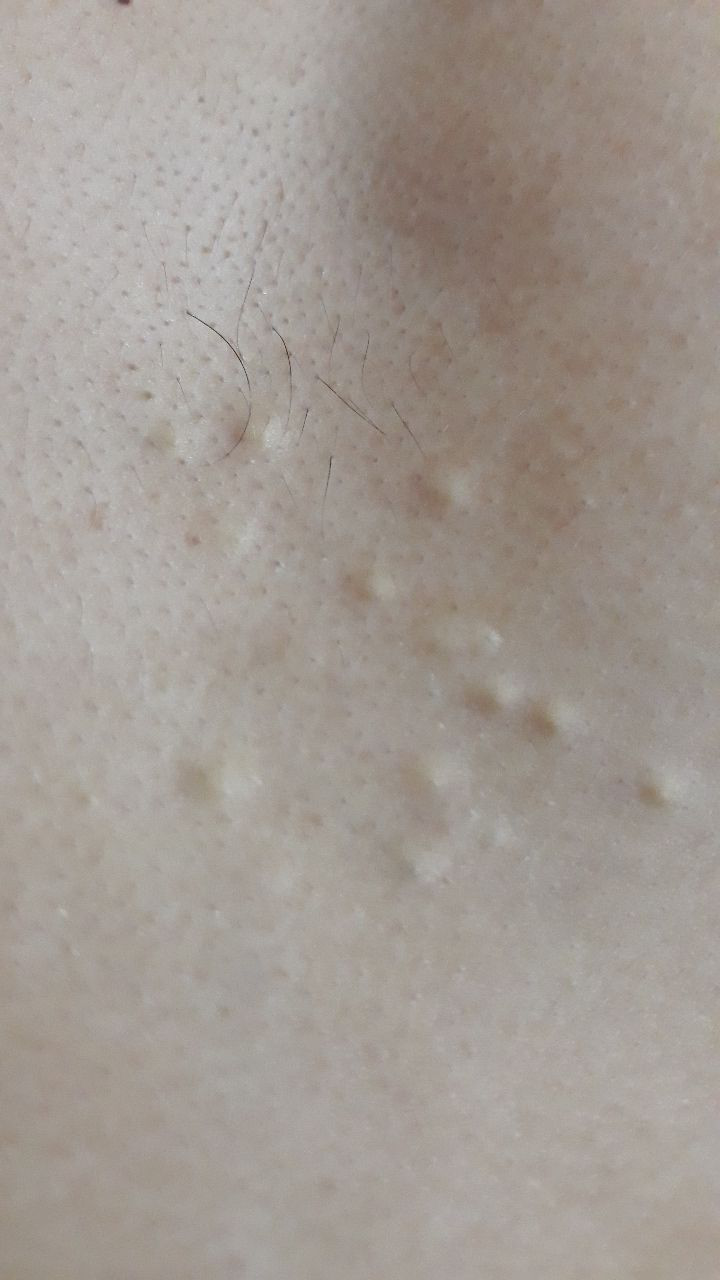
Milia have a characteristic appearance.
They look like:
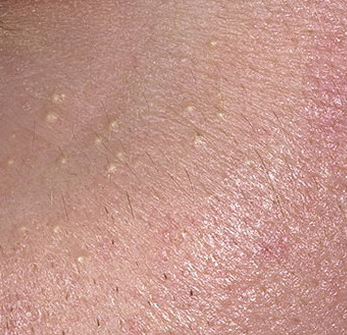
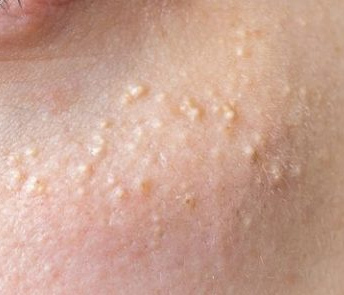
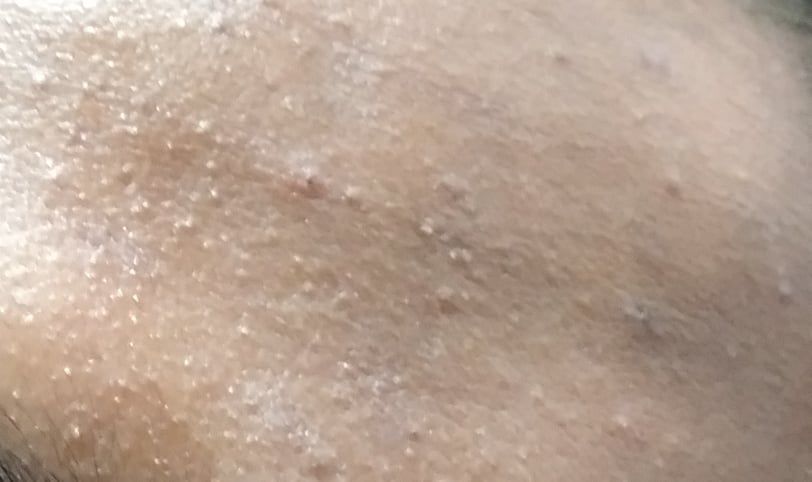
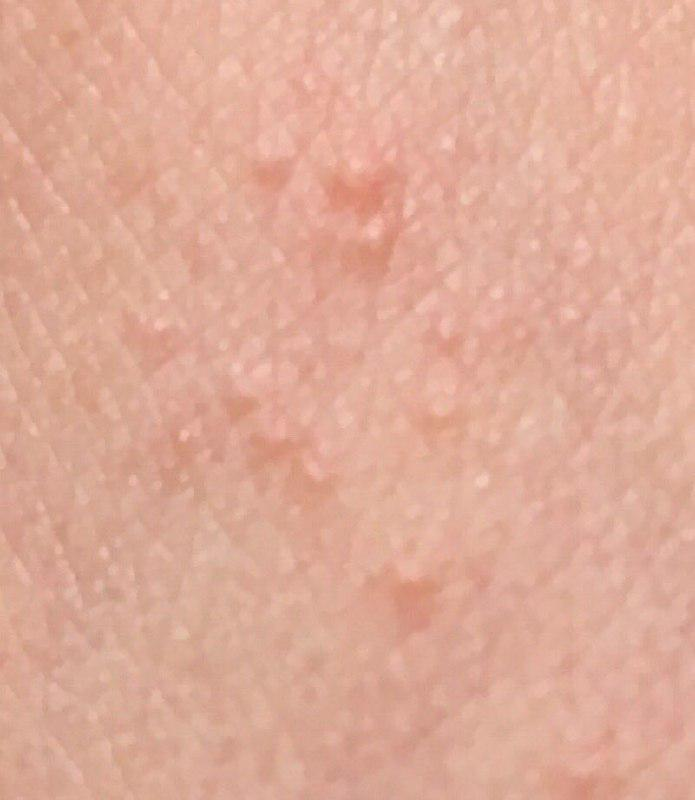
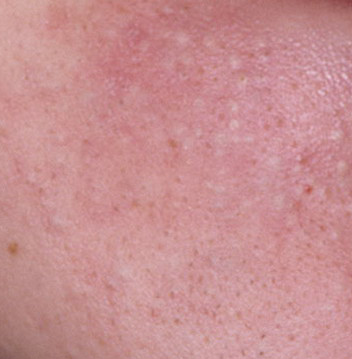
- small white or yellowish-white dots
- firm bumps under the skin
- smooth, rounded lesions
Features:
- usually 1–2 mm in size
- well-defined borders
- normal surrounding skin
- no redness or inflammation
They most often appear on the face:
- around the eyes
- on the cheeks
- on the nose
- on the chin
They can be single, but are more often found in groups.
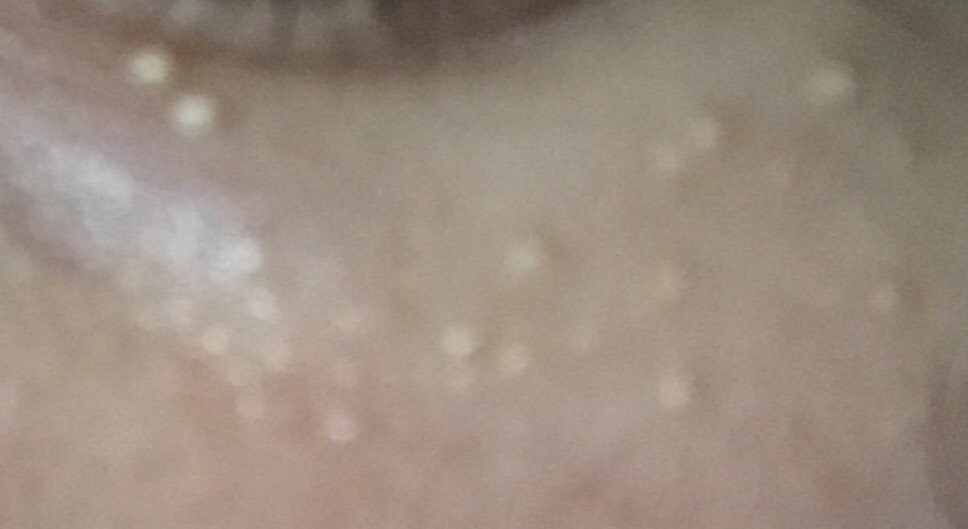
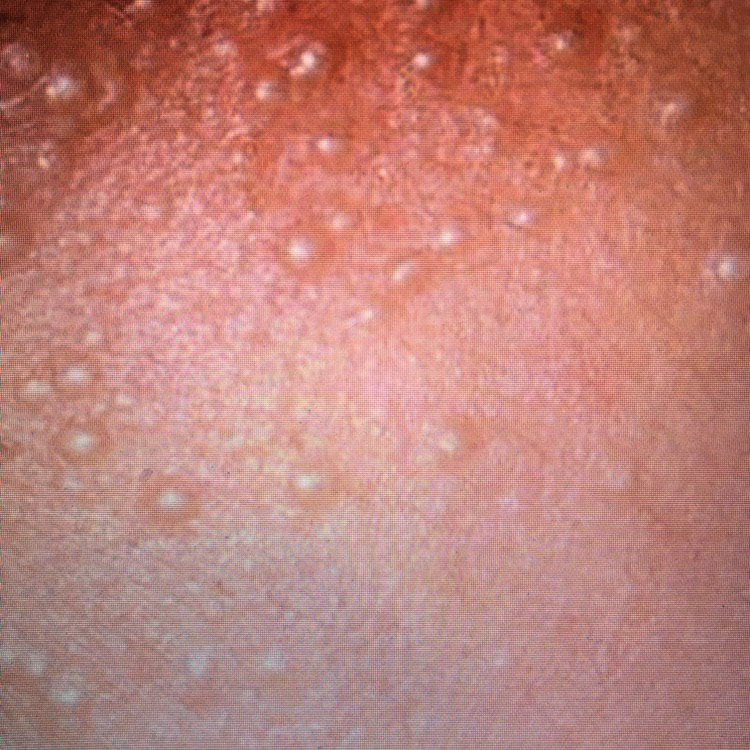
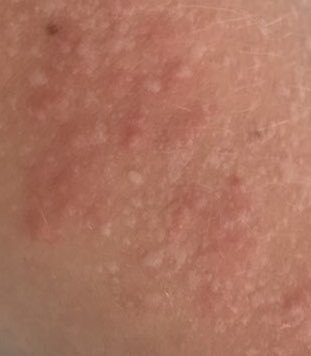
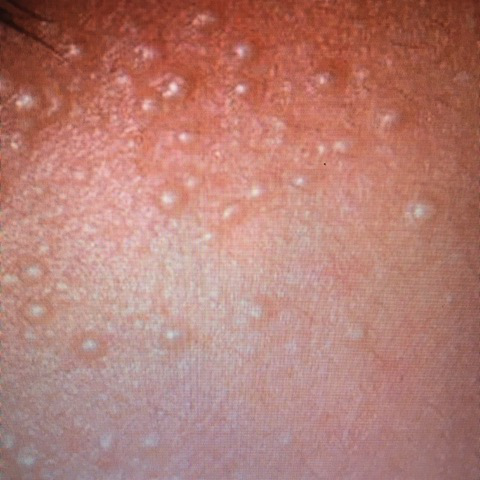
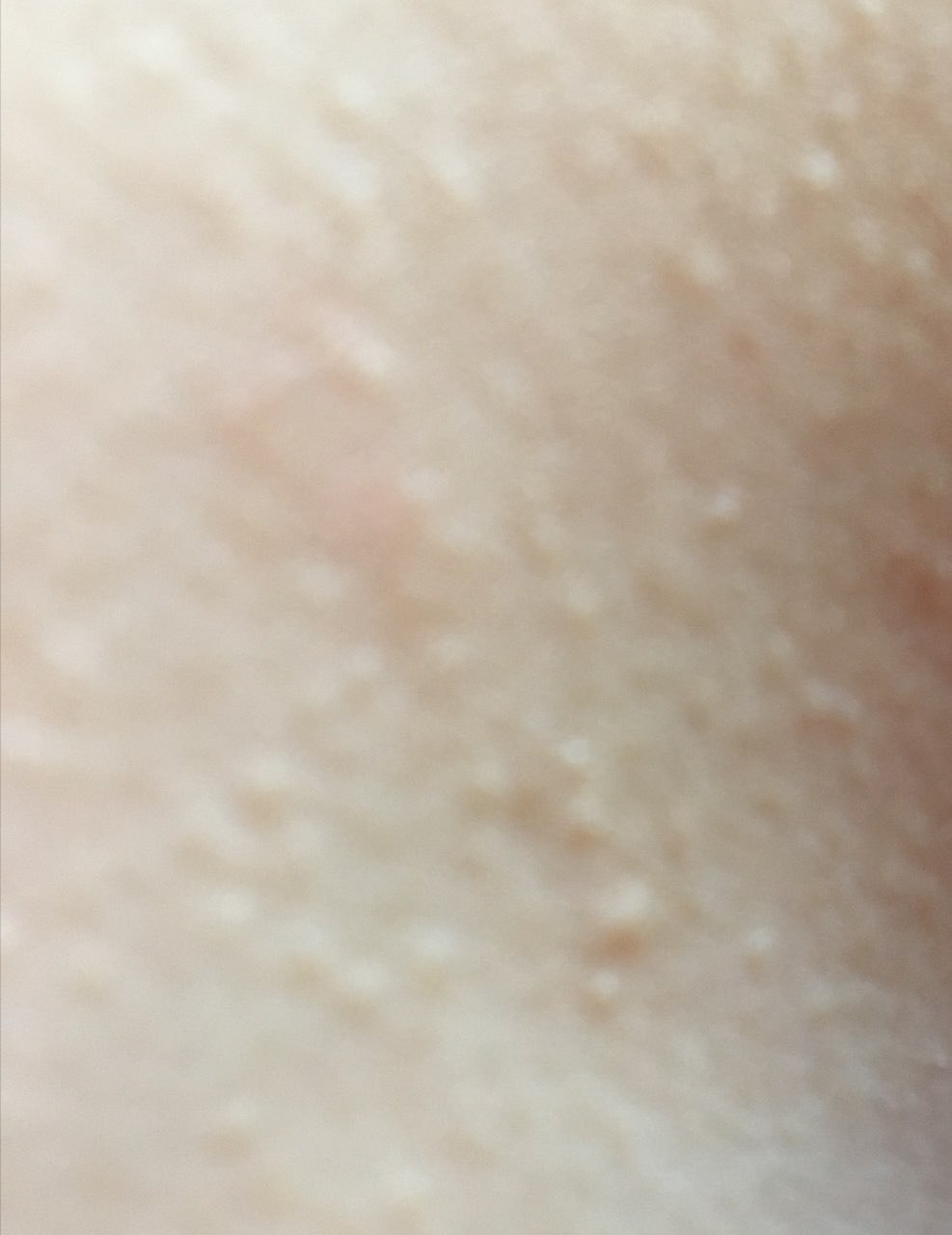
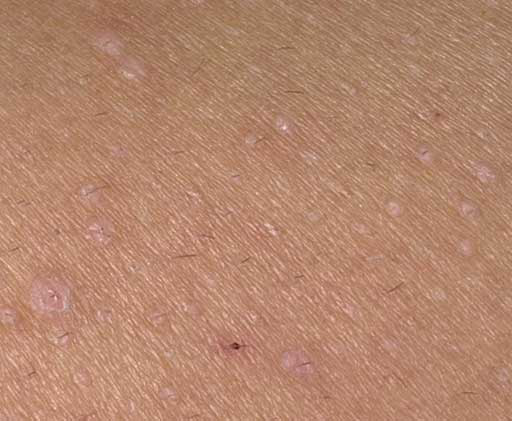
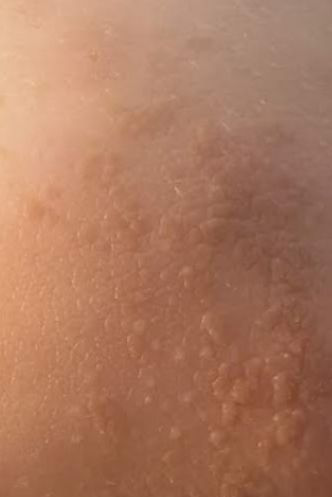
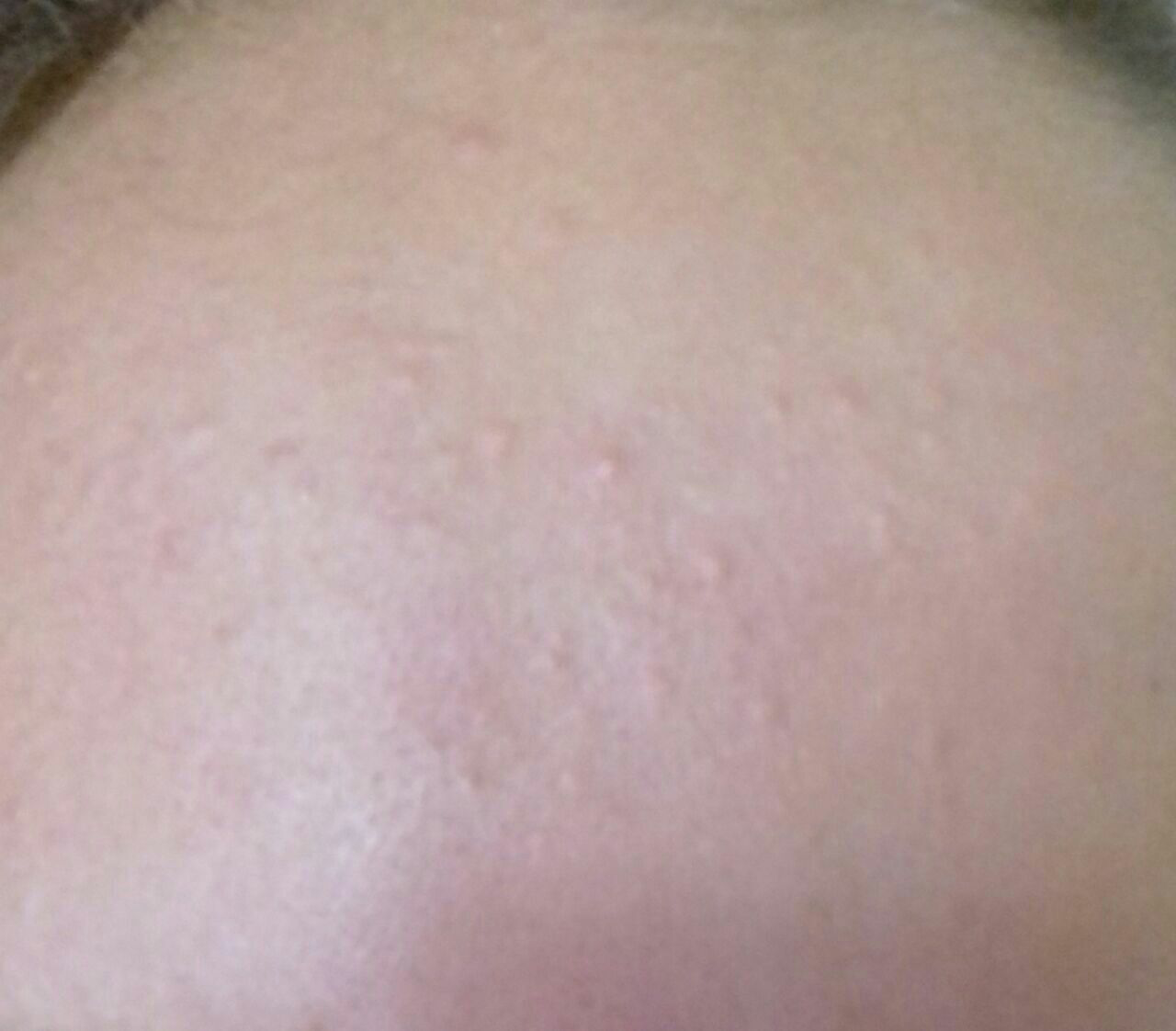
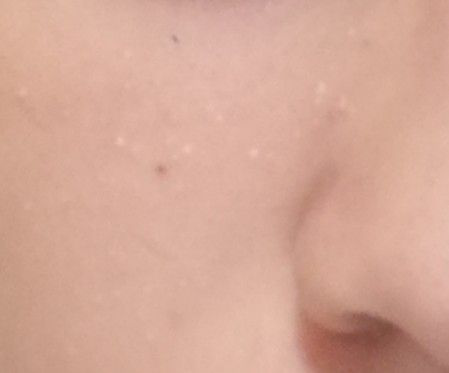
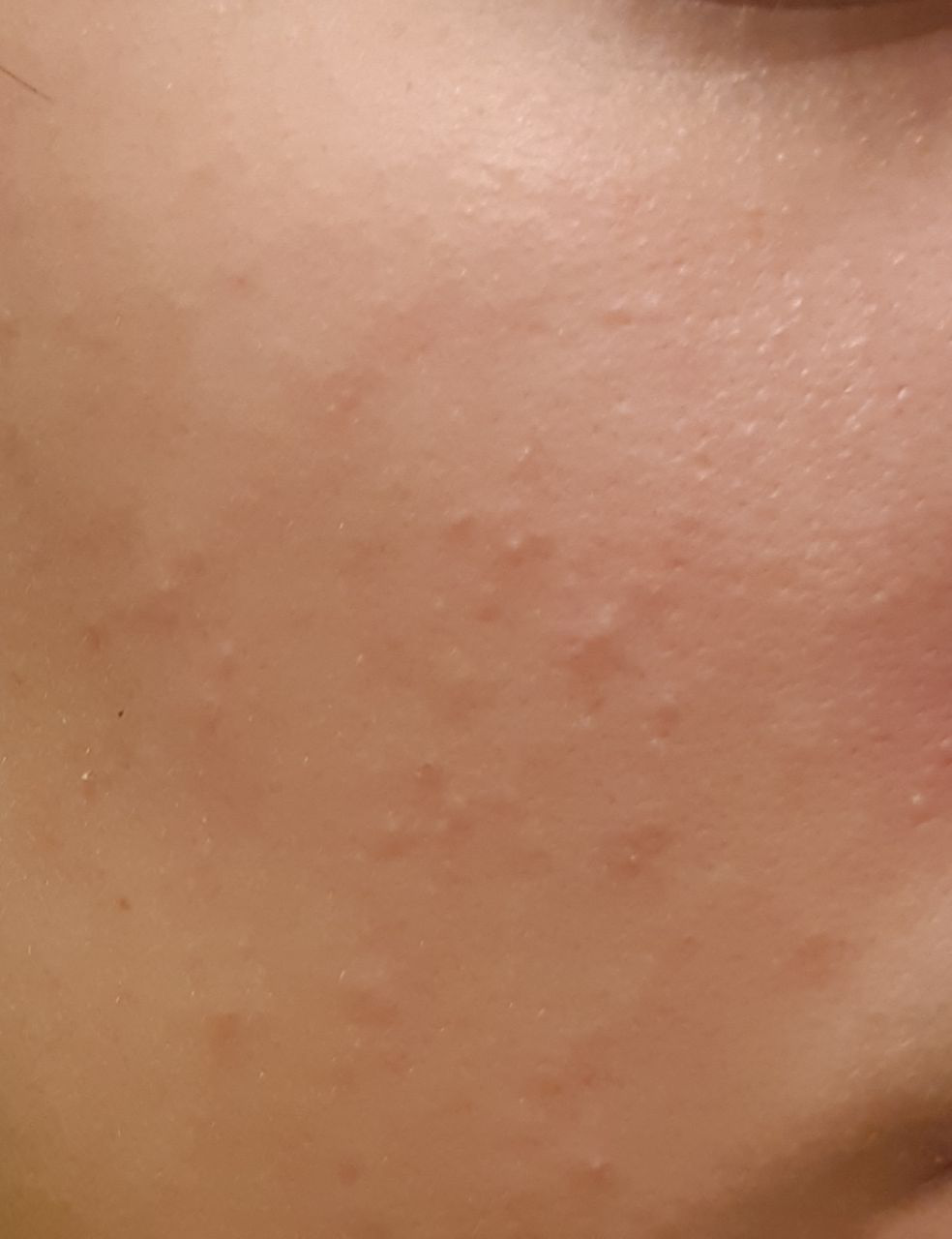
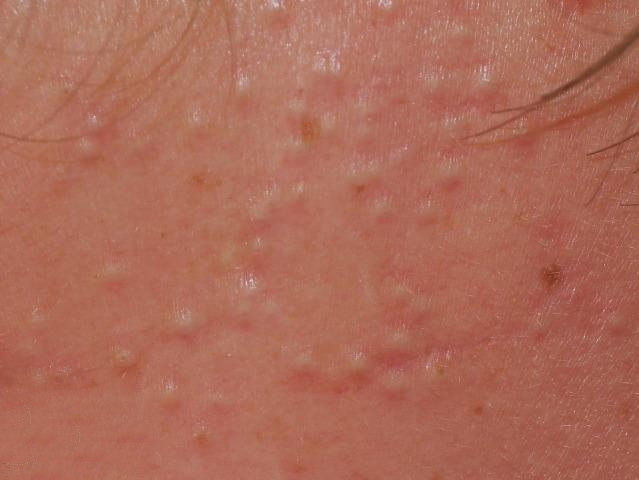
Below in the article you can view real photos to better understand how the condition looks.
Main symptoms
Milia usually do not cause discomfort.
Typical features:
- no pain
- no itching
- stable white lesions
- long-term persistence without changes
The main concern is cosmetic appearance.
Causes
Milia arise due to disruption of normal skin renewal processes.
External factors:
- excess UV exposure
- skin damage
- improper skincare
- unhealthy habits
Internal factors:
- increased formation of new skin cells
- slower shedding of old skin cells
- hormonal changes
- metabolic disorders
- genetic predisposition
In simple terms: the skin renews faster than it sheds dead cells, which become trapped under the surface and form a small white cyst.
How it develops
Normally, skin cells gradually move to the surface and are shed.
In milia:
- new cells form too quickly
- old cells fail to shed properly
- they accumulate beneath the skin surface
Over time, a small keratin-filled cyst forms — this is a milium.
Unlike acne, there is no inflammation and no involvement of pores.
Forms and types
Milia can be:
- primary — arise spontaneously, often in newborns and adolescents
- secondary — appear after skin damage (e.g., injury or inflammation)
Usually, lesions are similar in appearance and size.
When to see a doctor
You should see a dermatologist if:
- the number of milia increases
- they do not disappear over time
- they appear in unusual locations
- skin appearance worsens
Also seek medical advice if:
- lesions are damaged
- their appearance changes
- new sensations develop
Treatment
Management depends on the number of lesions and cosmetic concern.
If there are few lesions
Treatment may not be needed — milia can sometimes resolve on their own.
If treatment is required
Main approaches:
Removal
The primary method is careful extraction by a specialist using sterile instruments.
Procedural methods
For multiple lesions, laser, radiofrequency, or electrocautery methods may be used.
Prevention
After removal, it is important to address factors that contribute to recurrence.
Important:
- there is no cream that reliably removes milia
- treatment should be performed by a professional
- self-removal may cause complications
Q&A
Can milia disappear without treatment?
Sometimes they do, but removal is often needed for faster results.
Are they dangerous?
No, milia are harmless but may cause cosmetic concern.
Why do they come back?
If contributing factors are not addressed, new lesions may form.
Are milia acne?
No, they are a different condition not related to pore inflammation.
Can they be squeezed?
No, this may damage the skin and cause scarring.
Why do they appear around the eyes?
The skin there is thin and delicate, so milia are more common in that area.
How long does treatment take?
Removal is usually quick, but multiple sessions may be needed for many lesions.
Can their appearance be prevented?
Risk can be reduced with proper skincare.
Check Your Skin Instantly
Use the Skin disease scanner – SKinive AI to take a photo of a skin lesion and get an AI-based risk assessment. It helps determine whether professional consultation is recommended, giving you fast guidance and peace of mind.
Medical sources and references
- American Academy of Dermatology (AAD)
- European Academy of Dermatology and Venereology (EADV)
- Fitzpatrick’s Dermatology, 9th Edition
- Bolognia Dermatology, 4th Edition
- Journal of the American Academy of Dermatology (JAAD)
- World Health Organization (WHO) guidelines on skin conditions
🇬🇧 Milia: Diagnosis and Treatment in the UK
If you notice milia (small white or yellow bumps on the skin), it’s important to get a professional opinion. In the UK, you can access dermatology care via the NHS, private clinics, or online dermatology consultations.
👉 How to See a Dermatologist in the UK NHS – This main guide explains how NHS referrals work, what to expect from specialist dermatology services, and how to choose between public and private care.
Dermatologists in Major UK Cities:
- Dermatologist in London
- Dermatologist in Manchester
- Dermatologist in Liverpool
- Dermatologist in Birmingham
- Dermatologist in Leeds
- Dermatologists in Other UK cities
Online Dermatology
If you prefer remote care or faster access, try online dermatology consultations. They allow dermatologists to review images, provide advice, and guide next steps without visiting a clinic. Read more in this article: Online Dermatologists in UK.
🇦🇺 Milia: Diagnosis and Treatment in Australia
If you notice milia (small white or yellow bumps on the skin), it’s important to get a professional opinion. In Australia, dermatology care is available via Medicare (public system), private clinics, or online consultations.
👉 How to See a Dermatologist in Australia – This main guide explains how referrals work through GPs and public clinics, what to expect from specialist dermatology services, and how to choose between public and private care.
Dermatologists in Major Australian Cities:
- Dermatologist in Sydney
- Dermatologist in Melbourne
- Dermatologist in Brisbane
- Dermatologist in Perth
- Dermatologist in Adelaide
- Dermatologists in other Australian cities
Online Dermatology
For faster access or remote care, online dermatology consultations allow dermatologists to review images, provide advice, and guide next steps without visiting a clinic. Read more in this article: Online Dermatologists in Australia.
Images of milia:
** Should you identify any copyright infringement regarding the images on this page, kindly reach out to us at info@skinive.com.
Furthermore, please be advised that these photos are not authorized for any purpose.