Sunscreen helps protect your skin from ultraviolet (UV) radiation, reducing the risk of sunburn, premature skin aging and skin cancer when used correctly. But choosing the right product is only the first step: how much you apply and when you reapply it also matter.
In this guide, you’ll learn how to choose a broad-spectrum sunscreen, understand SPF and build a practical sun-protection routine. You’ll also discover how the UV Index can help you plan your time outdoors.
Why Sunscreen Is Important for Skin Health
UV radiation affects the skin even when you do not notice an immediate change. Repeated exposure can cause damage that builds up over time.
Helps Reduce Sunburn
Sunburn is an inflammatory response to excessive UV exposure. Depending on its severity, the skin may feel hot, painful or swollen, and blisters can appear.
Sunscreen helps reduce the amount of UV radiation reaching your skin when applied correctly. However, no sunscreen blocks all UV rays or guarantees that you will not burn.
Helps Prevent Premature Skin Aging
Long-term UV exposure contributes to visible signs of premature aging, including wrinkles, changes in skin texture and uneven pigmentation.
Regular sun protection can help limit further UV-related damage. It cannot completely reverse changes that have already occurred.
Helps Reduce Skin Cancer Risk
UV exposure from the sun and tanning beds is an important risk factor for skin cancer. Using sunscreen as directed, together with other protective measures, helps reduce that risk.
Sun protection matters for people of every skin tone. Although melanin provides some natural protection, darker skin can still experience UV damage and skin cancer.
UVA and UVB: Why Broad-Spectrum Protection Matters
Sunlight contains different types of ultraviolet radiation. The two most relevant to sunscreen are UVA and UVB.
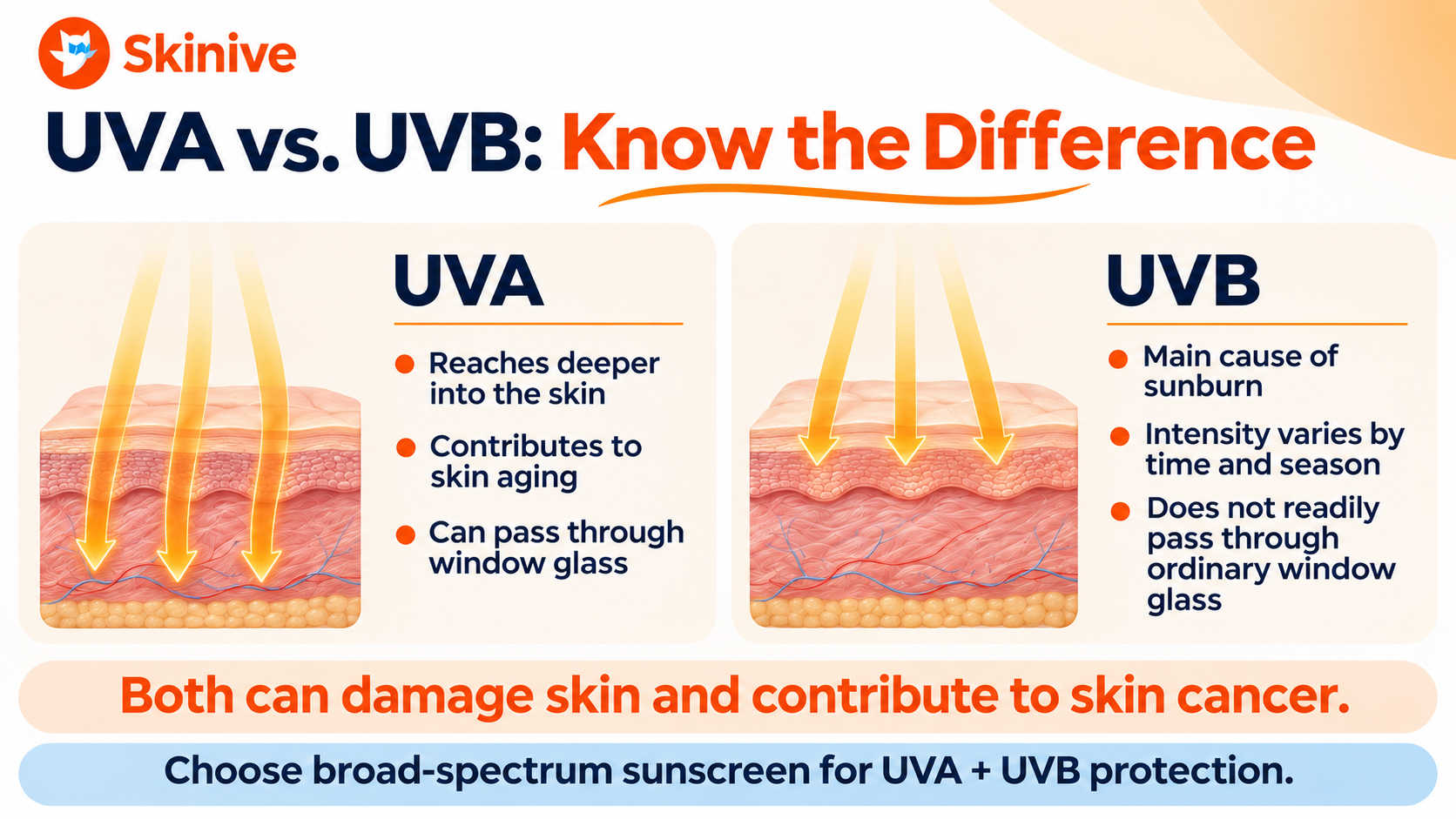
UVA rays contribute to premature skin aging, pigmentation changes and skin cancer. They can pass through clouds and glass.
UVB rays are a major cause of sunburn and also contribute to skin cancer.
Both can damage the skin. A sunscreen labelled broad spectrum is designed to protect against both UVA and UVB radiation.
What Does SPF Mean?
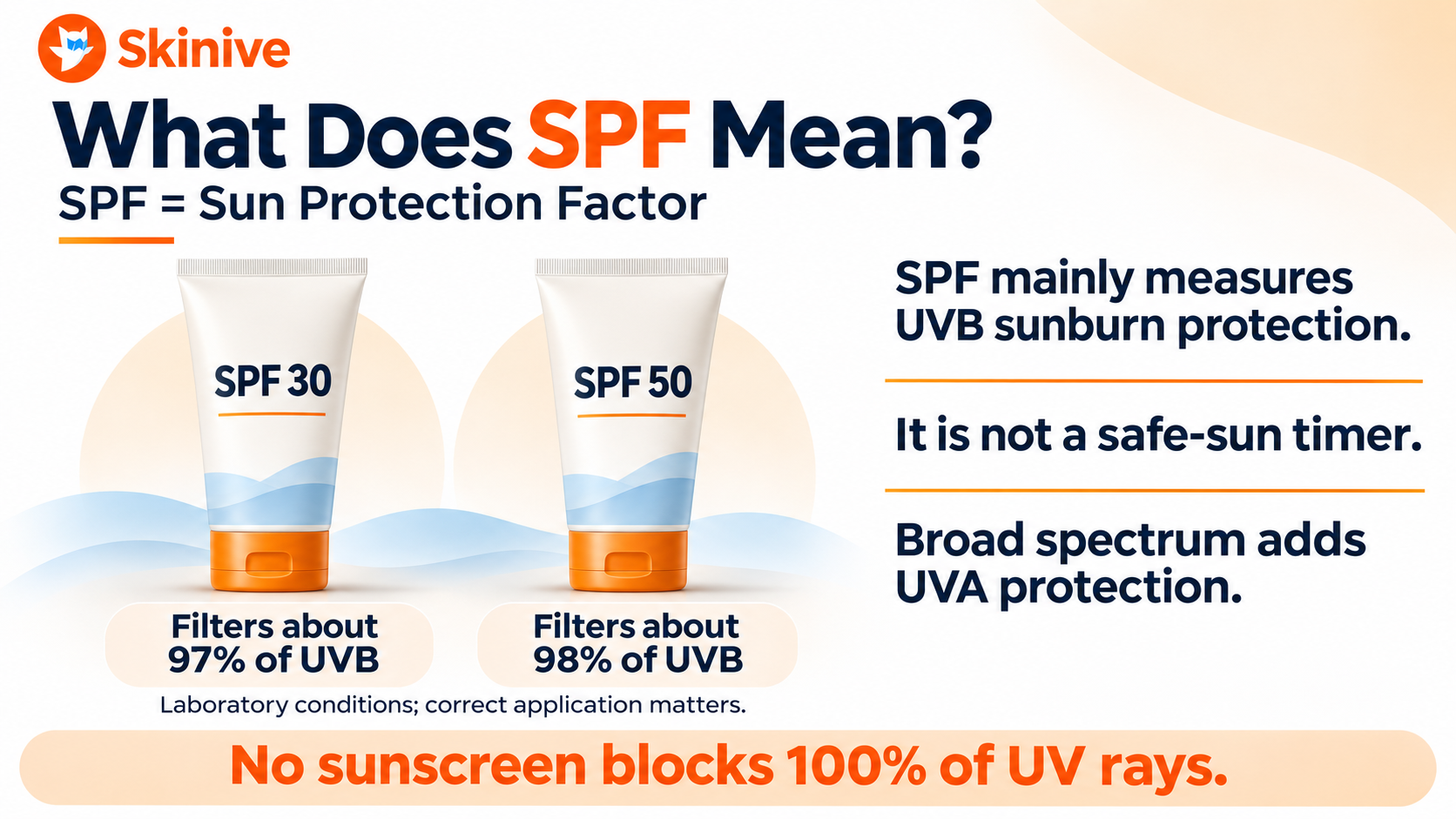
SPF stands for sun protection factor. It describes the protection a sunscreen provides against sunburn, primarily from UVB radiation, when the product is tested and used as directed.
A higher SPF provides greater UVB protection, but no sunscreen blocks all UV radiation. SPF also does not tell you exactly how long you can safely stay in the sun.
UV intensity, location, time of day, the amount of sunscreen applied and whether it has rubbed or washed off all affect your exposure.
SPF 30 vs. SPF 50
Under laboratory testing conditions:
- SPF 30 filters approximately 97% of UVB radiation.
- SPF 50 filters approximately 98% of UVB radiation.
Both can be useful choices when they provide broad-spectrum protection. A higher SPF may be appropriate for people with increased sensitivity to the sun or a higher risk of sun damage.
In everyday use, applying enough sunscreen and reapplying it matters. A high-SPF product cannot provide its labelled level of protection if you apply too little or miss areas of skin.
How to Choose the Right Sunscreen
Look for Broad-Spectrum Protection
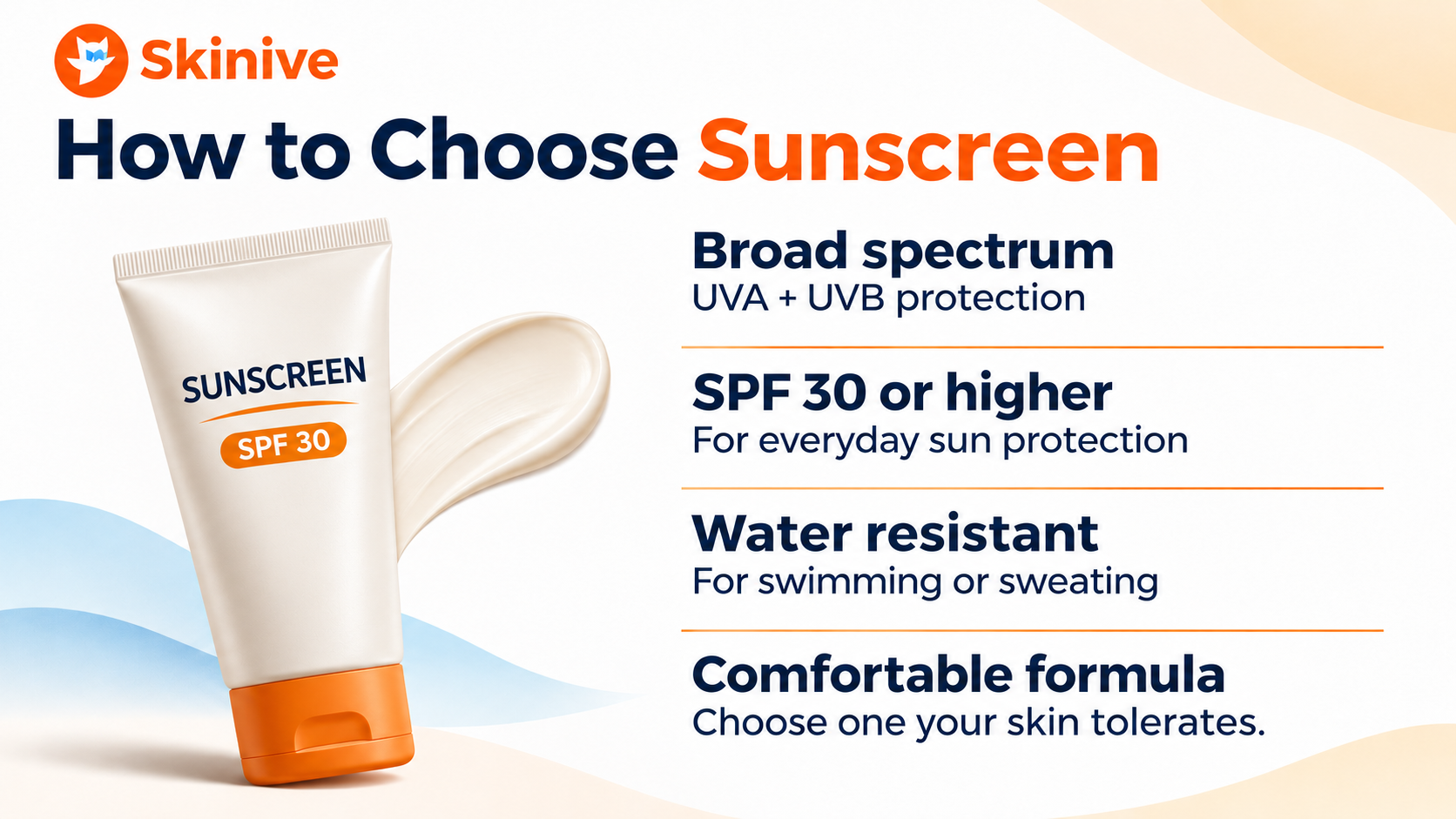
Choose a sunscreen labelled broad spectrum to help protect against both UVA and UVB rays. The SPF number primarily describes protection against UVB-related sunburn, so the broad-spectrum label provides important additional information.
Choose SPF 30 or Higher
For most everyday situations, a broad-spectrum sunscreen with SPF 30 or higher is a practical starting point. If you have a history of skin cancer, a condition affected by sunlight or another reason for increased sensitivity, ask a healthcare professional what is appropriate for you.
Find a Formula That Suits Your Skin
The best sunscreen is one that you can apply generously and use consistently.
- Oily or acne-prone skin: A lightweight gel or lotion may feel more comfortable. If clogged pores are a concern, look for a product labelled non-comedogenic.
- Dry skin: A cream or moisturizing formula containing ingredients such as glycerin may be more comfortable.
- Sensitive skin: A fragrance-free product may be easier to tolerate. Some people prefer mineral sunscreens containing zinc oxide, titanium dioxide or both.
- Skin prone to dark spots: A tinted sunscreen may be an option, particularly if it is comfortable to wear and helps avoid a visible cast.
Skin can react differently to individual products. If a sunscreen consistently stings, burns or causes a rash, stop using it and ask a healthcare professional for advice if the reaction persists.
Consider Water Resistance
If you will be swimming or sweating, choose a water-resistant sunscreen and check the label for its stated duration of protection in water.
No sunscreen is completely waterproof or sweatproof. Reapply after swimming, sweating or towel drying, following the product instructions.
Mineral vs. Chemical Sunscreen: Which Is Better?
Sunscreens use different ingredients to protect against UV radiation.
Mineral sunscreens contain zinc oxide, titanium dioxide or both. They are often available in formulas designed for sensitive skin, although some may leave a visible cast.
Chemical sunscreens use other approved UV filters. They come in a wide range of textures and may be easier for some people to apply without a visible residue.
Both can provide effective protection when properly formulated and used as directed. Choose a product that offers broad-spectrum protection, has an appropriate SPF and feels comfortable on your skin.
How to Apply Sunscreen Correctly
Apply Before Going Outdoors
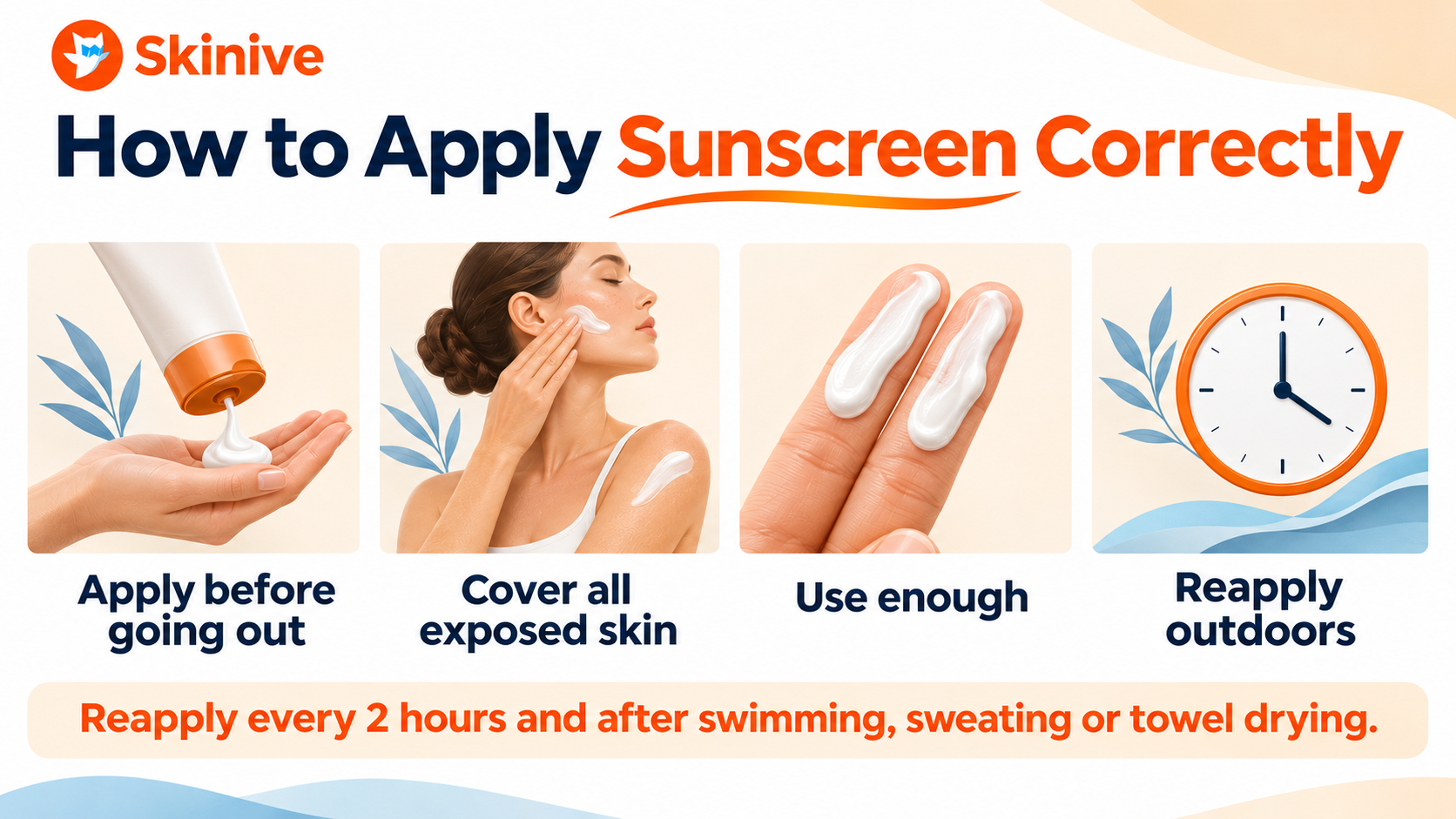
Apply sunscreen before sun exposure, following the directions on the product label. Many products are recommended approximately 15 minutes before going outside.
Use Enough Sunscreen
Most adults need approximately one ounce—about 30 mL—to cover exposed areas of the body. The amount varies depending on body size and how much skin is uncovered.
For the face, apply enough to cover the skin evenly and generously. A small dab may not provide the protection stated on the label.
Cover Easily Missed Areas
Apply sunscreen to exposed skin, including areas that are easy to overlook:
- Ears and neck.
- Hairline and exposed scalp.
- Backs of the hands.
- Tops of the feet.
- Lips, using an SPF lip balm.
A wide-brimmed hat can also help protect the scalp, ears and face.
Reapply Regularly
When outdoors, reapply sunscreen approximately every two hours, and after swimming, sweating or towel drying. Follow the label, as reapplication may be needed sooner.
When Should You Wear Sunscreen?
Sun exposure does not happen only at the beach. Walking, exercising outdoors, gardening or spending time outside during the workday can all add to your UV exposure.
Cloudy skies and cool temperatures do not reliably indicate that UV levels are low. UV intensity changes with the time of day, season, location and other conditions.
Check the UV Index when planning time outdoors, and consider your skin’s sensitivity, the length of exposure and your surroundings.
How Can the UV Index Help You?
The UV Index describes the strength of ultraviolet radiation at a particular place and time. Higher values mean a greater potential for damage to the skin and eyes.
| UV Index | Level | General guidance |
|---|---|---|
| 0–2 | Low | Consider your skin sensitivity and how long you will be outside. |
| 3–5 | Moderate | Use sun protection, including shade, clothing and sunscreen. |
| 6–7 | High | Take extra care, seek shade and cover exposed skin. |
| 8–10 | Very high | Reduce unnecessary exposure, especially around midday. |
| 11+ | Extreme | Minimize exposure during peak UV hours and use several protective measures. |
With the Skinive UV Index App, you can check UV conditions and forecasts for a selected location before heading outdoors.
A UV forecast is useful for planning, but it cannot guarantee that you will or will not get sunburned.
Track Your Sun Exposure with Skinive
Sunscreen is only one part of a sun-protection routine. Understanding the UV conditions and keeping track of time outdoors can help you make more informed choices.
The Skinive Sun Exposure and Tanning Timer lets you check the UV Index, select a skin phototype and include SPF information where applicable in an approximate exposure estimate.
The estimate is informational. It does not guarantee protection from sunburn or UV damage, account for every individual factor or establish a safe amount of tanning time. Continue to use sunscreen, shade and protective clothing, and do not use a timer as a reason to prolong sun exposure.
Can You Tan While Wearing Sunscreen?
Yes. Sunscreen reduces UV exposure but does not block it completely, so skin can still darken while you wear it.
A tan caused by UV radiation is a response to skin damage. Even without a visible sunburn, repeated tanning adds to cumulative UV exposure and can increase the risk of premature skin aging and skin cancer.
If you prefer the appearance of a tan, a self-tanning product can add color without UV tanning. A self-tanner does not necessarily contain sunscreen, so check the label and use sun protection separately.
Additional Ways to Protect Your Skin
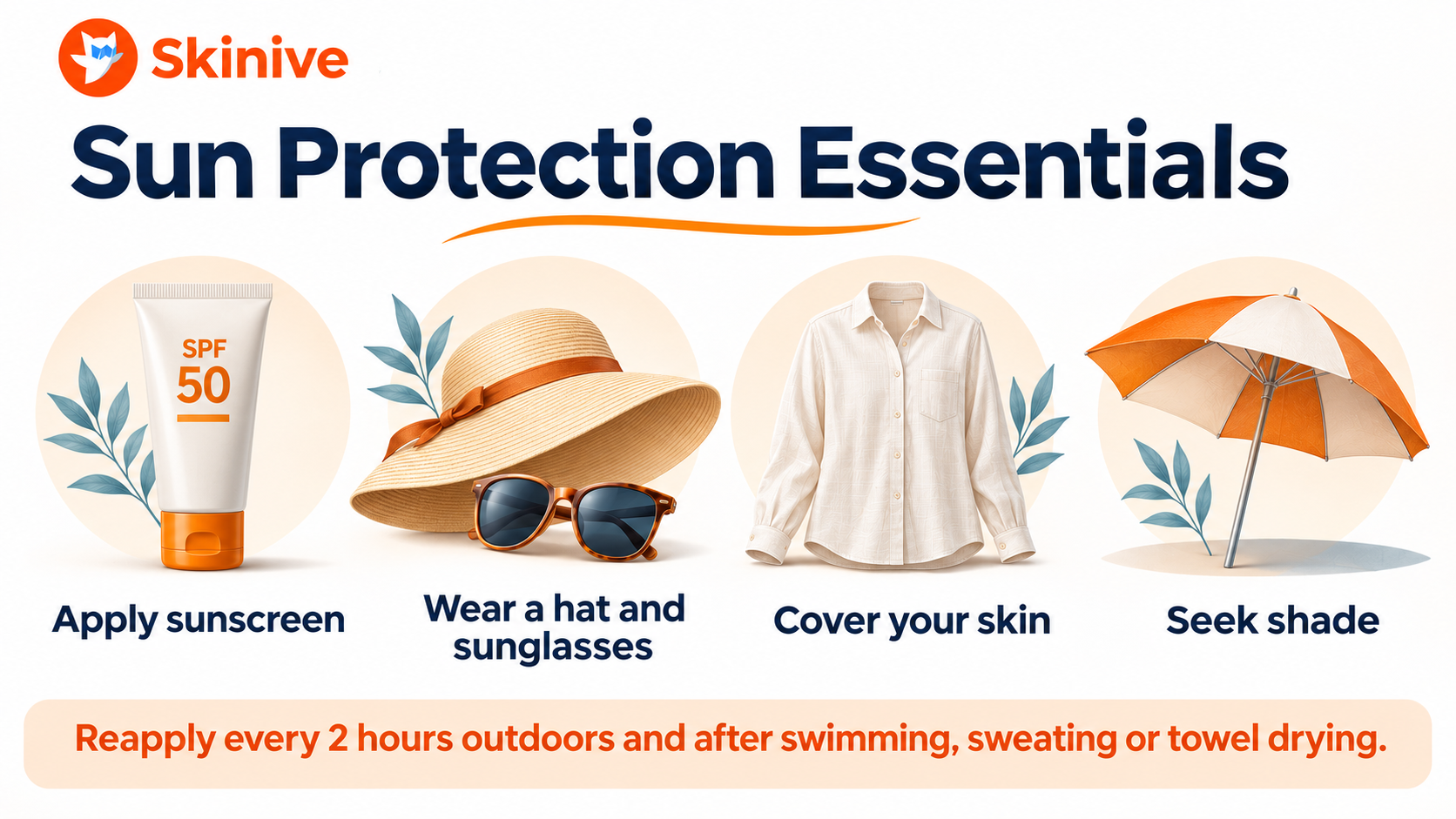
Combine sunscreen with other measures, particularly when UV levels are high:
- Seek shade: Reduce unnecessary exposure around midday, when UV radiation is often strongest.
- Wear protective clothing: Long sleeves, trousers and tightly woven fabrics can cover more skin.
- Choose a wide-brimmed hat: Protect your face, ears and neck.
- Wear UV-protective sunglasses: Your eyes also need protection.
- Take extra care near water, snow and sand: These surfaces can reflect UV radiation.
- Check your medicines: Some medicines can make skin more sensitive to sunlight. Ask a healthcare professional or pharmacist if you are unsure.
For babies under six months, prioritize shade and protective clothing and ask a healthcare professional for guidance about sunscreen.
Common Sunscreen Mistakes
Even a high-SPF sunscreen may not provide the expected protection if it is used incorrectly.
Common mistakes include:
- Applying too little sunscreen.
- Forgetting the ears, neck, hands or exposed scalp.
- Applying it only once during a long day outdoors.
- Assuming water-resistant means waterproof.
- Relying on makeup with SPF as the only sun protection.
- Using an expired product or storing it in excessive heat.
- Using sunscreen to justify spending longer in the sun.
Check the product label for application, reapplication and storage instructions.
Keep an Eye on Changes in Your Skin
Sun protection is one part of caring for your skin. Becoming familiar with your usual moles, spots and other visible features can help you notice changes over time.
Download Skinive to save skin observations and explore UV information. Skinive’s image-based results do not establish a diagnosis and cannot rule out skin cancer.
If you notice a new, changing, bleeding, painful or otherwise concerning spot, arrange an assessment with a qualified healthcare professional. You can also explore Skinive’s resources to find a dermatologist.
Build a Sun-Protection Routine That Works for You
Choose a broad-spectrum sunscreen with SPF 30 or higher, apply it generously and reapply when needed. Combine it with shade, protective clothing and sunglasses.
Checking the UV Index can help you plan your day, but no sunscreen, forecast or timer guarantees that UV damage will not occur. Consistent protection is what matters.