
Introduction
Finding a dermatologist in Darwin can sometimes be more challenging than in larger Australian cities such as Sydney or Melbourne. The Northern Territory has a smaller specialist workforce, meaning patients may experience longer waiting times for public dermatology appointments and limited clinic availability in some areas. Because of this, many residents rely on a combination of GP referrals, private skin clinics, telehealth consultations, and online skin assessment tools for faster access to care.
People in Darwin commonly seek dermatology services for acne, eczema, psoriasis, rosacea, skin infections, tropical skin conditions, and mole checks. Due to the Territory’s intense UV exposure and outdoor lifestyle, skin cancer screening and melanoma detection are especially important. Both Medicare-supported public pathways and private dermatology clinics are available, although costs and waiting times vary significantly depending on the type of care.
Online dermatology services have also become increasingly popular in Darwin, particularly for patients living in remote parts of the Northern Territory. Telehealth consultations and AI-supported skin monitoring tools can help people assess symptoms earlier and decide whether urgent medical attention is required.
👉 How to see a dermatologist in Australia — practical guide
When should you see a dermatologist?
Many skin conditions can initially appear mild but gradually become more difficult to manage without specialist treatment. In Australia, most people begin by visiting a GP, who may then provide a referral to a dermatologist if specialist care is needed.
Common skin conditions
Dermatologists in Darwin regularly diagnose and treat:
- Acne and hormonal breakouts
- Eczema and dermatitis
- Psoriasis
- Rosacea
- Fungal and bacterial skin infections
- Pigmentation disorders
- Chronic rashes
- Hair and nail disorders
Darwin’s tropical climate can also contribute to heat-related skin irritation, fungal infections, and flare-ups of inflammatory conditions. High humidity and year-round sun exposure may worsen some skin diseases, especially in people with sensitive skin.
Warning signs
You should arrange a mole check or dermatology consultation if you notice:
- A mole changing shape, colour, or size
- Bleeding or crusting skin lesions
- A sore that does not heal
- Persistent itching or pain
- Rapidly growing spots
- New pigmented lesions appearing in adulthood
Australia has one of the world’s highest melanoma rates, making early detection especially important. Suspicious moles should never be ignored, particularly in high UV regions like the Northern Territory.
Check your skin before visiting a doctor
Skin analysis with Skinive
Skinive is a CE-marked medical software that provides AI-based skin analysis. It allows users to check moles and skin conditions anytime using their smartphone.
Key features:
- Available 24/7
- AI-supported risk assessment
- Mole monitoring over time
- Early detection support
Skinive helps users decide whether they need to see a GP or dermatologist, but it is not a replacement for a doctor. It works best as a first step in identifying potentially concerning skin changes.
How dermatology works in Australia
Australia operates a mixed public-private healthcare system, and dermatology services are available through both Medicare-supported pathways and private clinics.
Medicare & public system
In most cases, patients first visit a GP for an assessment. If specialist care is required, the GP provides a referral to a dermatologist. This referral is usually necessary for Medicare rebates.
Public hospital dermatology services may offer reduced-cost consultations through Medicare, but waiting times can be lengthy, especially in smaller cities and regional areas such as Darwin. Non-urgent patients may wait several months for appointments.
Key points about the public system:
- GP referral usually required
- Medicare partially covers specialist consultations
- Public hospital dermatology services available
- Longer waiting times common
- Lower out-of-pocket costs
Private dermatologists
Private dermatologists in Darwin generally provide faster appointments and greater flexibility. Patients can often book directly, although a GP referral may still be recommended to access Medicare rebates.
Private consultations usually involve out-of-pocket costs, even after Medicare rebates are applied. Some patients also use private health insurance to help manage procedural costs.
Private dermatology may be preferred for:
- Faster access
- Mole checks
- Cosmetic dermatology
- Ongoing acne treatment
- Skin cancer procedures
Private clinics usually offer shorter waiting times compared with public hospital systems.
Dermatology clinics in Darwin
| Clinic | Location | Services | Price |
|---|---|---|---|
| Royal Darwin Hospital Dermatology | Tiwi | Public dermatology, referrals, skin disease management | Medicare-based |
| Darwin Dermatology | Darwin City | General dermatology, mole checks, skin cancer care | 150–450$ |
| Dermo Direct | Darwin | Dermatologist | 150–450$ |
| Skin Cancer Care NT | Vanderlin Dr, Casuarina | Skin care clinic | 150–450$ |
| Skin Stop Skin Cancer Clinic | Gurd St, Farrar | Skin care clinic | 150–450$ |
Darwin has fewer dermatology clinics than major Australian metropolitan areas, which means appointment availability can fluctuate throughout the year. Telehealth services are commonly used to improve access for remote communities.
Private dermatologists in Darwin
Private dermatology services in Darwin are often the fastest option for patients who need specialist review without long public waiting periods.
| Clinic | Services | Location | Price |
|---|---|---|---|
| Darwin Dermatology | General dermatology, mole checks, skin cancer care | Darwin City | 150–450$ |
| Dermo Direct | Dermatologist | Darwin | 150–450$ |
| Skin Cancer Care NT | Skin care clinic | Vanderlin Dr, Casuarina | 150–450$ |
| Top End Medical Centre | Medical clinic | Stuart Hwy, Stuart Park | 150–450$ |
| Skin Stop Skin Cancer Clinic | Skin care clinic | Gurd St, Farrar | 150–450$ |
Private dermatologists typically provide more flexible appointment scheduling and faster access to procedures. Patients may still receive a Medicare rebate if they obtain a valid GP referral before attending the consultation.
Dermatologists near Darwin
Dermatologist in Katherine
Katherine has more limited dermatology availability compared with Darwin, so telehealth plays an important role in specialist access. Local GPs commonly assess skin conditions first before arranging referrals to Darwin-based dermatologists.
Facilities such as Katherine Hospital, Wurli-Wurlinjang Health Service, and Katherine Family Medical Practice support skin-related care and referrals. Many residents use telehealth dermatology services for ongoing reviews.
Public pathways may involve longer waiting periods, while private telehealth consultations can provide faster specialist advice. Mole checks and skin cancer monitoring remain particularly important due to the region’s intense sun exposure.
Dermatologist in Alice Springs
Alice Springs residents often rely on a combination of local skin clinics, GP referrals, and teledermatology services. Access to in-person dermatologists can be more limited because of the region’s remote location.
Alice Springs Hospital, Central Australian Aboriginal Congress, and Alice Springs Skin Clinic all contribute to dermatology-related care. Telehealth consultations are commonly used for follow-up appointments and specialist reviews.
Medicare rebates are available for eligible specialist services with GP referrals. Private consultations may reduce waiting times for patients seeking faster access.
Dermatologist in Nhulunbuy
Nhulunbuy is a remote Northern Territory community where dermatology services are often coordinated through local healthcare centres and visiting specialists.
Facilities such as Gove District Hospital, Miwatj Health Aboriginal Corporation, and local GP services support initial skin assessments and referrals. Many patients use telehealth for dermatology advice due to limited local specialist availability.
Online skin monitoring tools may help patients decide when in-person assessment is needed, particularly for suspicious moles or changing lesions.
Dermatologist in Tennant Creek
Tennant Creek residents typically access dermatology care through GP referrals and regional telehealth services. Specialist availability can be limited, particularly for non-urgent cases.
Tennant Creek Hospital, Anyinginyi Health Aboriginal Corporation, and local medical centres assist with skin assessments and referrals. Public pathways may require travel to larger centres such as Darwin or Alice Springs.
Telehealth dermatology has become increasingly important for rural and remote patients managing chronic skin conditions.
Dermatologist in Cairns
Although located in Queensland, Cairns is often considered an important referral and travel destination for some Northern Territory residents seeking specialist care.
Facilities such as Cairns Hospital, Cairns Dermatology, and The Skin Cancer Centre Cairns offer both public and private dermatology services. Cairns has broader specialist availability compared with many Northern Territory locations.
Patients may choose private consultations for shorter waiting times and improved appointment flexibility.
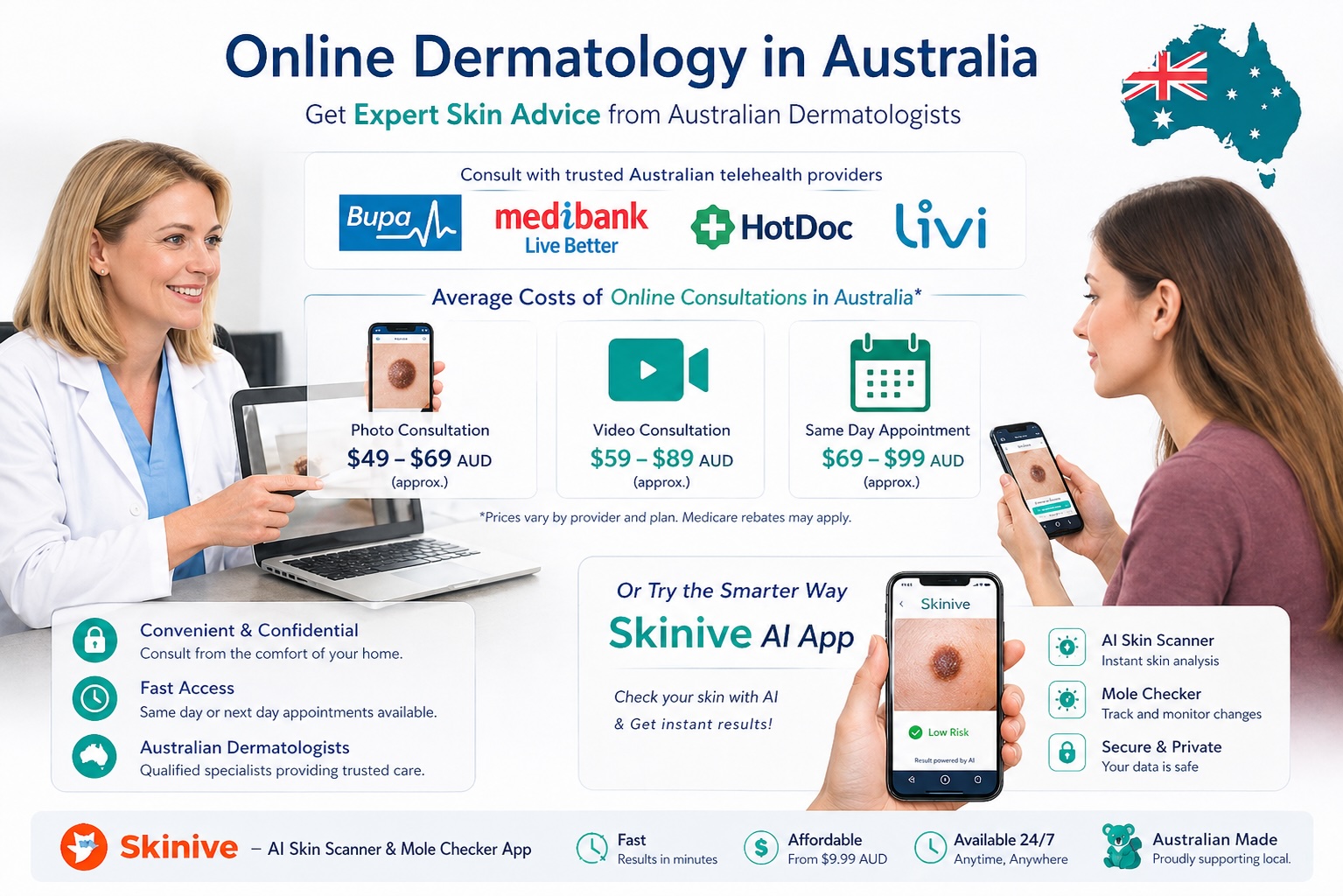
Online dermatologists in Australia
| Platform | Services | Availability | Price |
|---|---|---|---|
| Skinive | AI skin analysis, mole check | 24/7 | Free / low-cost |
| Telehealth GP platforms | Referrals, prescriptions | Daily | $40–$100 |
| Online dermatology services | Specialist review | Appointment-based | $100–$250 |
Online dermatology is useful for:
- Initial assessment
- Monitoring moles
- Getting faster guidance
- Access in regional or remote areas
👉 Online dermatologists in Australia — full guide
How to get a dermatology consultation online
Affordable dermatology access is increasingly important in Australia, especially in regional and remote communities.
Free options may include:
- GP consultations covered by Medicare
- Public hospital referrals
- Basic AI-supported skin assessment tools
AI tools such as Skinive can help users perform an initial skin screening before deciding whether specialist care may be required. While these tools cannot diagnose skin cancer, they may help identify lesions that need medical review.
Telehealth appointments are often cheaper than visiting private dermatology clinics in person. Some GP telehealth consultations may also qualify for Medicare rebates depending on eligibility requirements and provider arrangements.
Patients seeking second opinions sometimes use international teledermatology platforms, although Australian-registered practitioners remain preferable for ongoing treatment planning and Medicare compatibility.
For many Australians, the most practical approach is:
Skinive → GP or telehealth consultation → in-person dermatologist if needed.
Waiting times
| Type | Time |
|---|---|
| Public hospital dermatologist | Several months |
| Private dermatologist | 1–6 weeks |
| Telehealth dermatologist | Few days to 2 weeks |
| Urgent suspicious lesion | Same week possible |
| Online AI skin assessment | Immediate |
Public systems generally prioritise urgent or potentially cancerous cases. Private clinics usually offer faster access but involve higher out-of-pocket costs.
Cost of dermatologist in Darwin
| Service | Price |
|---|---|
| Initial private dermatologist consultation | $220–$380 |
| Follow-up consultation | $120–$250 |
| Mole check | $90–$200 |
| Skin biopsy | $150–$400 |
| Telehealth consultation | $80–$220 |
Medicare rebates may reduce some specialist consultation costs if patients have a valid GP referral. However, most private dermatology services in Darwin still involve out-of-pocket expenses.
Costs may also vary depending on procedure complexity, clinic location, and whether pathology services are required.
Melanoma symptoms
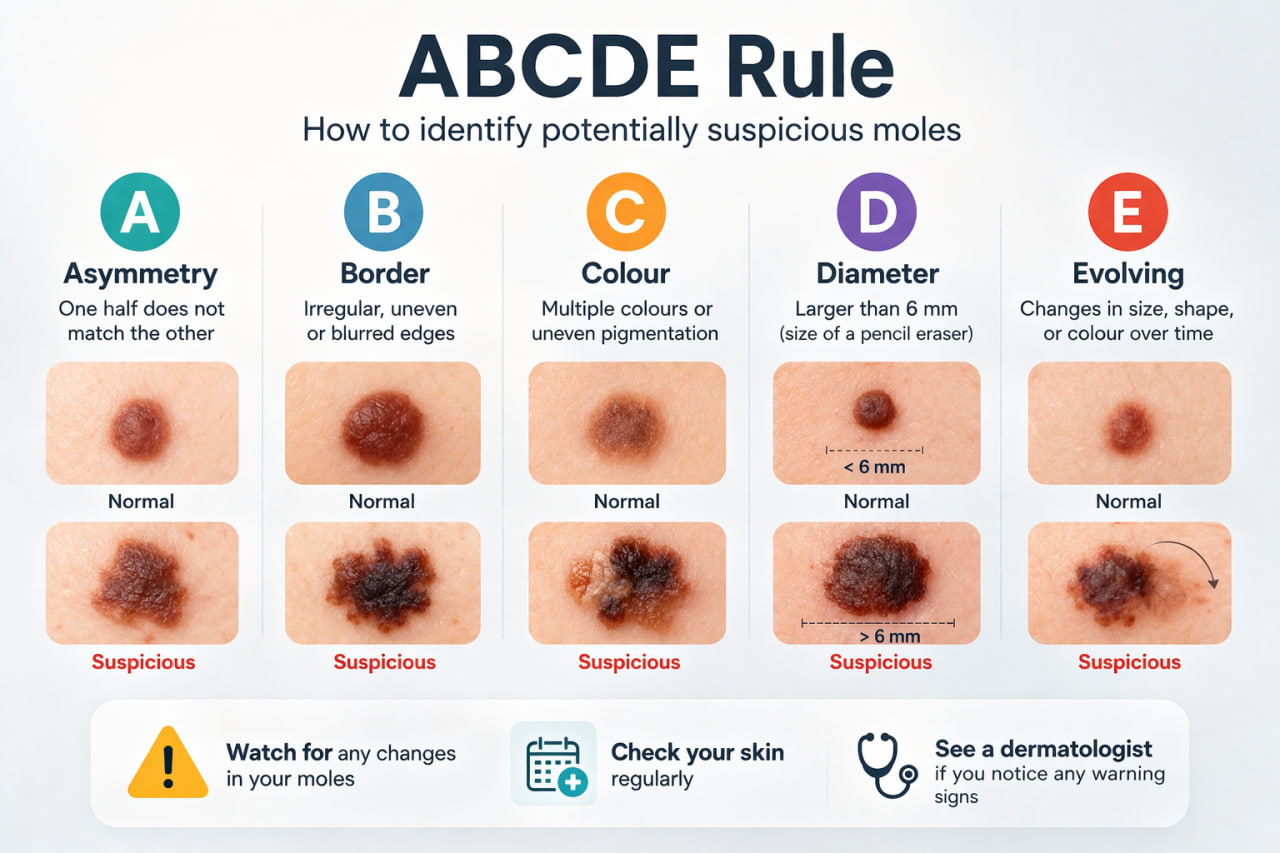
Recognising early signs of melanoma is critical. Dermatologists use the ABCDE rule:
When is it urgent?
Some skin symptoms require urgent medical attention.
You should seek prompt assessment if you notice:
- Rapidly changing moles
- Bleeding skin lesions
- Severe infections
- Spreading rashes with fever
- Painful skin swelling
- Sudden dark pigmented lesions
- Non-healing sores
Urgent suspicious lesions are often prioritised more quickly within both public and private dermatology systems.
FAQ — Dermatologist in Darwin
Do I need a GP referral to see a dermatologist in Darwin?
You can usually book a private dermatologist directly, but a GP referral is recommended if you want to claim a Medicare rebate. Public hospital dermatology services generally require a GP referral before appointments can be arranged.
Does Medicare cover dermatology in Australia?
Medicare can partially cover dermatologist consultations when patients have valid referrals from a GP. However, many private dermatologists still charge out-of-pocket fees above the Medicare rebate amount.
What is bulk billing in dermatology?
Bulk billing means the provider accepts the Medicare rebate as full payment, leaving no additional cost for the patient. Bulk billing dermatologists are less common than bulk billing GPs, especially in smaller cities such as Darwin.
How long are waiting times for dermatologists in Darwin?
Public hospital waiting times may extend for several months, particularly for non-urgent conditions. Private dermatologists generally offer faster appointments, while telehealth consultations may be available within days.
How much does a dermatologist cost in Darwin?
Initial private consultations commonly range from around $220 to $380 before Medicare rebates. Follow-up appointments and procedures may involve additional fees depending on treatment requirements.
Can I use an online dermatologist in Australia?
Yes. Many Australians now use telehealth dermatology services for skin reviews, follow-up care, and referrals. Online services are particularly useful in remote regions where specialist access is limited.
Where can I get a mole check in Darwin?
Mole checks are available through GPs, skin cancer clinics, and dermatologists across Darwin and Palmerston. Patients with suspicious lesions should arrange assessment as early as possible.
Is Skinive a replacement for a dermatologist?
No. Skinive is designed as an AI-supported skin monitoring and triage tool, not a replacement for professional medical care. Any suspicious or changing lesion should still be assessed by a qualified doctor.
Conclusion
Accessing a dermatologist in Darwin often involves balancing waiting times, costs, and availability. Public Medicare-supported pathways can reduce expenses but may require longer waits, while private dermatologists usually provide faster access at higher out-of-pocket costs. Telehealth and online dermatology services have become increasingly valuable for Northern Territory residents, particularly in remote communities.
Skinive can serve as a practical first step for skin monitoring, mole tracking, and early triage before visiting a GP or dermatologist. Used alongside professional medical care, online skin assessment tools may help Australians identify suspicious skin changes earlier and seek timely treatment when necessary.