
Introduction
Finding a dermatologist in Ballarat can sometimes feel challenging, especially for patients trying to balance Medicare coverage, waiting times, private clinic costs, and access to skin cancer checks. As a major regional city in Victoria, Ballarat has a growing healthcare sector, but specialist dermatology availability is still more limited compared with Melbourne.
Many people in Ballarat begin with a GP referral before seeing a dermatologist, particularly when using the Medicare pathway. Others choose private dermatology clinics for faster appointments and more flexible scheduling. Online dermatology and telehealth services are also becoming increasingly common across regional Australia, helping patients access skin advice without travelling long distances.
Skin concerns that commonly lead people to seek dermatology care include acne, eczema, psoriasis, rosacea, suspicious moles, pigmentation issues, chronic rashes, and skin cancer screening. Given Australia’s high UV exposure and melanoma rates, mole checks and early skin monitoring are especially important in Victoria.
In Ballarat, patients may choose between:
- public hospital dermatology pathways
- private dermatologists
- telehealth consultations
- online skin assessment tools
Costs vary depending on whether the consultation is bulk billed, partially covered by Medicare, or fully private. Waiting times also differ significantly between public and private systems.
👉 How to see a dermatologist in Australia — practical guide
When should you see a dermatologist?
Many skin conditions can initially appear minor but may worsen over time without appropriate assessment. Dermatologists specialise in diagnosing and managing diseases affecting the skin, hair, and nails.
Common skin conditions
People in Ballarat commonly seek dermatology care for conditions such as:
- acne and hormonal breakouts
- eczema and dermatitis
- psoriasis
- rosacea
- fungal or bacterial skin infections
- pigmentation disorders
- chronic itching
- hair thinning or scalp conditions
Some conditions respond well to GP treatment, while others require specialist care when symptoms persist or become severe.
Australia’s climate and strong sun exposure also contribute to high rates of sun damage and skin cancer concerns. Many patients book a mole check after noticing a new spot or changes in an existing mole.
Warning signs
You should consider seeing a dermatologist if you notice:
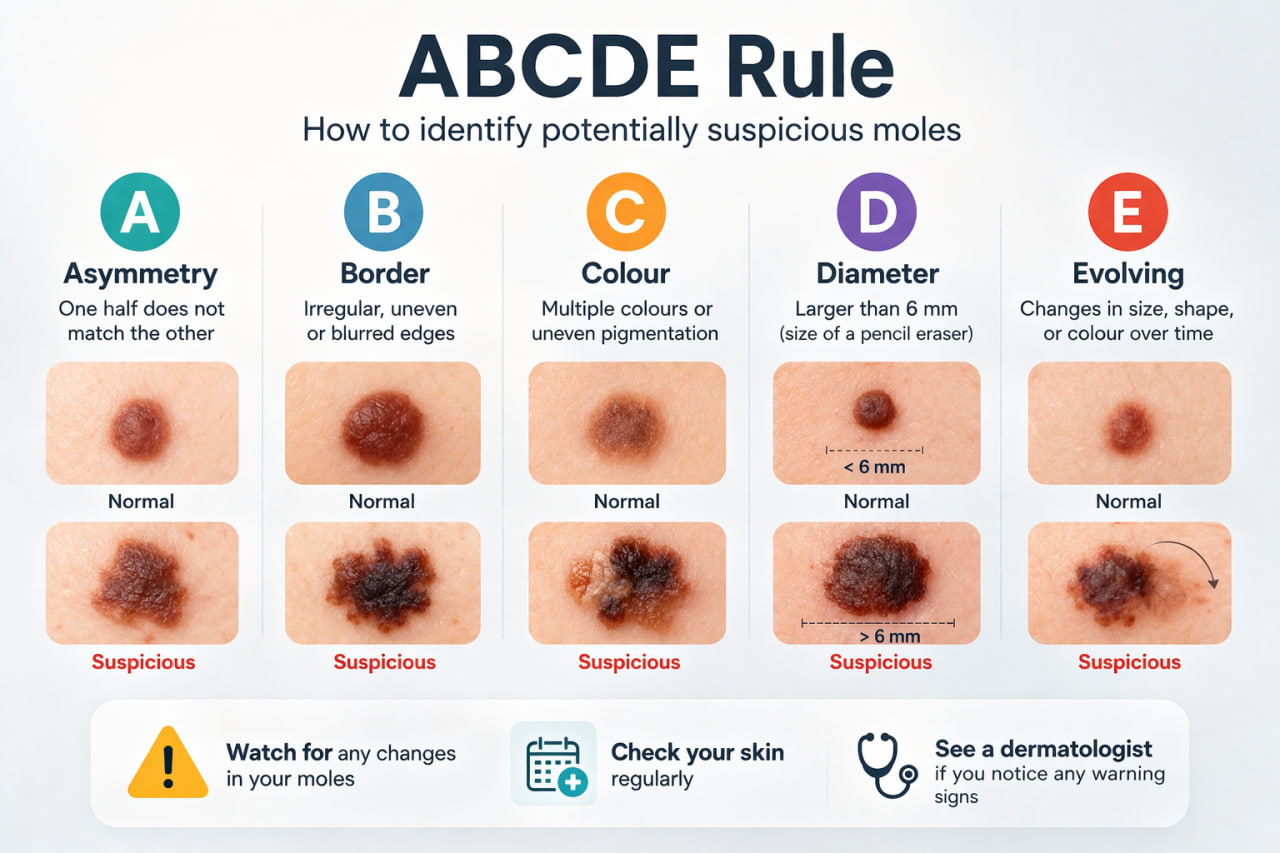
- a mole changing colour, shape, or size
- bleeding or crusting skin lesions
- sores that do not heal
- rapidly growing skin spots
- painful or itchy lesions
- persistent redness or inflammation
Melanoma can develop gradually or change quickly. Early detection is important because treatment outcomes are generally much better when skin cancer is identified early.
A professional mole check may include dermoscopy, photography, biopsy referral, or ongoing monitoring.
Check your skin before visiting a doctor
Skin analysis with Skinive
Skinive is a CE-marked medical software that provides AI-based skin analysis. It allows users to check moles and skin conditions anytime using their smartphone.
Key features:
- Available 24/7
- AI-supported risk assessment
- Mole monitoring over time
- Early detection support
Skinive helps users decide whether they need to see a GP or dermatologist, but it is not a replacement for a doctor. It works best as a first step in identifying potentially concerning skin changes.
How dermatology works in Australia
Australia uses a mixed public-private healthcare system, and dermatology access often depends on whether patients choose Medicare-supported care or private treatment.
Medicare & public system
Many Australians first visit a GP when they develop a skin concern. If specialist care is needed, the GP may provide a referral to a dermatologist.
Under Medicare:
- specialist consultations may receive partial rebates
- public hospital dermatology clinics can reduce costs
- waiting times may be longer
- referrals are usually required
Public dermatology services in regional Victoria often prioritise urgent or high-risk cases, such as suspected melanoma or severe inflammatory disease.
Patients using the public system in Ballarat may experience waiting periods ranging from several weeks to several months depending on demand and urgency.
Private dermatologists
Private dermatology clinics generally offer:
- faster appointments
- more flexible scheduling
- broader cosmetic and procedural services
- shorter waiting times
However, private consultations usually involve out-of-pocket costs even when Medicare rebates apply.
Private dermatologists may still request a GP referral, particularly for Medicare rebate eligibility. Some clinics also accept patients without referrals for certain services.
Private health insurance may help cover selected procedures but usually does not fully eliminate specialist consultation fees.
Key factors patients compare include:
- appointment availability
- consultation cost
- Medicare rebate amount
- waiting time
- clinic location
Dermatology clinics in Ballarat
| Clinic | Location | Services | Price |
|---|---|---|---|
| Ballarat Base Hospital Dermatology | Ballarat Central | Public dermatology, referrals, skin conditions | Medicare/public |
| Gentle Dermatology | Ballarat Central | Dermatologist | 150–450$ |
| Australian Skin Clinics Ballarat | Ballarat Central | Skin care clinic | 150–450$ |
| Ballarat Specialist Skin Cancer Centre | Ballarat | Cancer treatment center | 150–450$ |
| Skin Cancer Ballarat | Ballarat | Cancer treatment center | 150–450$ |
Private dermatologists in Ballarat
Private dermatology services in Ballarat can provide faster access compared with public pathways, particularly for non-urgent skin concerns.
Patients often choose private care for:
- acne management
- rosacea treatment
- skin cancer checks
- procedural dermatology
- shorter waiting periods
| Clinic | Services | Location | Price |
|---|---|---|---|
| MoleMap | Skin care clinic | Ballarat | 150–450$ |
| Ballarat Specialist Skin Cancer Centre | Cancer treatment center | Ballarat | 150–450$ |
| Gentle Dermatology | Dermatologist | Ballarat Central | 150–450$ |
| Skin Cancer Ballarat | Cancer treatment center | Ballarat | 150–450$ |
| Australian Skin Clinics Ballarat | Skin care clinic | Ballarat Central | 150–450$ |
Private clinics may still involve waiting periods, although these are generally shorter than public hospital dermatology services.
Dermatologists near Ballarat
Dermatologist in Melbourne
Melbourne has one of Australia’s largest concentrations of dermatologists and skin clinics. Patients from Ballarat frequently travel to Melbourne for faster specialist access, advanced procedures, or subspecialty dermatology services.
Melbourne offers:
- public hospital dermatology departments
- private specialist clinics
- melanoma centres
- cosmetic dermatology
Common hospitals and clinics include:
- The Royal Melbourne Hospital
- St Vincent’s Hospital Melbourne
- Skin Health Institute
Both Medicare-supported and private pathways are widely available. However, private consultation fees in Melbourne are generally higher than regional Victoria.
Dermatologist in Geelong
Geelong provides another major regional option for dermatology access in Victoria. Patients can access both public and private skin specialists, including telehealth-linked services.
Notable providers include:
- University Hospital Geelong
- Geelong Dermatology
- Barwon Health Specialist Clinics
Geelong often has shorter travel requirements compared with Melbourne for western Victorian residents.
Dermatologist in Bendigo
Bendigo has a growing healthcare network with increasing dermatology access through specialist clinics and hospital referral pathways.
Services include:
- skin cancer assessment
- inflammatory skin disease management
- teledermatology support
Facilities include:
- Bendigo Health
- Bendigo Skin Clinic
- View Street Medical
Waiting times can still vary depending on specialist availability.
Dermatologist in Bacchus Marsh
Bacchus Marsh residents often use local GPs for initial assessment before referral to Melbourne or Ballarat specialists. Limited local specialist availability means telehealth is becoming increasingly important.
Healthcare providers include:
- Bacchus Marsh Hospital
- local skin clinics
- GP-led mole check services
Patients commonly compare private appointments with Medicare-supported referrals.
Dermatologist in Daylesford
Daylesford has fewer dedicated dermatology services, so many patients travel to Ballarat or Melbourne for specialist care.
Local healthcare options include:
- Daylesford Hospital
- GP skin cancer clinics
- telehealth referrals
Online dermatology can help reduce unnecessary travel for preliminary assessment.
Dermatologist in Ararat
Ararat residents generally rely on GP referrals and regional specialist outreach services. Public hospital pathways may involve longer waiting periods for non-urgent cases.
Key providers include:
- East Grampians Health Service
- regional skin cancer clinics
- telehealth services
Private dermatology access often requires travel to Ballarat or Melbourne.
Dermatologist in Horsham
Horsham patients frequently use telehealth and outreach dermatology programs due to specialist shortages in western Victoria.
Healthcare services include:
- Wimmera Base Hospital
- GP skin clinics
- regional teledermatology programs
Online consultations are increasingly used for follow-up reviews and triage.
Online dermatologists in Australia
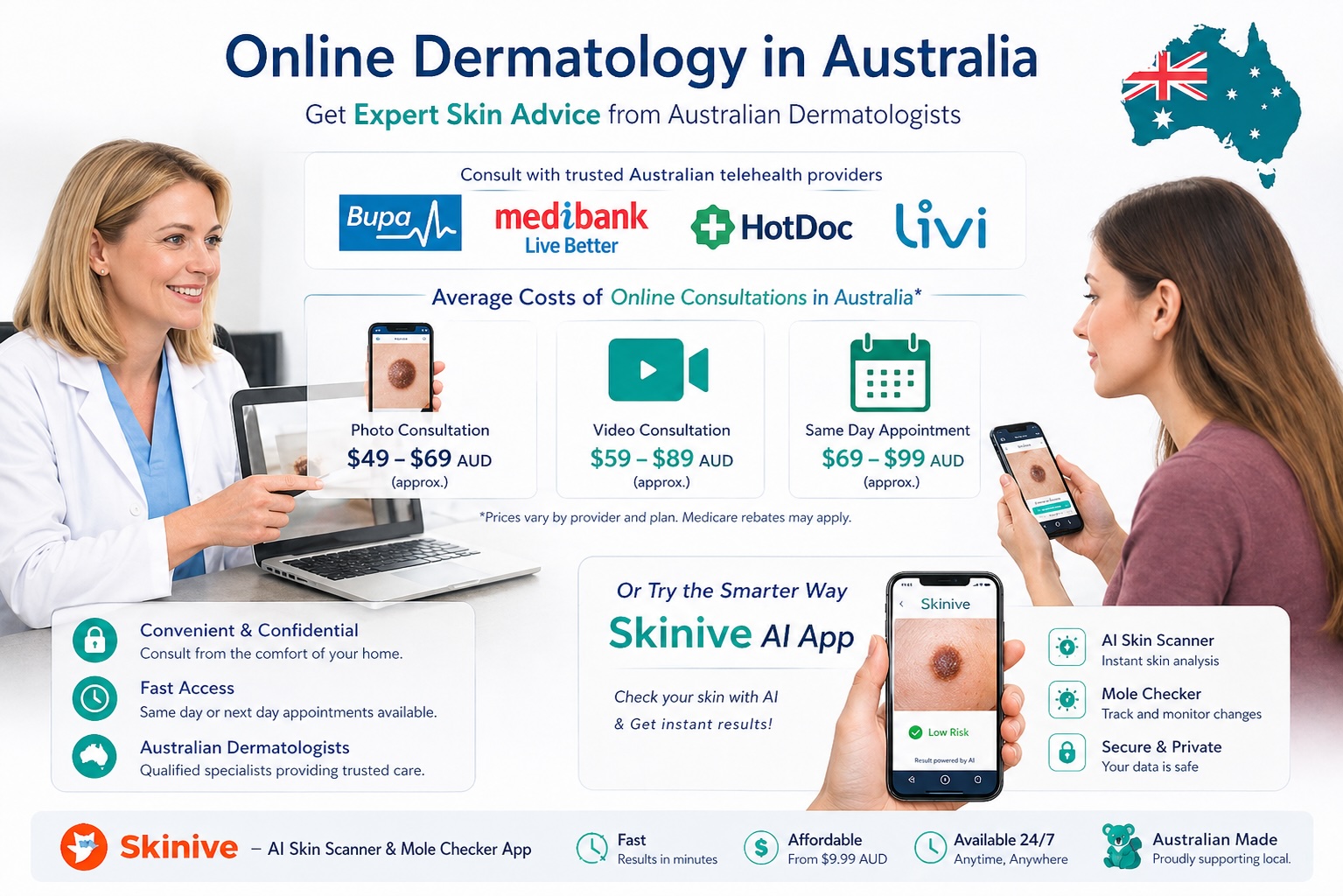
| Platform | Services | Availability | Price |
|---|---|---|---|
| Skinive | AI skin analysis, mole check | 24/7 | Free / low-cost |
| Telehealth GP platforms | Referrals, prescriptions | Daily | $40–$100 |
| Online dermatology services | Specialist review | Appointment-based | $100–$250 |
Online dermatology is useful for:
- Initial assessment
- Monitoring moles
- Getting faster guidance
- Access in regional or remote areas
How to get a dermatology consultation online
Australians increasingly use online healthcare to reduce waiting times and improve access to specialist advice.
Free or low-cost options may include:
- Healthdirect guidance
- Medicare-supported GP telehealth
- public referral pathways
- AI screening tools
Affordable telehealth consultations are often cheaper than full private dermatology appointments, especially for initial assessment.
Some patients use international online second-opinion services for complex skin conditions, although Australian follow-up care may still be necessary.
A practical approach for many patients is:
- start with Skinive for early monitoring
- consult an online GP or telehealth provider
- arrange in-person dermatologist review if needed
This pathway can help prioritise urgent lesions while reducing unnecessary specialist visits.
Waiting times
Waiting times vary considerably between public hospitals, private clinics, and online services.
| Type | Time |
|---|---|
| Public dermatology referral | Several weeks to months |
| Private dermatologist | Days to several weeks |
| GP skin clinic | Same week to several weeks |
| Online GP telehealth | Same day to 48 hours |
| AI skin assessment | Immediate |
Public hospital systems usually prioritise urgent skin cancer cases, while non-urgent inflammatory conditions may wait longer.
Private clinics generally provide faster access but involve higher out-of-pocket costs.
Cost of dermatologist in Ballarat
Dermatology costs in Ballarat are generally lower than central Melbourne but still vary between clinics.
| Service | Price |
|---|---|
| GP skin check | AUD 40–100 |
| Private dermatologist consultation | AUD 180–350 |
| Follow-up dermatology visit | AUD 100–250 |
| Mole removal or biopsy | AUD 150–500 |
| Telehealth consultation | AUD 60–180 |
Medicare rebates may partially reduce specialist consultation costs when patients have valid GP referrals.
Out-of-pocket expenses depend on:
- clinic billing model
- specialist fees
- procedure complexity
- private insurance coverage
Bulk billing dermatologists are relatively uncommon in Australia, especially in regional specialist settings.
Melanoma symptoms
Recognising early signs of melanoma is critical. Dermatologists use the ABCDE rule:
When is it urgent?
Some skin conditions require urgent medical review.
Urgent warning signs include:
- rapidly changing moles
- bleeding lesions
- severe skin infections
- widespread rashes with fever
- painful blistering
- suspected melanoma
If symptoms are severe or rapidly worsening, patients should seek urgent GP assessment, emergency care, or expedited dermatology referral.
Skin cancer concerns are usually prioritised within Australian public and private systems.
FAQ — Dermatologist in Ballarat
Do I need a GP referral to see a dermatologist in Ballarat?
Many dermatologists recommend or require a GP referral, especially if you want to receive a Medicare rebate. Some private clinics may accept direct bookings, but referral policies vary.
Does Medicare cover dermatology in Australia?
Medicare may partially cover dermatologist consultations when patients have eligible referrals. However, many private specialists still charge additional out-of-pocket fees.
What is bulk billing in dermatology?
Bulk billing means the doctor accepts the Medicare payment as the full fee, leaving no additional patient cost. Bulk billing dermatologists are less common than bulk billing GPs.
How long are dermatology waiting times in Ballarat?
Public hospital waiting times can range from weeks to months depending on urgency. Private clinics are usually faster, while telehealth services may offer same-week appointments.
How much does a dermatologist cost in Ballarat?
Initial private consultations commonly range between AUD 180 and AUD 350 before Medicare rebates. Costs vary based on the clinic and treatment required.
Can I use an online dermatologist in Australia?
Yes. Many Australians now use telehealth dermatology and online GP platforms for skin concerns, referrals, and follow-up appointments.
Can Skinive diagnose melanoma?
Skinive helps assess skin lesions and supports early detection awareness, but it does not replace a dermatologist or provide a definitive medical diagnosis.
When should I get a mole checked?
You should arrange a mole check if a spot changes colour, shape, size, or begins bleeding, itching, or crusting. Early assessment is especially important in Australia due to high UV exposure.
Conclusion
Accessing a dermatologist in Ballarat may involve choosing between public hospital referrals, private clinics, telehealth services, and online monitoring tools. Medicare can help reduce specialist costs, but waiting times may be longer within the public system.
Private dermatologists generally provide faster access, although patients should expect out-of-pocket fees. Telehealth and online dermatology are increasingly helping regional Australians access earlier skin assessment and specialist advice.
For many people, the most practical pathway is:
- monitor skin changes early
- use digital tools such as Skinive
- consult a GP
- escalate to dermatology when necessary
Skinive can support early skin awareness and mole monitoring, helping users decide when professional assessment may be appropriate.