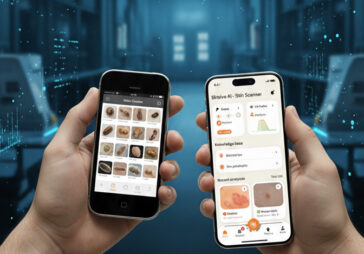

Pharmacie Notre-Dame in Roquefort-les-Pins becomes the first community pharmacy in France to pilot Skinive MD app for AI-assisted skin lesion identification, combining artificial intelligence with digital dermoscopy to support skin health awareness and appropriate referral to medical care.
Skinive has launched a real-world pilot of its AI-powered skin analysis technology at Pharmacie Notre-Dame in Roquefort-les-Pins, Alpes-Maritimes, France.
Led by pharmacists Sandra and Éric d’Aura, the initiative explores how community pharmacies can use artificial intelligence and digital dermoscopy to support the early identification of moles and skin lesions (like different types of skin cancer) that may require medical attention, provide patients with appropriate information, and encourage referral to a physician or dermatologist when necessary.
The pilot explores a complementary role for community pharmacists in skin health: identifying, informing and referring, while medical assessment and diagnosis remain the responsibility of physicians and dermatologists.
Bringing AI Skin Lesion Identification into the Community Pharmacy
Patients frequently approach pharmacists with questions about a changing mole, unusual spot or other visible skin concern.
As highly accessible healthcare professionals, community pharmacists can play an important role in listening to these concerns, identifying situations that may warrant further attention and directing patients towards appropriate medical care.
During the pilot, Pharmacie Notre-Dame will use Skinive MD, Skinive’s professional AI-powered skin analysis application, together with a FireFly Pro digital dermatoscope.
The dermatoscope allows pharmacists to capture detailed images of skin lesions, which can then be analysed using Skinive MD. The technology provides additional information that can support the pharmacist in identifying skin lesions that may warrant referral for medical evaluation.
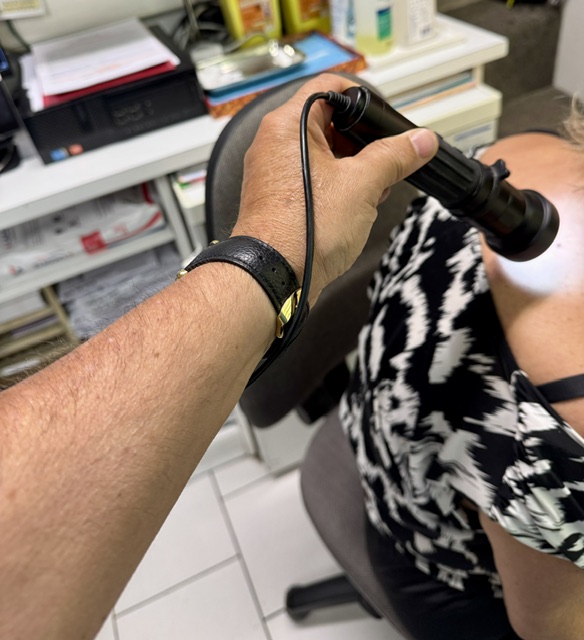
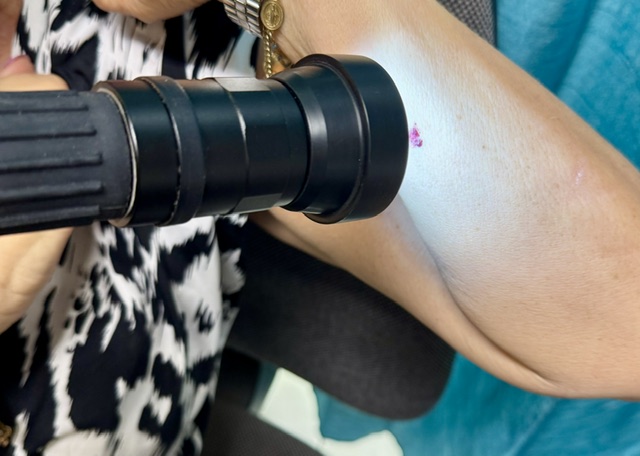
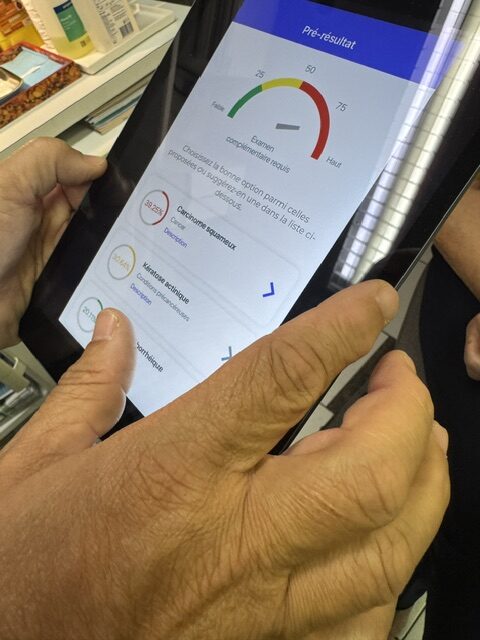
The objective is straightforward: identify, inform and refer when appropriate — while keeping the physician and dermatologist at the centre of the medical assessment and diagnostic pathway.
How the Skinive MD Pharmacy Pilot Works
The workflow has been designed to fit into the everyday environment of a community pharmacy.
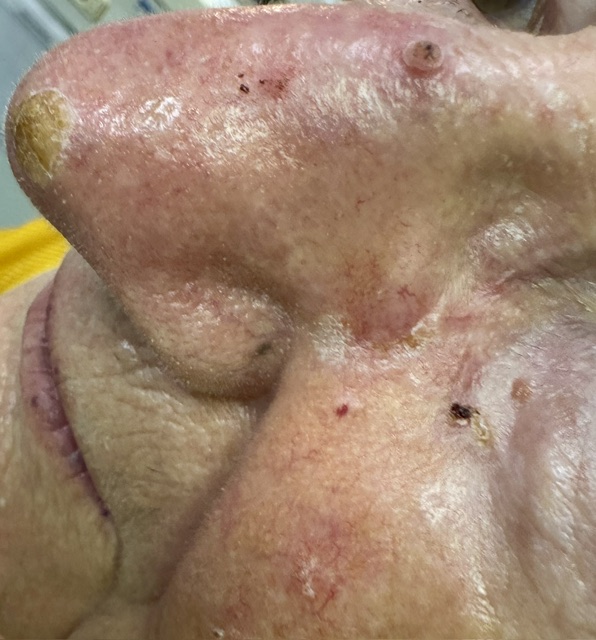
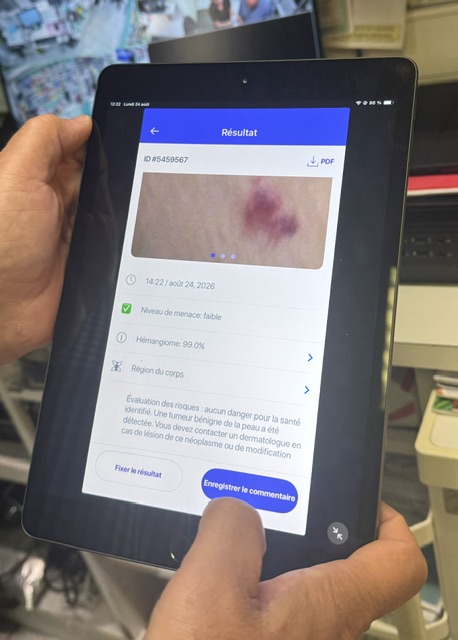
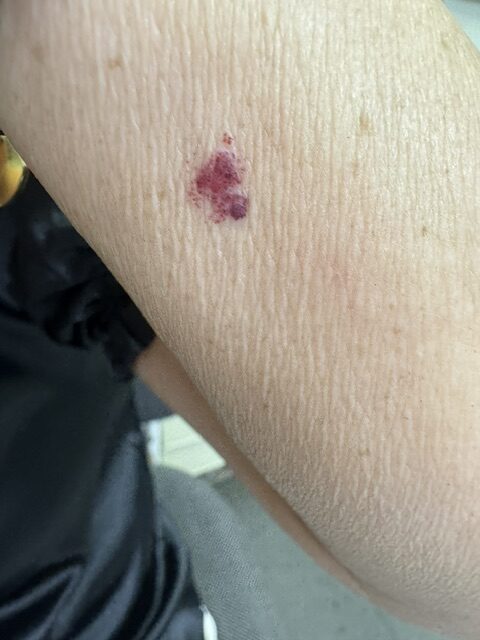
A pharmacist captures an image of a mole or skin lesion using a digital dermatoscope. Skinive MD then analyses the image using artificial intelligence trained to recognise visual patterns associated with different types of skin lesions and dermatological conditions.
The resulting information provides the pharmacist with an additional digital tool when deciding whether a patient should be encouraged to seek further medical evaluation.
Skinive MD does not replace a physician or dermatologist, and the pharmacist does not make a medical diagnosis. Medical assessment and diagnosis remain the responsibility of appropriately qualified medical professionals.
An important aspect of the French pilot is the use of equipment already available at Pharmacie Notre-Dame. The pharmacy is conducting the pilot with its existing FireFly Pro digital dermatoscope, helping to explore whether pharmacies already equipped with suitable dermoscopy technology could incorporate Skinive MD into their workflow without requiring additional investment in dedicated imaging hardware.
A Real-World Pilot in France
Approximately 50 people have already participated in initial testing at Pharmacie Notre-Dame.
The broader pilot is planned to involve approximately 300 participants, providing valuable real-world experience of how AI-assisted skin lesion identification can operate within a French community pharmacy.
The project will examine not only the technology itself, but also the practical workflow: how patients interact with the service, how pharmacists incorporate digital skin analysis into their daily practice, and how the technology can help identify situations in which referral to a physician or dermatologist may be appropriate.
Importantly, the service is being offered to participating patients free of charge and without an appointment during the pilot.
Supporting the Pathway to Medical Care
One of the central principles of the project is that artificial intelligence should support healthcare professionals rather than replace them.
AI can analyse visual patterns in skin images rapidly and consistently. In the pharmacy setting, this technology can provide pharmacists with an additional tool when patients approach them with concerns about a mole or skin lesion.
The role of the pharmacist remains clearly defined: listen, identify, inform and refer. Medical evaluation and diagnosis remain with the physician and dermatologist.
“Community pharmacies are one of the most accessible points of contact in healthcare. This pilot gives us an opportunity to understand how AI-assisted skin lesion identification can work in a real pharmacy environment — not as a replacement for physicians or dermatologists, but as an additional tool that can support awareness and appropriate referral. France is an especially interesting market for this model, and we are very pleased to work with Sandra and Éric to evaluate it in practice.”
— Kirill Sokol, CEO of Skinive
A Pharmacist-Led Approach to Skin Health Awareness
For Sandra and Éric d’Aura, the project reflects situations they encounter regularly in everyday pharmacy practice.
“As community pharmacists based in a village of 7,000 inhabitants, we are often among the first healthcare professionals patients turn to when they are concerned about a mole or a skin lesion. Our role is not to make a diagnosis, that remains the responsibility of the physician and dermatologist. Our role is to listen, identify a potentially concerning situation, provide guidance and, above all, refer the patient for medical evaluation.
Skinive MD, combined with digital dermoscopy, provides us with an additional tool in our daily professional practice. It is also important to us that this service remains free of charge and accessible without an appointment: no patient should be left alone with their concerns simply because access to medical care may take time. And above all, if the use of Skinive MD enables us to guide that patient back into the medical care pathway, then we will have achieved our goal.”
— Sandra and Éric d’Aura, PharmD, Pharmacie Notre-Dame
Their approach reflects the broader objective of the pilot: exploring whether accessible digital tools in community pharmacies can help patients take concerns about their skin seriously and, where appropriate, encourage them to enter or return to the medical care pathway.
French Media Highlight the Skinive MD Pharmacy Pilot
The initiative has already attracted significant media attention in France ahead of the broader operational phase.
French regional newspaper Nice-Matin featured Pharmacie Notre-Dame and the Skinive MD pilot, describing the initiative as a first in France and examining how artificial intelligence and digital dermoscopy are being explored within a community pharmacy setting.
Read the original Nice-Matin article (in French): Pharmacie des Alpes-Maritimes vous aide à établir un prédiagnostic des grains de beauté et des lésions cutanées en utilisant l’application Skinive MD
The project has also attracted attention from French television, reflecting growing public interest in the potential role of artificial intelligence and digital health technologies in supporting skin health awareness and access to appropriate medical care.
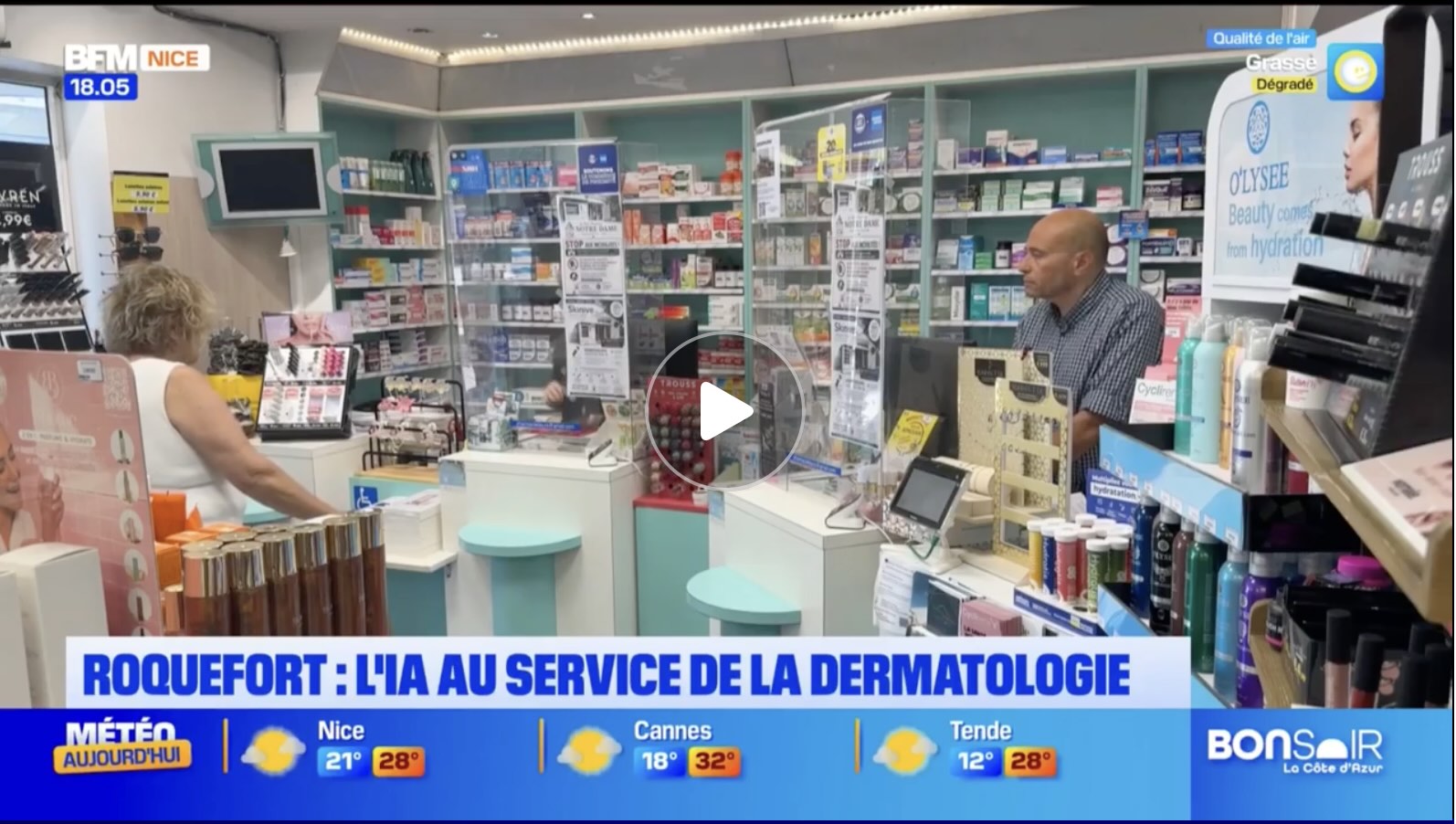
Watch video on BFMTV: https://www.bfmtv.com/cote-d-azur/replay-emissions/bonsoir-cote-d-azur/video-a-roquefort-une-pharmacie-propose-gratuitement-un-depistage-dermatologique_VN-202608250629.html
Exploring a New Role for AI in Pharmacy-Based Skin Health
The Pharmacie Notre-Dame pilot will provide Skinive and the participating pharmacists with practical insights into how AI-powered skin analysis and digital dermoscopy can be incorporated into community pharmacy workflows.
If the model proves effective, the experience could help inform future discussions about how community pharmacies can contribute to skin health awareness, early identification of potentially concerning moles and skin lesions, and appropriate referral to physicians and dermatologists.
For Skinive, the project also provides an opportunity to evaluate its professional technology in another real-world healthcare environment and gather further evidence about practical applications of AI-assisted skin lesion identification.
The broader pilot is planned to involve approximately 300 participants, with initial structured results expected as the project progresses.
International Pharmacy Media Interest in AI Skin Analysis
The potential role of Skinive in pharmacy-supported skin health has also attracted attention beyond France. German pharmacy and healthcare publication ApoRisk recently highlighted Skinive in its coverage of skin cancer prevention and the evolving role of community pharmacies in patient guidance.
The publication described how Skinive can support the photographic documentation and monitoring of moles and other visible skin changes over time, alongside UV monitoring and prevention tools. It also emphasized an important principle that aligns closely with the French pharmacy pilot: digital skin assessment can support awareness and monitoring, while suspicious or changing skin lesions should be referred for professional medical evaluation.
Read the original ApoRisk article (in German): https://www.pressebox.de/pressemitteilung/aporisk-gmbh/apotheken-themen-von-heute-zeigen-neue-wege-bei-wegovy-verschrfen-cannabisfragen-machen-versteckte-folgerisiken-sichtbar/boxid/1308108
About Skinive
Skinive develops AI-powered technology for skin health analysis and monitoring. Its solutions include the consumer Skinive App, the professional Skinive MD application, and the Skinive Dermatology Skin Analysis API and SDK for integration into third-party healthcare and digital-health platforms.
Skinive’s technology is built on a proprietary dermatological dataset containing more than 6 million skin images (Q3 2026) and is used in consumer and professional healthcare environments internationally.