
Onychomycosis is a fungal infection of the nails that causes changes in their color, structure, and appearance. It most commonly affects toenails and less frequently fingernails.
The disease is caused by different types of fungi that can penetrate the nail plate and gradually destroy it. Onychomycosis does not always cause pain, but over time it can lead to noticeable nail deformity.
The infection can be transmitted through contact with contaminated surfaces (e.g., in swimming pools, gyms) or by sharing personal items. It is a common condition that is usually treatable but requires time and patience.
What to do if you suspect it
If you notice changes in nail color, thickening, or destruction, it is important not to delay diagnosis.
The first step is to see a dermatologist or dermato-venereologist. The specialist will examine the nails and, if necessary, order additional tests to confirm the fungal nature of the disease.
Additionally:
- do not cover changes with nail polish before diagnosis
- do not use antifungal medications on your own without confirmed diagnosis
- check whether there are changes in the skin of the feet or between the toes
Timely medical evaluation is important because different types of fungi require different treatment approaches. Without proper diagnosis, therapy may be ineffective.
How it looks
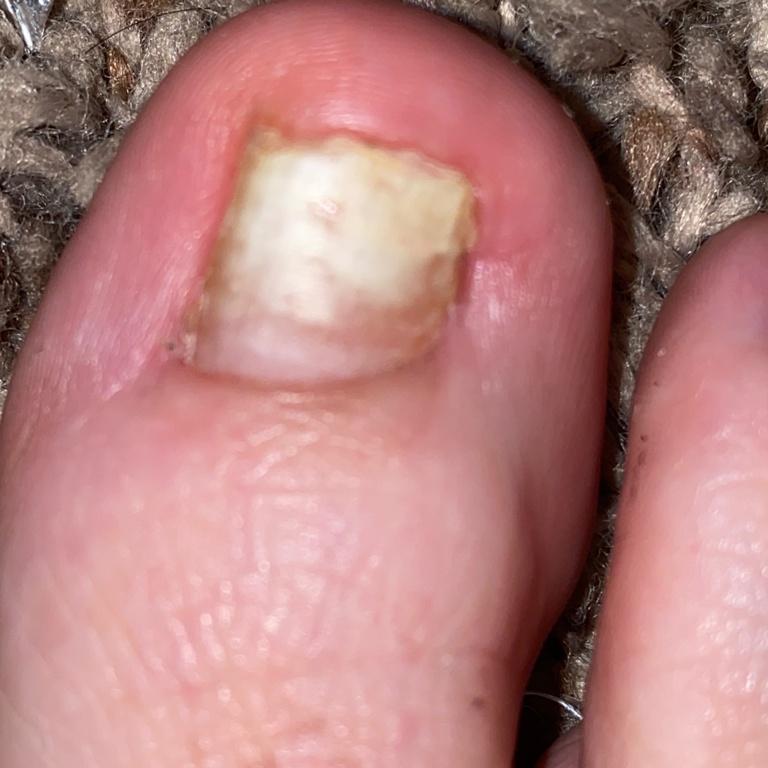
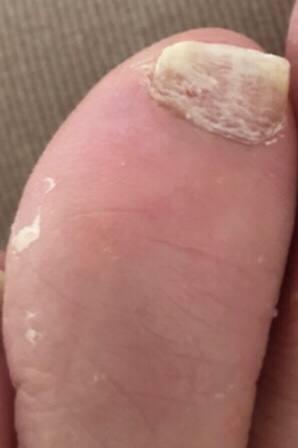
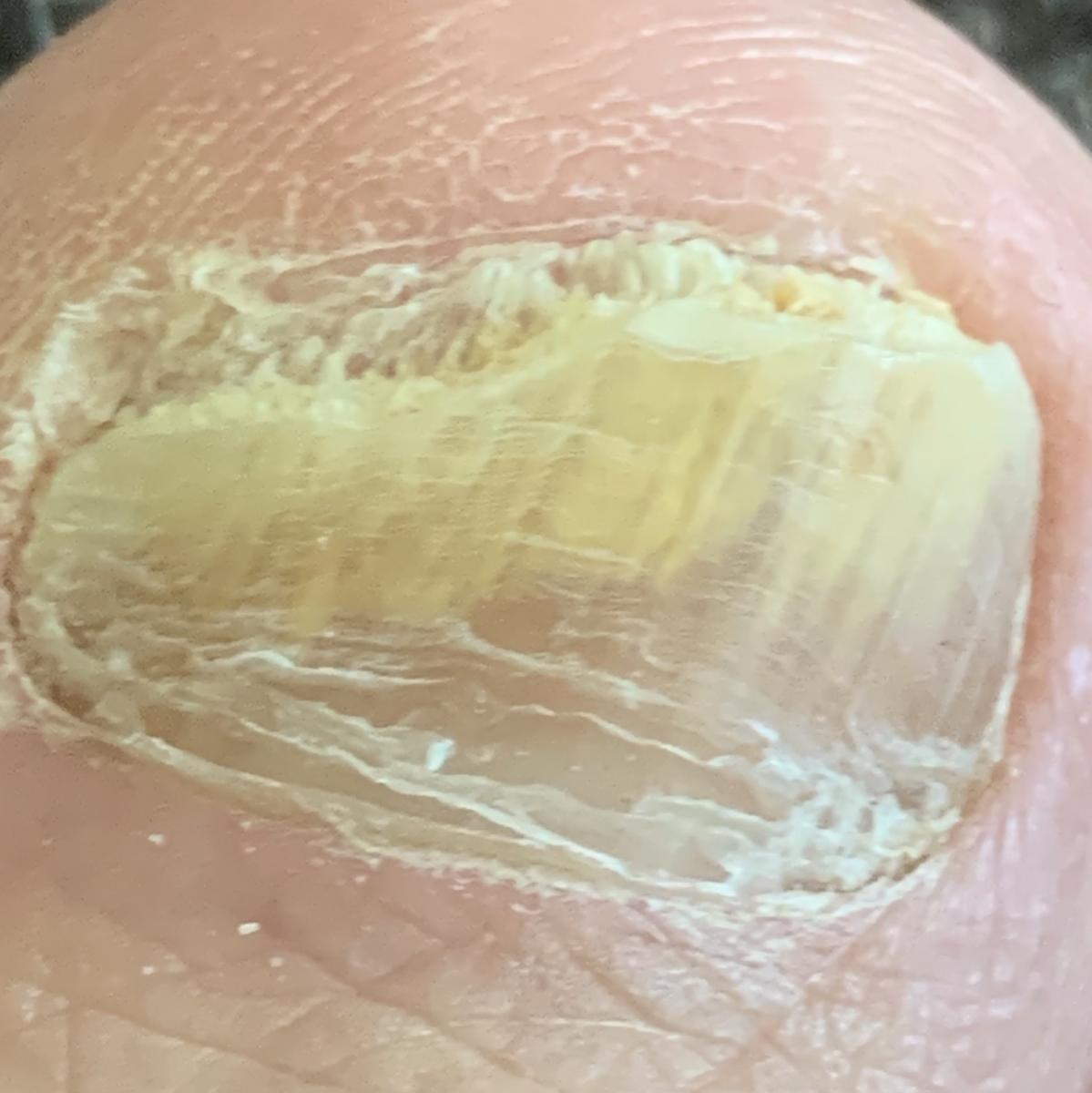
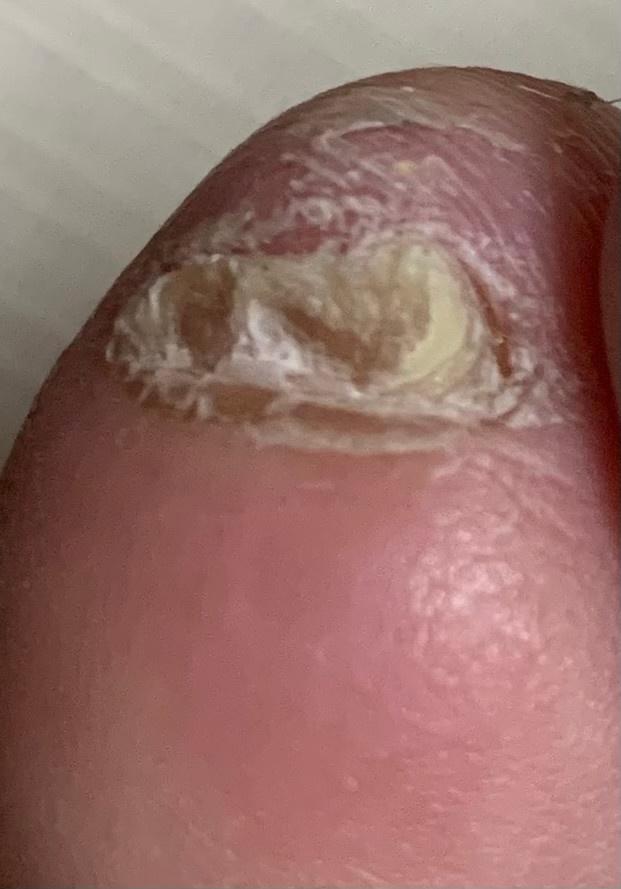
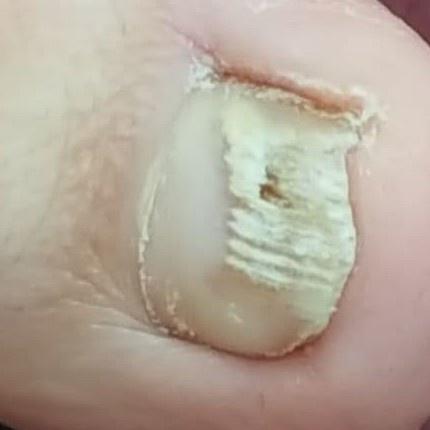
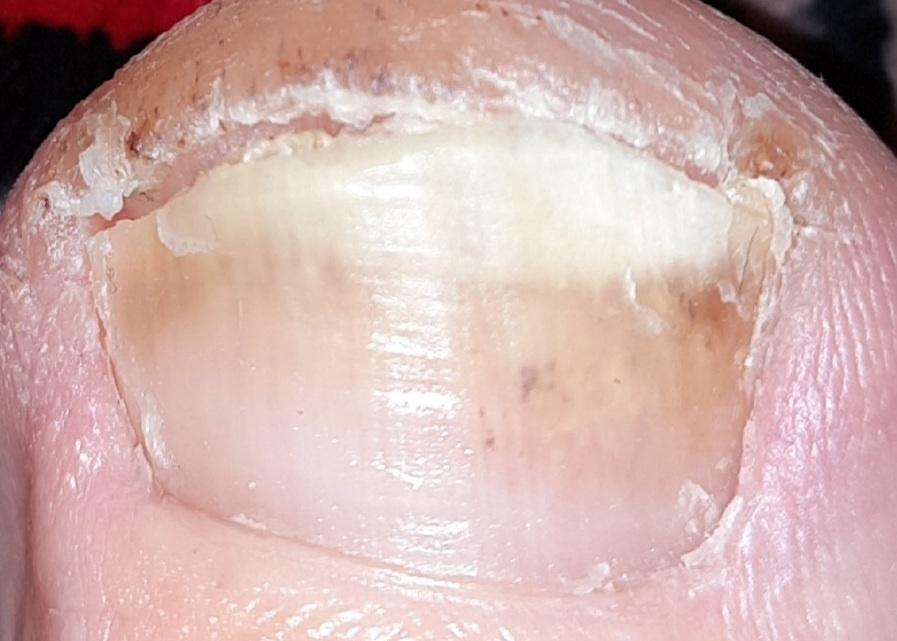
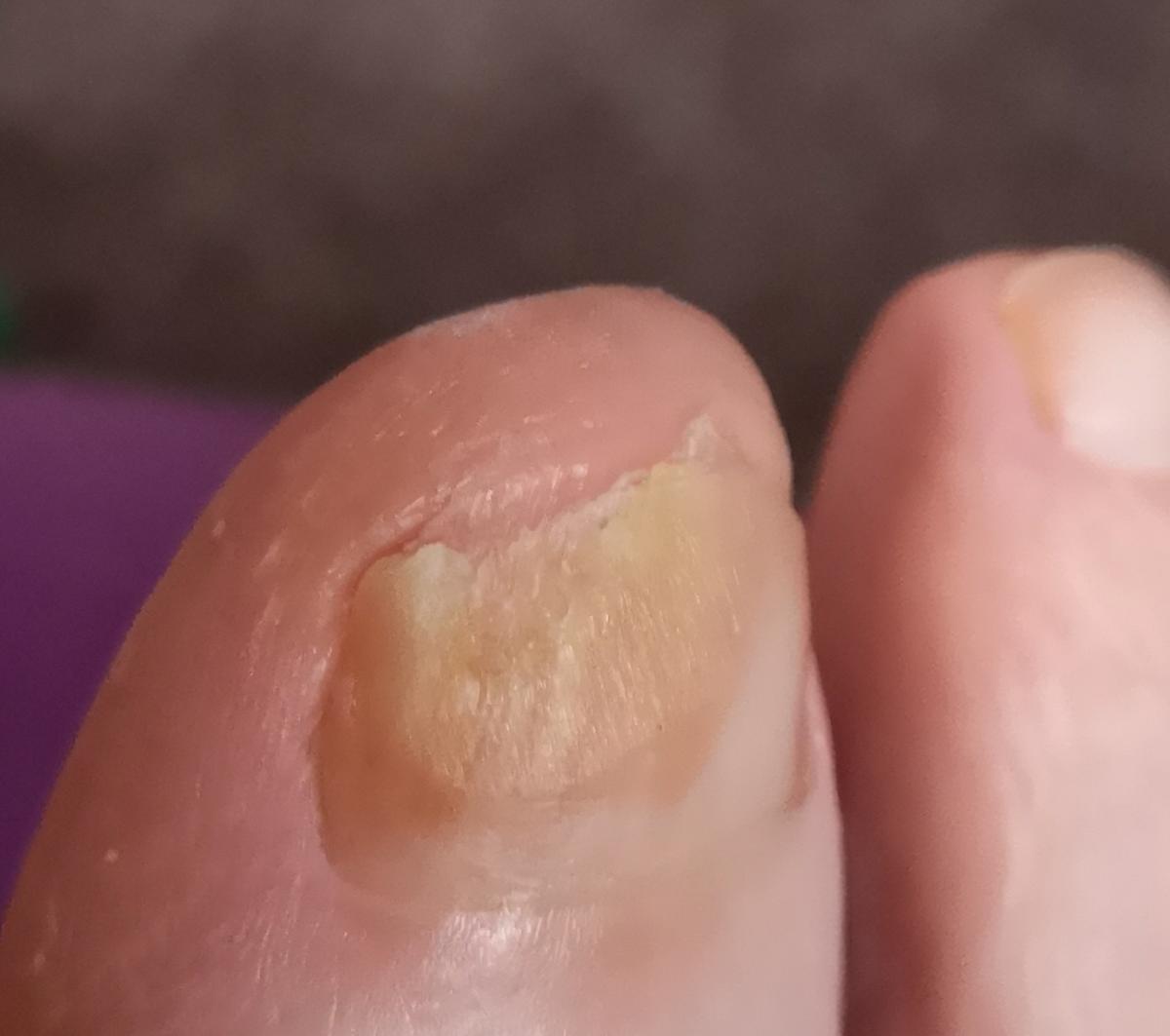
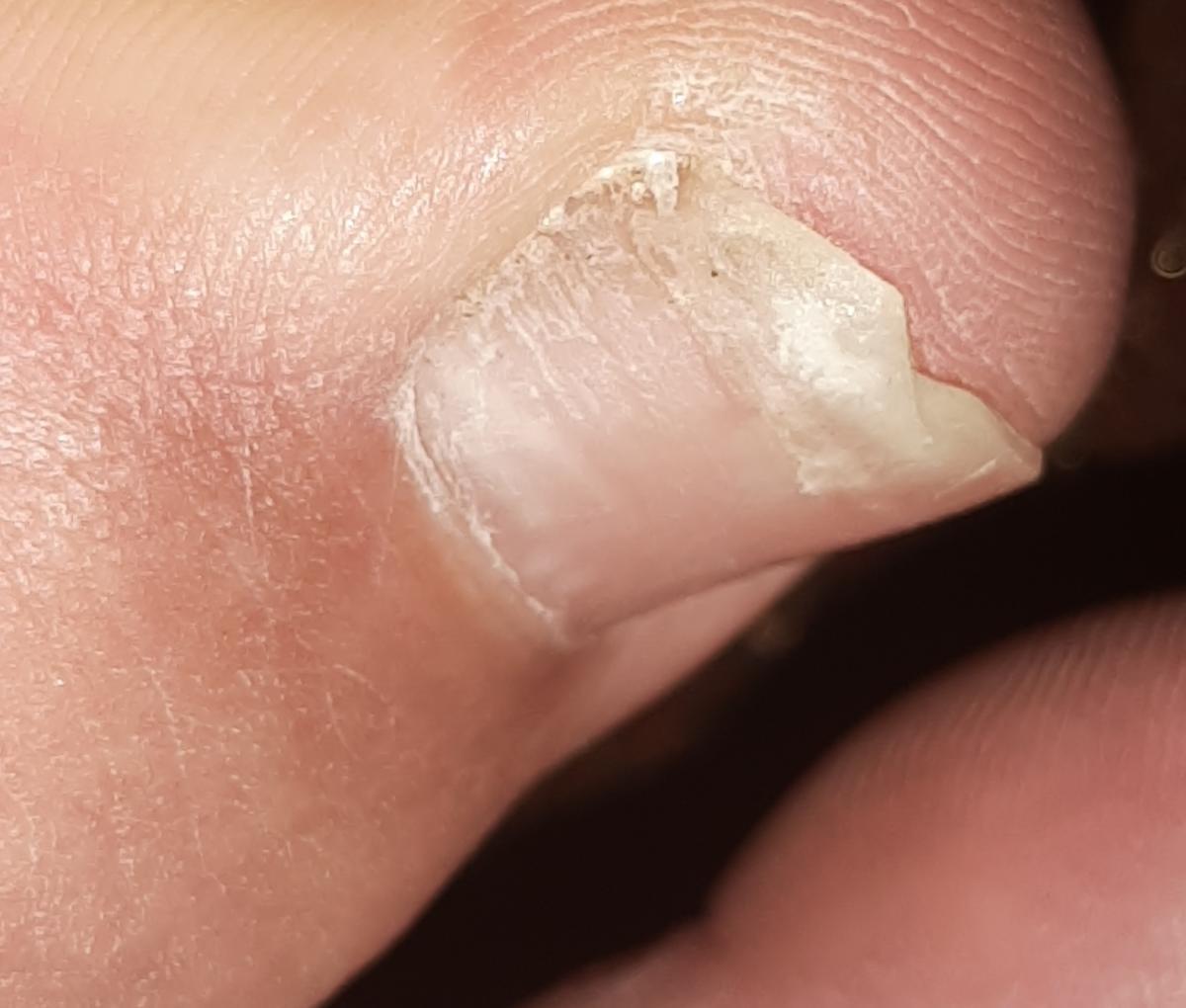
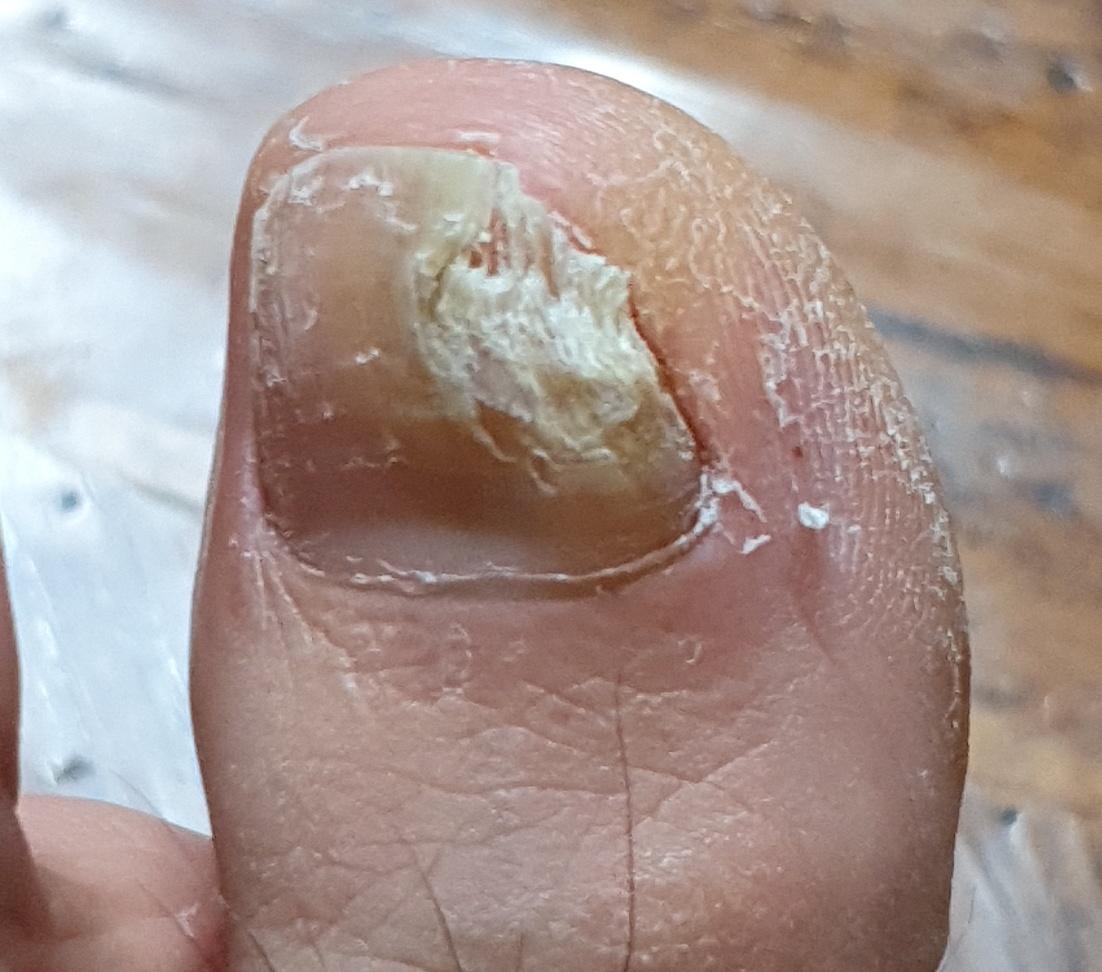
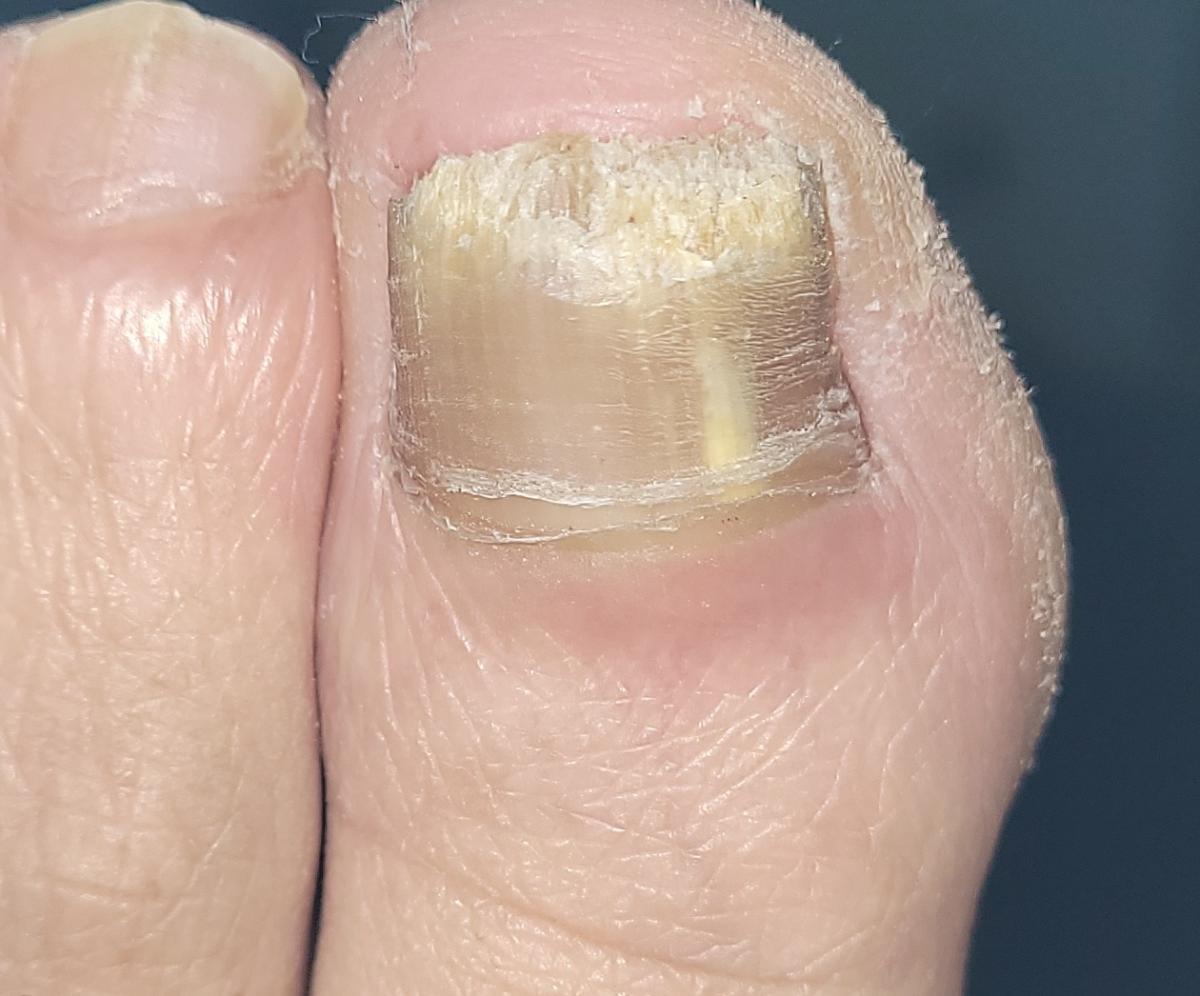
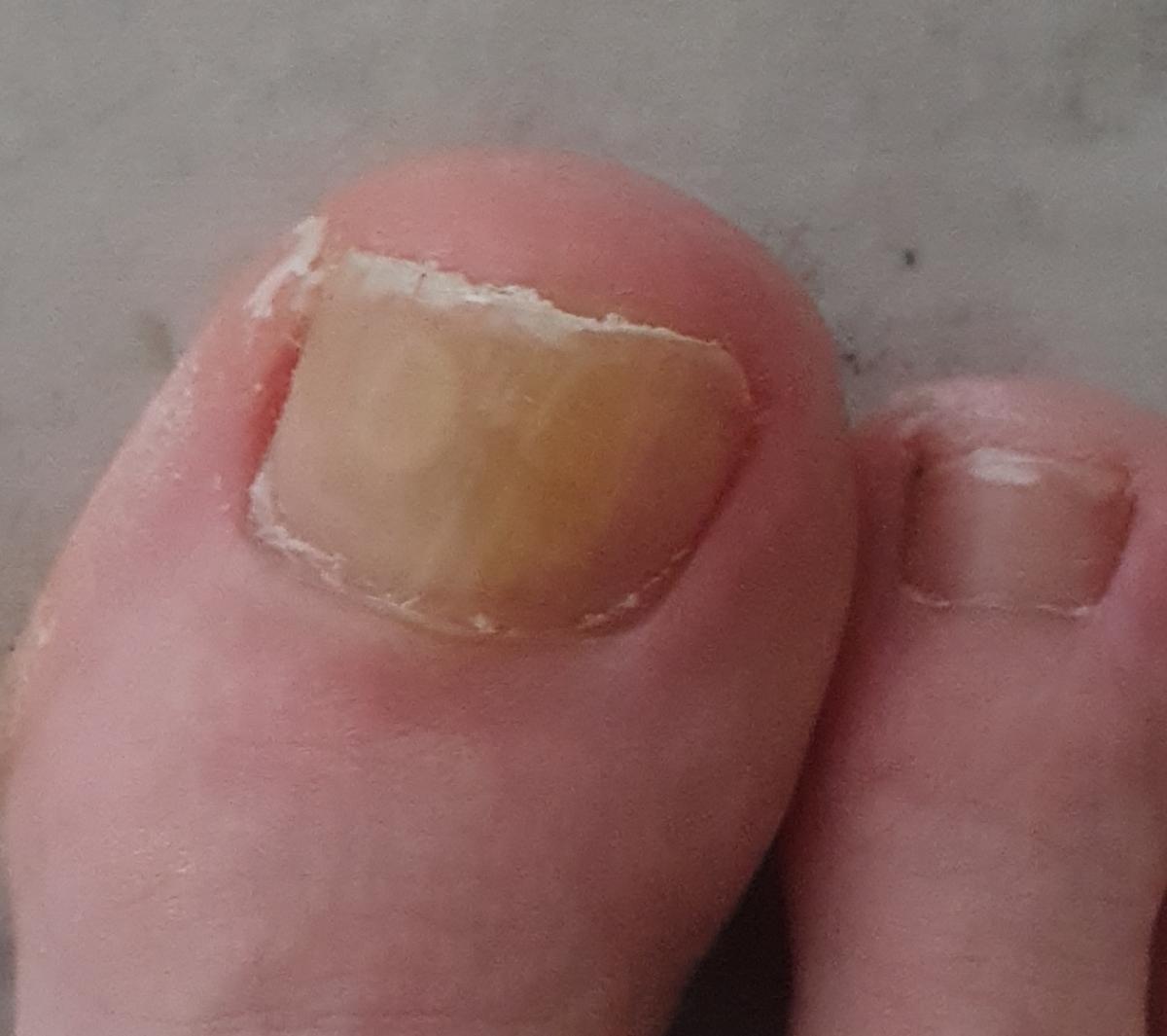
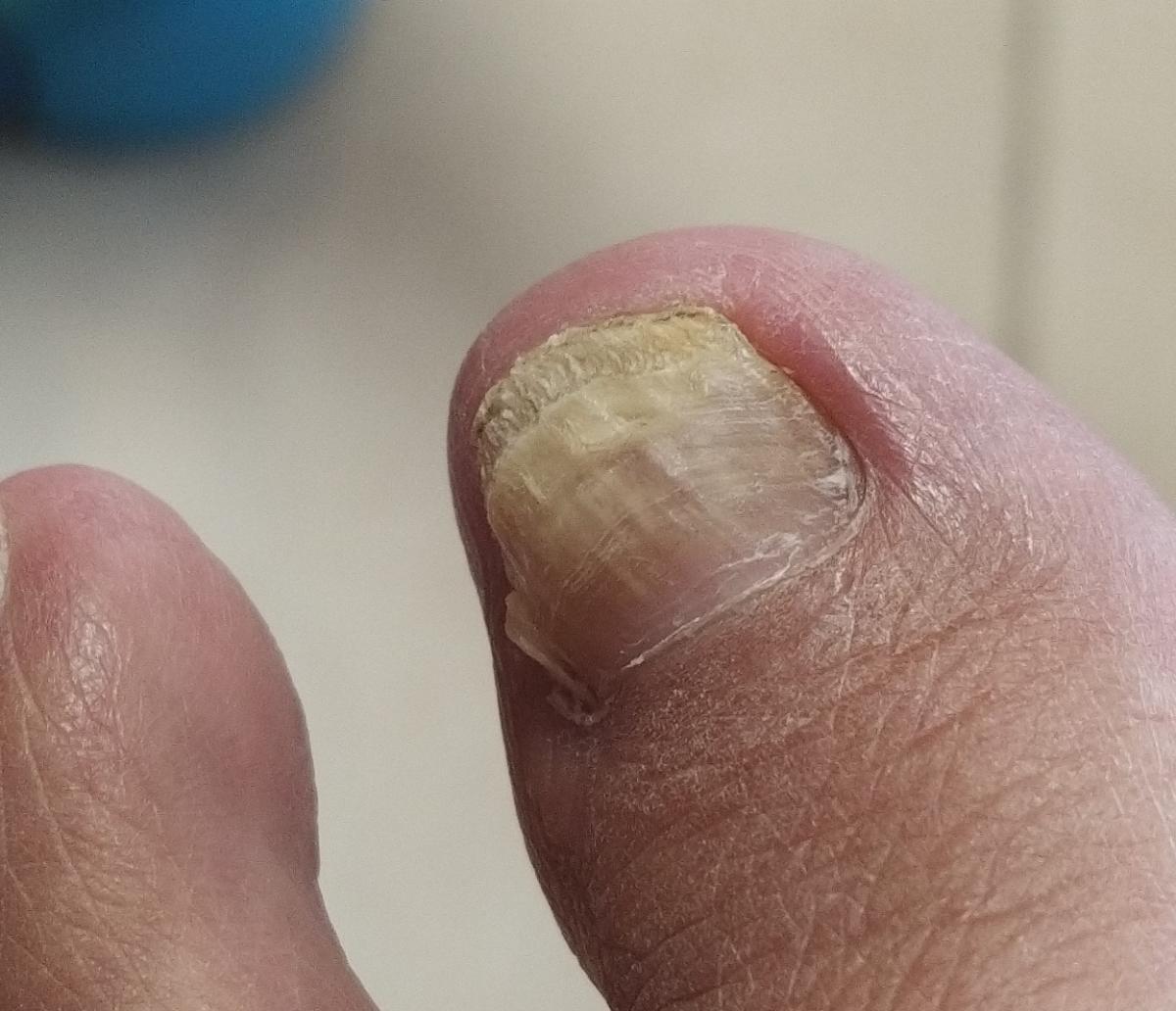
The appearance of onychomycosis can vary greatly depending on the form and stage.
Most commonly observed:
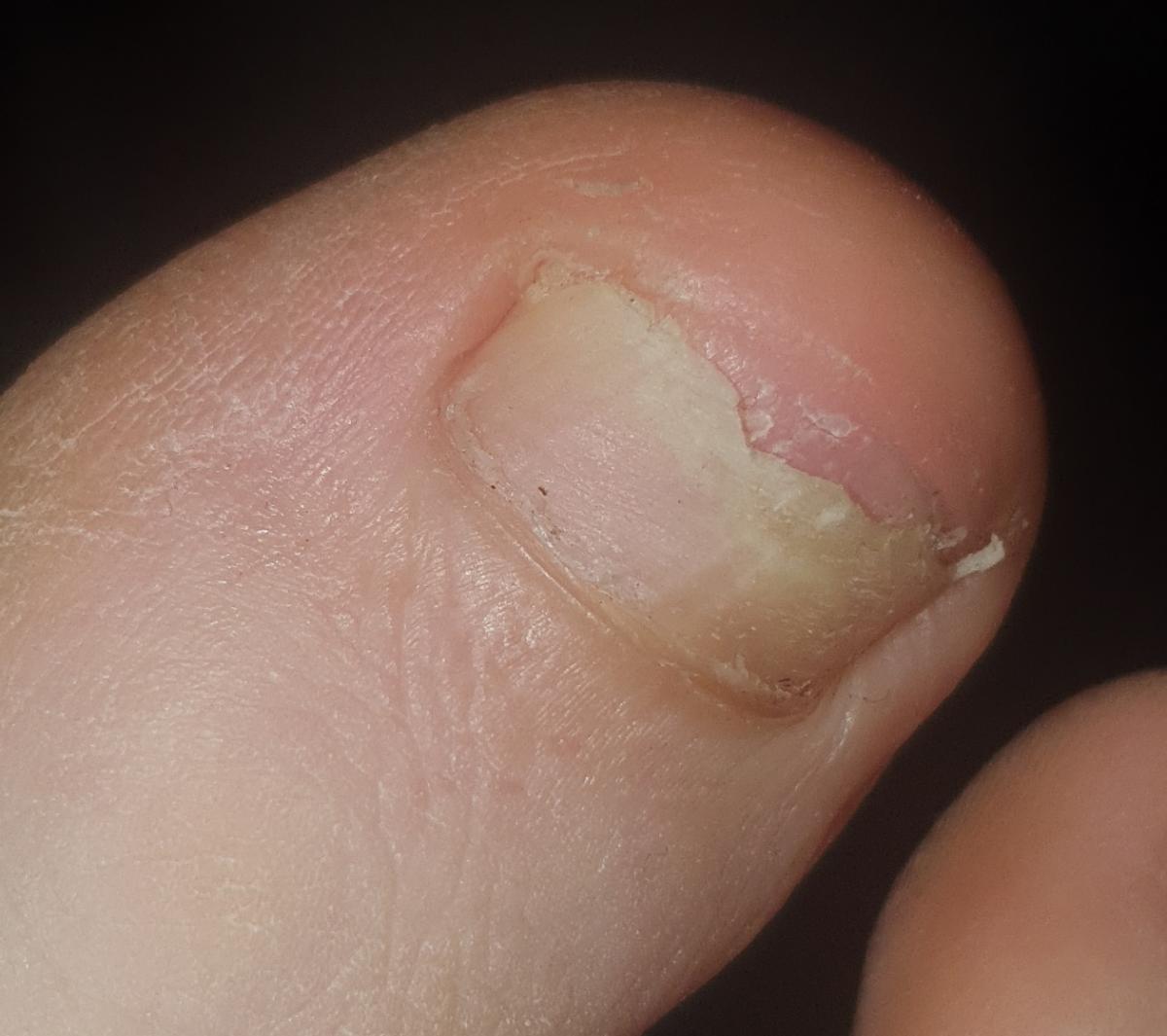
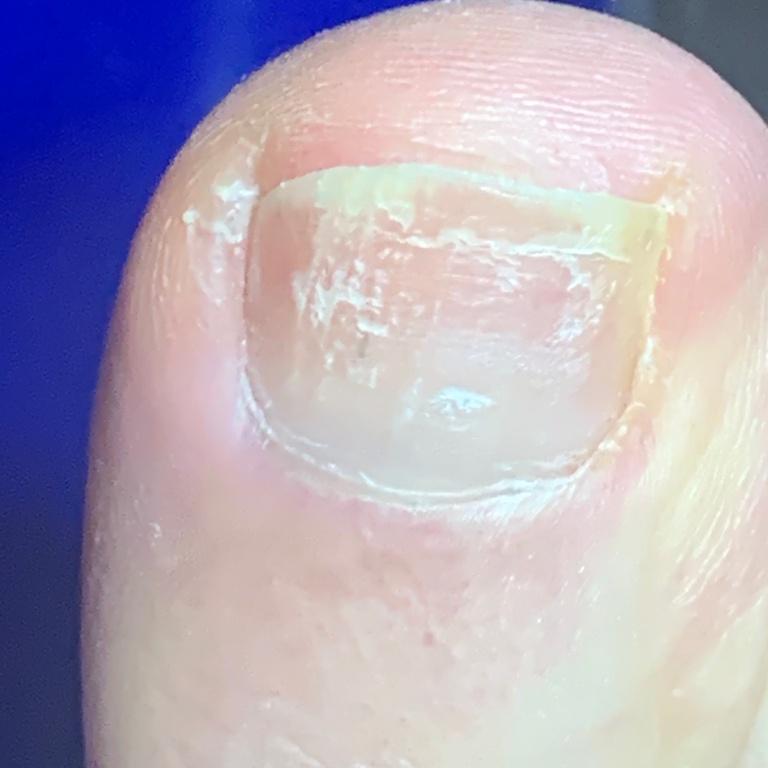
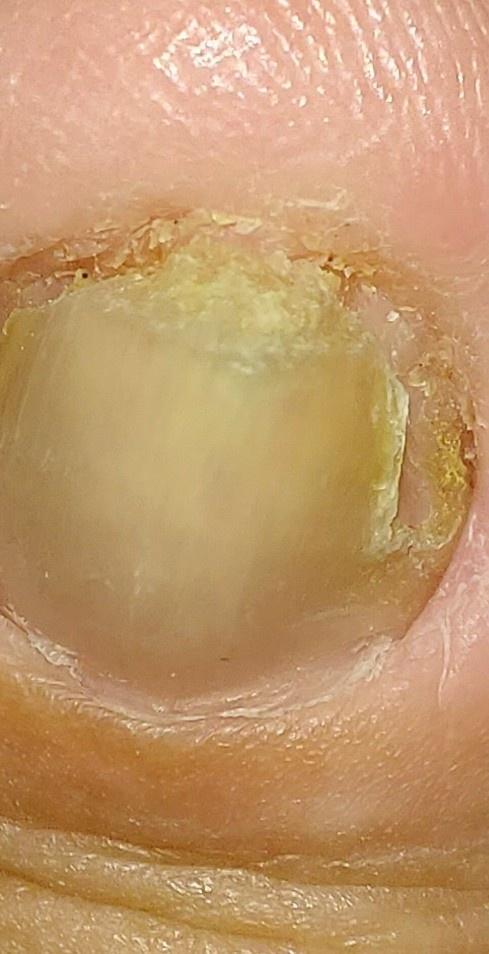
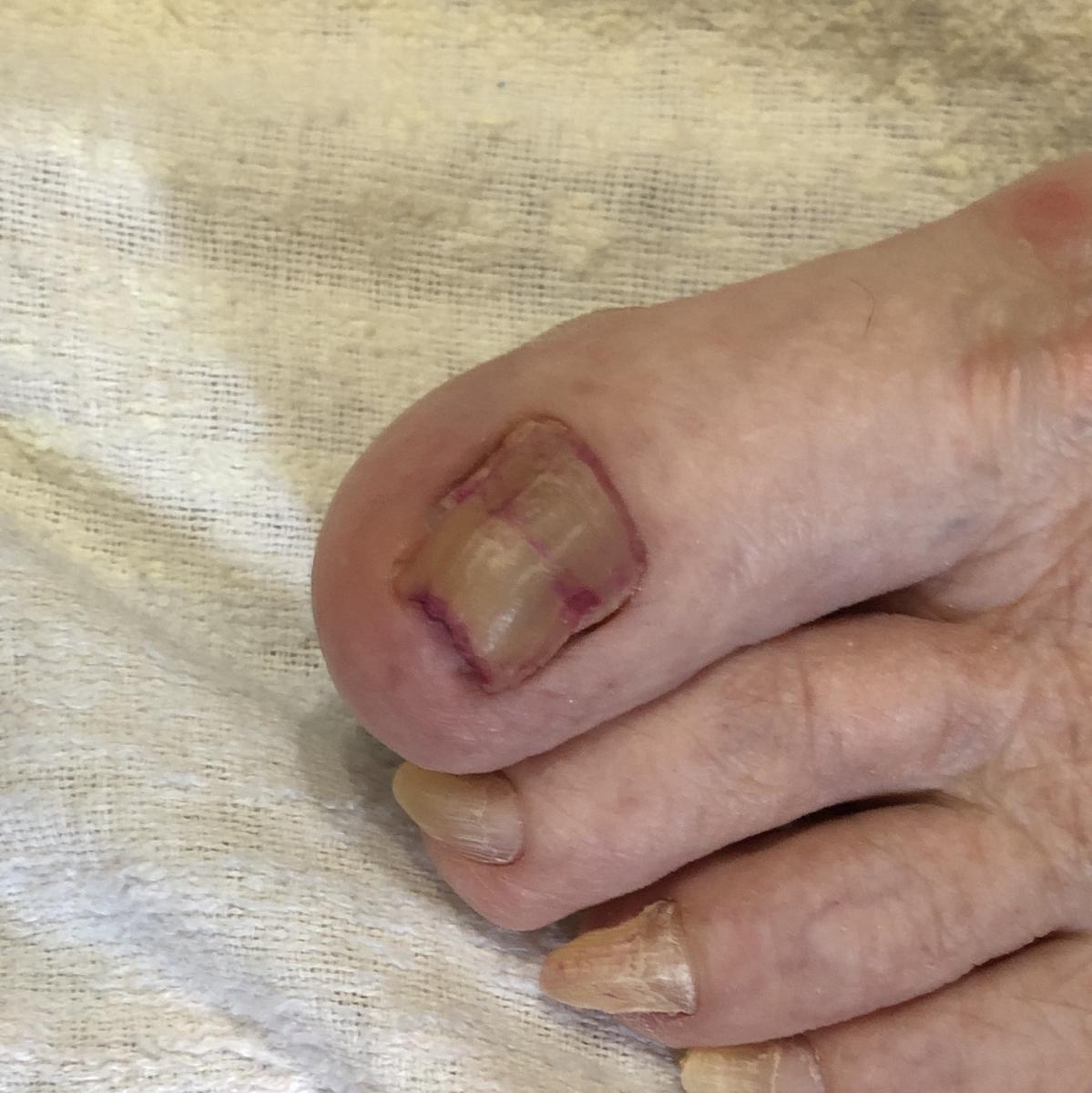
- change in nail color — yellow, white, gray, or dull appearance
- thickening of the nail plate
- irregular surface, ridges, or crumbling
- nail separation from the nail bed
Sometimes the infection starts at the edge of the nail and gradually spreads toward the base. In other cases, changes begin at the nail base or appear as white spots on the surface.
Over time, the nail may deform and partially break down. Manifestations vary from subtle to severe.
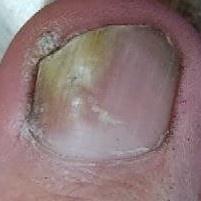
Below in the article you can view real photos to better understand how the condition looks.
Main symptoms
The main signs are changes in nail appearance:
- discoloration (yellowing, whitening, dullness)
- thickening or thinning of the nail
- brittleness and crumbling
- nail detachment
The disease usually develops slowly and may remain painless for a long time. Pain or discomfort may appear with advanced changes or pressure from footwear.
Causes
Onychomycosis develops due to infection with fungi that break down keratin — the main structural protein of the nail.
Infection may occur through:
- contact with contaminated surfaces (floors, mats, shoes)
- shared personal items (nail scissors, towels)
- close contact with an infected person
Risk factors include:
- increased moisture and foot sweating
- tight or poorly ventilated footwear
- minor nail injuries
- weakened immune system
- chronic diseases (e.g., diabetes)
How it develops
Fungi enter the nail or under it and gradually multiply. They destroy keratin, which makes the nail strong.
As a result, the nail plate loses its structure, becomes brittle, changes color, and deforms.
The infection may spread from the edge of the nail toward the base or vice versa. In some cases, only the surface is affected.
Without treatment, the process usually progresses slowly but may involve more nails over time.
Forms and types
There are several types of onychomycosis.
By location:
- infection starting from the nail edge and spreading
- changes starting at the nail base
- white or yellow spots on the nail surface
By structural changes:
- mild form — only color changes
- thickened form — nail becomes dense and irregular
- thinned form — nail becomes fragile and may detach
These differences are important for choosing treatment.
When to see a doctor
Seek medical attention if:
- nail color or structure changes
- the nail thickens, crumbles, or detaches
- the infection spreads to other nails
- there is pain or discomfort
- symptoms persist for a long time
Also consult a doctor if previous treatment has failed.
Treatment
Treatment of onychomycosis aims to eliminate the fungus and restore healthy nail growth.
Depending on the case:
- topical treatments (lacquers, creams, solutions) — for limited infection
- systemic antifungal drugs — for more extensive cases
Additionally:
- regular nail care
- keeping feet dry
- avoiding reinfection risks
Treatment takes time because nails grow slowly. Even after the infection is cleared, it takes months for a healthy nail to grow back.
Therapy is always individually prescribed by a doctor.
Q&A
Can nail fungus be cured?
Yes, in most cases it can be treated successfully, but it may take several months due to slow nail growth.
Are tablets always required?
No. Mild cases may be treated with topical medications only, but more severe cases may require oral drugs.
Is onychomycosis contagious?
Yes, it can spread through surfaces and shared items, so hygiene is important.
Can you use nail polish?
Before diagnosis, it is better to avoid it because it can hide symptoms and interfere with evaluation.
Why does treatment take so long?
Because nails grow slowly and need time to fully replace the infected portion.
Can it spread to the skin?
Yes, it may spread to the feet or between toes.
Is it dangerous?
Usually not, but without treatment it can progress and significantly damage nails.
Can you get infected in a swimming pool?
Yes, humid public places are a common source of infection.
Check Your Skin Instantly
Use the Skin Scanner app – Skinive AI to take a photo of a skin lesion and get an AI-based risk assessment. It helps determine whether professional consultation is recommended, giving you fast guidance and peace of mind.
Medical sources
- World Health Organization (WHO) — Fungal infections epidemiology
- Fitzpatrick’s Dermatology, 9th Edition
- European Academy of Dermatology and Venereology (EADV) Guidelines
- American Academy of Dermatology (AAD) — Nail fungus
- Bolognia Dermatology
🇬🇧 Onychomycosis: Diagnosis and Treatment in the UK
If you notice onychomycosis (fungal infections of the nails)—such as thickened, discolored, or brittle nails—it’s important to get a professional opinion. In the UK, you can access dermatology care via the NHS, private clinics, or online dermatology consultations.
👉 How to See a Dermatologist in the UK NHS – This main guide explains how NHS referrals work, what to expect from specialist dermatology services, and how to choose between public and private care.
Dermatologists in Major UK Cities:
- Dermatologist in London
- Dermatologist in Manchester
- Dermatologist in Liverpool
- Dermatologist in Birmingham
- Dermatologist in Leeds
- Dermatologists in Other UK cities
Online Dermatology
If you prefer remote care or faster access, try online dermatology consultations. They allow dermatologists to review images, provide advice, and guide next steps without visiting a clinic. Read more in this article: Online Dermatologists in UK.
🇦🇺 Onychomycosis: Diagnosis and Treatment in Australia
If you notice onychomycosis (fungal infections of the nails)—such as thickened, discolored, or brittle nails, it’s important to get a professional opinion. In Australia, dermatology care is available via Medicare (public system), private clinics, or online consultations.
👉 How to See a Dermatologist in Australia – This main guide explains how referrals work through GPs and public clinics, what to expect from specialist dermatology services, and how to choose between public and private care.
Dermatologists in Major Australian Cities:
- Dermatologist in Sydney
- Dermatologist in Melbourne
- Dermatologist in Brisbane
- Dermatologist in Perth
- Dermatologist in Adelaide
- Dermatologists in other Australian cities
Online Dermatology
For faster access or remote care, online dermatology consultations allow dermatologists to review images, provide advice, and guide next steps without visiting a clinic. Read more in this article: Online Dermatologists in Australia.
Images of nail fungus:
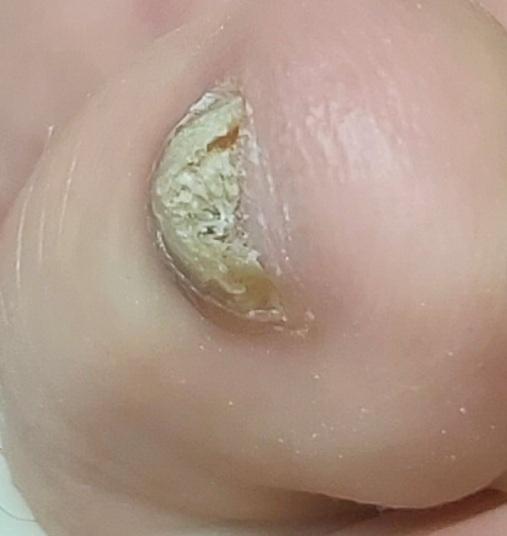

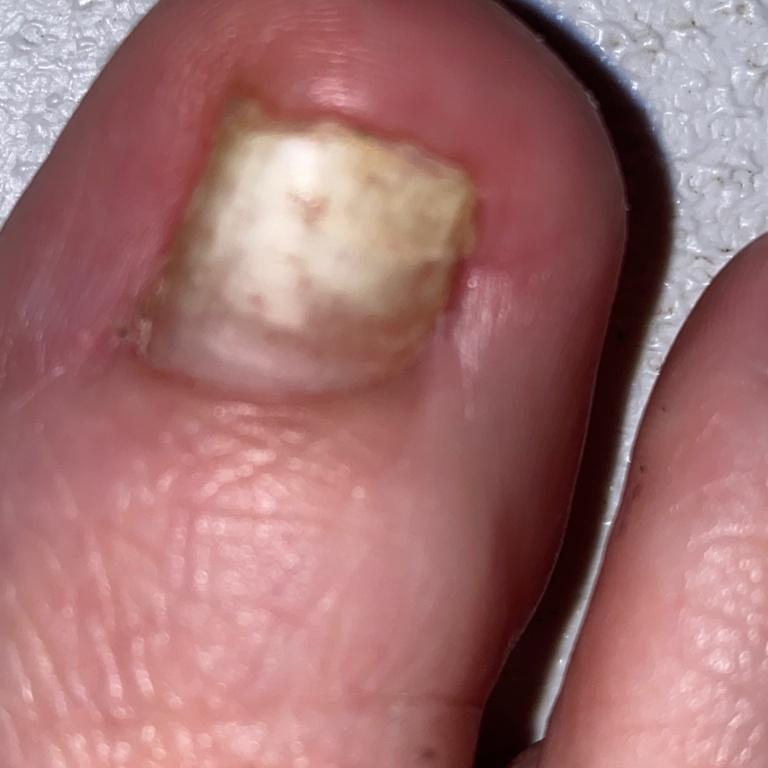
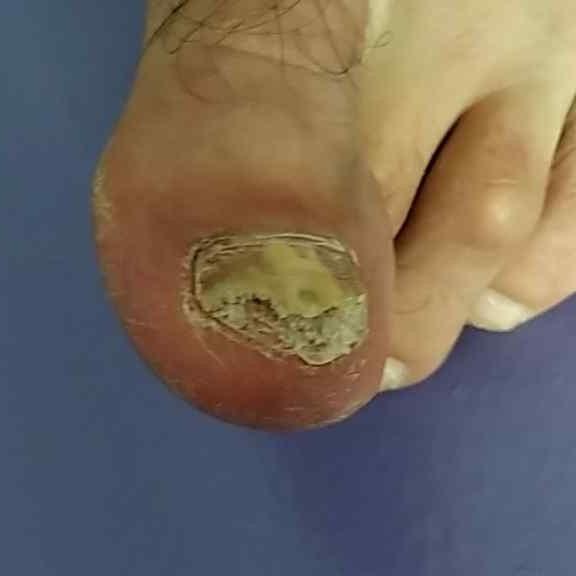
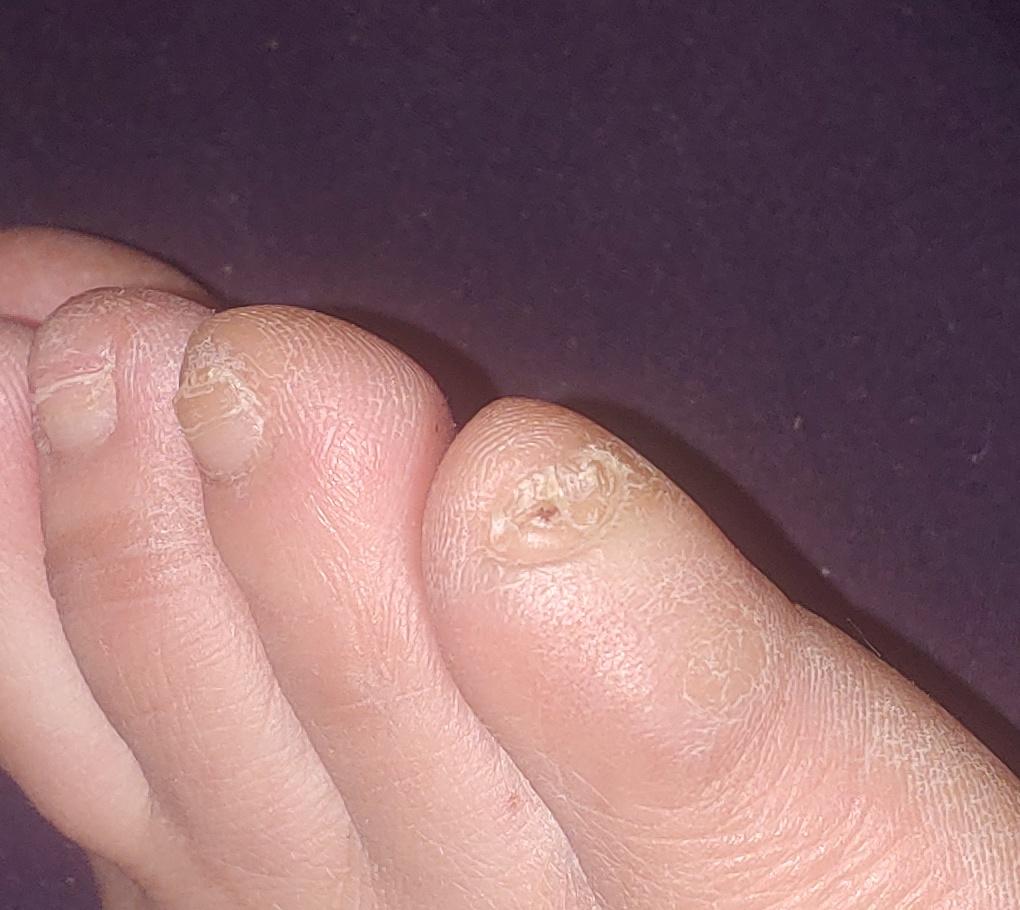
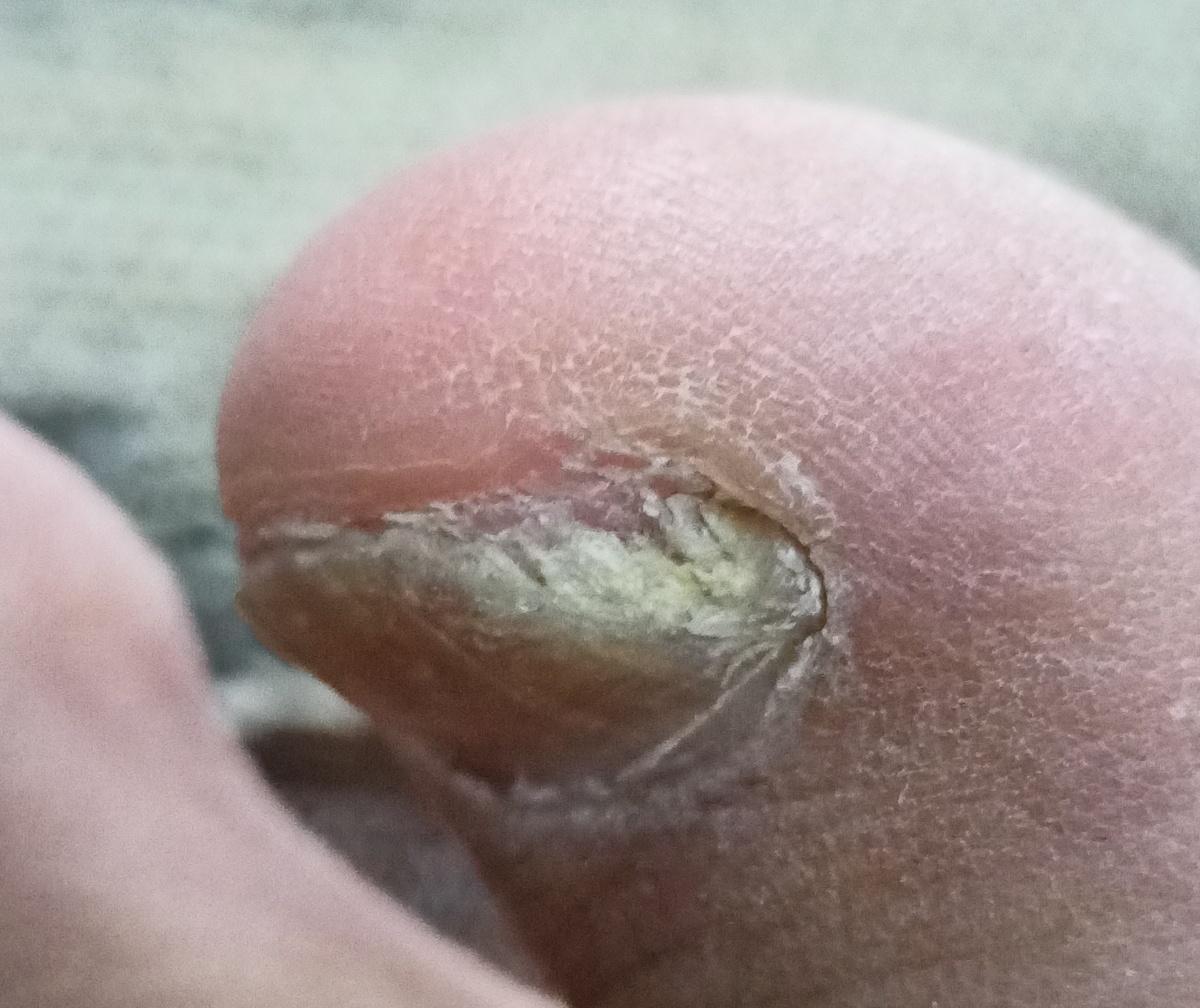
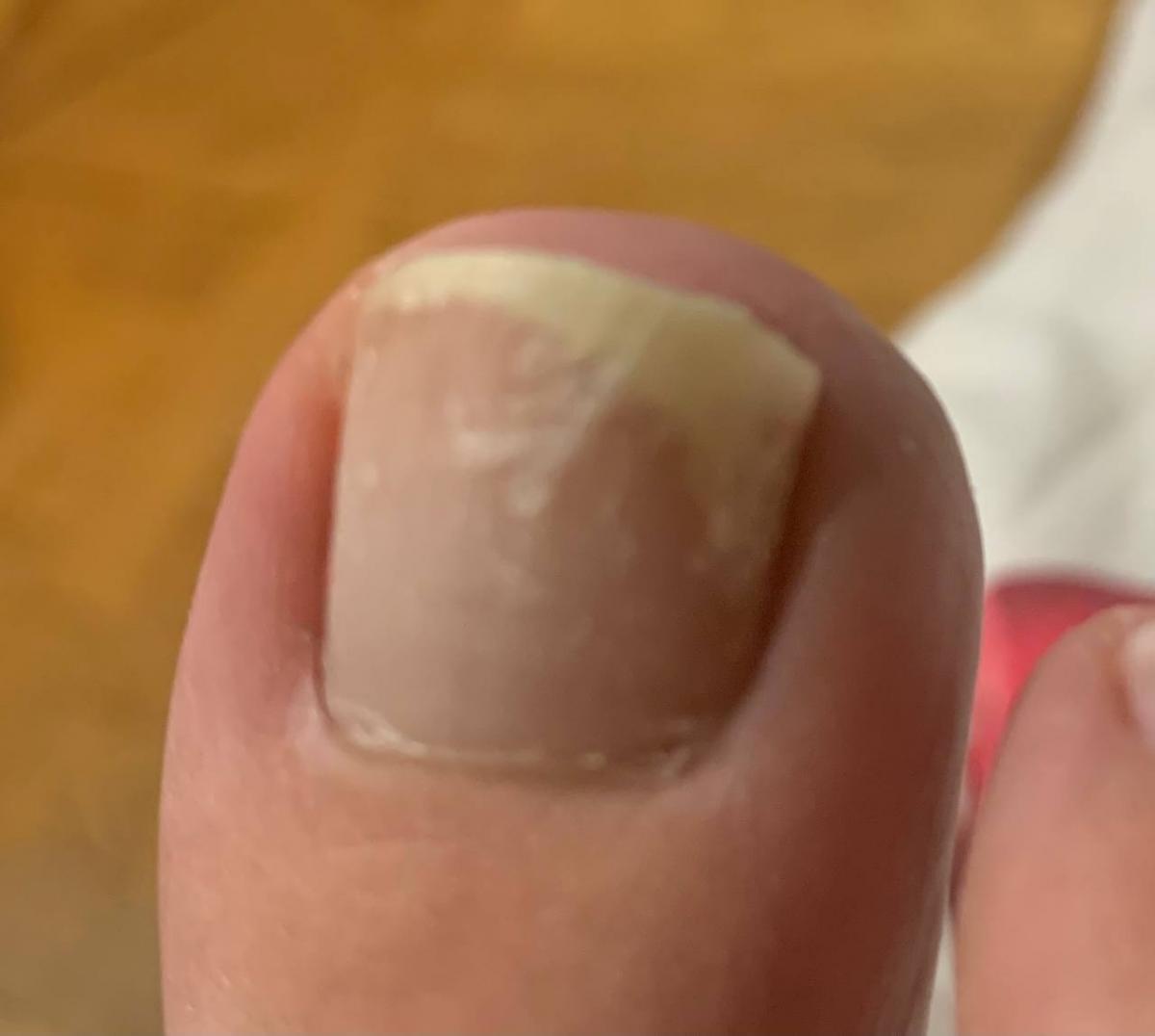
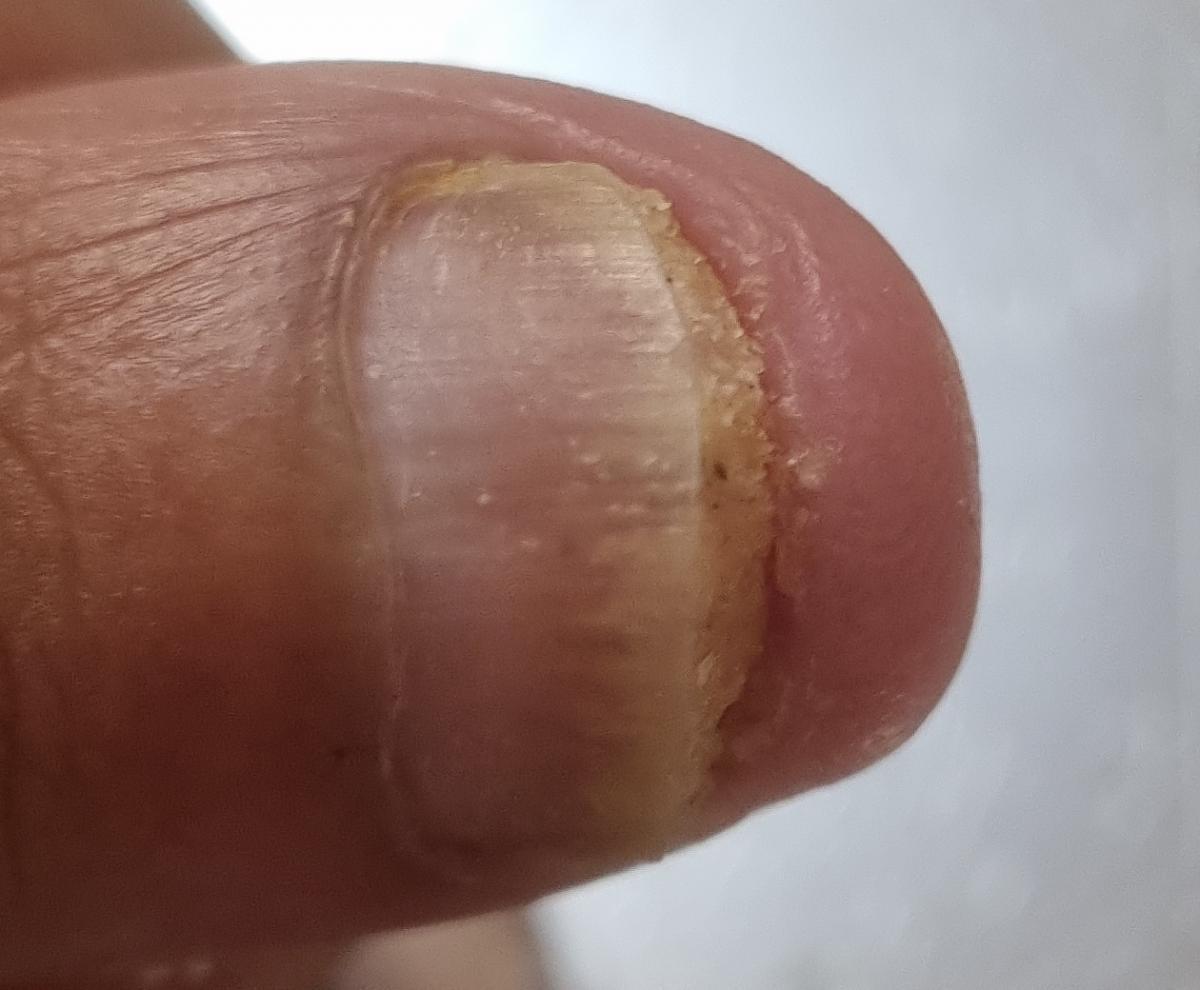
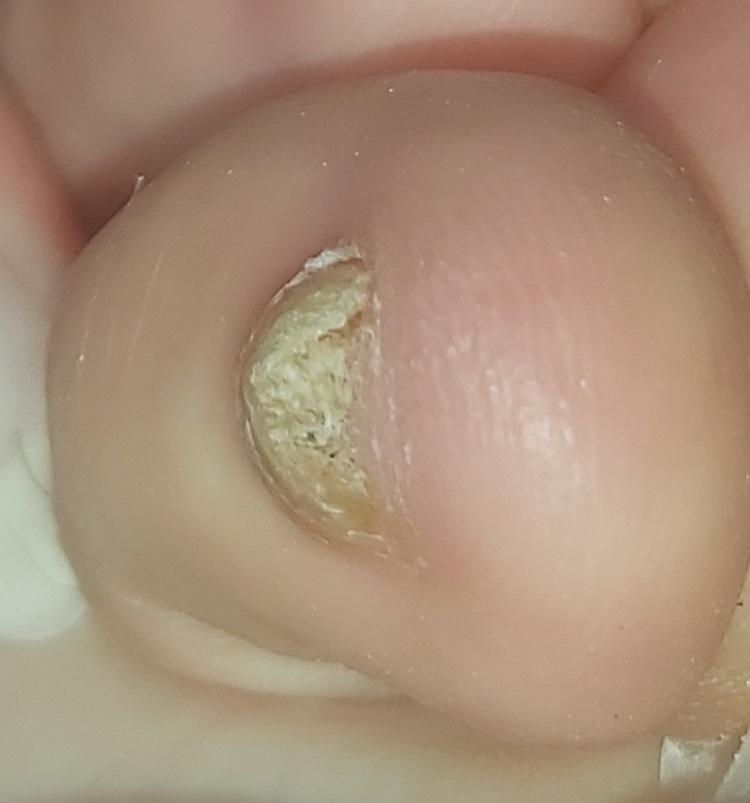
** Should you identify any copyright infringement regarding the images on this page, kindly reach out to us at info@skinive.com.
Furthermore, please be advised that these photos are not authorized for any purpose.