
Herpes simplex is a viral disease of the skin and mucous membranes that causes painful blisters, most often on the lips. It is caused by the herpes simplex virus (HSV), which remains in the body for life after infection.
There are two main types of the virus: one most often affects the lips and face, the other the genital area. However, both types can appear on different parts of the body.
It is a very common condition. In most cases, herpes is mild and resolves within 1–2 weeks, but it can recur periodically. The disease is contagious, especially during active outbreaks.
What to do if you suspect it
If you notice burning, redness, or the appearance of blisters on the skin or mucous membranes, it is important not to ignore the symptoms.
First step — consult a doctor: a general practitioner or dermatologist.
Until medical evaluation, avoid touching or popping the blisters. This can increase viral spread and delay healing.
If outbreaks occur frequently, are very painful, or affect the eye area, seek medical care as early as possible.
Early consultation helps shorten the duration of outbreaks and reduce the risk of complications.
What the condition looks like
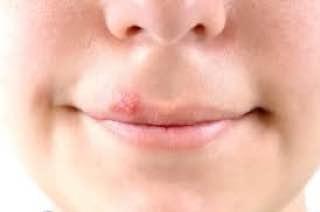
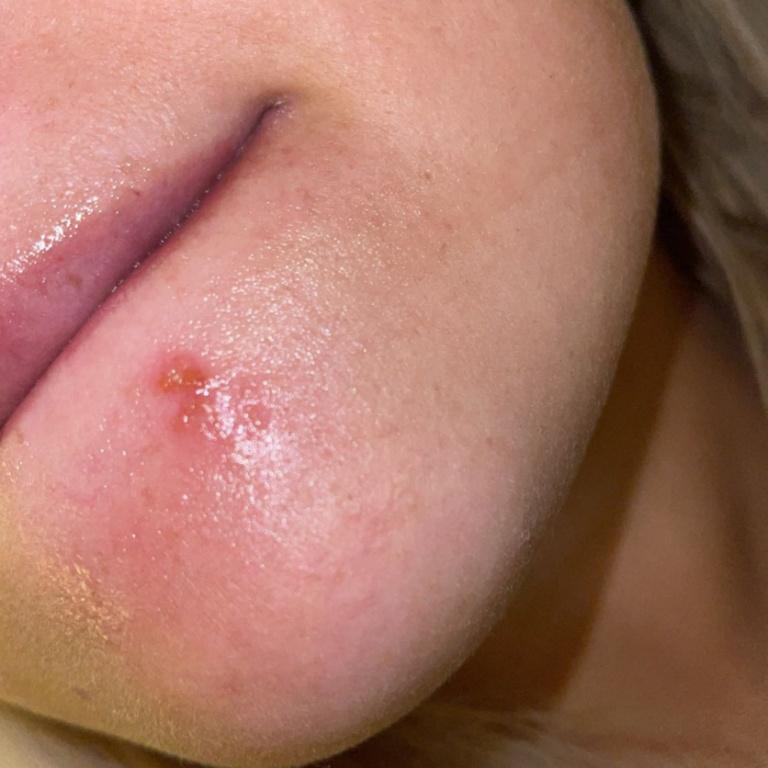
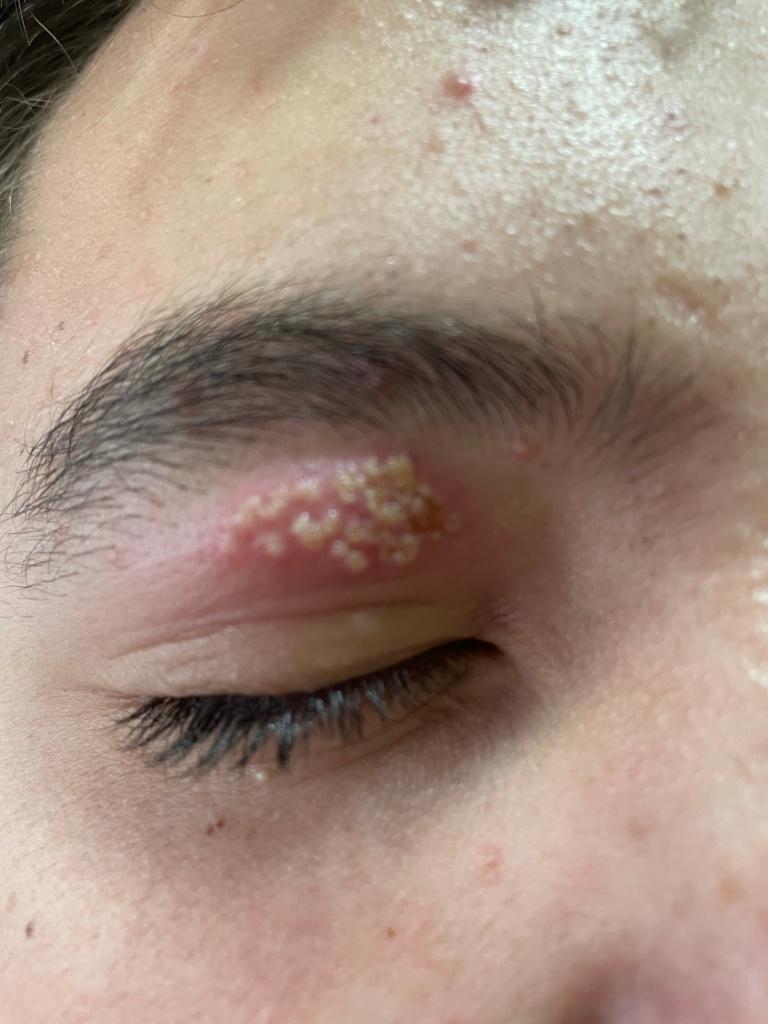
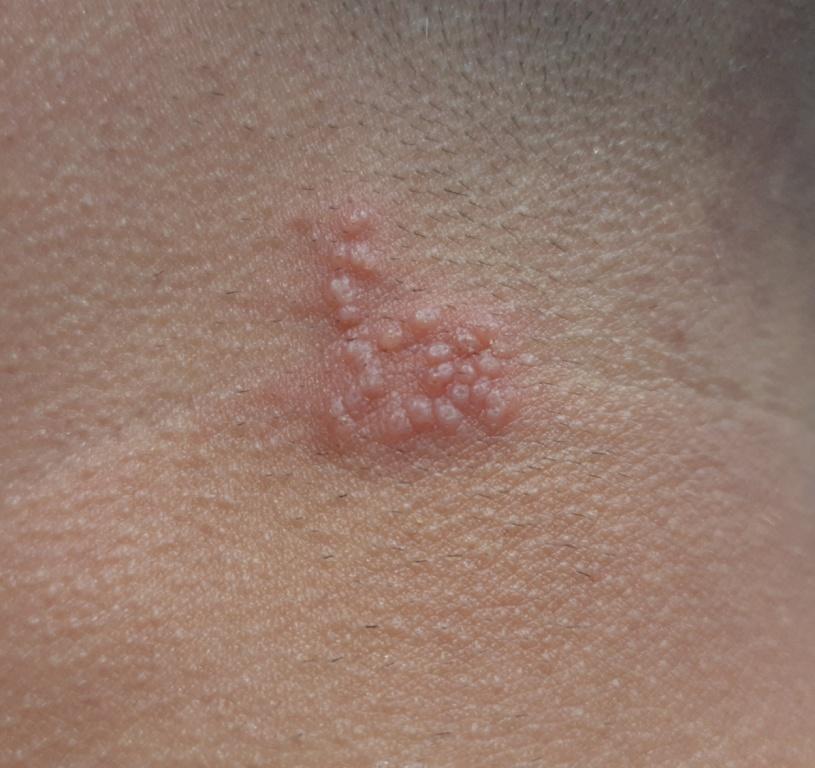
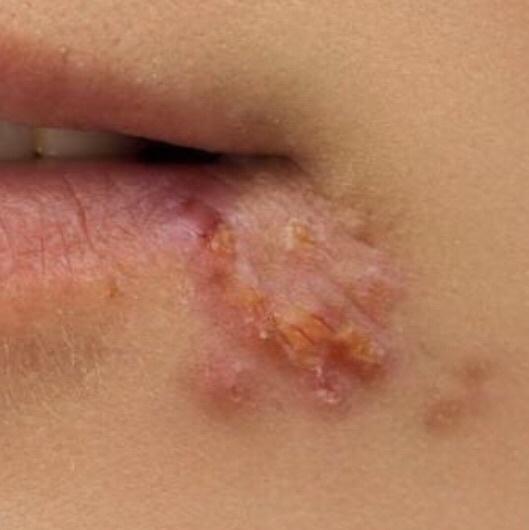
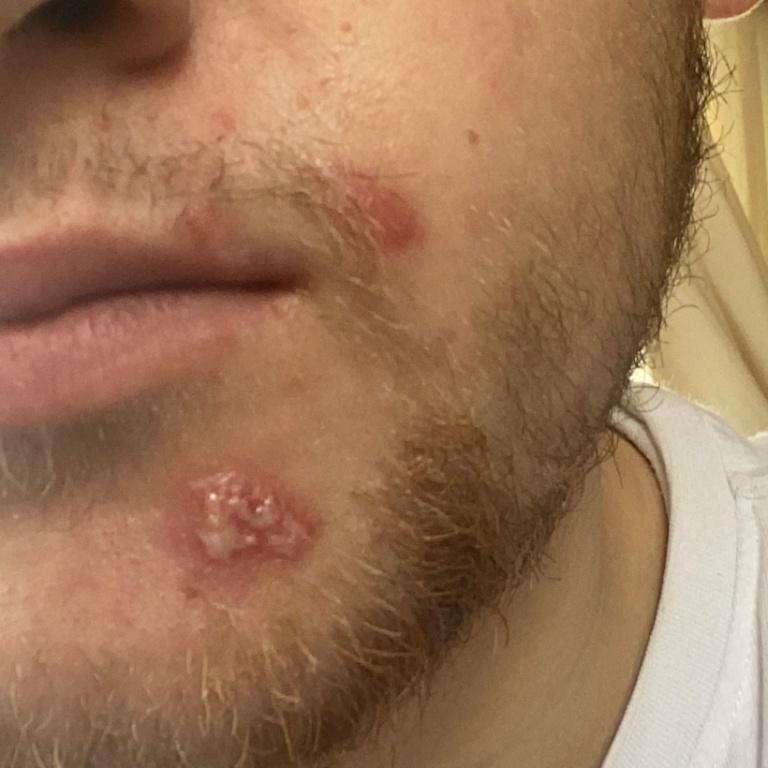
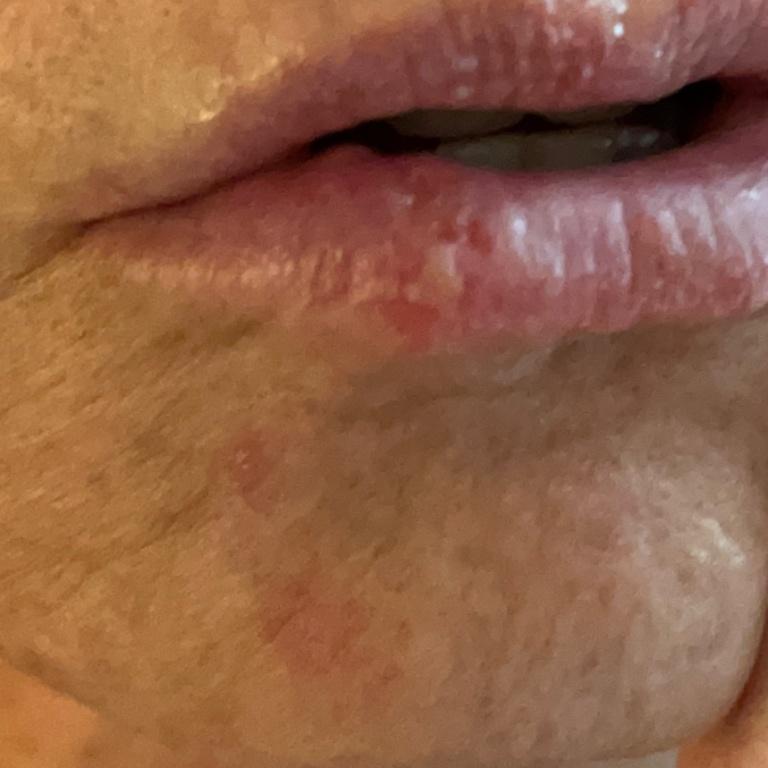
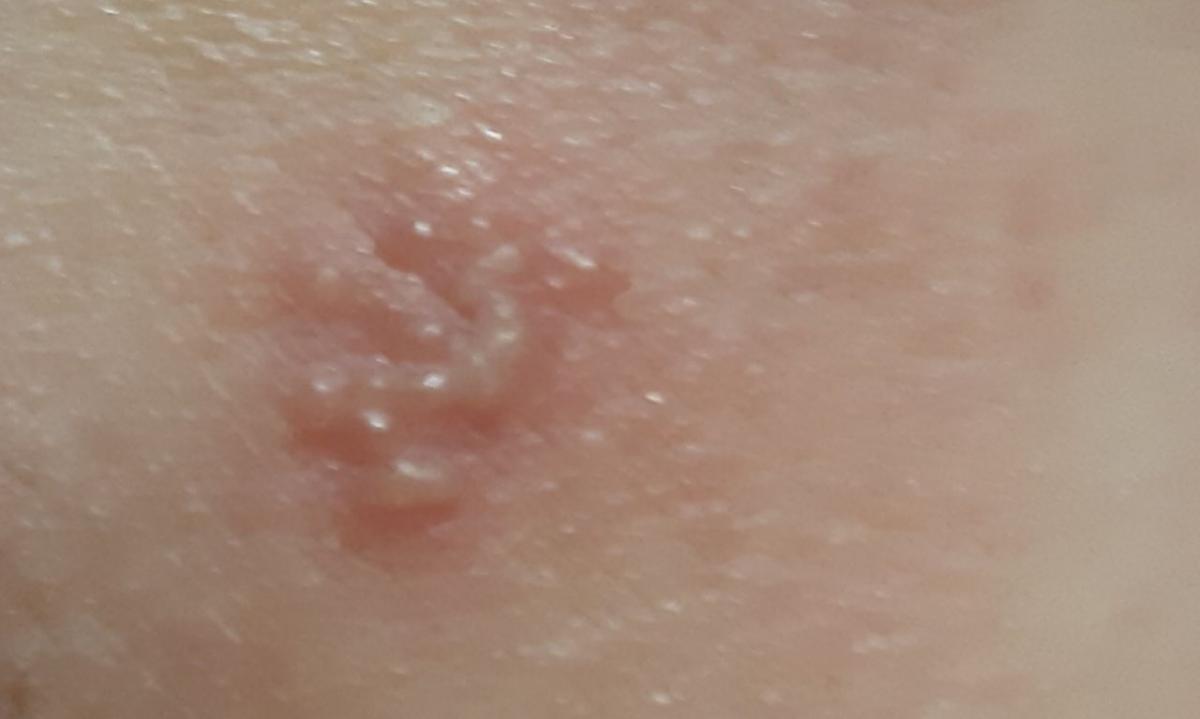
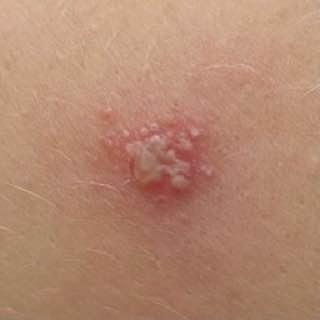
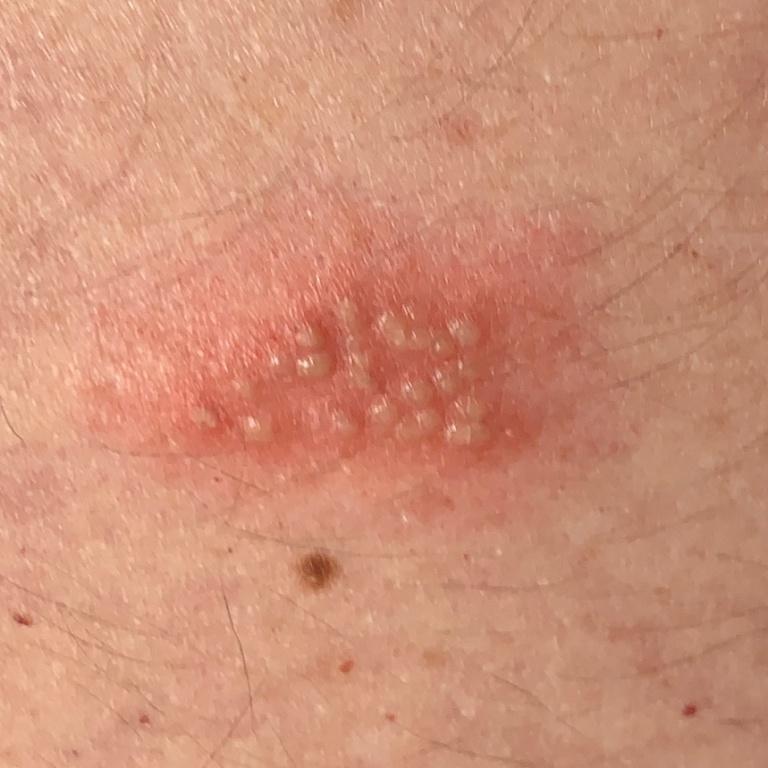
Herpes usually starts with tingling, burning, or itching on the skin. Within 1–2 days, small fluid-filled blisters appear in that area.
They form clusters on red and inflamed skin or mucous membranes. Over time, the blisters rupture, leaving small erosions that later crust over and heal.
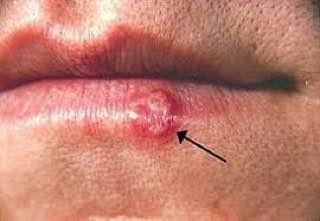
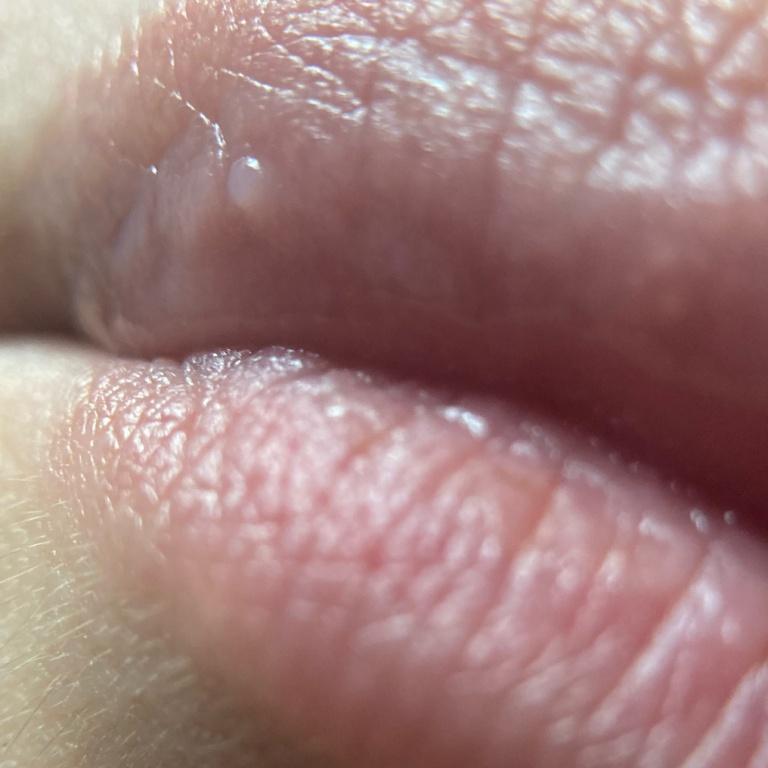
Most commonly, lesions appear on the lips, around the mouth, and on the face. Other locations are also possible.
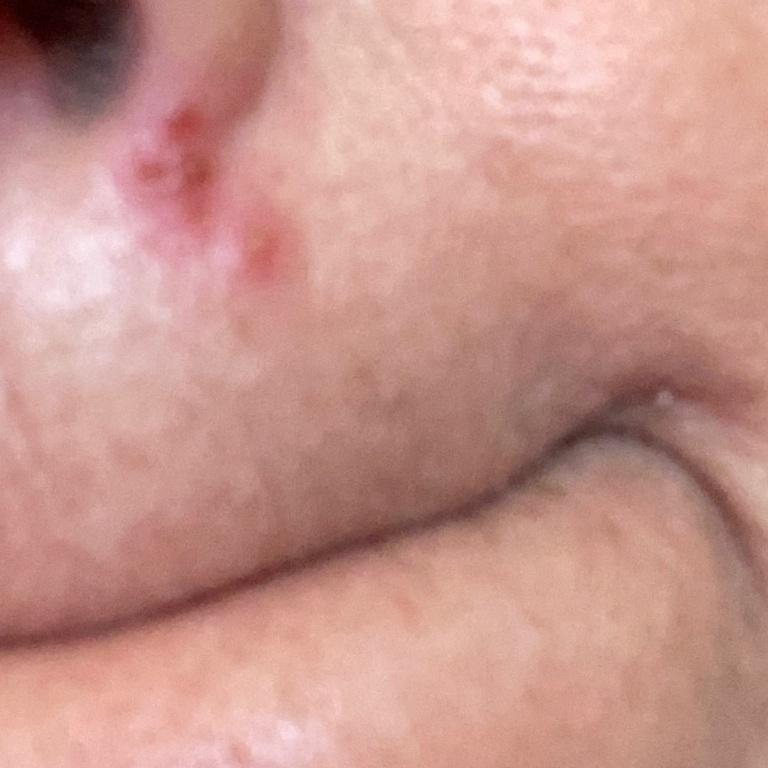
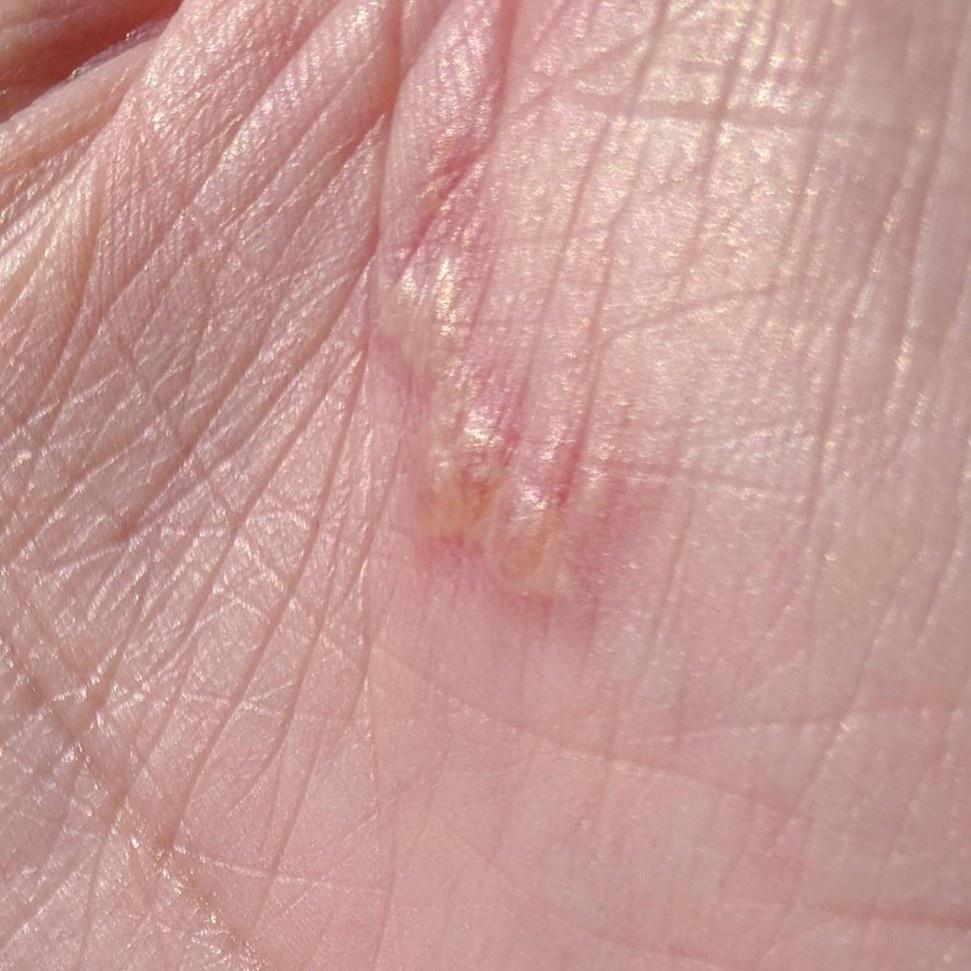
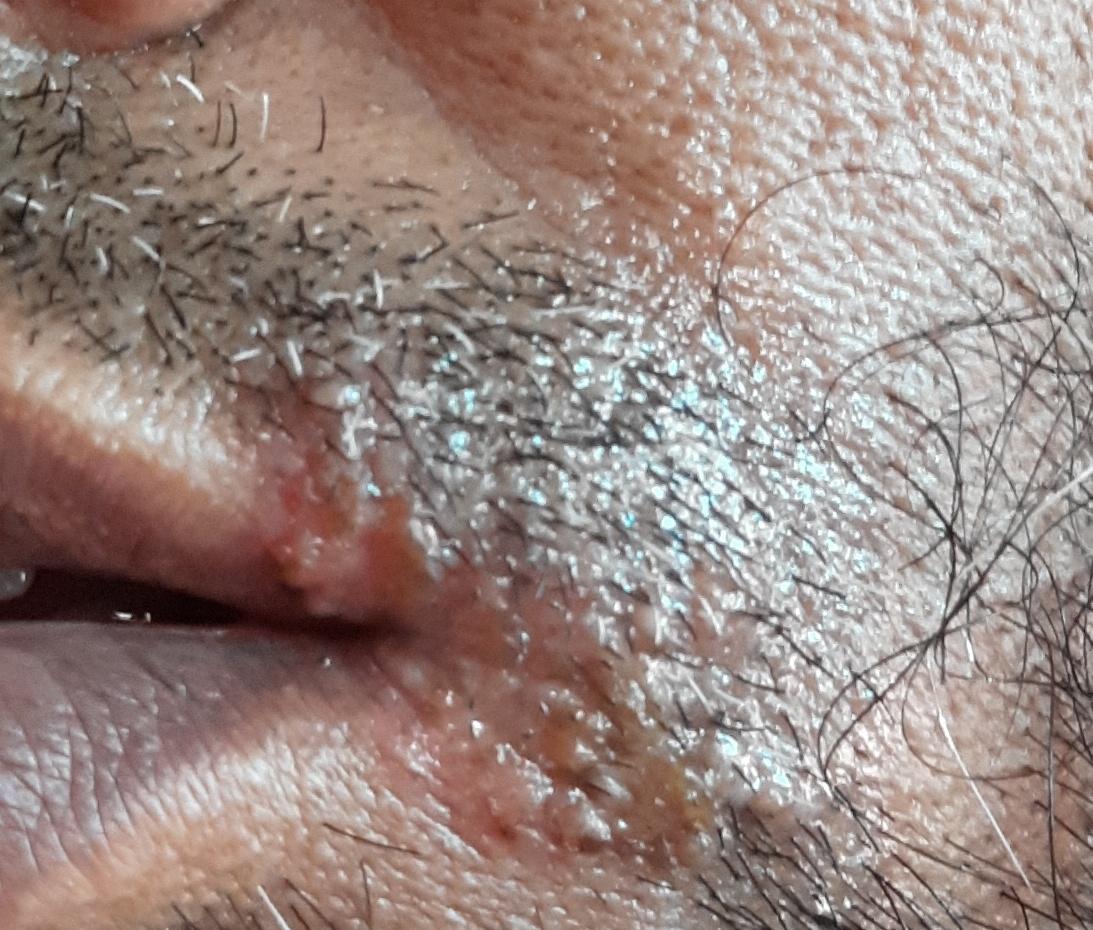
Below in the article you can view real photos to better understand how the condition appears.
Main symptoms
Main manifestations are related to lesions and local discomfort.
Common signs include:
- burning and tingling before lesions appear
- painful blisters
- itching and discomfort
- redness and swelling of the skin
Swollen lymph nodes may also occur.
Causes
The cause is infection with the herpes simplex virus.
After initial infection, the virus remains dormant in nerve cells. Under certain conditions, it becomes active again and causes new outbreaks.
Transmission occurs:
- through close skin-to-skin contact
- through saliva (e.g., kissing)
- through shared personal items
How it develops
After entering the body, the virus travels to nerve cells and remains there long-term.
When immune defense weakens, it reactivates and moves to the skin or mucous membranes, causing blisters.
After healing, it returns to a dormant state but may reactivate again.
Forms and types
Types of herpes differ mainly by location, but the disease mechanism is the same.
Frequency of outbreaks varies widely — from rare episodes to several times per year.
When to see a doctor
Seek medical attention if:
- outbreaks occur frequently
- pain or discomfort is severe
- the eye area is affected
- lesions are widespread or slow to heal
- this is the first episode
People with weakened immune systems should also consult a doctor.
Treatment
Treatment aims to reduce symptoms and shorten the duration of outbreaks.
Antiviral medications are commonly used to suppress viral activity. They may be applied as creams or taken orally, depending on the situation.
Pain relief and skin care products may also be used to reduce irritation.
For frequent recurrences, preventive therapy may be recommended to reduce outbreak frequency.
It is important to understand that the virus cannot be completely removed from the body, but its activity can be controlled.
Q&A
Can herpes be completely cured?
No, the virus remains in the body, but its activity can be controlled and outbreaks reduced.
Is herpes contagious?
Yes, especially during active outbreaks, when close contact should be avoided.
Do you need treatment for herpes?
Treatment helps reduce symptoms and discomfort, especially in frequent or severe cases.
How long does herpes last?
Usually 7–14 days.
Can you pop the blisters?
No, this can spread the infection and delay healing.
Why does herpes come back?
It reactivates when the immune system is weakened.
Is herpes dangerous?
Usually not, but in some cases it requires medical supervision.
How to reduce recurrences?
Healthy lifestyle, skin protection, and following medical advice can help.
Check Your Skin Instantly
Use the Skin Scanner app – Skinive AI to take a photo of a skin lesion and get an AI-based risk assessment. It helps determine whether professional consultation is recommended, giving you fast guidance and peace of mind.
Medical sources
- World Health Organization (WHO) — Herpes Simplex Virus (HSV)
- Centers for Disease Control and Prevention (CDC) — Herpes Simplex Virus
- American Academy of Dermatology (AAD) — Herpes Simplex Overview
- National Health Service (NHS) — Cold Sores and Genital Herpes
🇬🇧 Herpes Simplex: Diagnosis and Care in the UK
If you notice herpes simplex (cold sores or oral/genital blisters), it’s important to get a professional opinion. In the UK, you can access dermatology care via the NHS, private clinics, or online dermatology consultations.
👉 How to See a Dermatologist in the UK NHS – This main guide explains how NHS referrals work, what to expect from specialist dermatology services, and how to choose between public and private care.
Dermatologists in Major UK Cities:
- Dermatologist in London
- Dermatologist in Manchester
- Dermatologist in Liverpool
- Dermatologist in Birmingham
- Dermatologist in Leeds
- Dermatologists in Other UK cities
Online Dermatology
If you prefer remote care or faster access, try online dermatology consultations. They allow dermatologists to review images, provide advice, and guide next steps without visiting a clinic. Read more in this article: Online Dermatologists in UK.
🇦🇺 Herpes Simplex: Diagnosis and Care in Australia
If you notice herpes simplex (cold sores or oral/genital blisters), it’s important to get a professional opinion. In Australia, dermatology care is available via Medicare (public system), private clinics, or online consultations.
👉 How to See a Dermatologist in Australia – This main guide explains how referrals work through GPs and public clinics, what to expect from specialist dermatology services, and how to choose between public and private care.
Dermatologists in Major Australian Cities:
- Dermatologist in Sydney
- Dermatologist in Melbourne
- Dermatologist in Brisbane
- Dermatologist in Perth
- Dermatologist in Adelaide
- Dermatologists in other Australian cities
Online Dermatology
For faster access or remote care, online dermatology consultations allow dermatologists to review images, provide advice, and guide next steps without visiting a clinic. Read more in this article: Online Dermatologists in Australia.
Images of herpes simplex:






** Should you identify any copyright infringement regarding the images on this page, kindly reach out to us at info@skinive.com.
Furthermore, please be advised that these photos are not authorized for any purpose.