
Actinic keratosis is a skin change caused by long-term sun exposure. It appears as a dry, rough, reddish patch or plaque and most often develops after the age of 40 on sun-exposed areas of the body.
The condition is not contagious, but it is considered precancerous — meaning that in some cases it can gradually progress to skin cancer.
These changes most commonly appear on the face, ears, scalp, and hands — areas that are regularly exposed to sunlight.
What to do if you suspect it
If you notice a rough patch on the skin that does not go away and gradually changes over time, it is important to see a dermatologist.
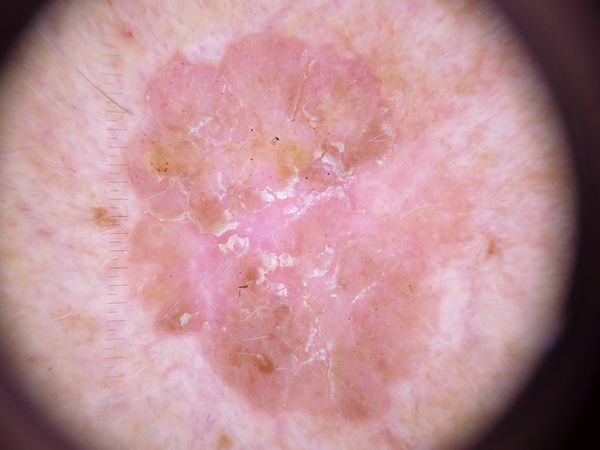
A doctor will examine the skin and, if needed, perform dermoscopy — a magnified skin examination that helps assess the structure of the lesion. In some cases, a biopsy may be required to rule out malignant changes.
Such skin changes should not be ignored, even if they are not painful. Actinic keratosis can progress, so early diagnosis helps reduce risks.
It is also important not to self-treat or damage the affected area.
What the condition looks like
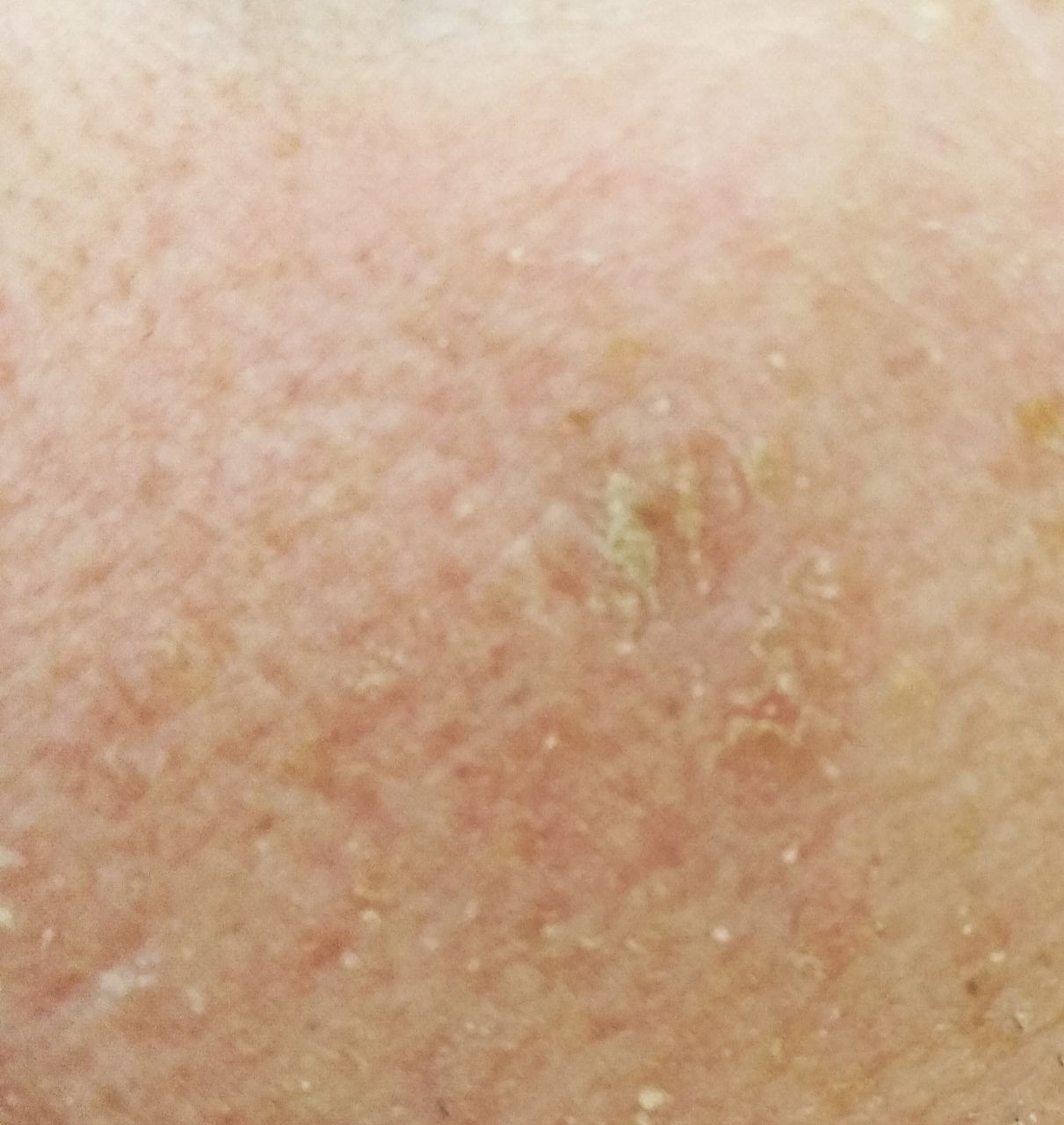
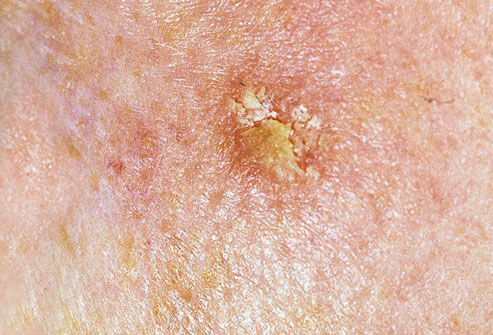
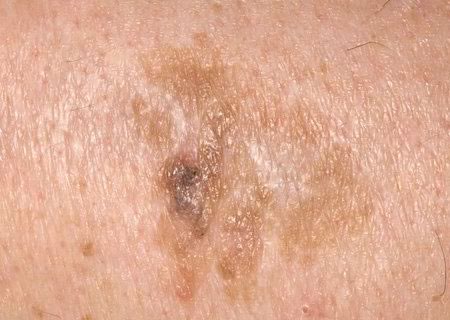
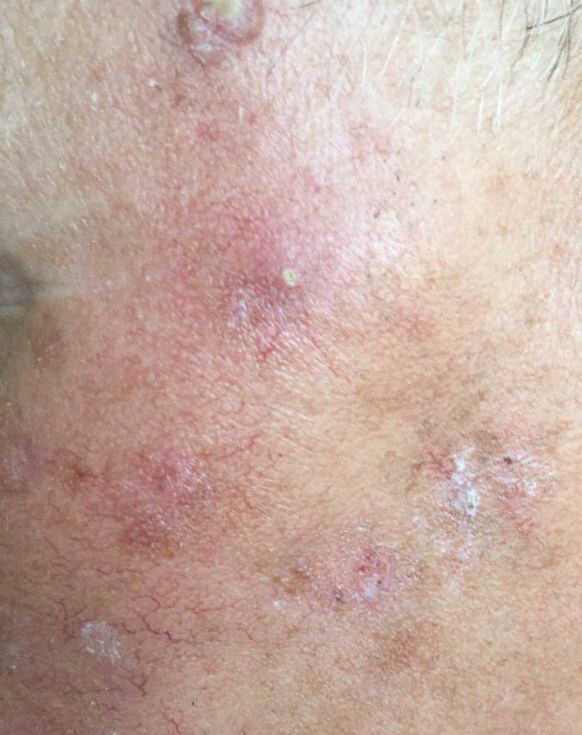
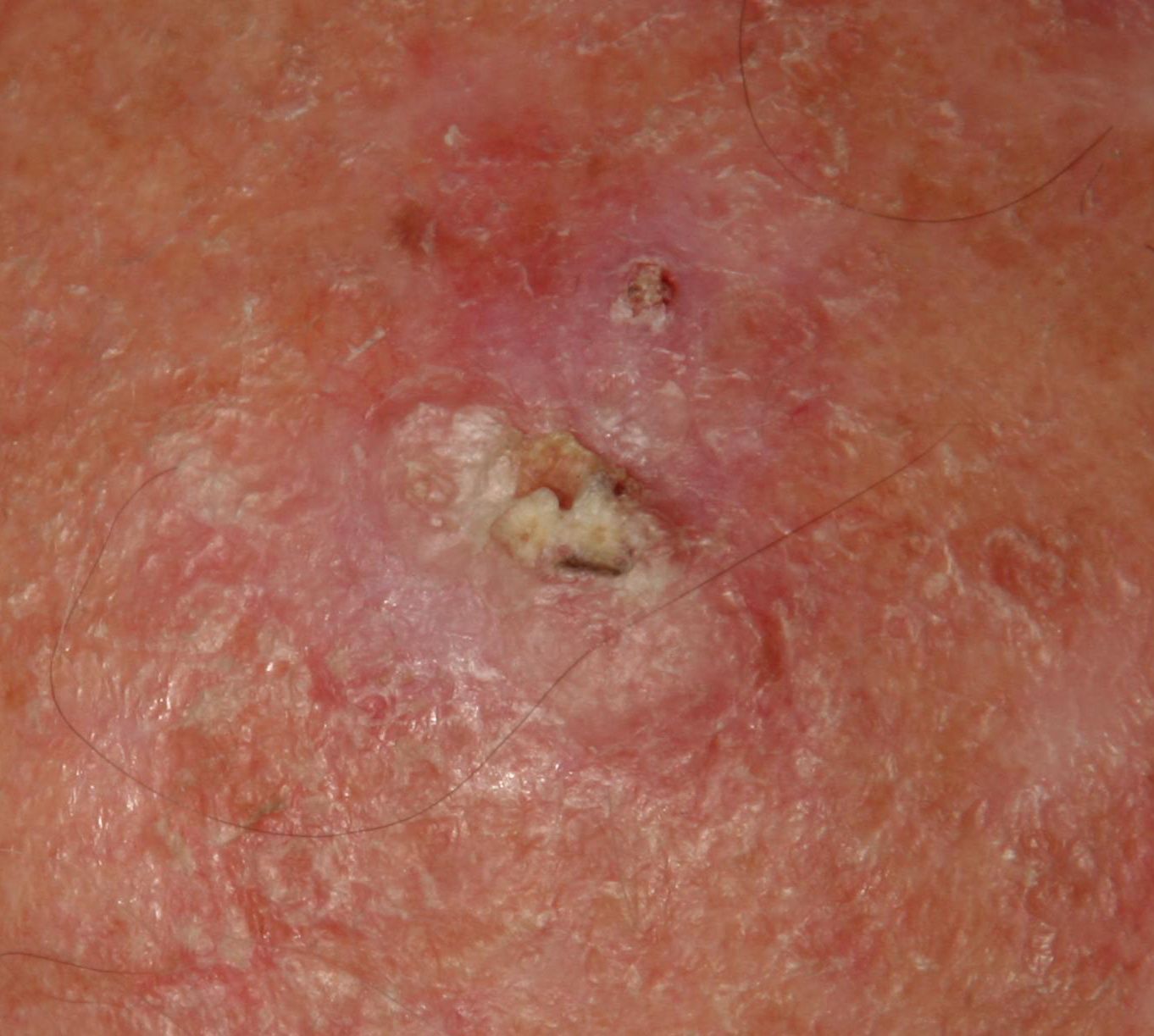
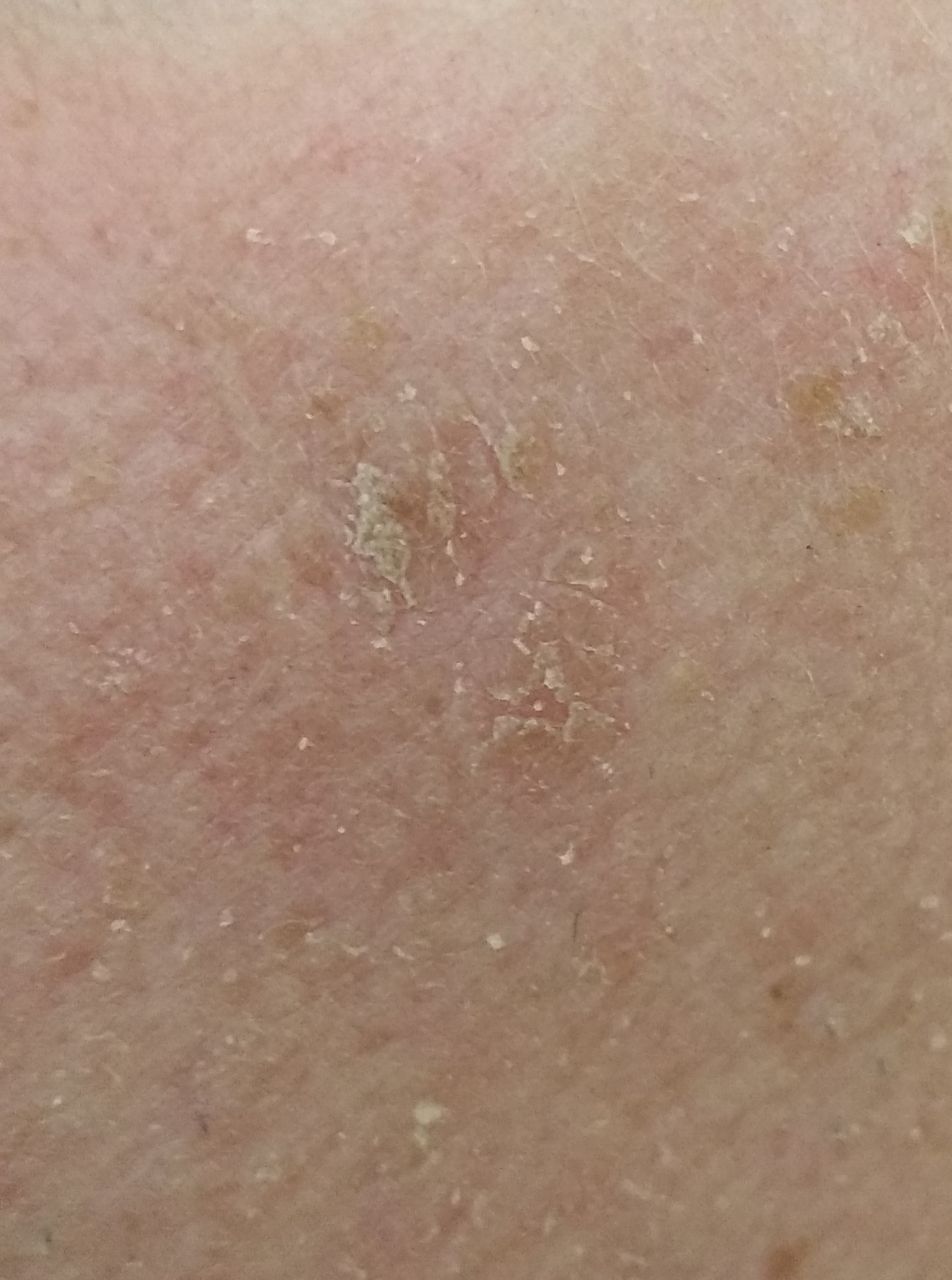
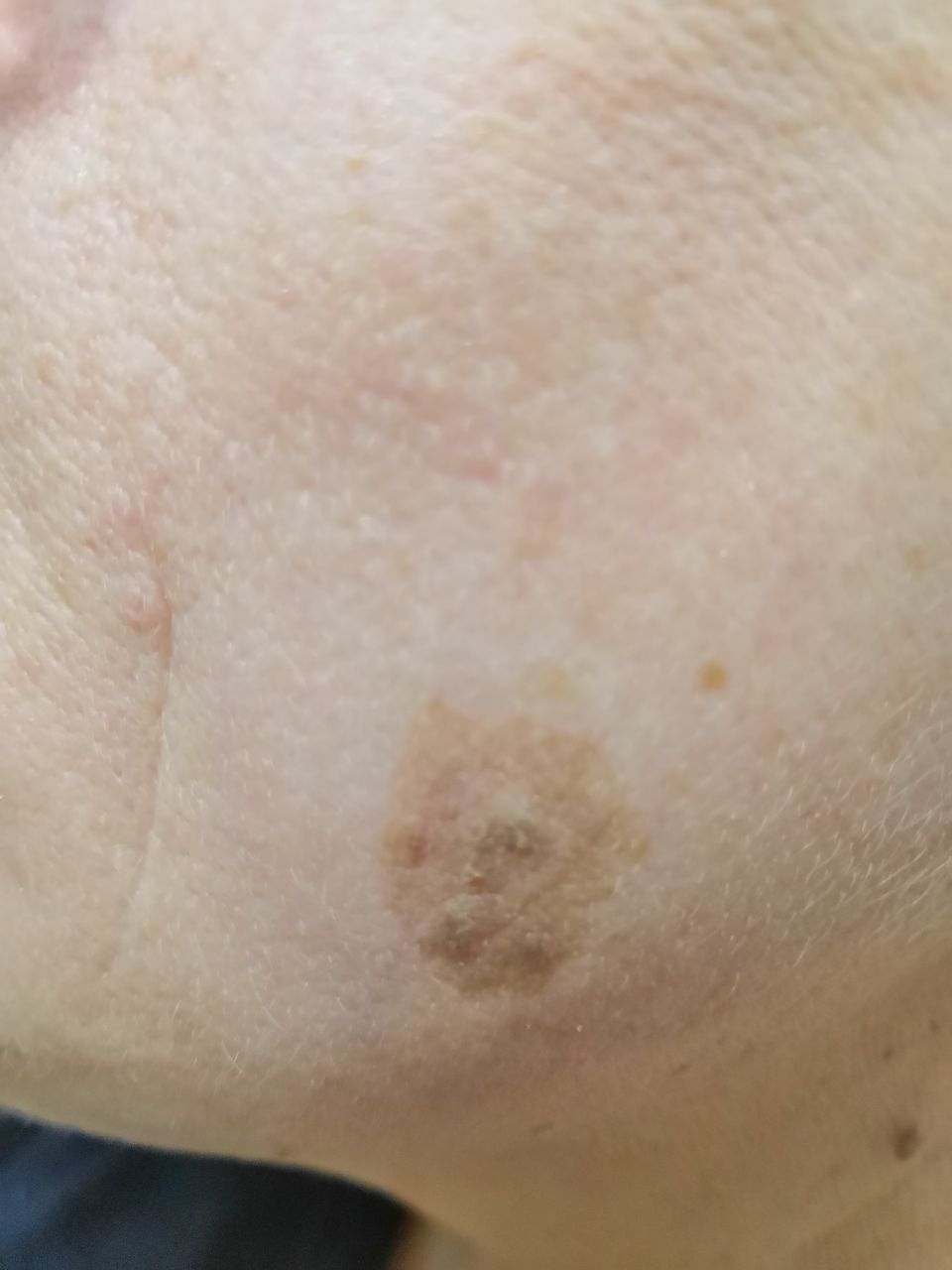
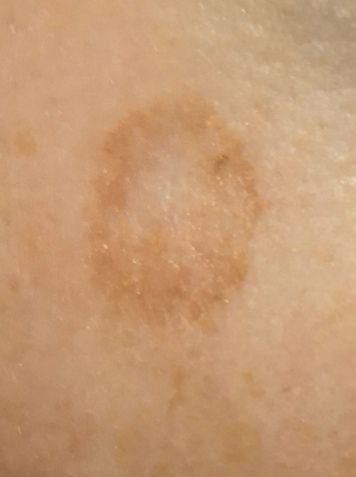
Actinic keratosis usually appears as patches or plaques with a rough surface.
Typical features:
- dry, rough texture
- scaling or crusts
- irregular, poorly defined borders
- color ranging from skin-toned and gray to pink or reddish
Sometimes these lesions are easier to feel than to see — the skin feels “sandpaper-like”.
Sizes usually range from a few millimeters to 1–2 cm, but larger areas may form if lesions merge.
Most commonly affected areas:
- face (nose, forehead, cheeks)
- ears
- scalp
- hands and shoulders
Over time, the number of lesions may increase.
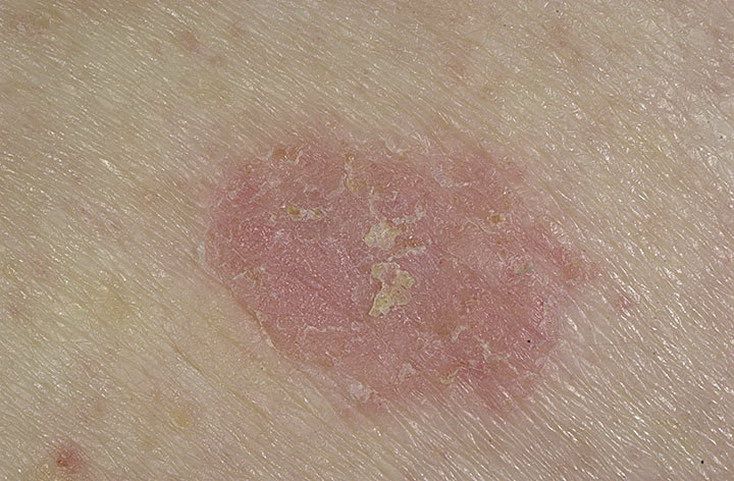
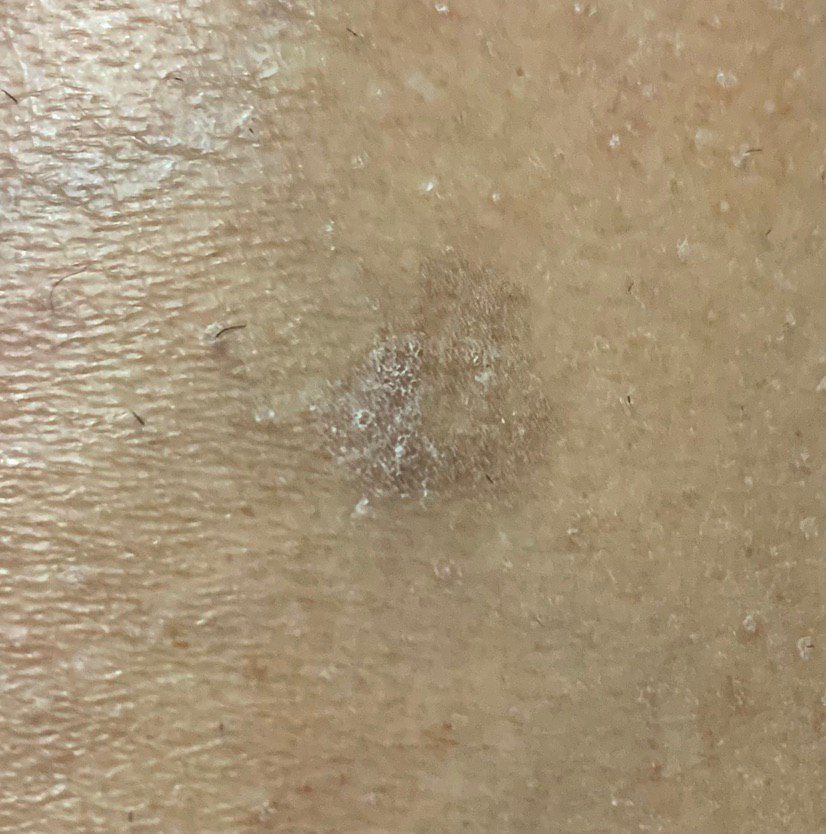
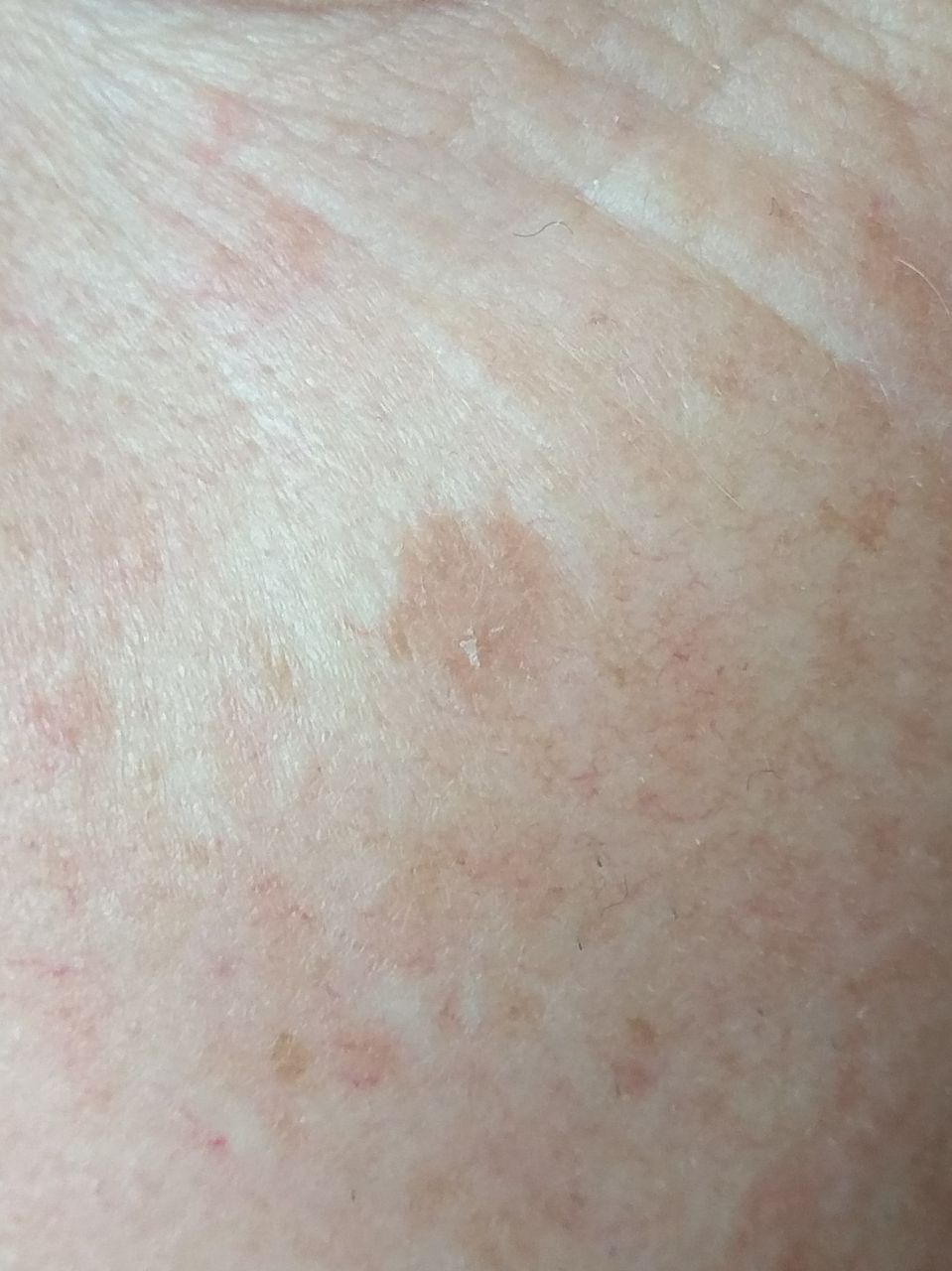
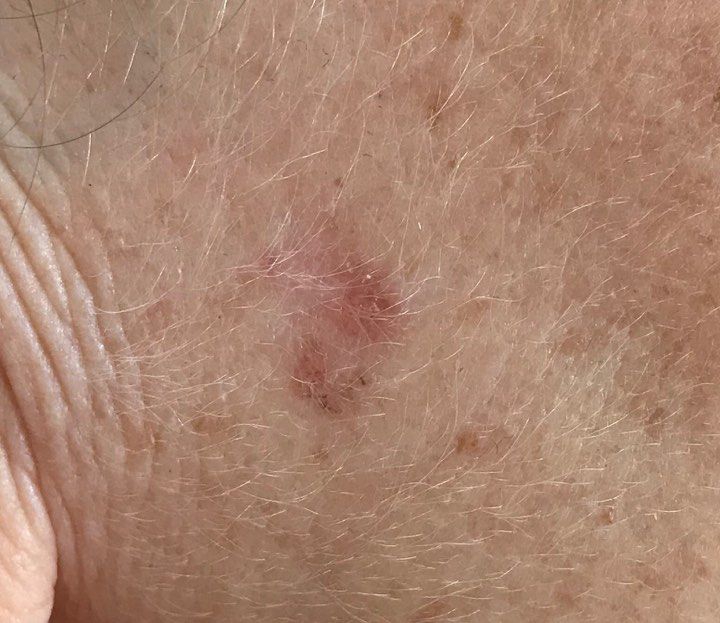
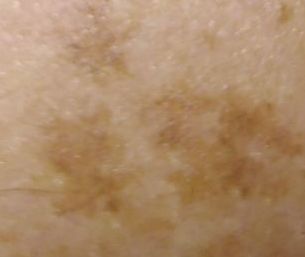
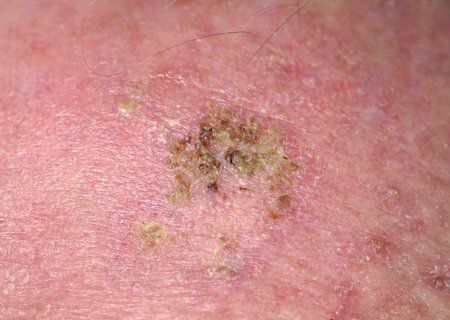
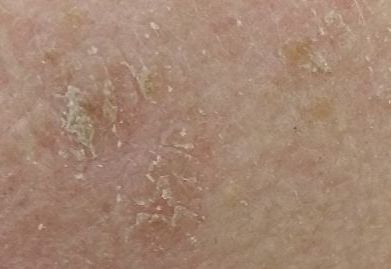
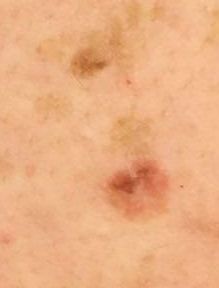
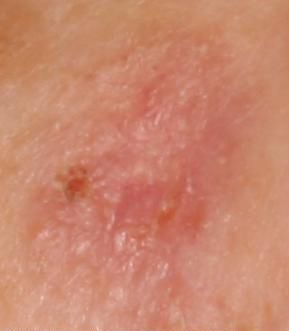
Below in the article you can view real photos to better understand how the condition looks.
Main symptoms
Actinic keratosis often develops without obvious symptoms.
Possible signs include:
- rough skin texture
- mild itching
- dryness
- occasional pain or bleeding if the area is injured
The main feature is a persistent change in a skin area.
Causes of the condition
The primary cause is long-term exposure to ultraviolet (UV) radiation.
Skin damage accumulates over many years, so actinic keratosis may appear long after periods of intense sun exposure.
Risk factors include:
External factors:
- frequent and prolonged sun exposure
Internal factors:
- fair skin
- age over 50
- weakened immune system
- genetic predisposition
Chemical exposure and chronic skin damage may also contribute.
How the condition develops
Under UV exposure, skin cells (keratinocytes) become progressively damaged.
Over time, some cells begin to divide abnormally, forming thickened, keratinized areas of skin.
This is not yet cancer, but the cells are altered and require monitoring and, in many cases, treatment.
Forms and types
Actinic keratosis can appear in different forms — from barely noticeable rough patches to thick plaques with marked keratin buildup.
Lesions may merge, forming larger affected areas.
When to see a doctor
You should see a doctor if:
- a patch does not disappear over time
- it increases in size
- its color or structure changes
- bleeding or pain appears
- a thick crust develops
Regular skin checks are also important if you already have such lesions.
Treatment
Actinic keratosis usually requires treatment because of its potential to progress into skin cancer.
Main approaches include:
- sun protection (clothing, hats, sunscreen)
- removal of lesions (laser, cryotherapy, and other methods)
- topical medications prescribed by a doctor
In some cases, surgical removal may be needed, especially if diagnosis is uncertain.
Treatment is always individualized and supervised by a specialist.
Q&A
Is actinic keratosis dangerous?
It is a precancerous condition that can sometimes progress to skin cancer, so it requires monitoring and treatment.
Can it be cured?
Yes, lesions can be removed or controlled with appropriate medical treatments.
Does it need treatment?
In most cases, yes, to reduce the risk of malignant transformation.
Can it go away on its own?
Some lesions may regress, but most persist or progress.
Is it skin cancer?
No, but it can develop into skin cancer if left untreated.
Can I sunbathe if I have it?
It is not recommended — strict sun protection is important.
Why does it appear years later?
Because UV damage accumulates gradually over time.
Can it be prevented?
Yes, sun protection significantly reduces the risk.
Check Your Skin Instantly
Use the Skin cancer detector: Skinive AI to take a photo of a mole or lesion and get an AI-based risk assessment. It helps determine whether professional consultation is recommended, giving you fast guidance and peace of mind.
Medical sources
- Fitzpatrick’s Dermatology
- World Health Organization (WHO) Classification of Skin Tumours
- American Academy of Dermatology (AAD)
- DermNet NZ
- UpToDate
🇬🇧 Actinic keratosis: Assessment and Care in the UK
If you notice an unusual skin lesion, it’s important to get a professional opinion at your earliest. In the UK, you can access dermatology care via the NHS, private clinics, or online consultations.
👉 How to See a Dermatologist in the UK NHS – This main guide explains how NHS referrals work, what to expect from specialist dermatology services, and how to choose between public and private care.
Dermatologists in Major UK Cities:
- Dermatologist in London
- Dermatologist in Manchester
- Dermatologist in Liverpool
- Dermatologist in Birmingham
- Dermatologist in Leeds
- Dermatologists in Other UK cities
Online Dermatology
If you prefer remote care or faster access, try online dermatology consultations. They allow dermatologists to review images, provide advice, and guide next steps without visiting a clinic. Read more in this article: Online Dermatologists in UK.
🇦🇺 Actinic keratosis: Assessment and Care in Australia
If you notice borderline or precancerous skin lesions, it’s important to get a professional opinion. In Australia, you can access dermatology care via Medicare (public system), private clinics, or online consultations.
👉 How to See a Dermatologist in Australia – This main guide explains how referrals work through GPs and public clinics, what to expect from specialist dermatology services, and how to choose between public and private care.
Dermatologists in Major Australian Cities:
- Dermatologist in Sydney
- Dermatologist in Melbourne
- Dermatologist in Brisbane
- Dermatologist in Perth
- Dermatologist in Adelaide
- Dermatologists in other Australian cities
Online Dermatology
For faster access or remote care, online dermatology consultations allow dermatologists to review images, provide advice, and guide next steps without visiting a clinic. Read more in this article: Online Dermatologists in Australia.
Images of actinic keratosis:

** Should you identify any copyright infringement regarding the images on this page, kindly reach out to us at info@skinive.com.
Furthermore, please be advised that these photos are not authorized for any purpose.