
Tinea versicolor (pityriasis versicolor) is a common fungal skin infection that causes patches of different colors ranging from light to brown. It most often appears on the chest, back, and shoulders and may show mild scaling.
The condition is associated with Malassezia fungi, which normally live on the skin of most people without causing problems. However, under certain conditions, they begin to overgrow and lead to visible skin changes.
Tinea versicolor is not considered contagious in the classic sense and is more related to skin characteristics and environmental factors. It is a chronic condition that can recur but is usually well controlled with treatment.
What to do if you suspect it
If you notice skin patches that differ in color from surrounding skin and show mild scaling, it is best not to delay consultation.
The first step is to see a dermatologist. The specialist will examine the skin and, if needed, perform simple tests to confirm the diagnosis.
Additionally:
- observe whether symptoms worsen after sun exposure
- inform your doctor about hormonal medications or other drugs you take
- do not attempt self-treatment without a confirmed diagnosis
It is important not to ignore symptoms. Although the condition is usually harmless, without treatment it may persist and spread.
How it looks
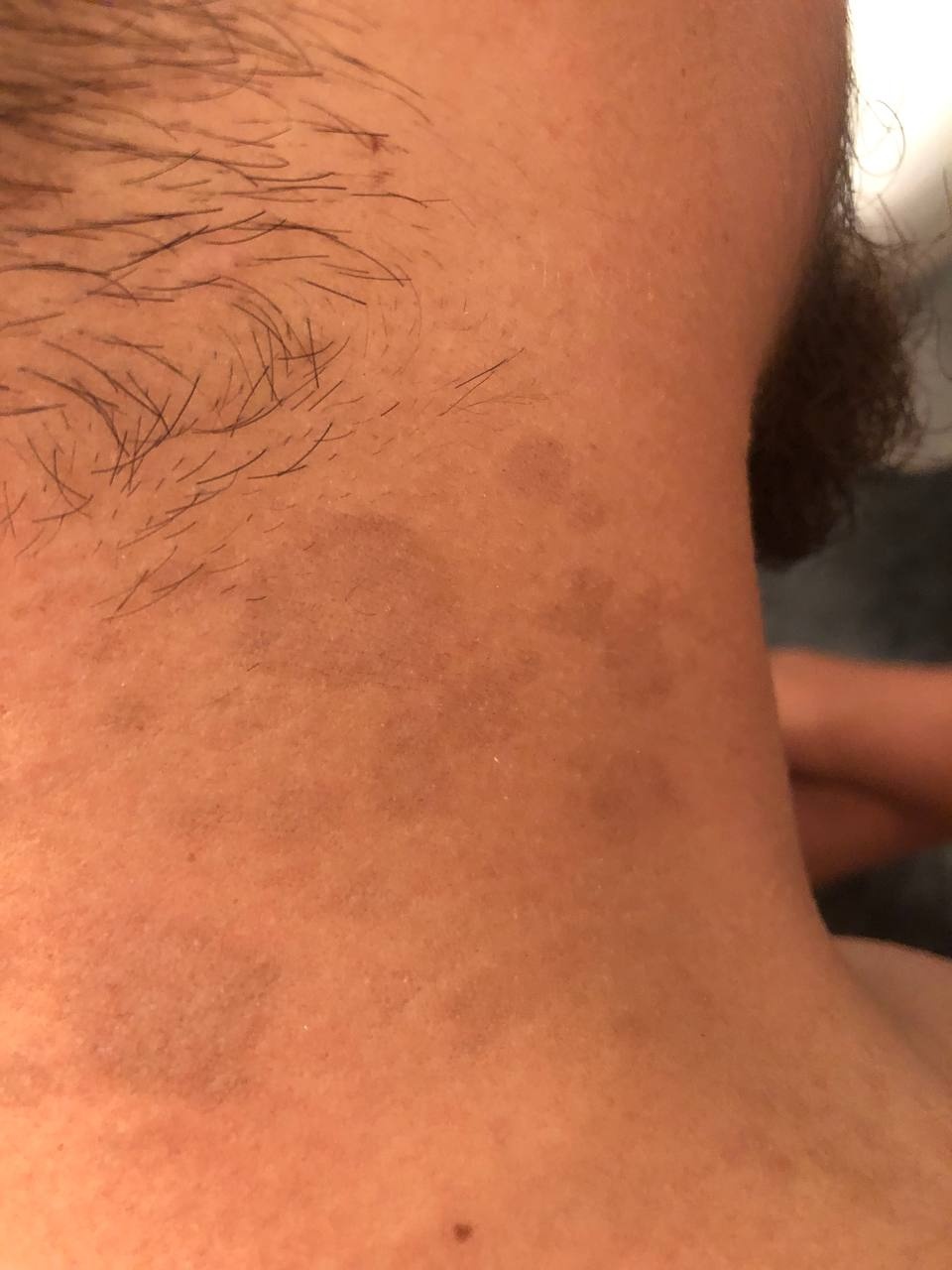
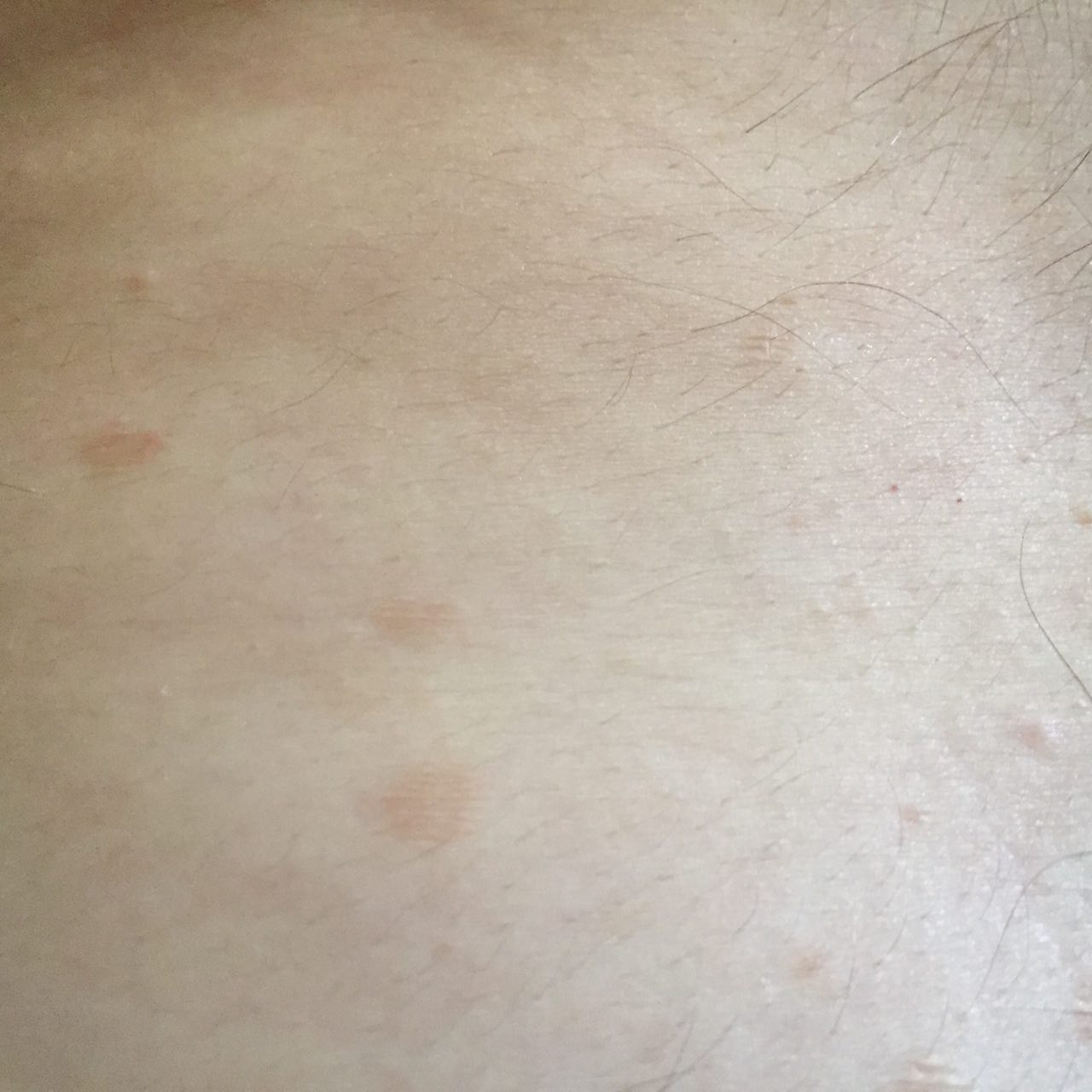
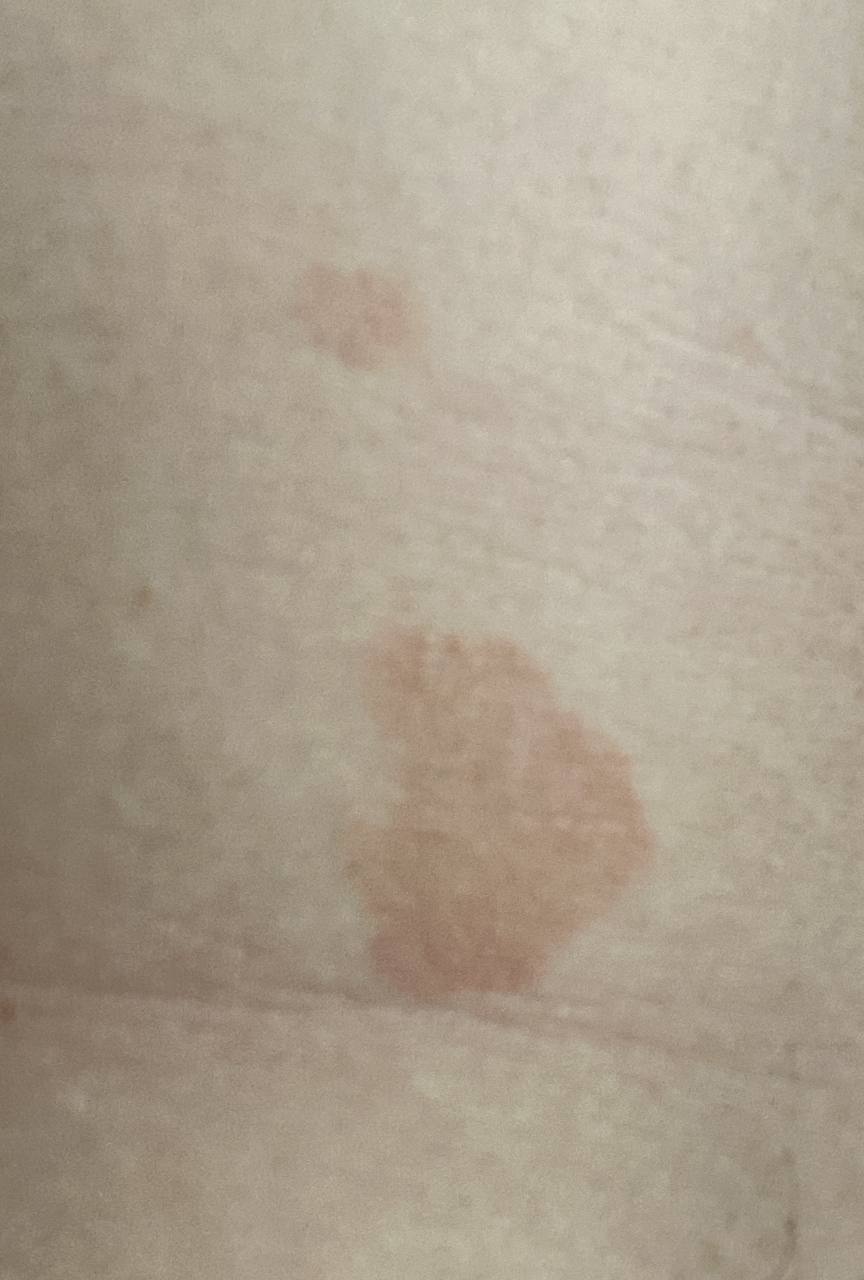
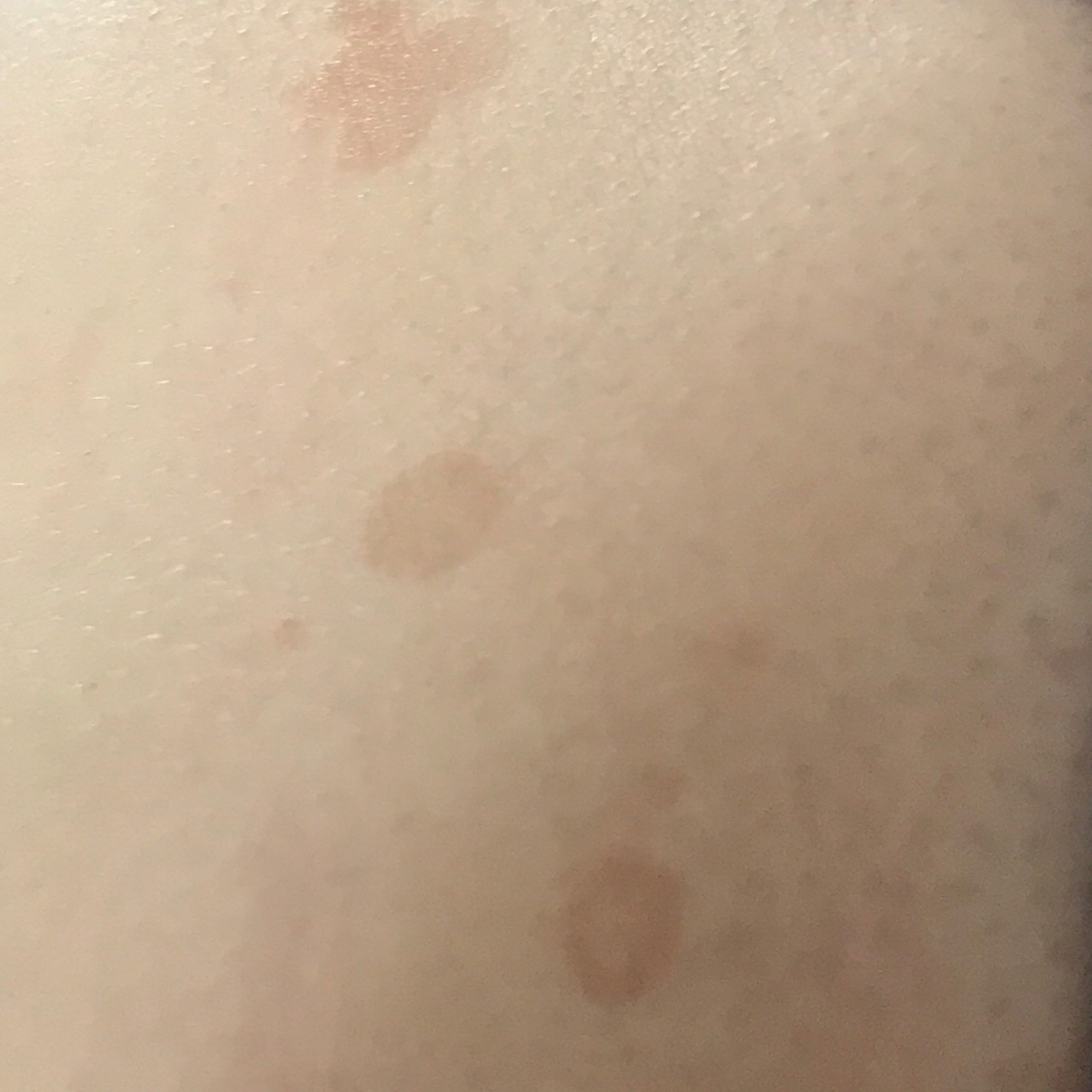
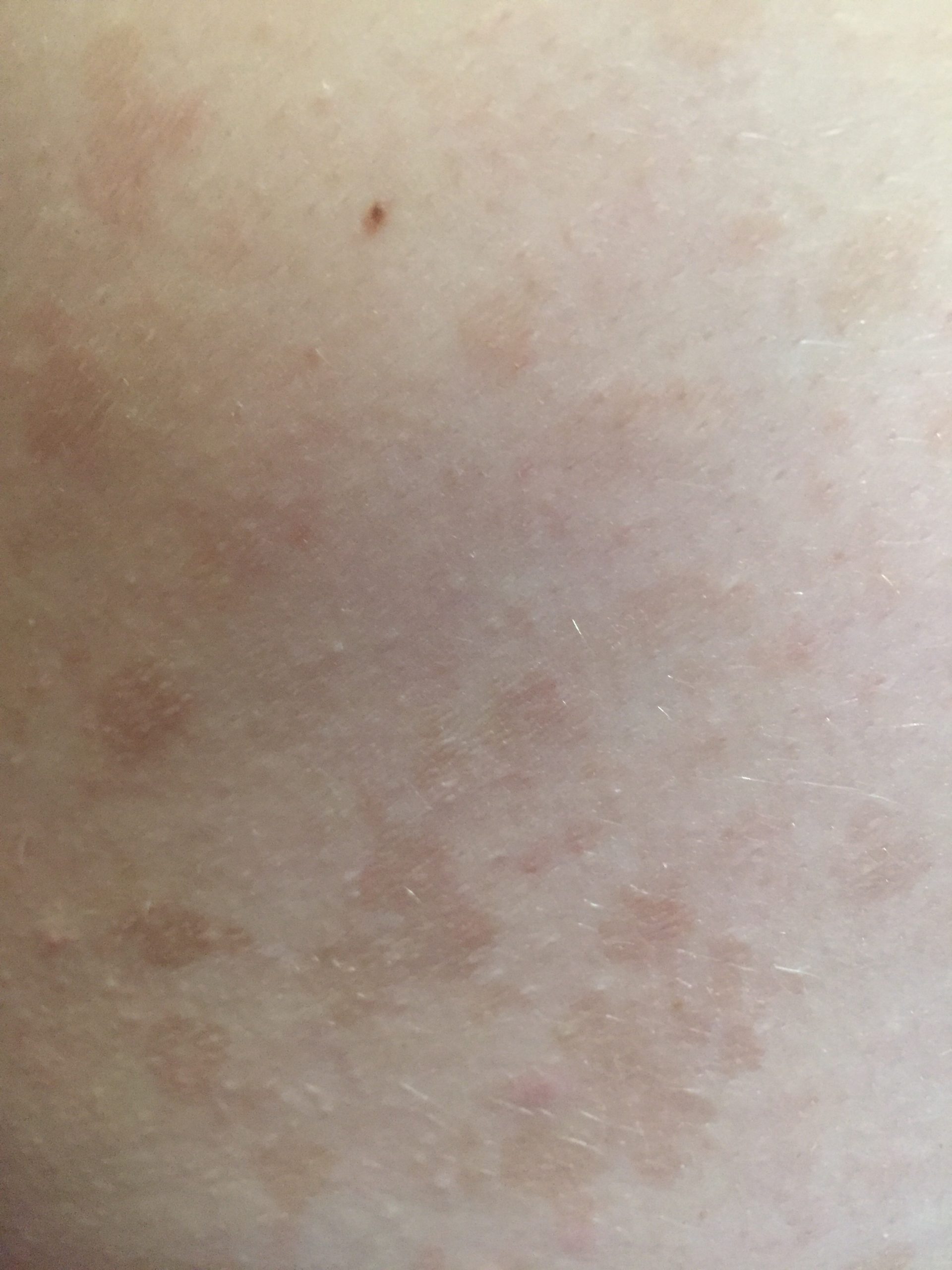
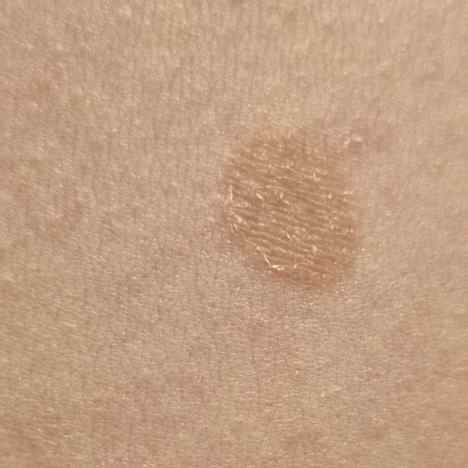
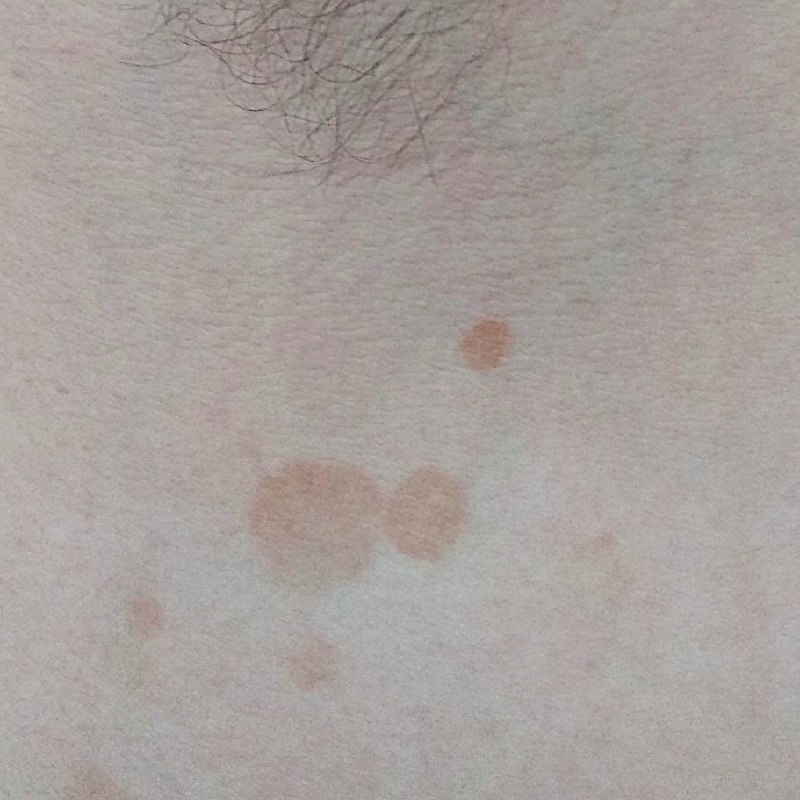
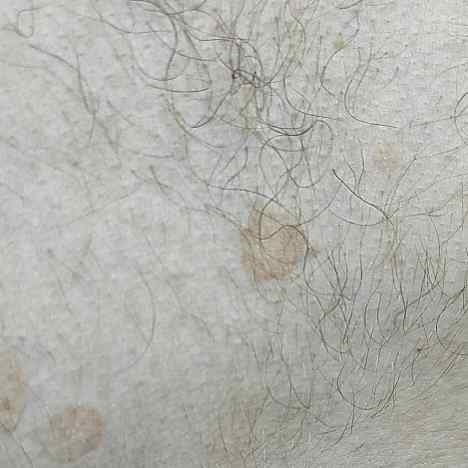
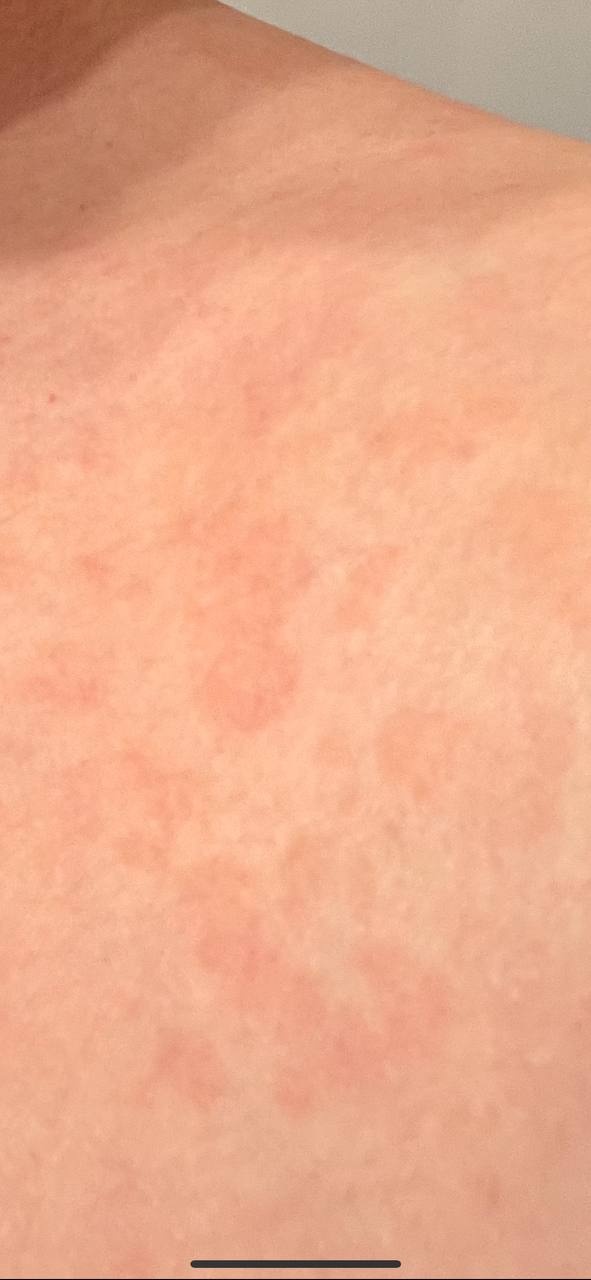
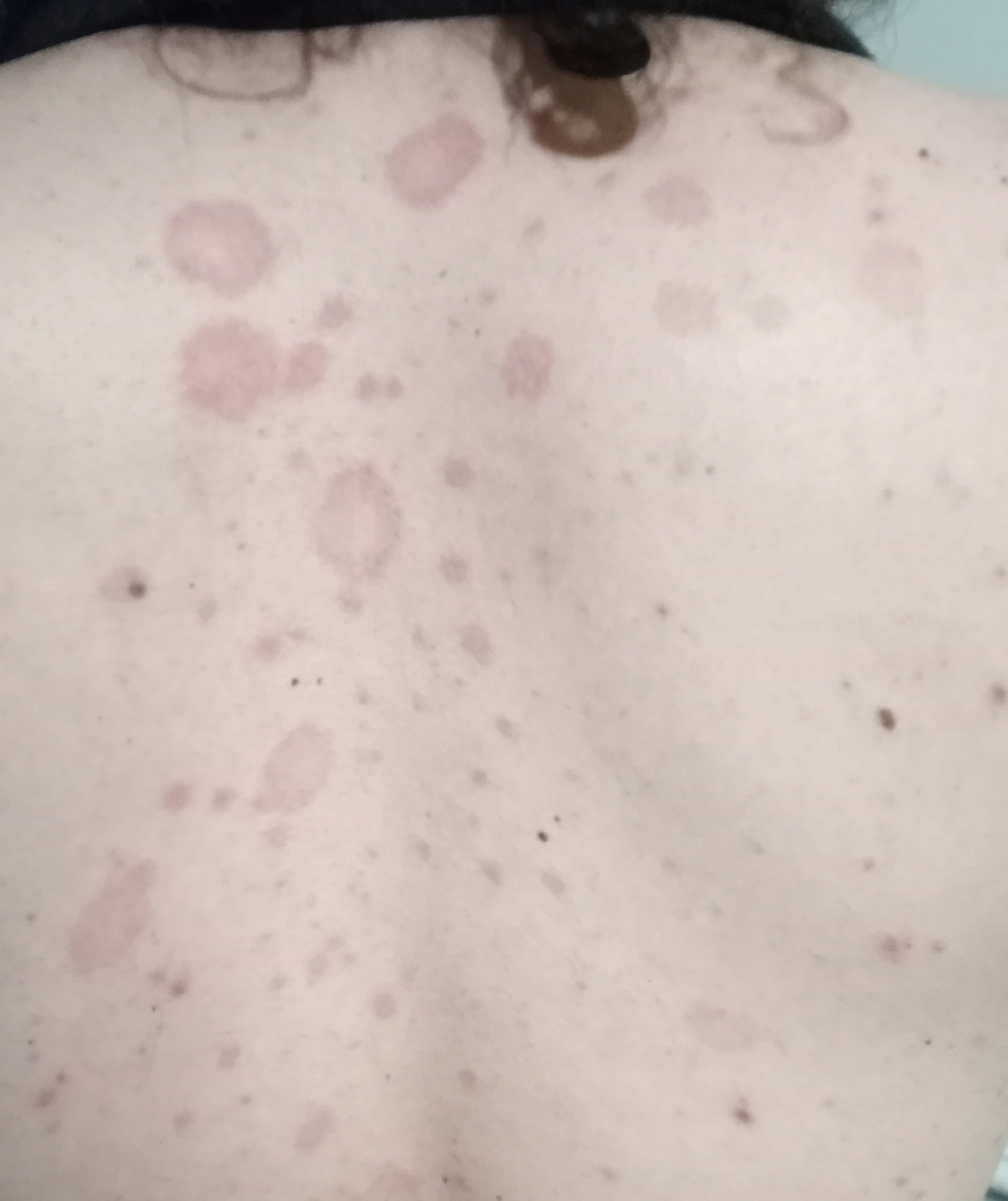
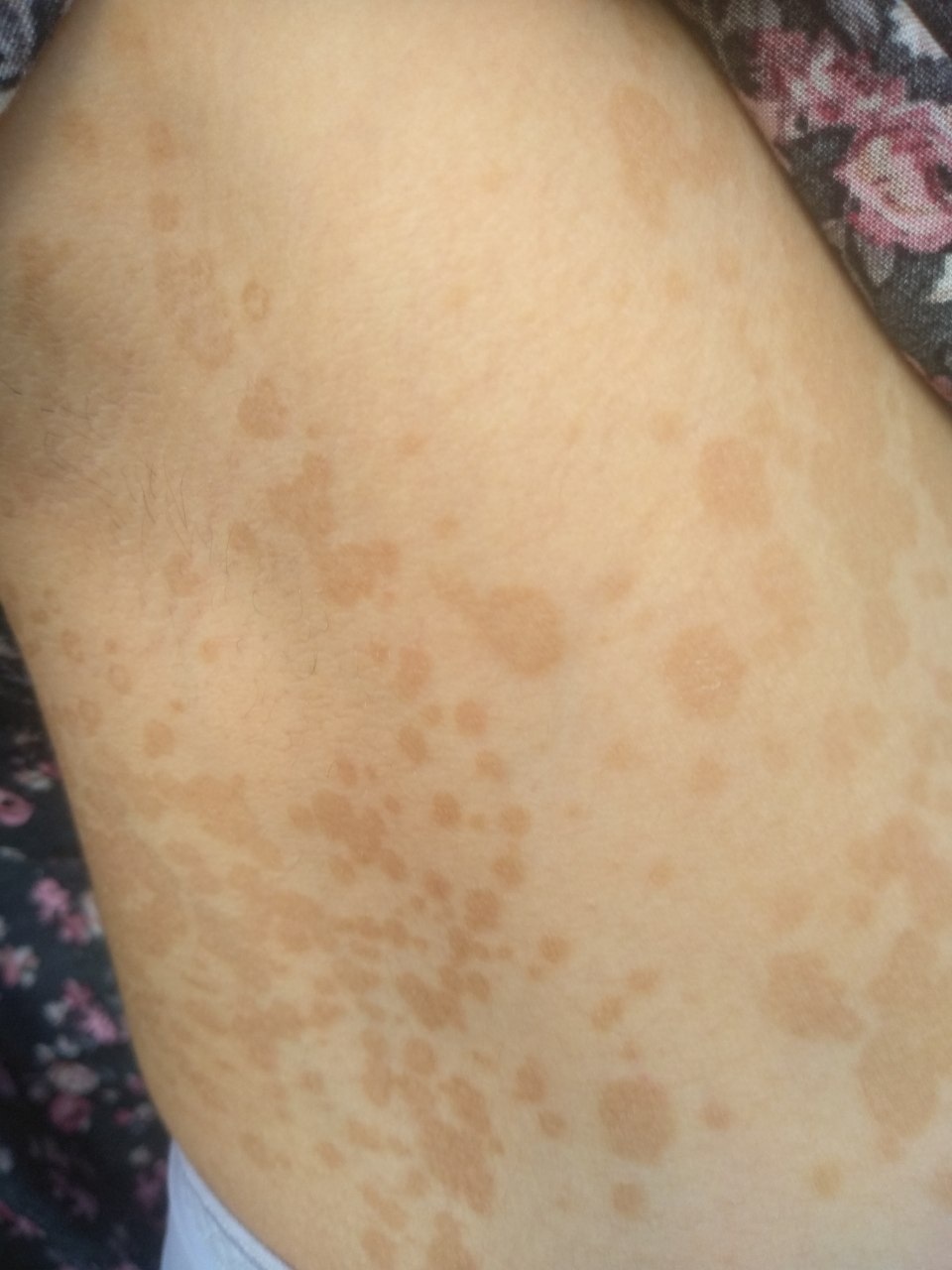
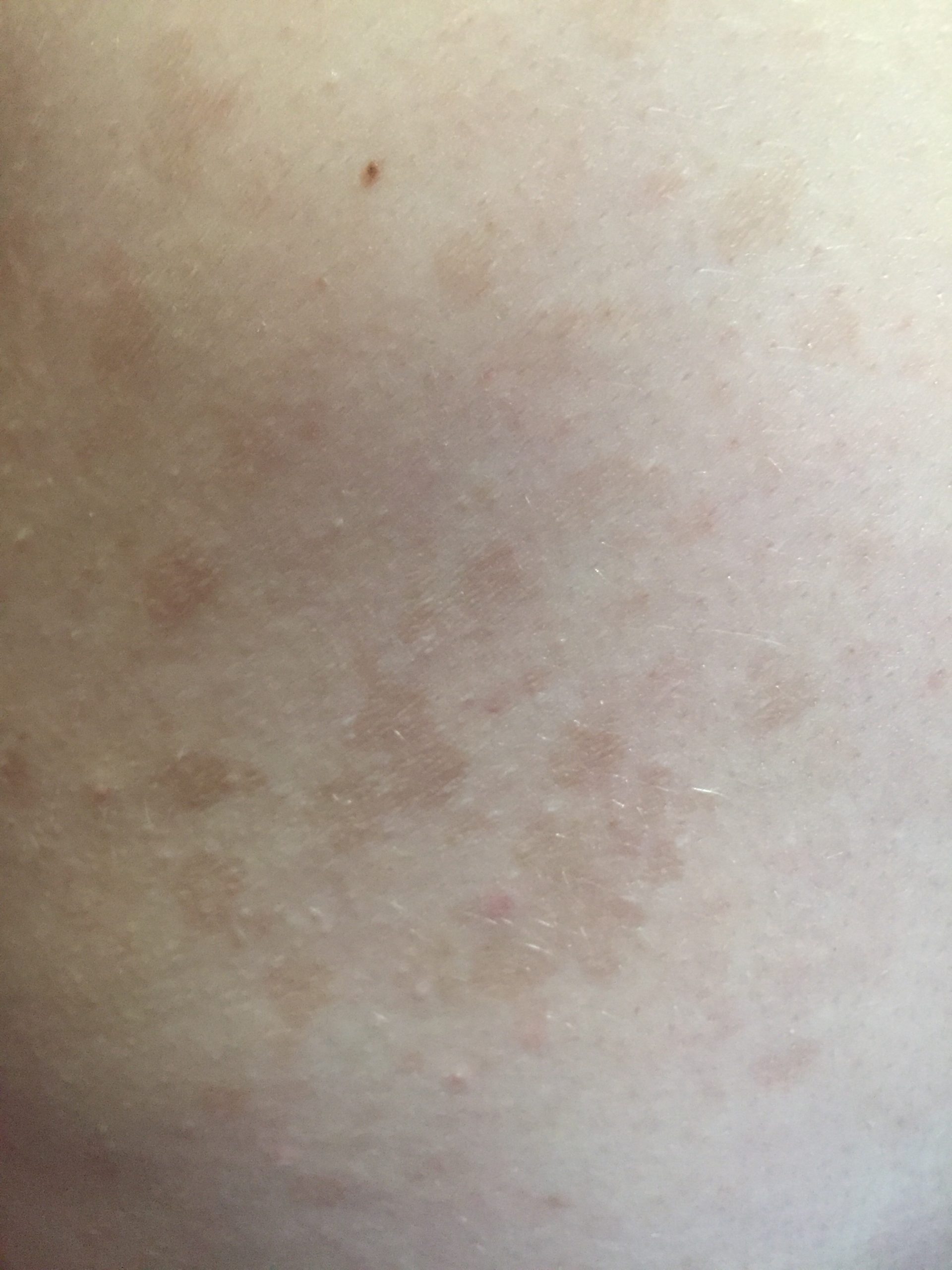
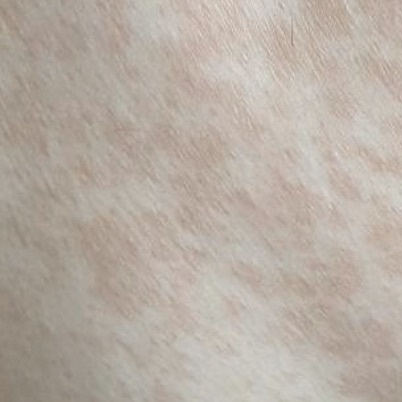
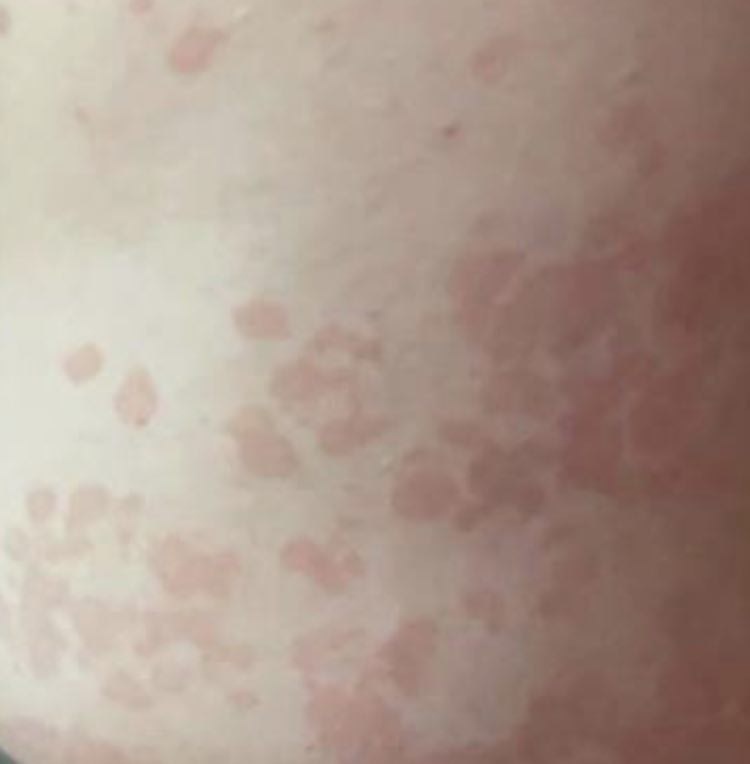
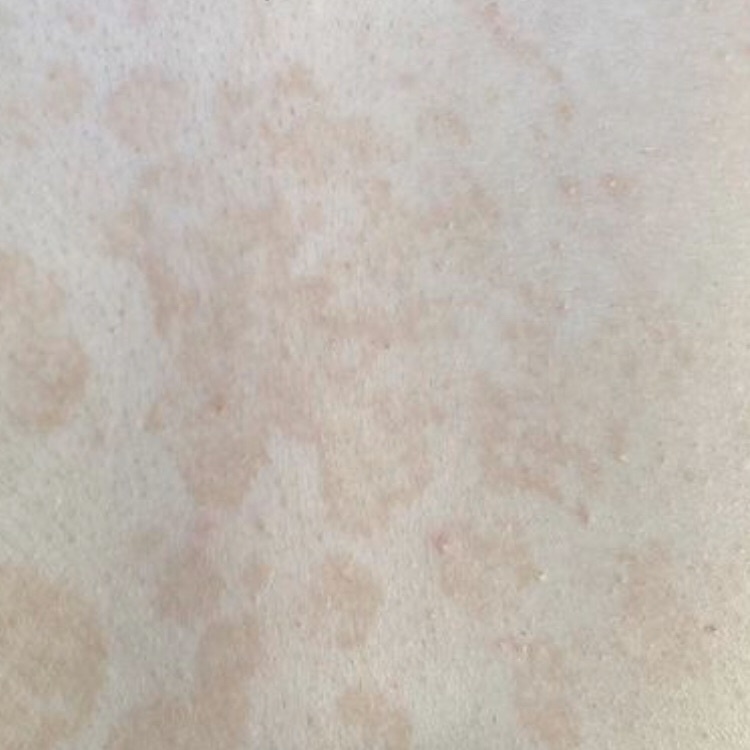
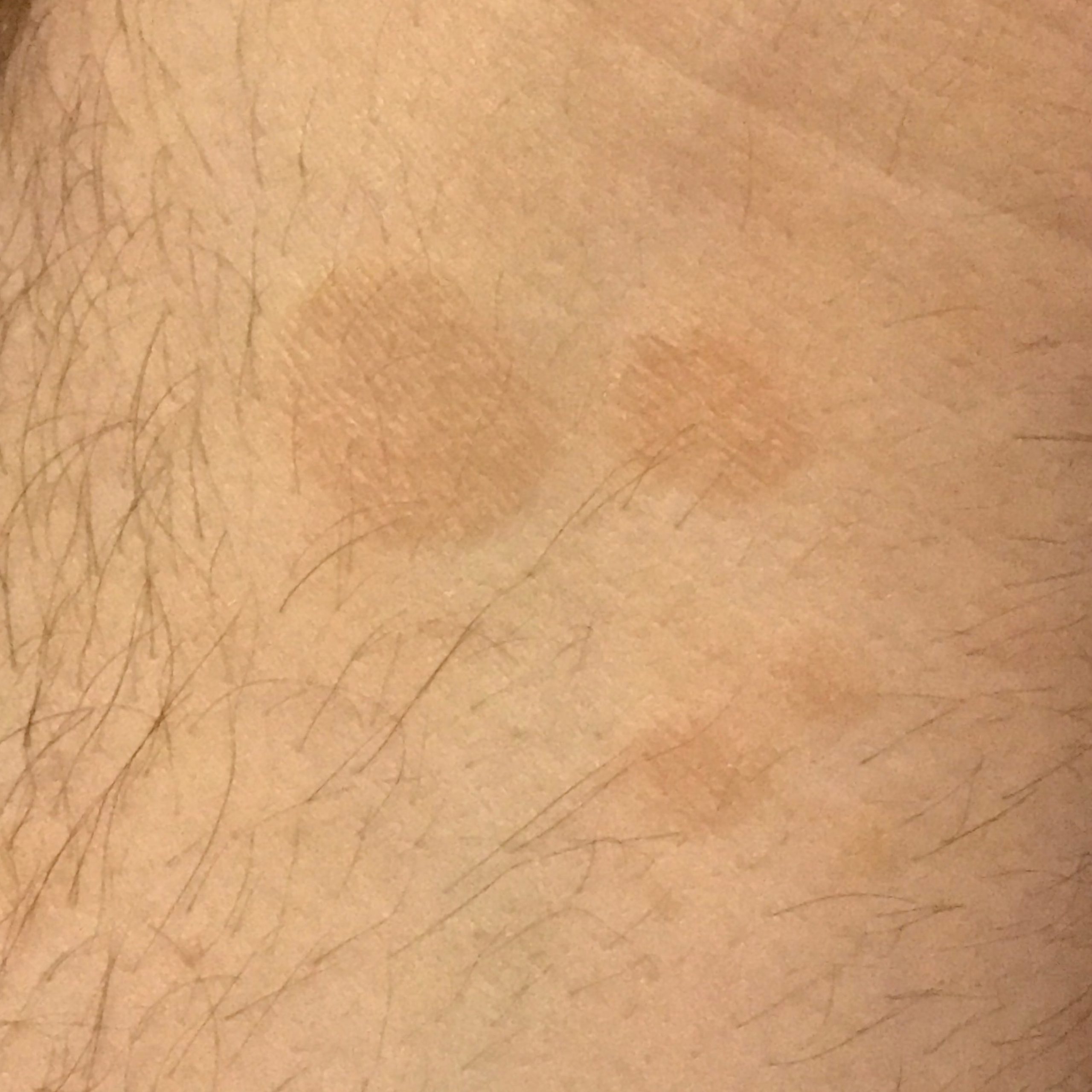
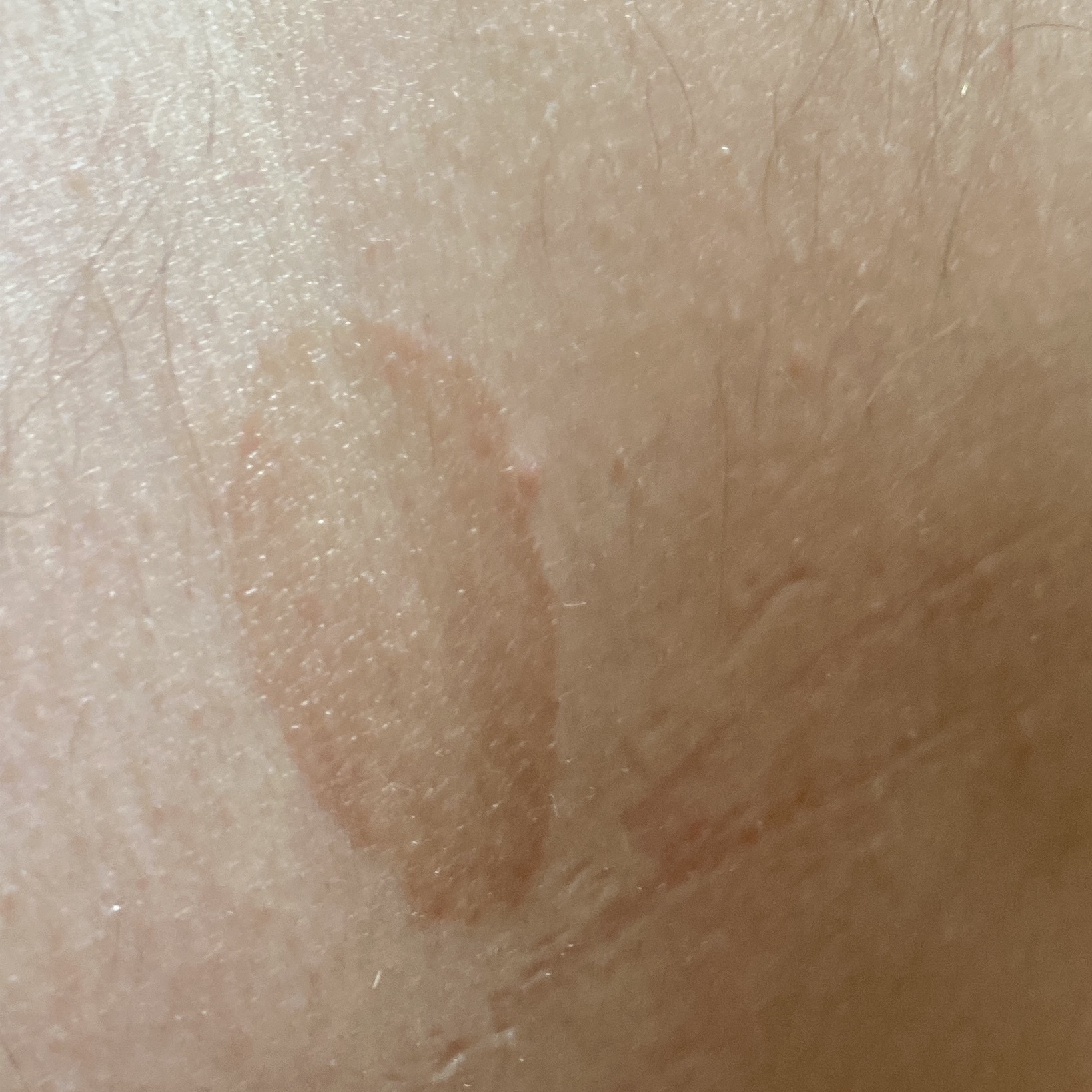
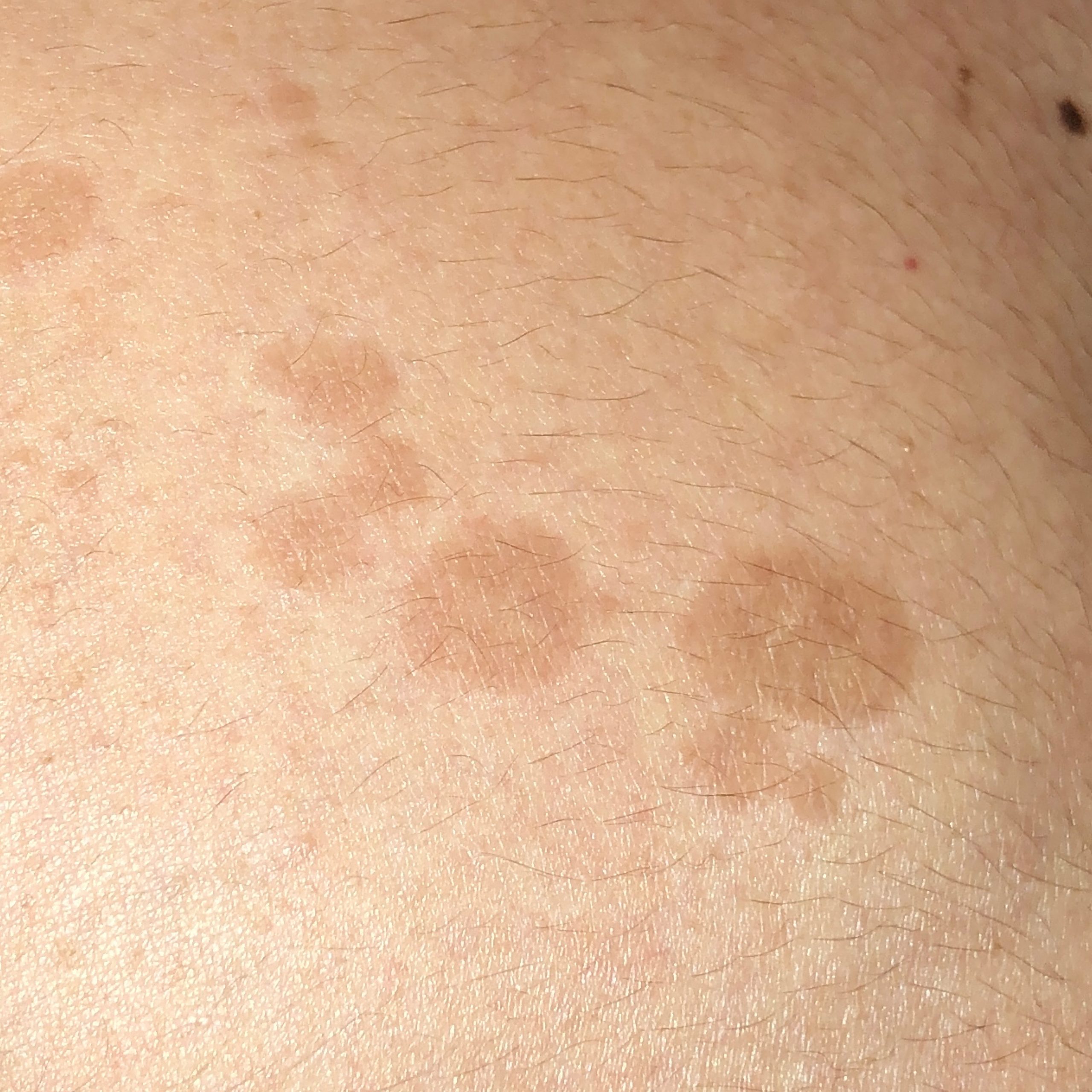
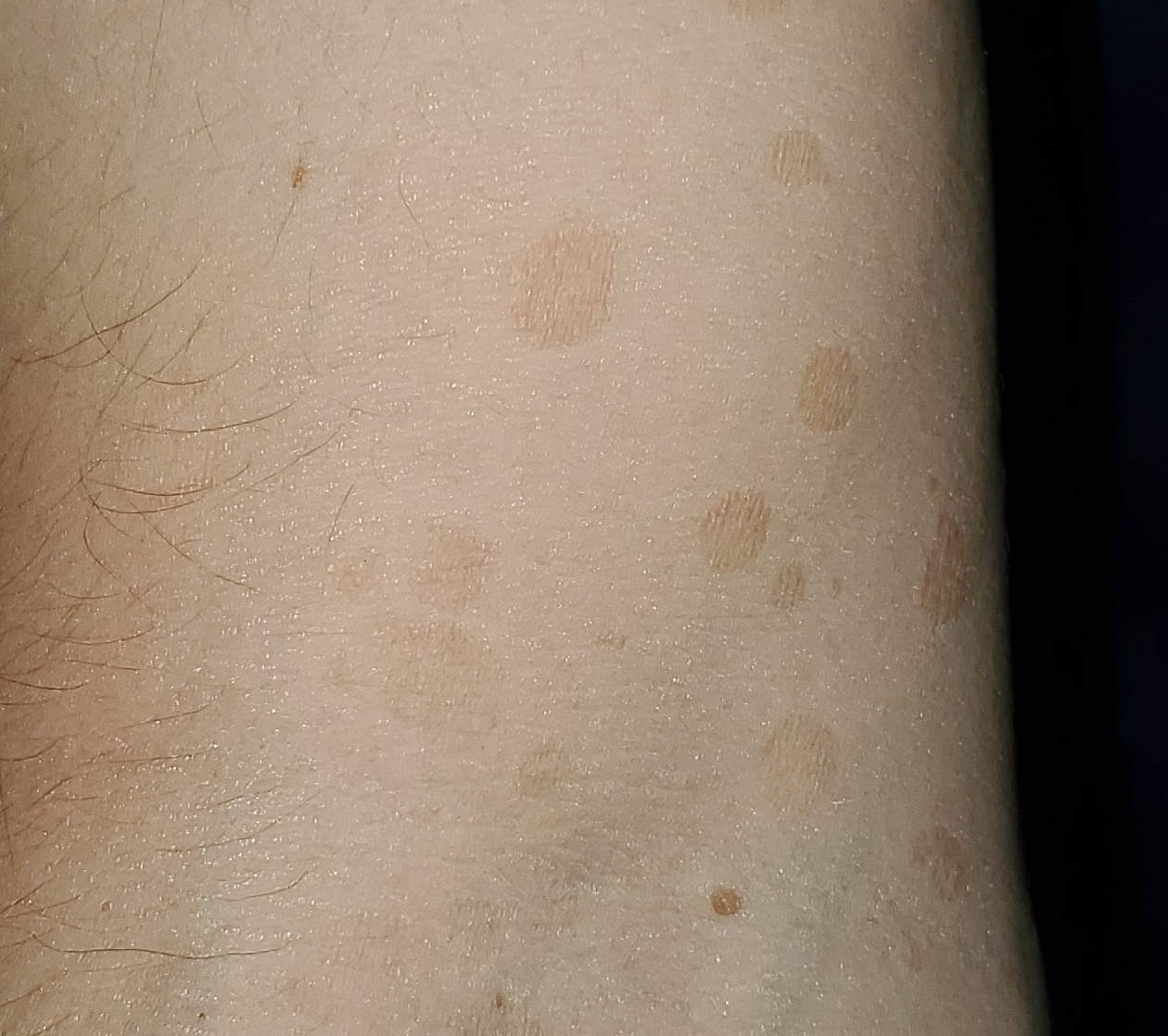
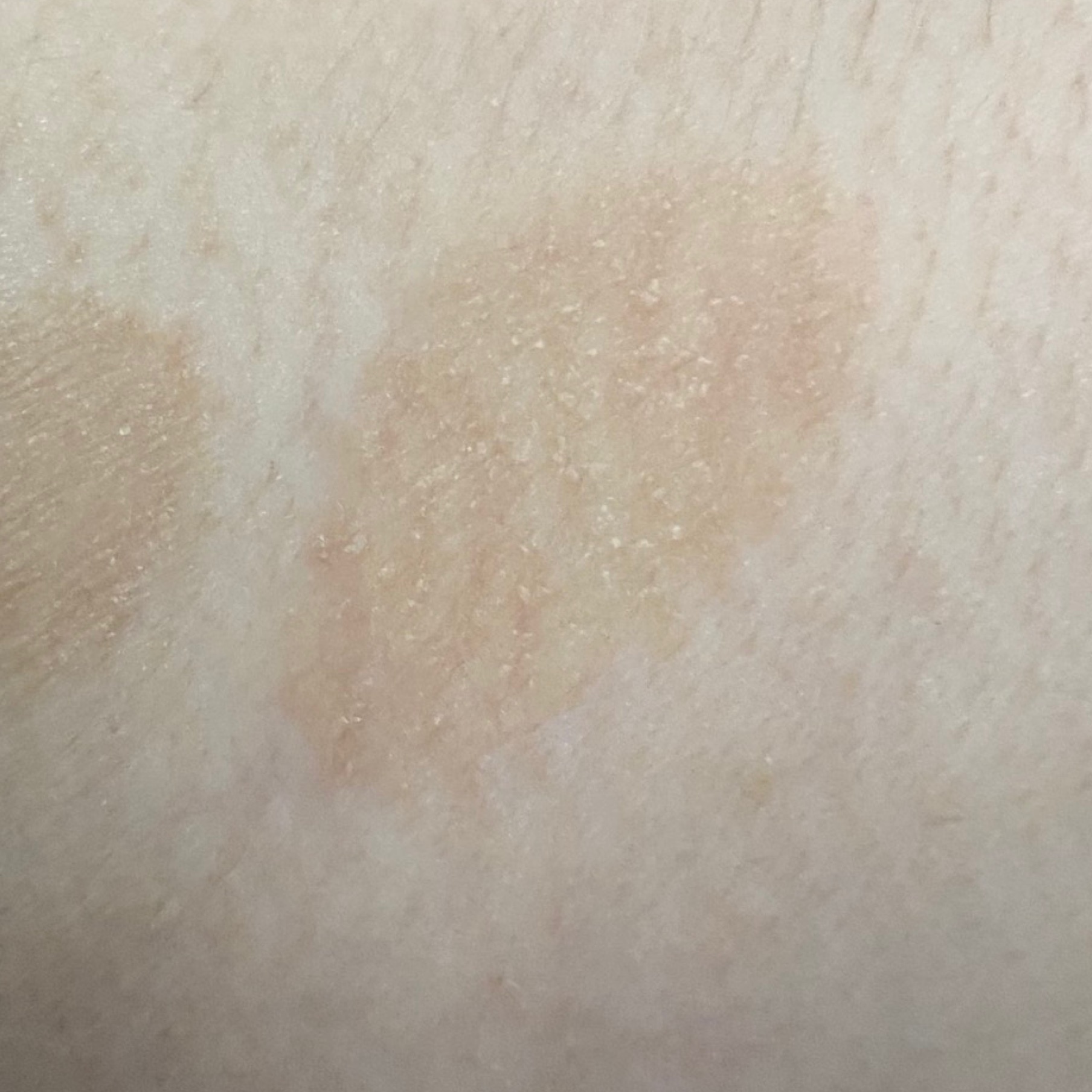
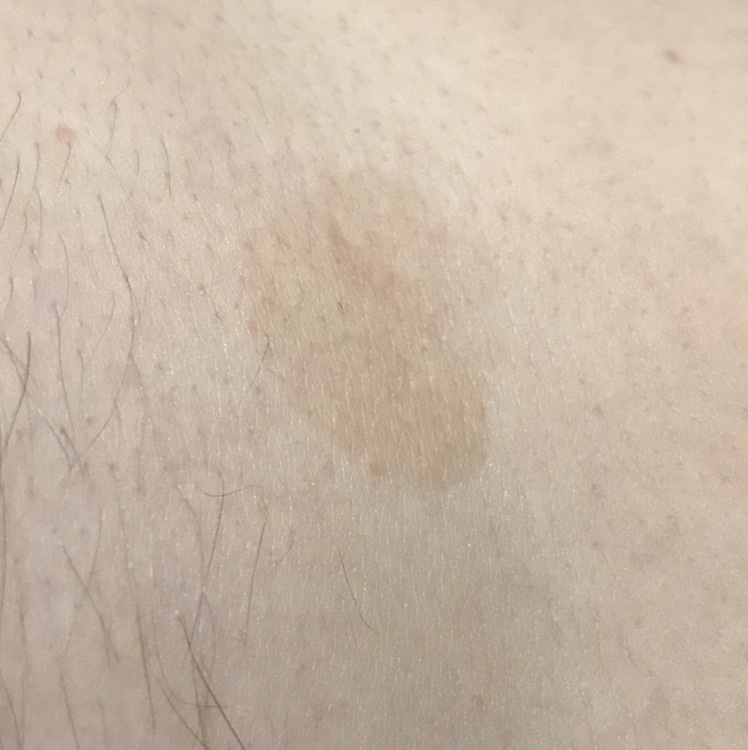
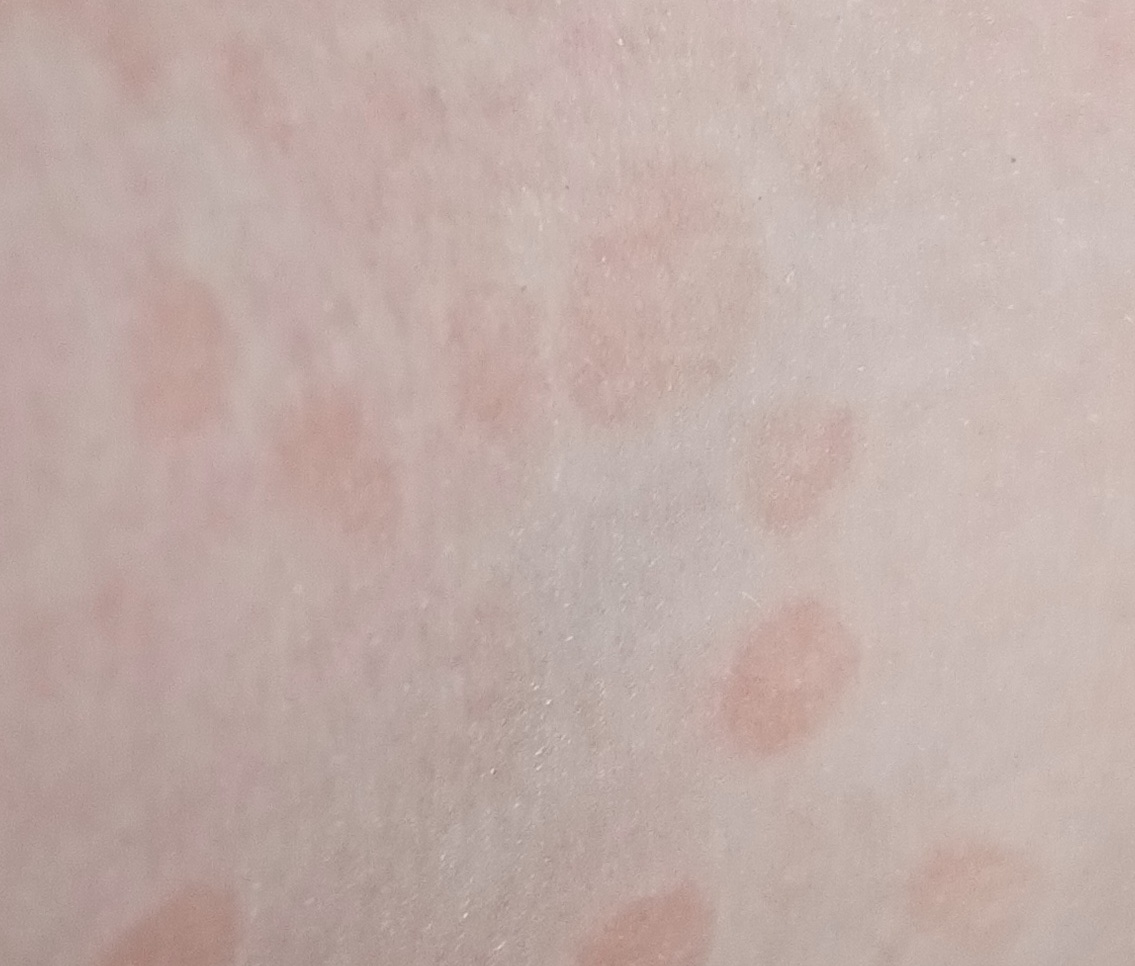
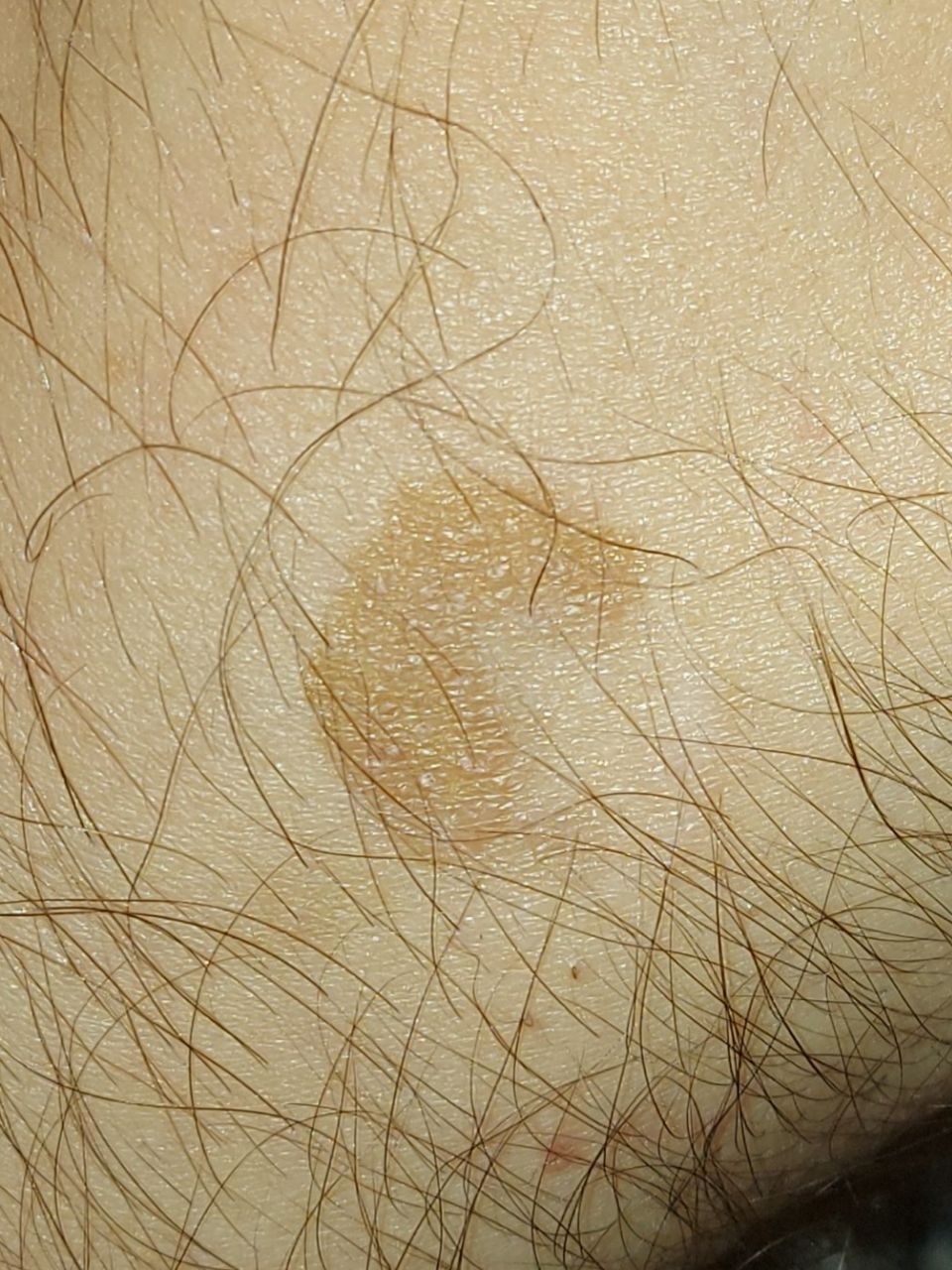
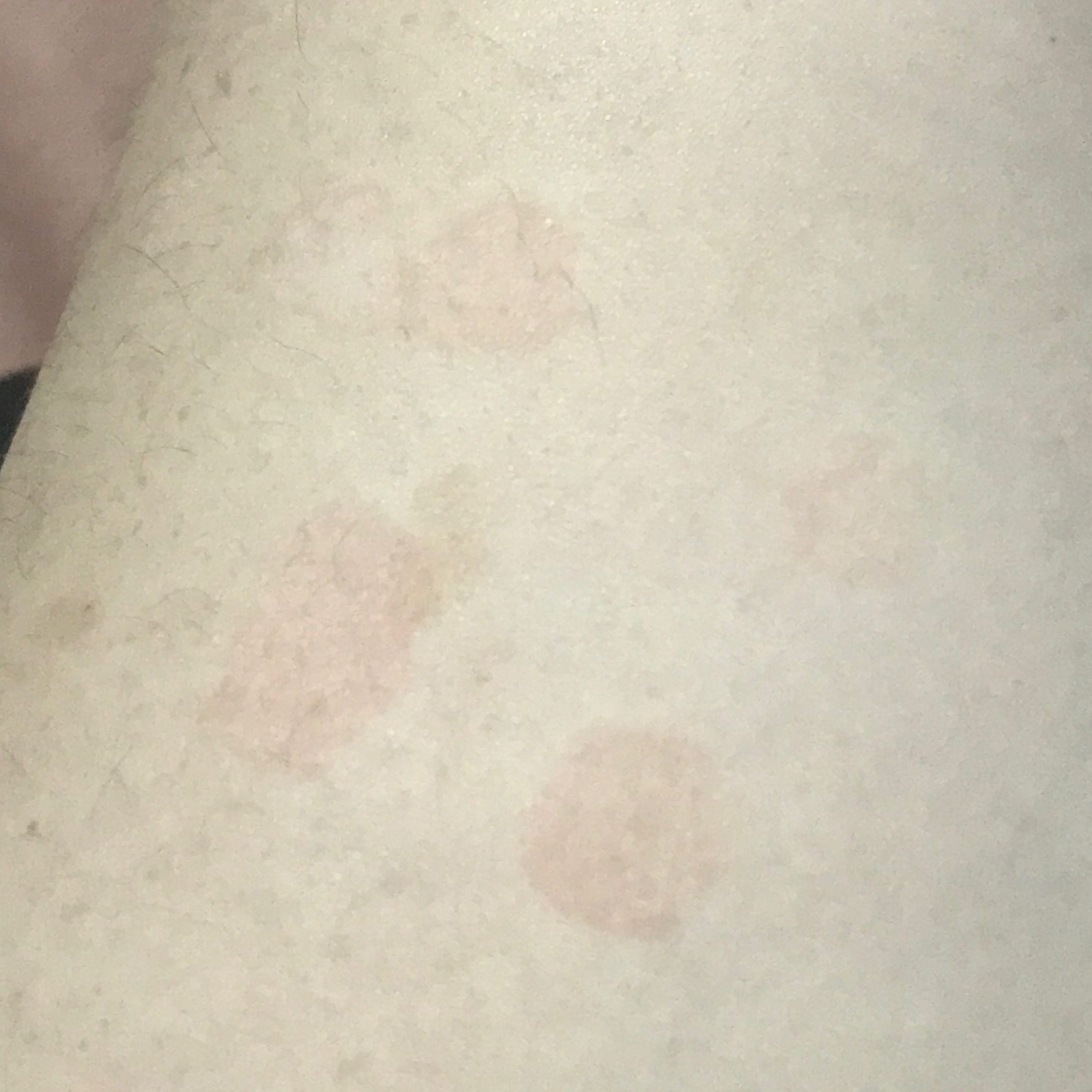
Tinea versicolor appears as patches that may be pink, yellow, brown, or “coffee-with-milk” colored. In people with darker skin, they often appear lighter than surrounding skin.
The patches usually:
- have clear borders
- show fine scaling when scratched
- may merge into larger areas over time
Most commonly affected areas include the chest, back, abdomen, and upper arms. The face is rarely involved.
After sun exposure, the patches become more noticeable because affected skin tans less, creating a “light island” effect.
Sometimes the condition may appear as small bumps around hair follicles, resembling acne-like lesions.
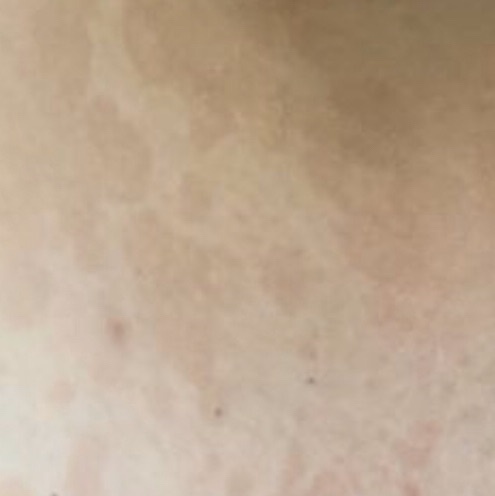
Below in the article you can view real photos to better understand how the condition looks.
Main symptoms
The main sign is patches of different colors with mild scaling.
Other possible symptoms include:
- mild or no itching
- dry skin sensation
- increased contrast after sun exposure
The condition is usually more of a cosmetic concern than a physical discomfort.
Causes
The cause is overgrowth of Malassezia fungi that normally live on the skin.
Factors contributing to this include:
- warm and humid environment
- increased sweating
- oily skin
- hormonal changes or hormonal medications
- weakened immune system
- chronic illnesses
Individual skin predisposition also plays a role.
How it develops
Normally, Malassezia fungi exist on the skin in a harmless state.
Under favorable conditions, they become more active and multiply rapidly. This disrupts normal skin function, including pigment production.
As a result, patches of different colors appear, becoming more visible after sun exposure.
The condition may persist for long periods and tends to recur.
Forms and types
Tinea versicolor may present in different patterns:
- as isolated small patches
- as larger merged areas
- with lighter or darker pigmentation changes
Sometimes it may involve inflammation around hair follicles resembling small eruptions.
When to see a doctor
Seek medical attention if:
- patches are increasing or spreading
- they become more noticeable after sun exposure
- you are unsure about the cause of skin changes
- symptoms persist or recur over time
Also consult a doctor if previous treatment has not worked.
Treatment
Treatment aims to reduce fungal overgrowth and restore normal skin appearance.
For mild cases, topical treatments are usually used:
- antifungal creams, solutions, or shampoos
- applied for several weeks to affected areas
For more extensive cases, oral medications may be prescribed.
Additionally:
- maintain regular skin hygiene
- reduce excessive sweating and moisture
- follow full treatment duration recommendations
Even after successful treatment, skin color may take time to normalize.
Q&A
Can tinea versicolor be cured?
Yes, symptoms can usually be controlled effectively with treatment, but recurrence is possible under favorable conditions.
Are tablets always needed?
No. Mild cases are treated with topical medications only. Oral treatment is used for more extensive or resistant cases.
Is it contagious?
Usually not. The fungi are already present on the skin, and the condition is due to overgrowth rather than transmission.
Why do patches become more visible after sun exposure?
Affected skin produces less pigment and does not tan properly, so it appears lighter.
Is it dangerous?
No, it is a benign condition that mainly affects skin appearance.
Can it go away on its own?
Sometimes symptoms may improve, but without treatment the fungus often persists and patches may return.
Can it be completely eliminated?
It can be controlled, but some people may experience recurrences.
Why are the patches different colors?
Because pigment production is disrupted, affected areas may become either lighter or darker than surrounding skin.
Check Your Skin Instantly
Use the Skin Scanner app – Skinive AI to take a photo of a skin lesion and get an AI-based risk assessment. It helps determine whether professional consultation is recommended, giving you fast guidance and peace of mind.
Medical sources
- World Health Organization (WHO) — Fungal skin infections
- Fitzpatrick’s Dermatology, 9th Edition
- European Academy of Dermatology and Venereology (EADV) Guidelines
- American Academy of Dermatology (AAD) — Tinea versicolor
- Bolognia Dermatology
🇬🇧 Pityriasis Versicolor: Diagnosis and Treatment in the UK
If you notice pityriasis versicolor (Tinea Versicolor)—patchy, discolored skin with mild scaling, often on the chest, back, or shoulders—it’s important to get a professional opinion. In the UK, you can access dermatology care via the NHS, private clinics, or online dermatology consultations.
👉 How to See a Dermatologist in the UK NHS – This main guide explains how NHS referrals work, what to expect from specialist dermatology services, and how to choose between public and private care.
Dermatologists in Major UK Cities:
- Dermatologist in London
- Dermatologist in Manchester
- Dermatologist in Liverpool
- Dermatologist in Birmingham
- Dermatologist in Leeds
- Dermatologists in Other UK cities
Online Dermatology
If you prefer remote care or faster access, try online dermatology consultations. They allow dermatologists to review images, provide advice, and guide next steps without visiting a clinic. Read more in this article: Online Dermatologists in UK.
🇦🇺 Pityriasis Versicolor: Diagnosis and Treatment in Australia
If you notice pityriasis versicolor (Tinea Versicolor)—patchy, discolored skin with mild scaling, often on the chest, back, or shoulders, it’s important to get a professional opinion. In Australia, dermatology care is available via Medicare (public system), private clinics, or online consultations.
👉 How to See a Dermatologist in Australia – This main guide explains how referrals work through GPs and public clinics, what to expect from specialist dermatology services, and how to choose between public and private care.
Dermatologists in Major Australian Cities:
- Dermatologist in Sydney
- Dermatologist in Melbourne
- Dermatologist in Brisbane
- Dermatologist in Perth
- Dermatologist in Adelaide
- Dermatologists in other Australian cities
Online Dermatology
For faster access or remote care, online dermatology consultations allow dermatologists to review images, provide advice, and guide next steps without visiting a clinic. Read more in this article: Online Dermatologists in Australia.
Images of tinea versicolor:
** Should you identify any copyright infringement regarding the images on this page, kindly reach out to us at info@skinive.testovii.fun.
Furthermore, please be advised that these photos are not authorized for any purpose.