
Molluscum contagiosum is a viral skin infection that causes small, firm bumps with a characteristic central indentation. It is caused by a poxvirus.
It most commonly affects children and adolescents, but it can also occur in adults. Lesions often appear in clusters and may gradually increase in number.
It is a benign condition and is not related to cancer. However, it is contagious and can spread across the skin or be transmitted to other people through close contact.
What to do if you suspect it
If you notice small, smooth bumps on the skin, especially if they are increasing in number, it is important not to delay medical evaluation.
First step — consult a dermatologist. A specialist can examine the skin, confirm the diagnosis, and recommend appropriate treatment.
Until consultation, do not squeeze, cut, or damage the lesions. This can lead to viral spread and skin inflammation.
It is also advisable to limit close skin-to-skin contact with others to reduce transmission risk.
Early evaluation helps stop further spread of the lesions more quickly.
What the condition looks like
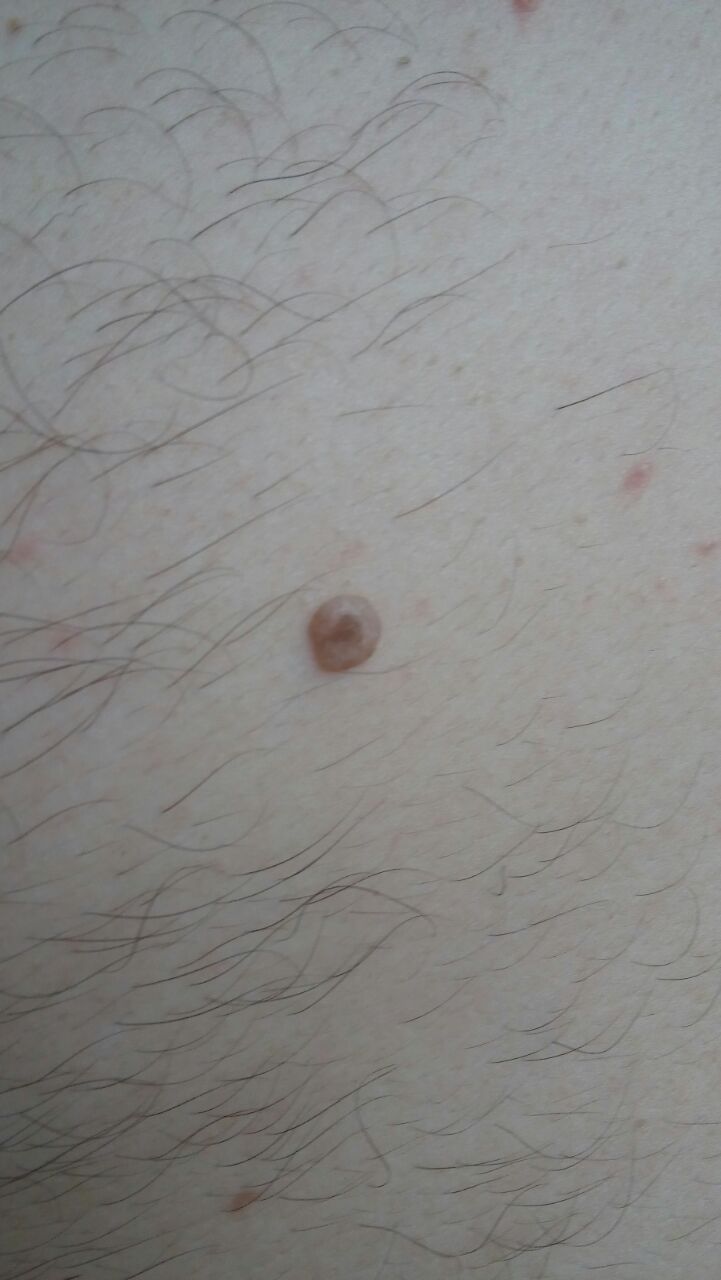
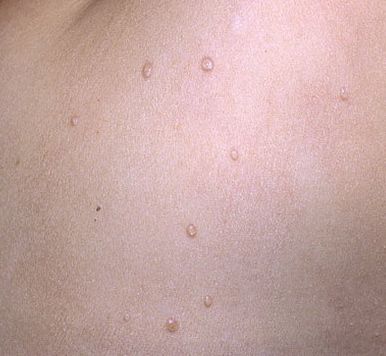
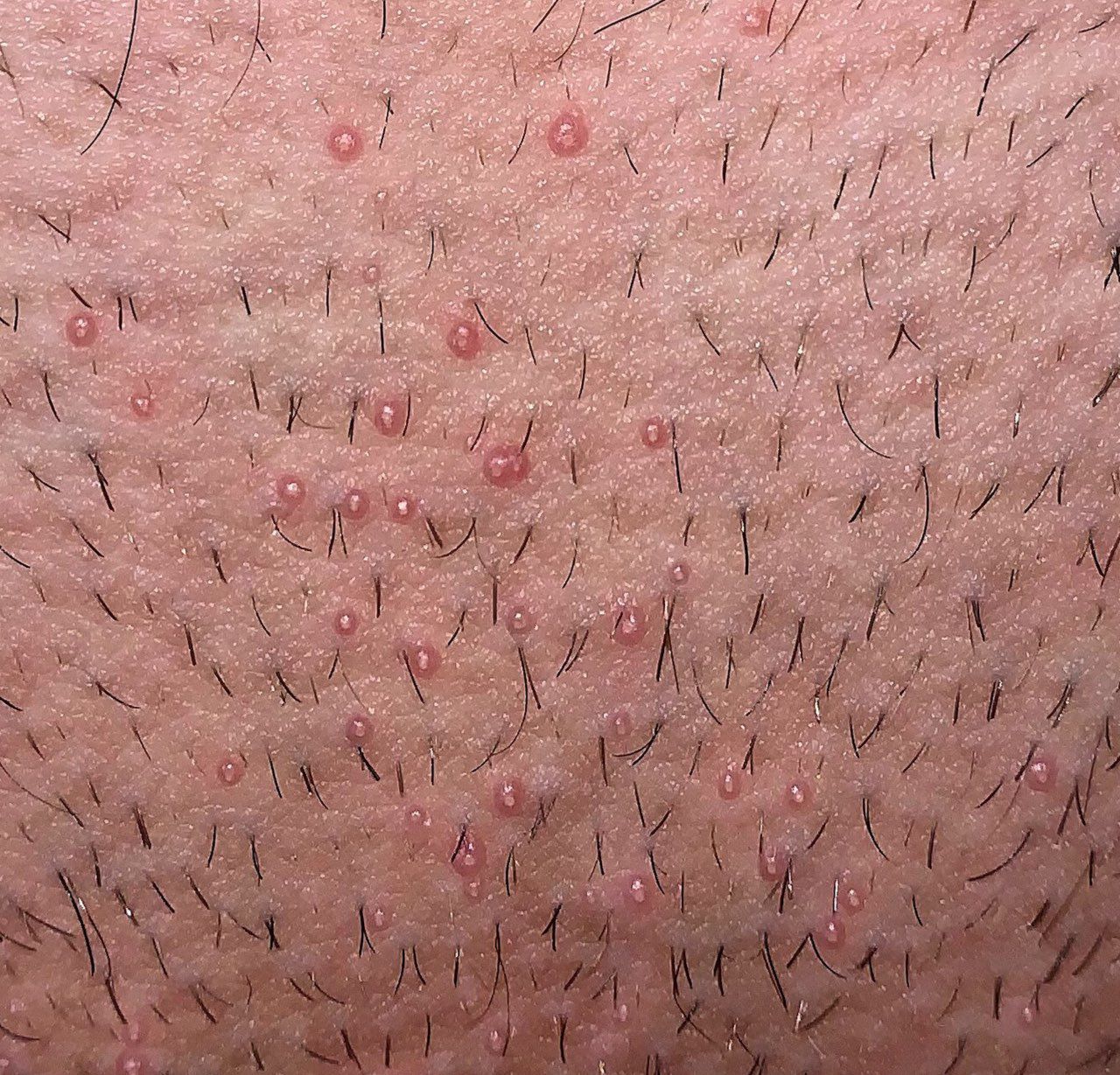
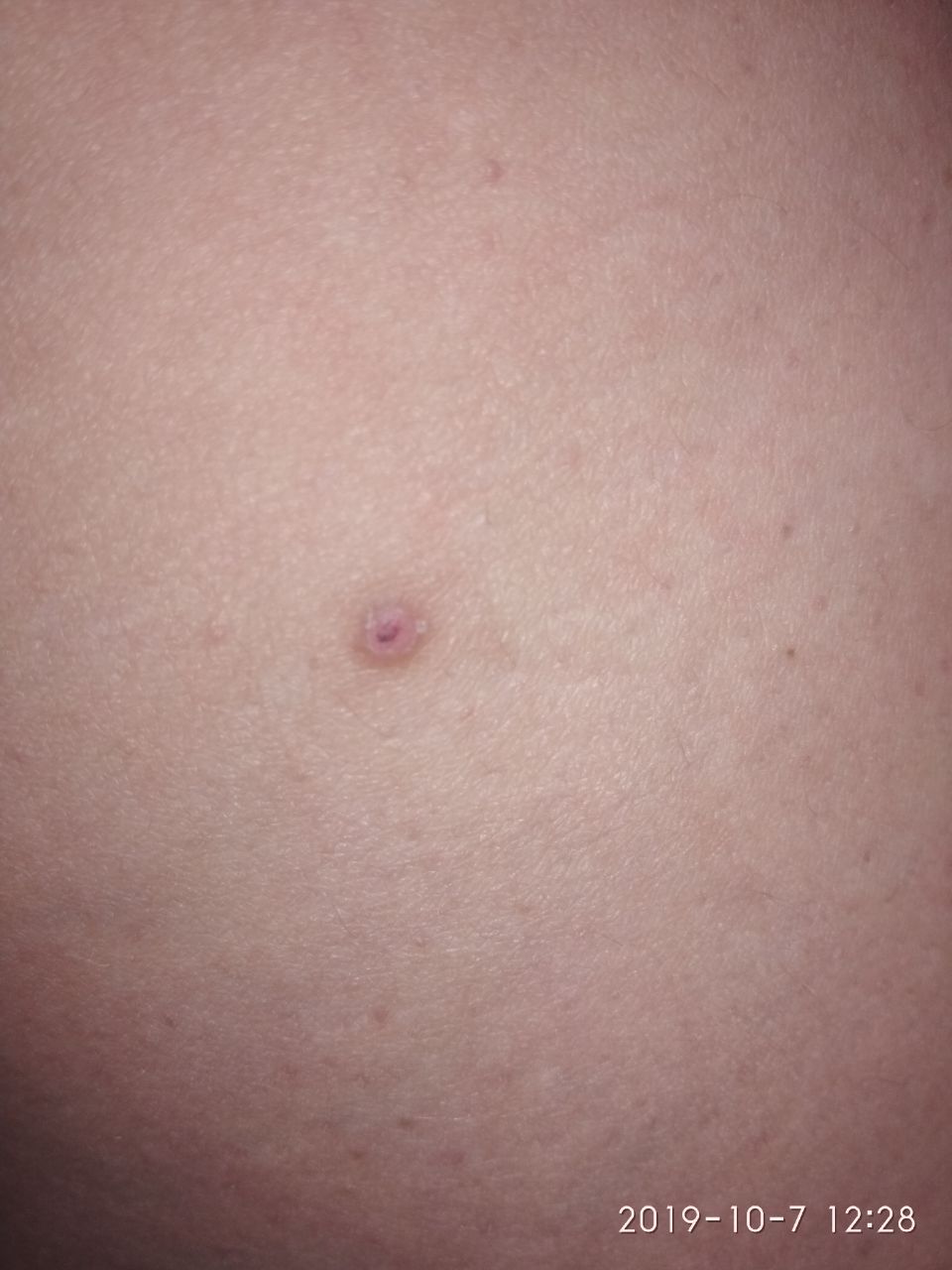
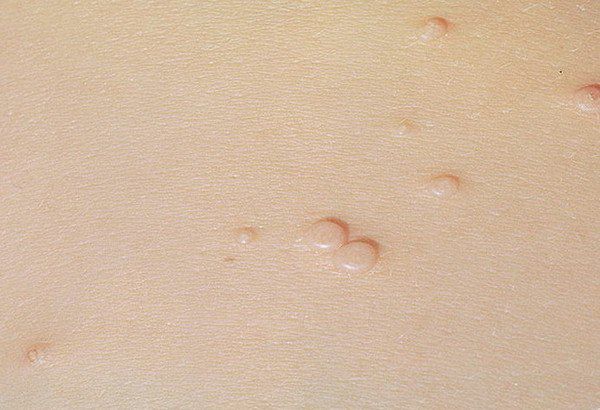
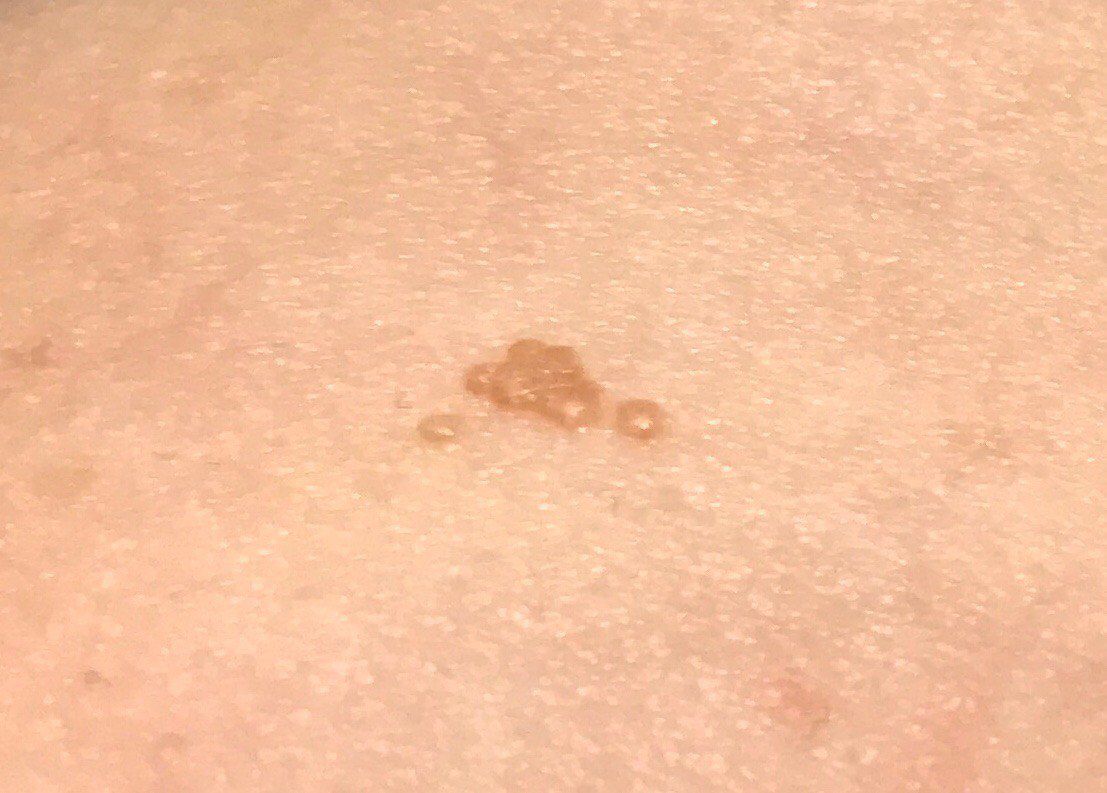
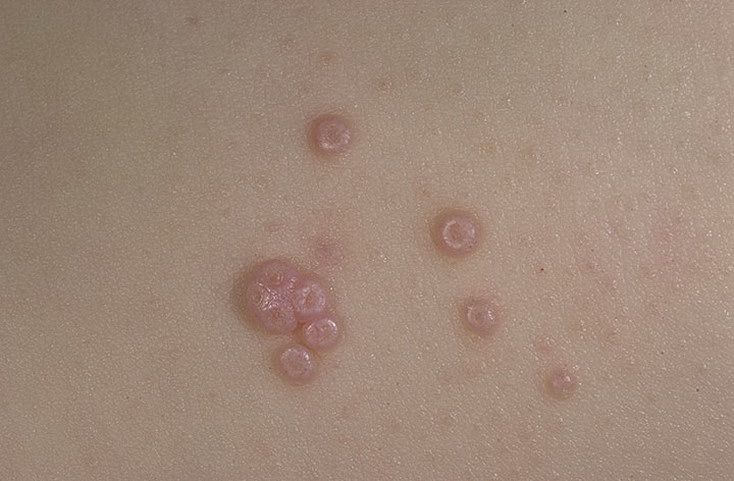
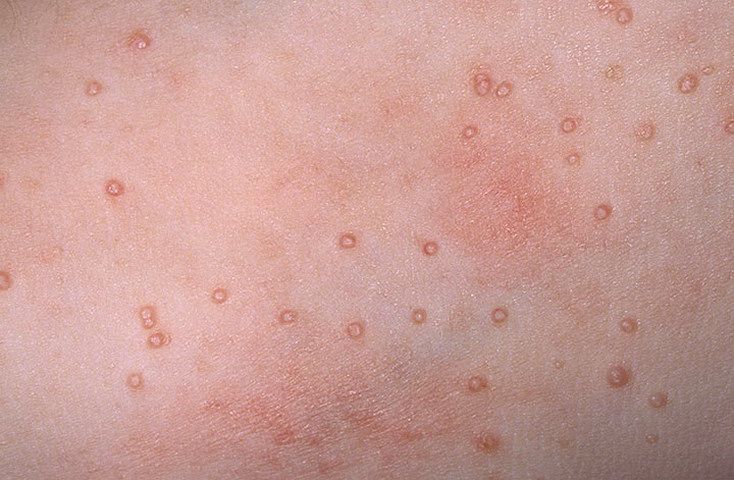
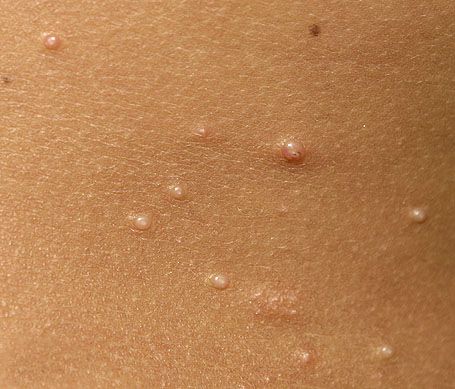
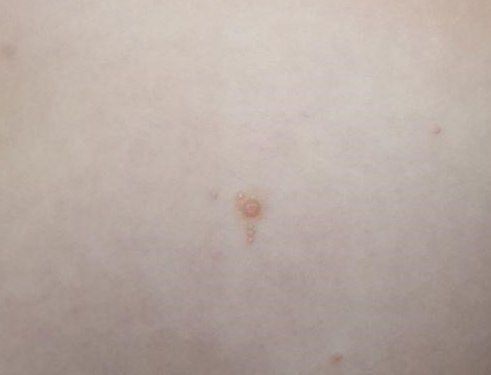
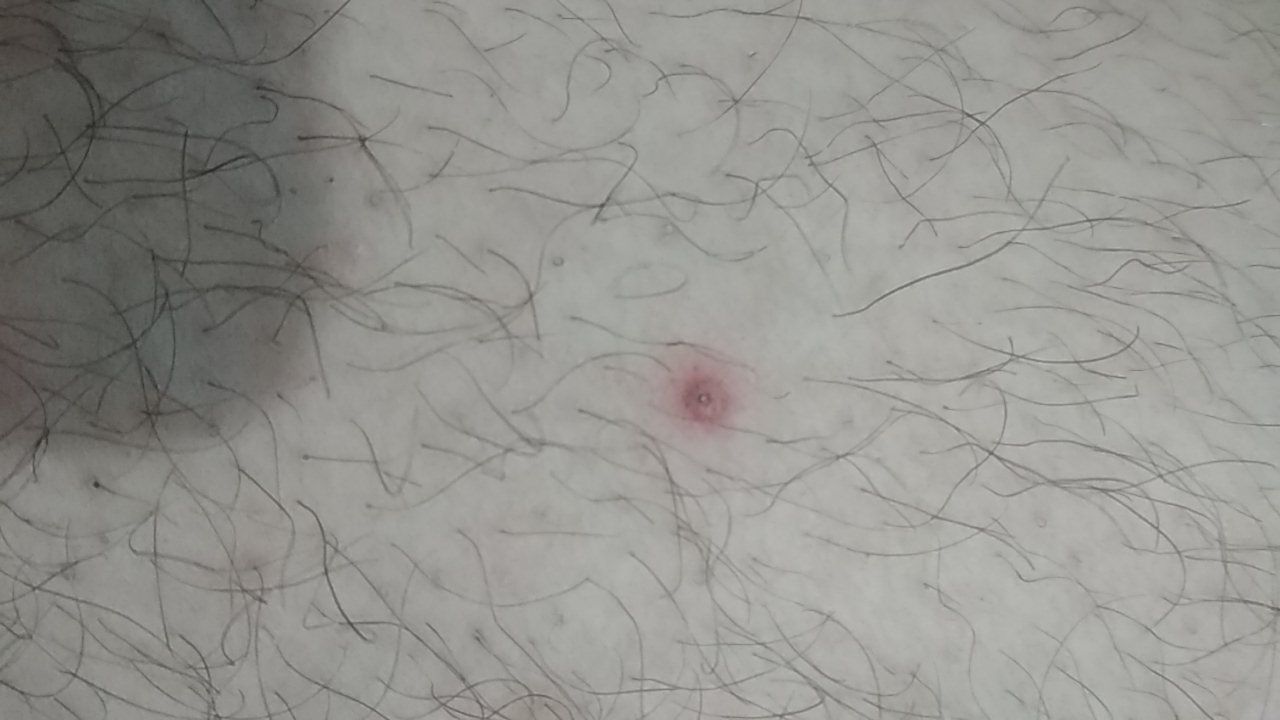
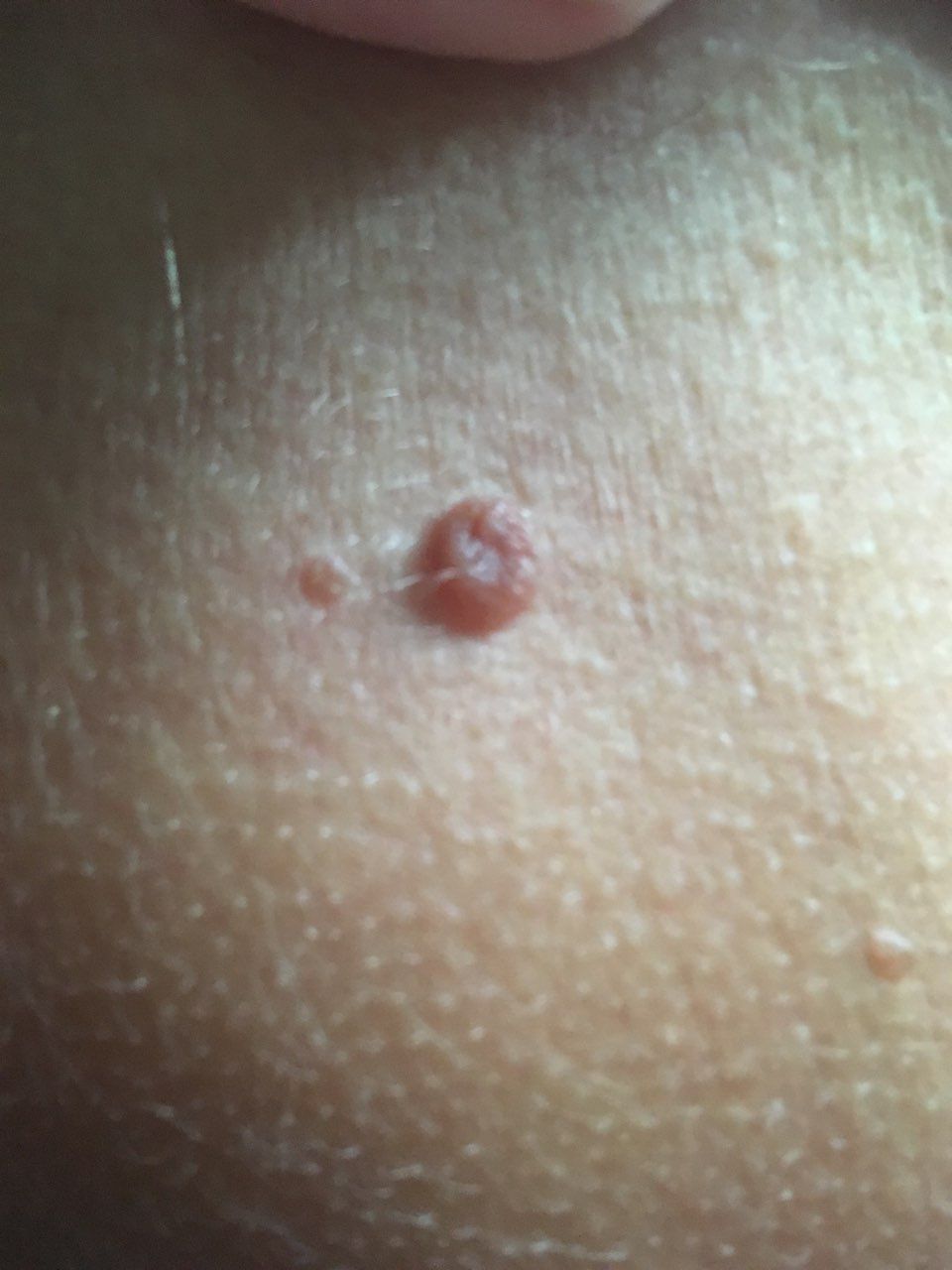
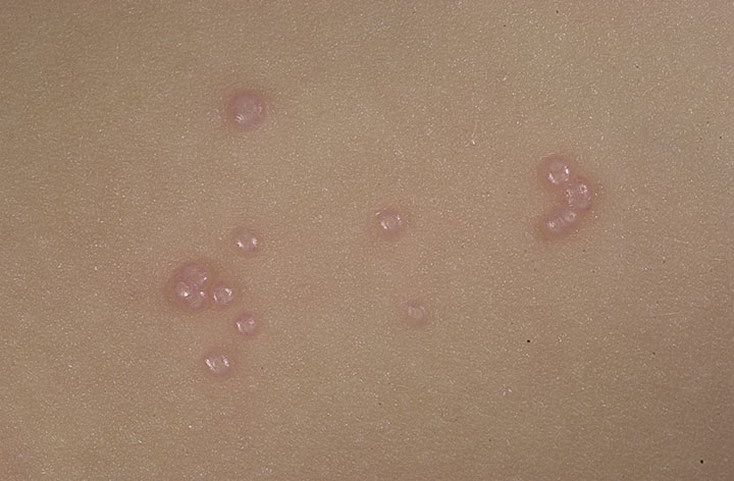
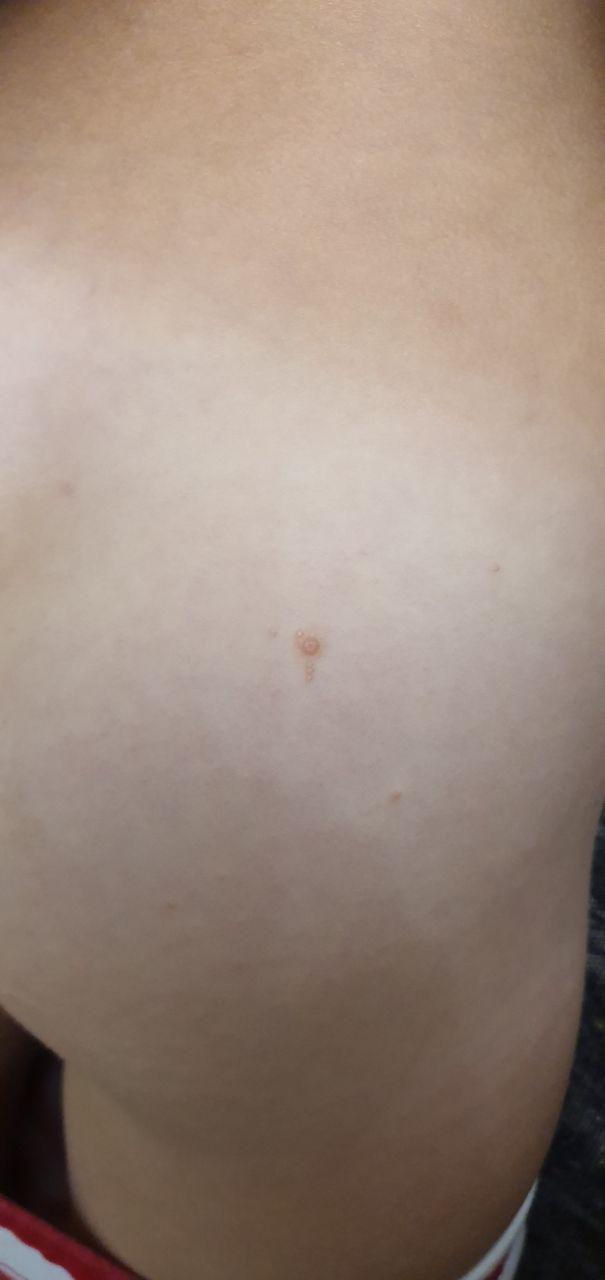
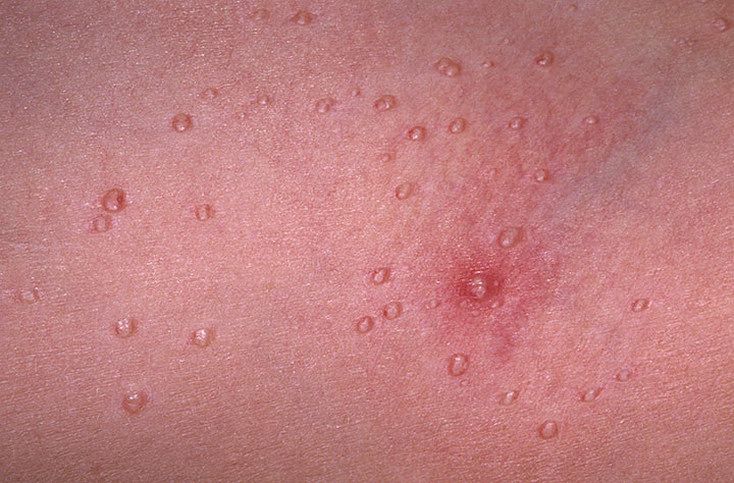
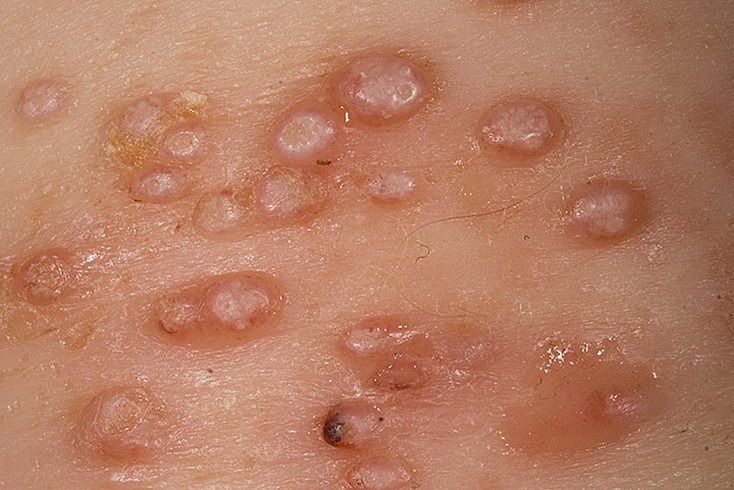
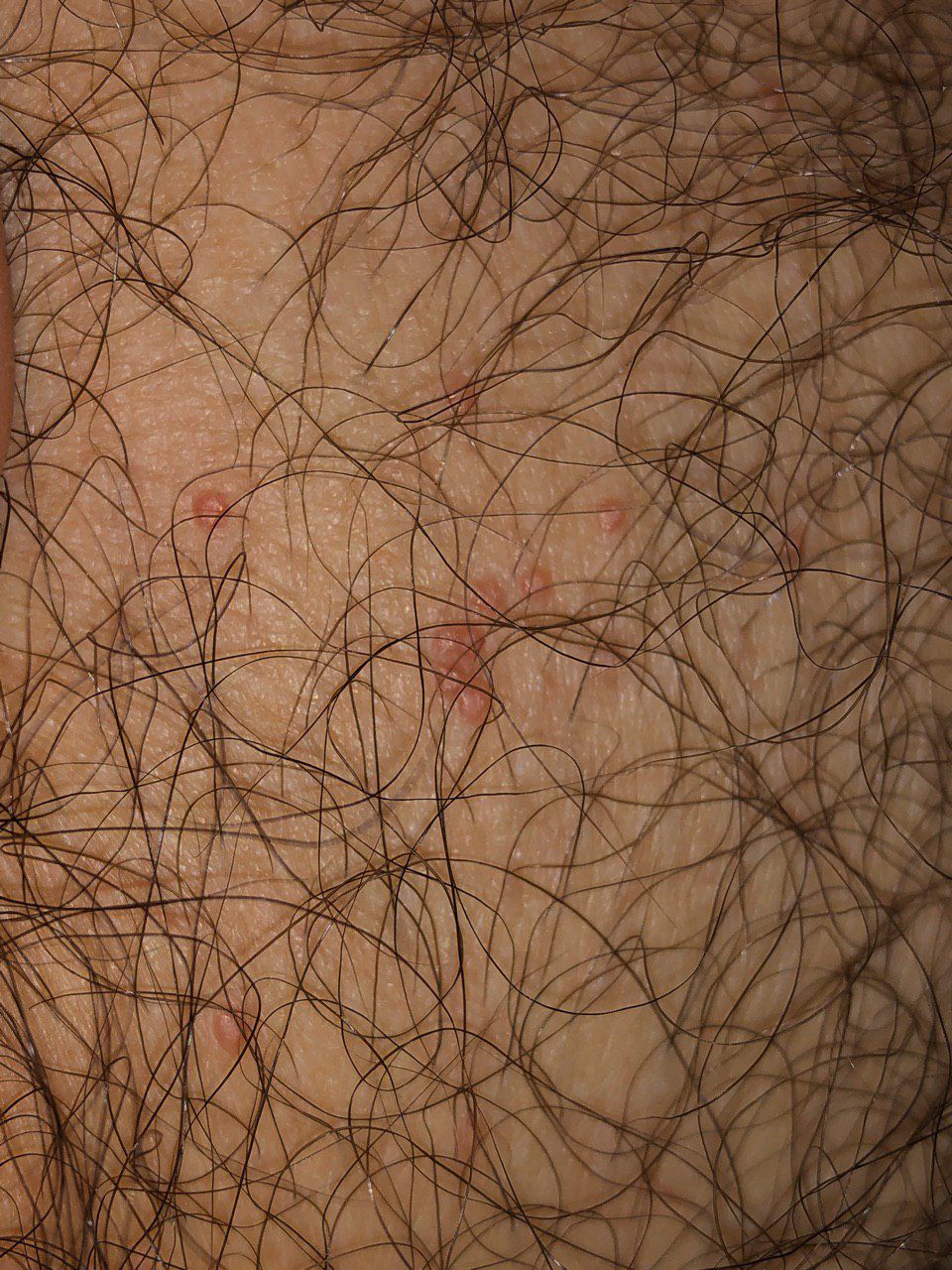
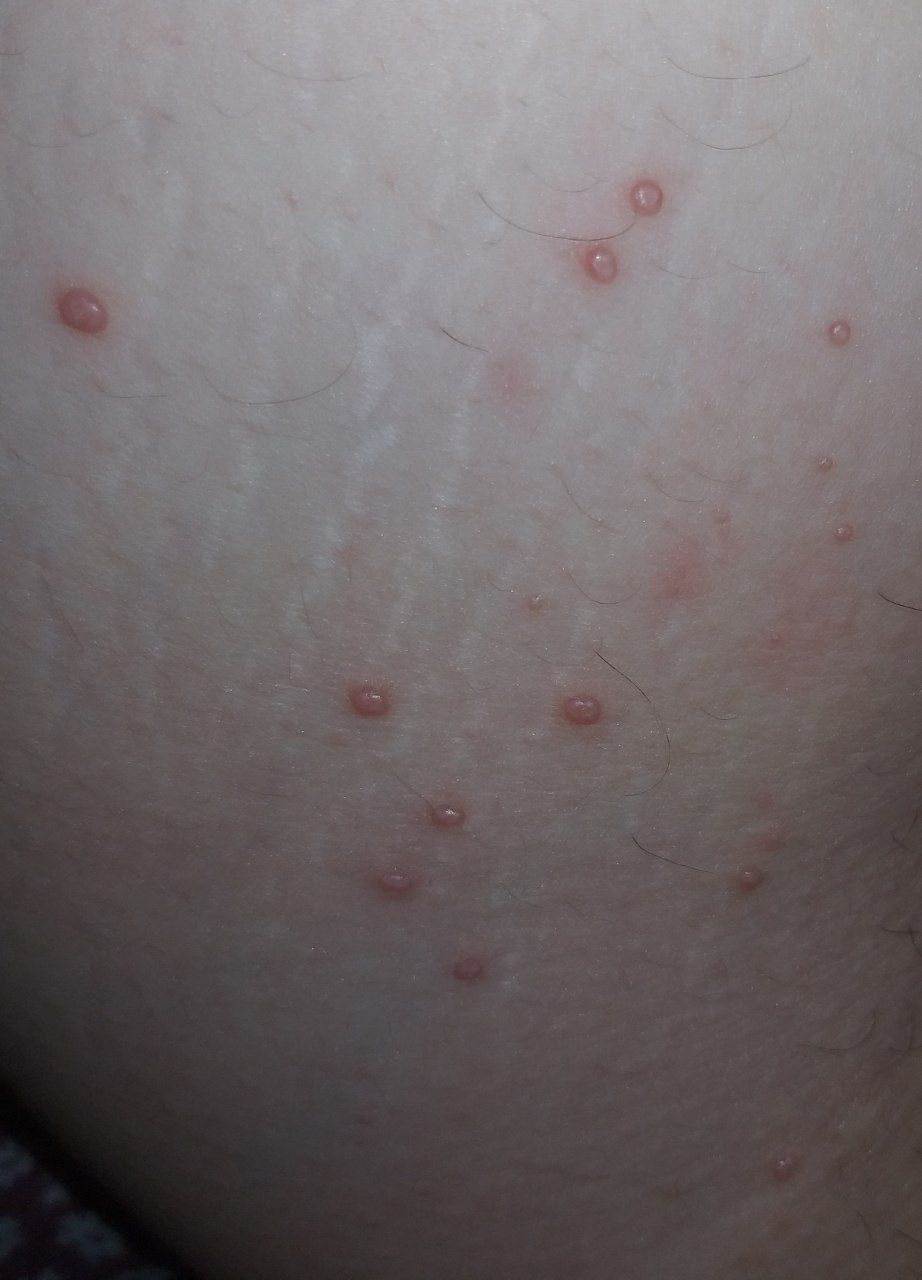
Molluscum contagiosum appears as small (usually 2–5 mm), round, raised bumps on the skin.
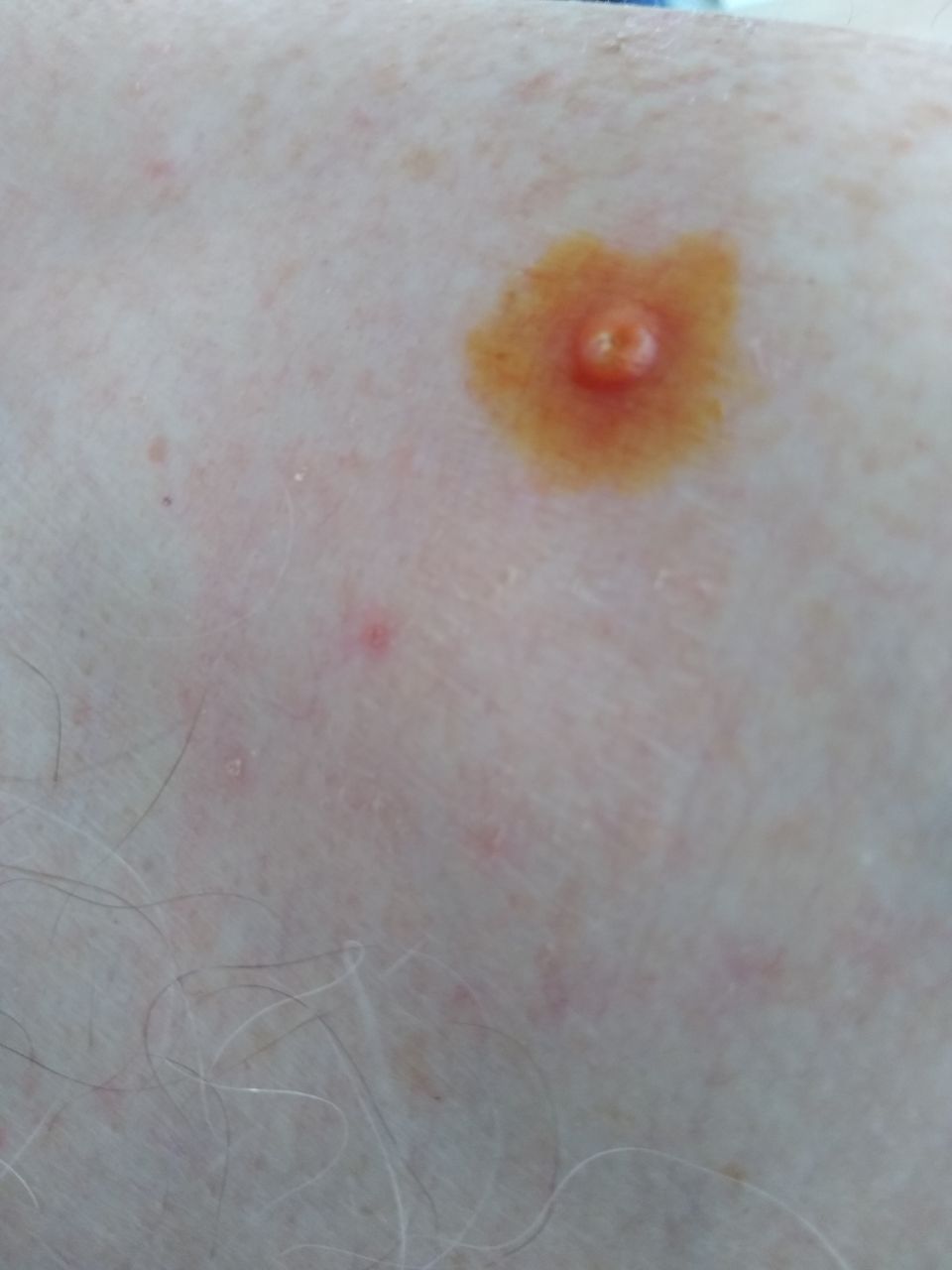
They have a smooth surface with a central dimple (“umbilication”). Inside, there may be a whitish material.
Lesions are typically skin-colored or slightly pink with well-defined borders and a uniform shape.
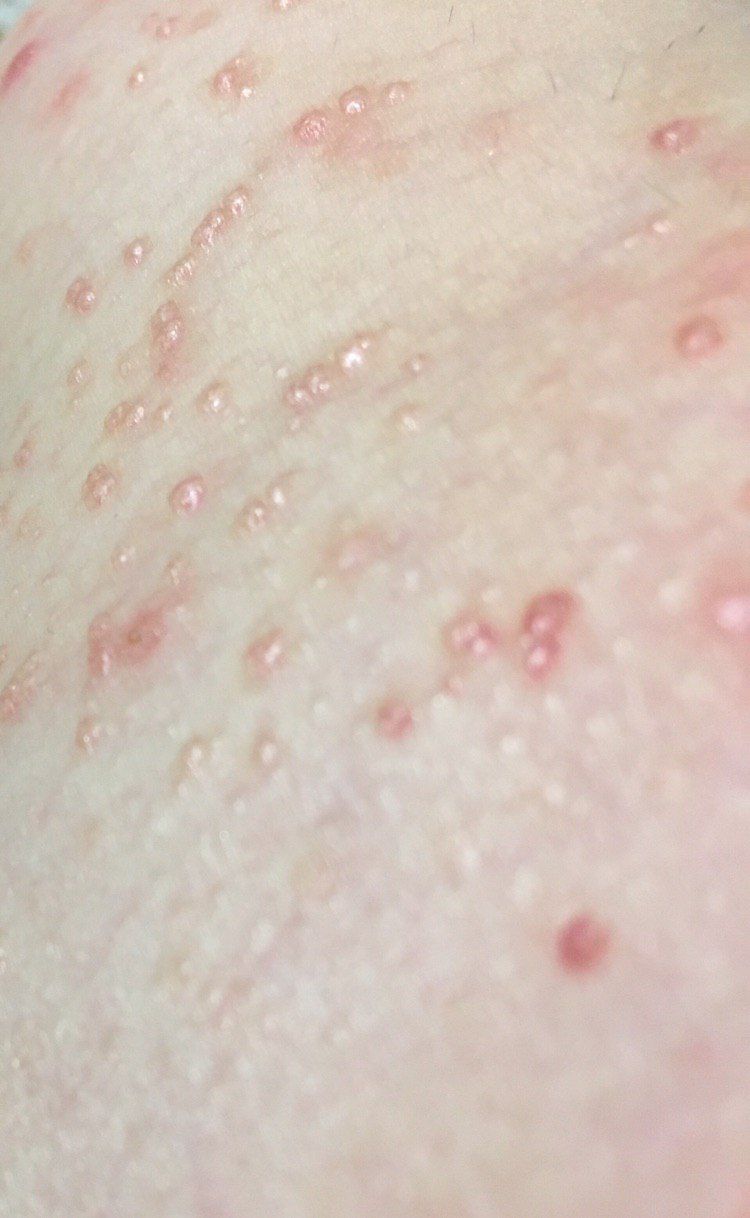
They often occur in clusters and may merge into larger patches.
In children, lesions are commonly found on the arms, face, and trunk. In adults, they are more often seen on the abdomen, groin, genital area, or buttocks.
Below in the article you can view real photos to better understand how the condition appears.
Main symptoms
In most cases, molluscum contagiosum does not cause significant discomfort.
Common features include:
- appearance of multiple skin-colored bumps
- smooth surface with central indentation
- gradual increase in number of lesions
Mild itching may occur. Pain is usually absent unless lesions are irritated or injured.
Causes
The cause is infection with the molluscum contagiosum virus.
Transmission occurs:
- through direct skin-to-skin contact
- through contaminated objects (towels, toys, hygiene items)
- through water exposure, such as in swimming pools
In adults, transmission may occur through sexual contact.
The virus enters the skin through small breaks and causes localized cell growth.
How it develops
After entering the skin, the virus replicates in the superficial layers.
This leads to the formation of characteristic bumps. If lesions are scratched or irritated, the virus can spread to nearby areas, resulting in new lesions.
In some cases, the immune system eventually clears the virus and lesions disappear on their own, although this may take several months.
Forms and types
The most common form is the classic presentation with multiple small lesions.
When there are many lesions, they may merge into larger clusters.
When to see a doctor
Seek medical attention if:
- the number of lesions is increasing
- the rash is spreading
- there is inflammation, pain, or bleeding
- there is uncertainty about the diagnosis
- lesions are located in the genital area
Medical evaluation is also important for people with weakened immune systems.
Treatment
Although lesions may sometimes resolve spontaneously, treatment is often recommended to prevent spread and reduce transmission risk.
The main approach is lesion removal using methods such as laser therapy, cryotherapy, or electrocautery.
Topical treatments may also be used in some cases to act on affected skin areas.
In selected cases, surgical removal and laboratory examination may be required.
Treatment should be performed under medical supervision. Self-removal can lead to complications and further spread.
Q&A
Do molluscum contagiosum lesions need treatment?
Often yes, to prevent spread and reduce transmission to others.
Is molluscum contagiosum contagious?
Yes, it spreads easily through skin contact or shared objects.
Can I remove the lesions myself?
No, this may cause inflammation and new lesions.
How long does it last?
Without treatment, lesions may persist for months or longer.
Is it dangerous?
No, it is a benign condition that does not affect internal organs.
Do lesions leave scars?
With proper treatment, scarring risk is minimal.
Can you get it again?
Yes, immunity is not permanent, so reinfection is possible.
How to reduce spread?
Avoid touching lesions, maintain hygiene, and follow medical advice.
Check Your Skin Instantly
Use the Skin Scanner app – Skinive AI to take a photo of a skin lesion and get an AI-based risk assessment. It helps determine whether professional consultation is recommended, giving you fast guidance and peace of mind.
Medical sources
- World Health Organization (WHO) — Poxvirus Infections
- Centers for Disease Control and Prevention (CDC) — Molluscum Contagiosum
- American Academy of Dermatology (AAD) — Molluscum Contagiosum Overview
- National Health Service (NHS) — Molluscum Contagiosum
🇬🇧 Molluscum Contagiosum: Diagnosis and Care in the UK
If you notice molluscum contagiosum (small, firm, dome-shaped bumps on the skin), it’s important to get a professional opinion. In the UK, you can access dermatology care via the NHS, private clinics, or online dermatology consultations.
👉 How to See a Dermatologist in the UK NHS – This main guide explains how NHS referrals work, what to expect from specialist dermatology services, and how to choose between public and private care.
Dermatologists in Major UK Cities:
- Dermatologist in London
- Dermatologist in Manchester
- Dermatologist in Liverpool
- Dermatologist in Birmingham
- Dermatologist in Leeds
- Dermatologists in Other UK cities
Online Dermatology
If you prefer remote care or faster access, try online dermatology consultations. They allow dermatologists to review images, provide advice, and guide next steps without visiting a clinic. Read more in this article: Online Dermatologists in UK.
🇦🇺 Molluscum Contagiosum: Diagnosis and Care in Australia
If you notice molluscum contagiosum (small, firm, dome-shaped bumps on the skin), it’s important to get a professional opinion. In Australia, dermatology care is available via Medicare (public system), private clinics, or online consultations.
👉 How to See a Dermatologist in Australia – This main guide explains how referrals work through GPs and public clinics, what to expect from specialist dermatology services, and how to choose between public and private care.
Dermatologists in Major Australian Cities:
- Dermatologist in Sydney
- Dermatologist in Melbourne
- Dermatologist in Brisbane
- Dermatologist in Perth
- Dermatologist in Adelaide
- Dermatologists in other Australian cities
Online Dermatology
For faster access or remote care, online dermatology consultations allow dermatologists to review images, provide advice, and guide next steps without visiting a clinic. Read more in this article: Online Dermatologists in Australia.
Images of molluscum contagiosum:





** Should you identify any copyright infringement regarding the images on this page, kindly reach out to us at info@skinive.com.
Furthermore, please be advised that these photos are not authorized for any purpose.