
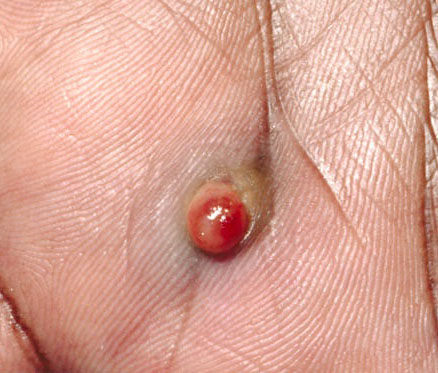
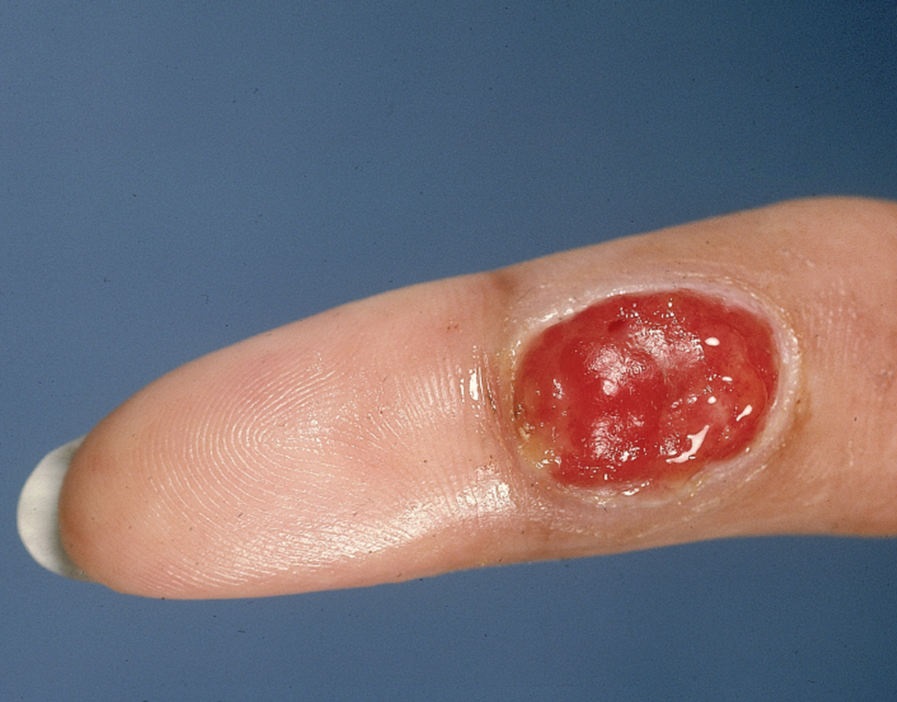
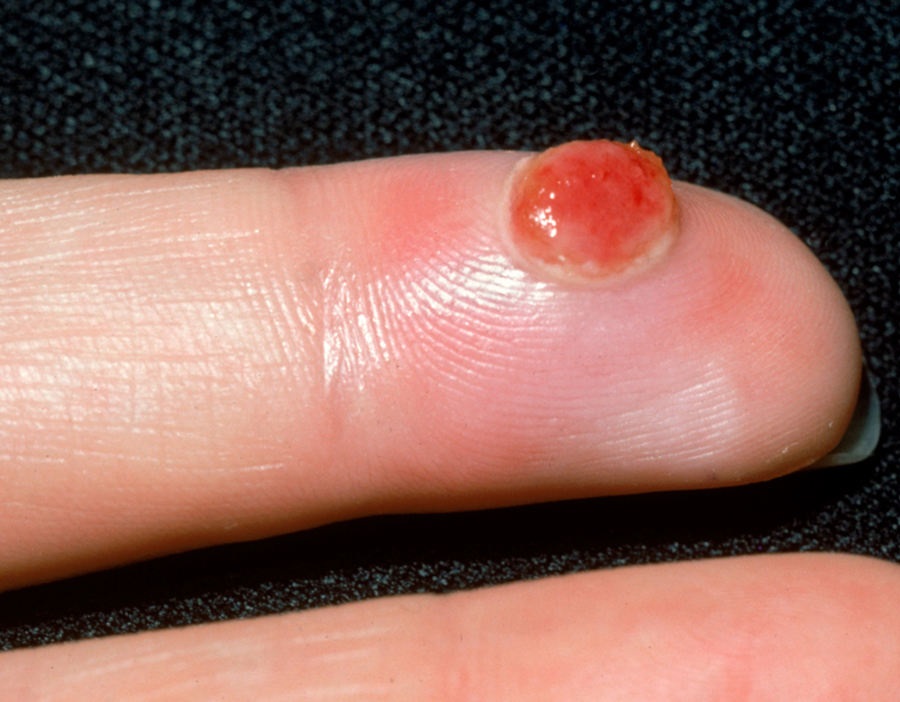
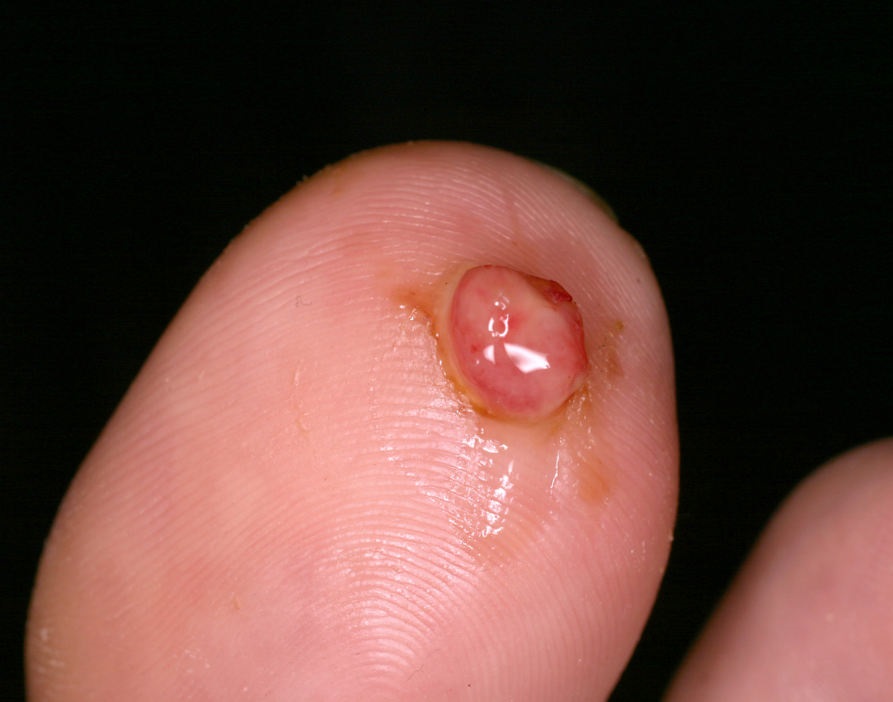
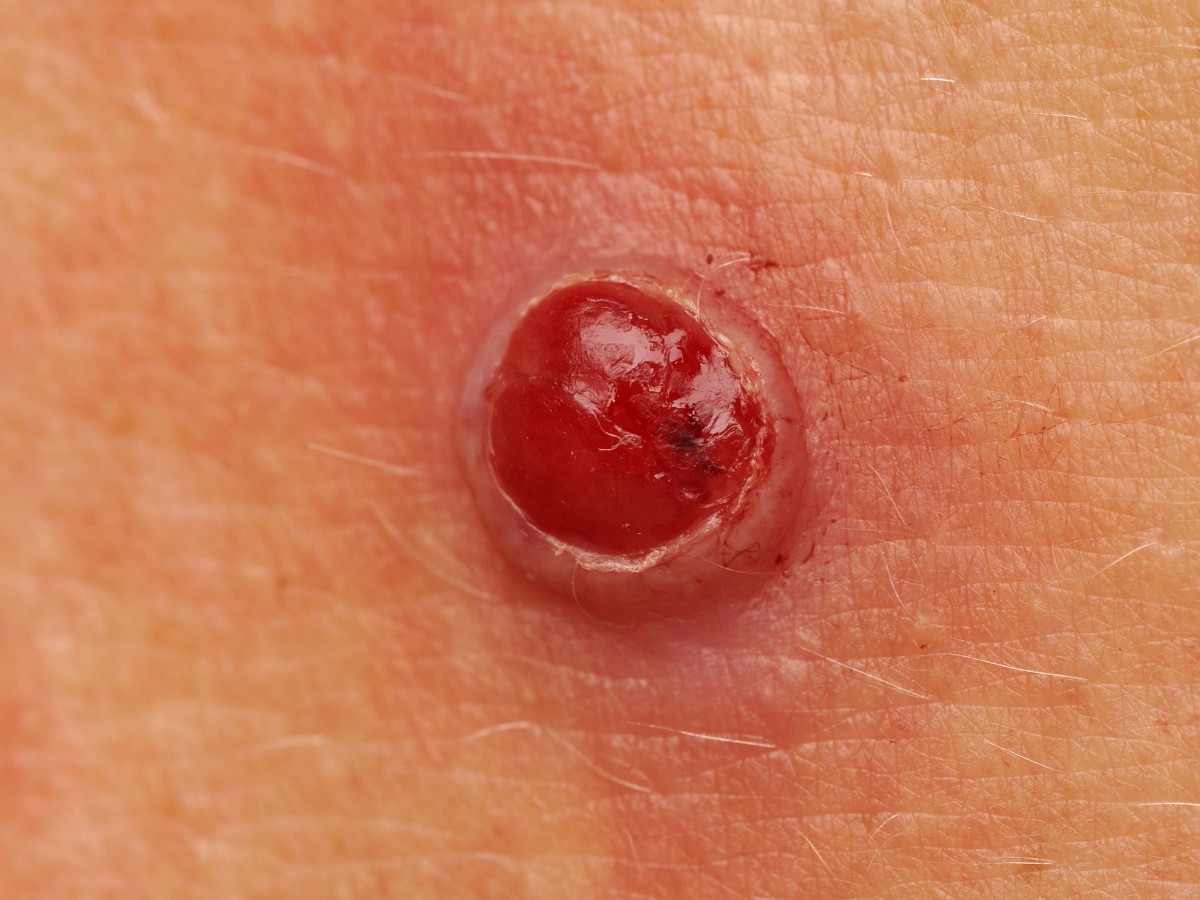
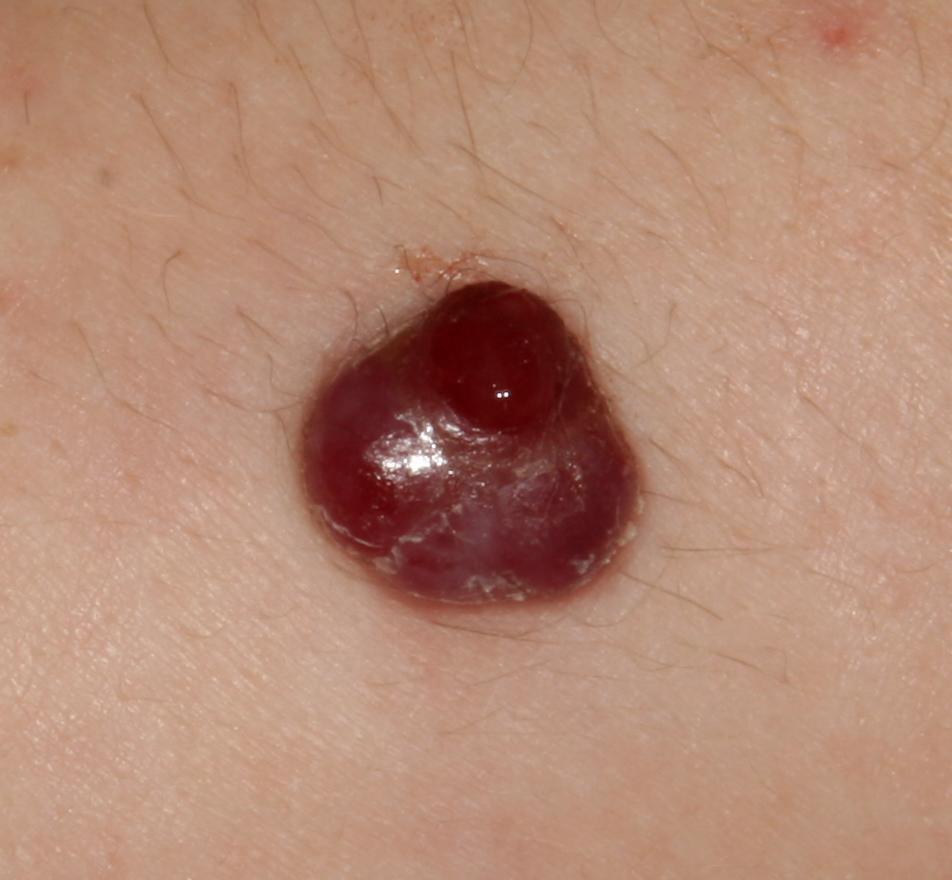
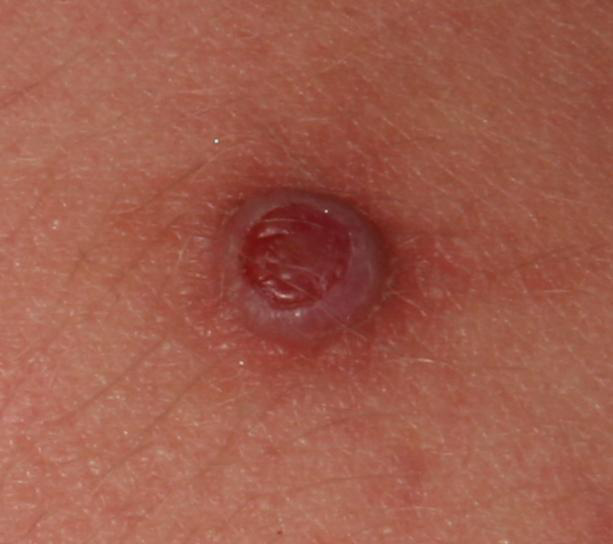
A pyogenic granuloma is a benign vascular growth on the skin or mucous membranes that appears as a bright red or burgundy nodule. It most often develops as a reaction to irritation or minor injury but is not contagious.
These lesions can appear quickly—sometimes within a few weeks—and bleed easily, even with minor contact. Despite their alarming appearance, pyogenic granulomas are usually not linked to skin cancer. They are more common in children, young adults, and during pregnancy.
What to do if you suspect one
If you notice a rapidly growing red lesion that bleeds easily, see a dermatologist promptly.
The doctor may perform:
- Dermatoscopy – a painless examination using magnification
- Biopsy – in some cases, to rule out other serious conditions
Even if the lesion is painless, it’s important not to delay evaluation, as pyogenic granulomas can bleed or become infected.
Do not attempt to remove or burn the lesion yourself, as this can worsen bleeding or cause inflammation. Early medical care allows safe confirmation of the diagnosis and proper treatment.
What it looks like
Typical features of a pyogenic granuloma:
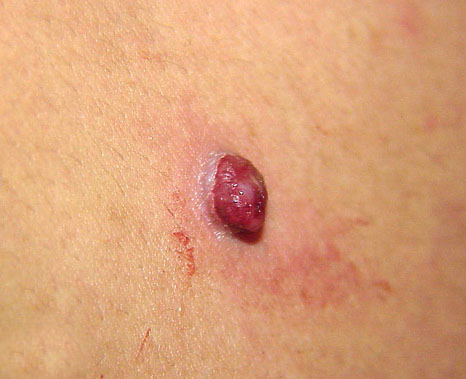
- Small, raised nodule on the skin
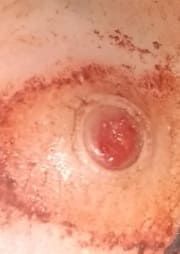
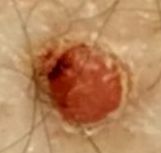
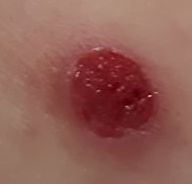
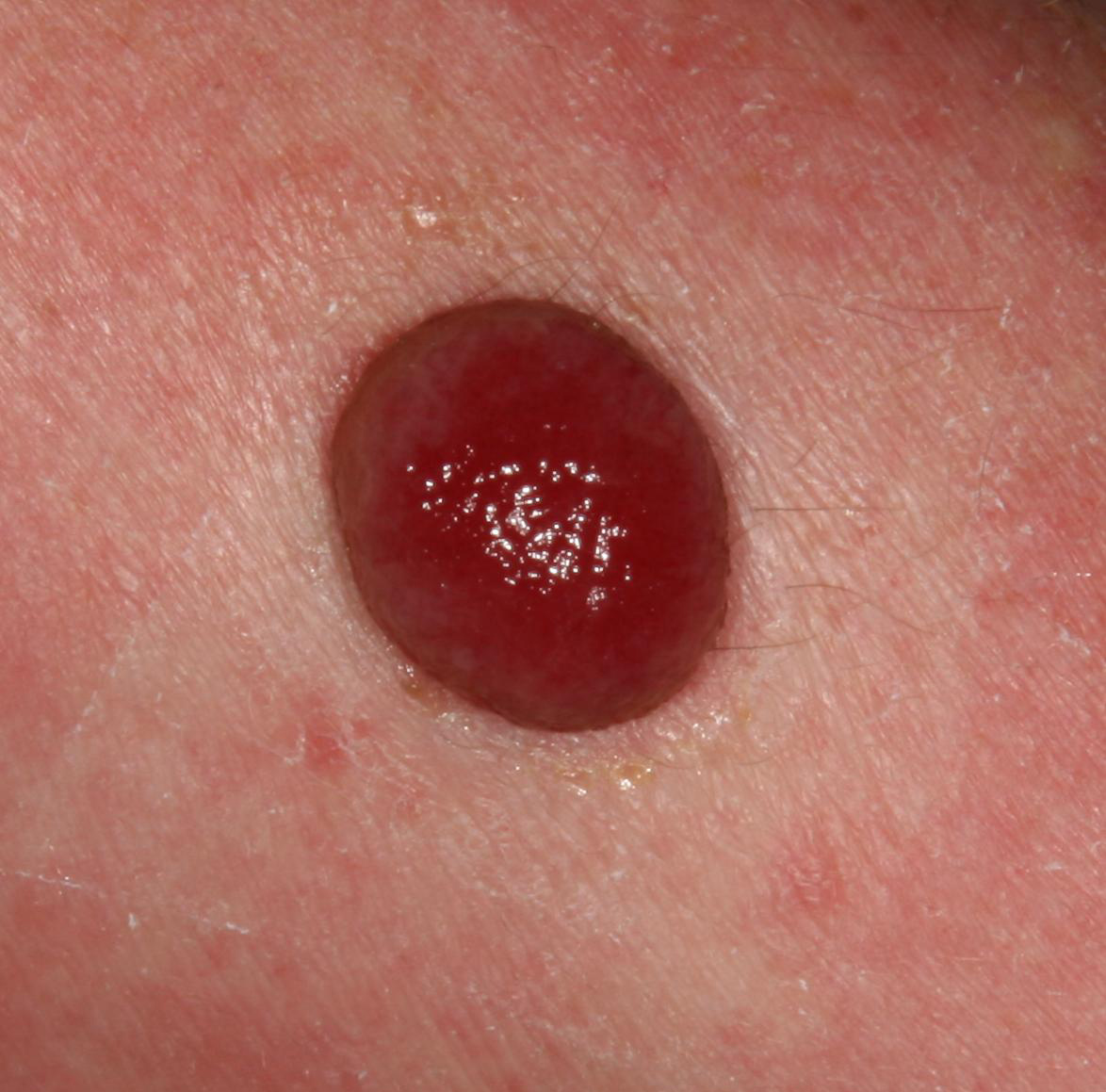
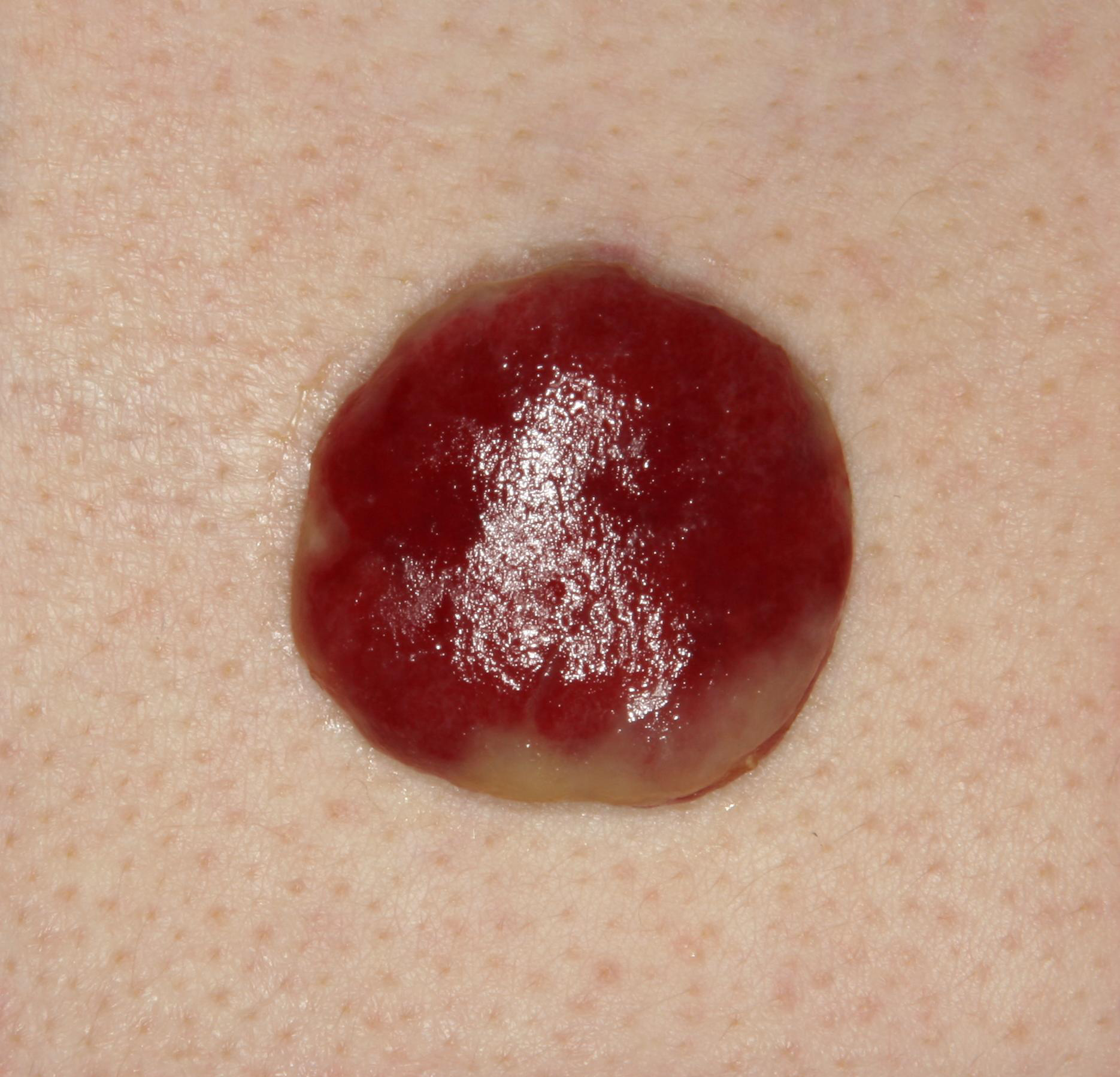
- Bright red, burgundy, or bluish color
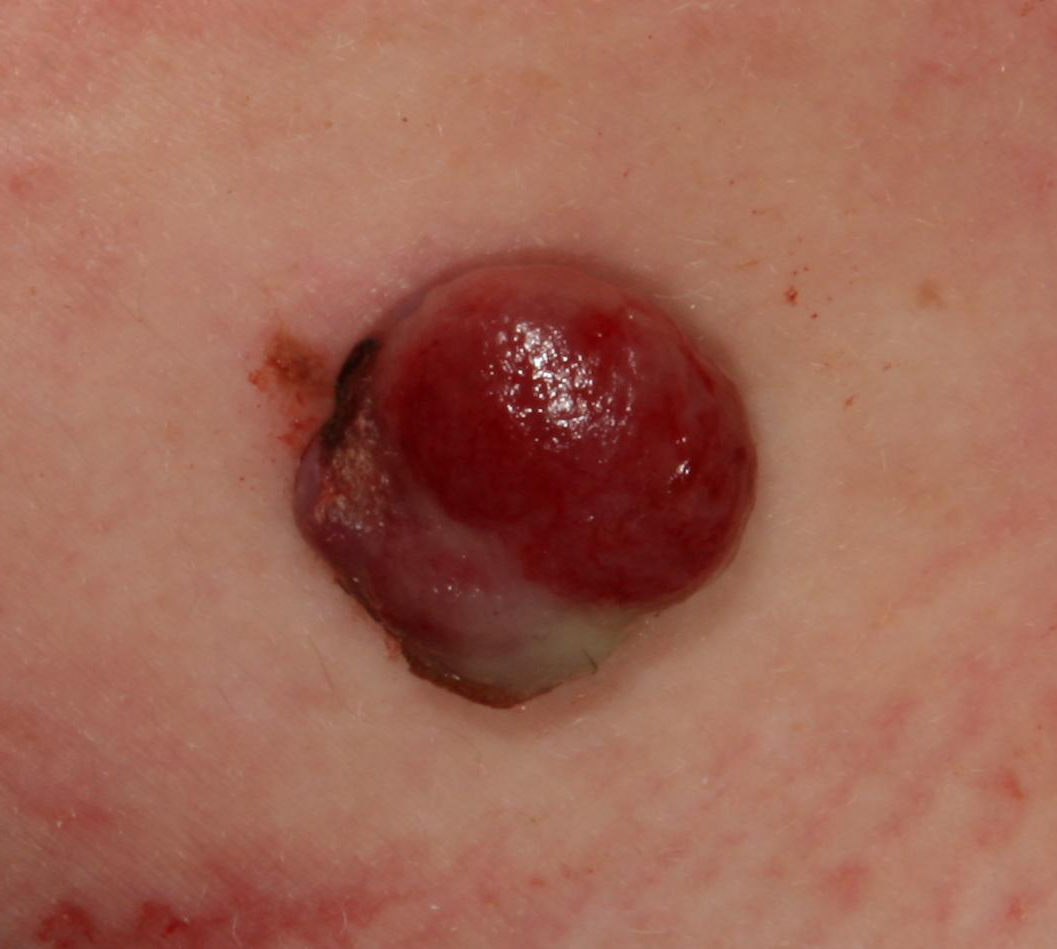
- Smooth or lobulated surface, sometimes resembling a raspberry
- Shiny, “wet” appearance
- Bleeds easily, even with light touch
- Occasionally crusts or minor surface damage
Size: usually a few millimeters to 1–1.5 cm. Growth is typically rapid.
Common locations:
- Fingers and toes
- Around nails
- Face
- Less commonly, other skin areas or mucous membranes
Without treatment, pyogenic granulomas usually do not disappear on their own, except in certain cases such as post-pregnancy regression.
Main symptoms
- Rapid growth
- Bleeding with minimal trauma
- Crusting
- Pain if infection occurs
Otherwise, they are usually painless.
Causes
Exact causes are not always clear. Possible factors include:
External:
- Skin injury (cuts, burns, friction)
Internal:
- Hormonal changes (e.g., pregnancy)
- Skin infections
- Certain medications
- Underlying skin conditions
Sometimes lesions appear without any obvious trigger.
How it develops
Pyogenic granulomas form from small blood vessels (capillaries) that proliferate in response to irritation or internal factors. The resulting soft nodule is rich in blood vessels, giving it a bright color and easy bleeding tendency. This growth is benign and does not spread systemically.
Types and variations
Appearance can vary by cause and location. Lesions in pregnant women may regress after delivery. Differences generally do not affect the treatment approach.
When to see a doctor
Consult a doctor if:
- The lesion grows rapidly
- Bleeds easily or frequently
- Appears after injury and does not regress
- Shows signs of infection (pain, pus, redness)
- Bleeding is difficult to stop
Even asymptomatic lesions should be evaluated for accurate diagnosis.
Treatment
Most pyogenic granulomas require removal, as they rarely resolve on their own.
Treatment options include:
- Surgical excision
- Radio wave or electrocautery removal
- Laser or cryotherapy in select cases
Tissue is typically sent for histological examination to confirm the diagnosis. Because lesions are vascular, bleeding can occur during removal, so procedures must be performed by a specialist. Treatment is individualized by the physician.
Q&A
Is a pyogenic granuloma dangerous?
No, it is benign and not linked to skin cancer.
Does it need treatment?
Yes, usually, due to bleeding risk and rare spontaneous resolution.
How is it treated?
Surgically or with minimally invasive methods chosen by a doctor.
Can it resolve on its own?
Sometimes, especially after pregnancy, but usually requires treatment.
Why does it bleed so easily?
Because it is made up of numerous small blood vessels.
Can I stop the bleeding myself?
Small bleeds may be controlled with pressure, but frequent episodes require medical care.
Is it an infection?
No, though it may become secondarily infected.
Can it be injured?
Yes, due to its vascular nature. Avoid trauma and seek medical attention.
Check Your Skin Instantly
Use the Mole Checker app: Skinive AI to take a photo of a mole or lesion and get an AI-based risk assessment. It helps determine whether professional consultation is recommended, giving you fast guidance and peace of mind.
Sources
- Fitzpatrick’s Dermatology
- American Academy of Dermatology (AAD)
- DermNet NZ
- World Health Organization (WHO)
- UpToDate
🇬🇧 Pyogenic Granuloma: When to Seek Medical Advice in the UK
If you notice benign neoplasms, nevi, or moles, it’s important to get a professional opinion. In the UK, you can access dermatology care via the NHS, private clinics, or online consultations.
👉 How to See a Dermatologist in the UK NHS – This main guide explains how NHS referrals work, what to expect from specialist dermatology services, and how to choose between public and private care.
Dermatologists in Major UK Cities:
- Dermatologist in London
- Dermatologist in Manchester
- Dermatologist in Liverpool
- Dermatologist in Birmingham
- Dermatologist in Leeds
- Dermatologists in Other UK cities
Online Dermatology
If you prefer remote care or faster access, try online dermatology consultations. They allow dermatologists to review images, provide advice, and guide next steps without visiting a clinic. Read more in this article: Online Dermatologists in UK.
🇦🇺 Pyogenic Granuloma: When to Seek Medical Advice in Australia
If you notice benign neoplasms, nevi, or moles, it’s important to get a professional opinion. In Australia, you can access dermatology care via Medicare (public system), private clinics, or online consultations.
👉 How to See a Dermatologist in Australia – This main guide explains how referrals work through GPs and public clinics, what to expect from specialist dermatology services, and how to choose between public and private care.
Dermatologists in Major Australian Cities:
- Dermatologist in Sydney
- Dermatologist in Melbourne
- Dermatologist in Brisbane
- Dermatologist in Perth
- Dermatologist in Adelaide
- Dermatologists in other Australian cities
Online Dermatology
For faster access or remote care, online dermatology consultations allow dermatologists to review images, provide advice, and guide next steps without visiting a clinic. Read more in this article: Online Dermatologists in Australia.
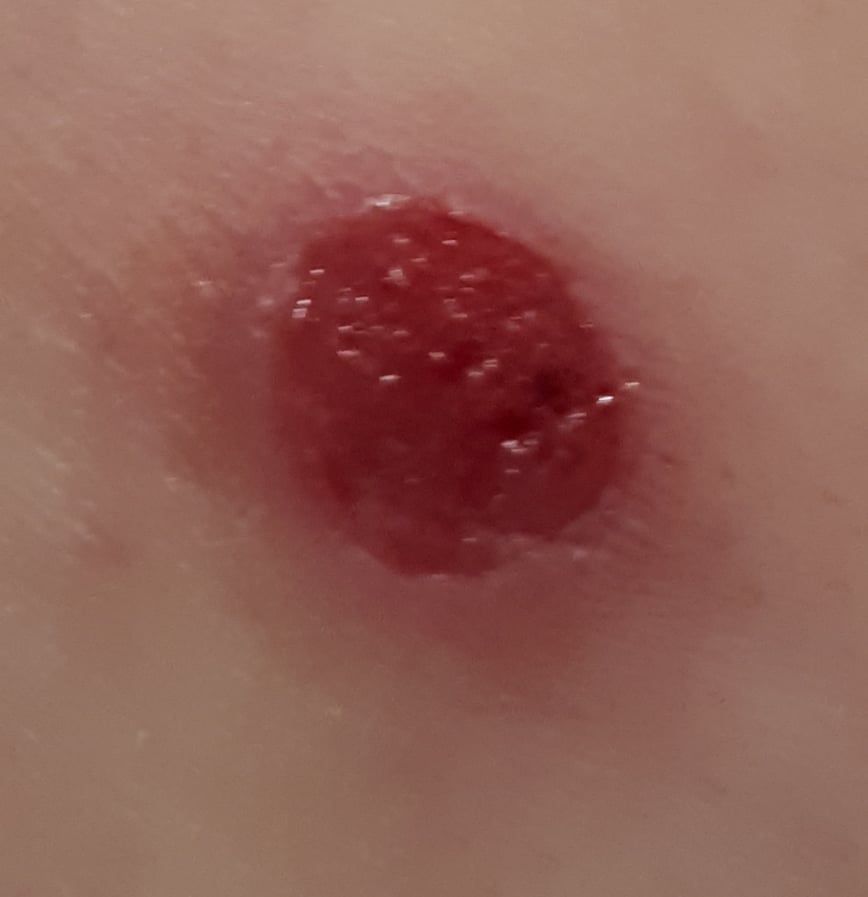
Images of pyogenic granuloma:

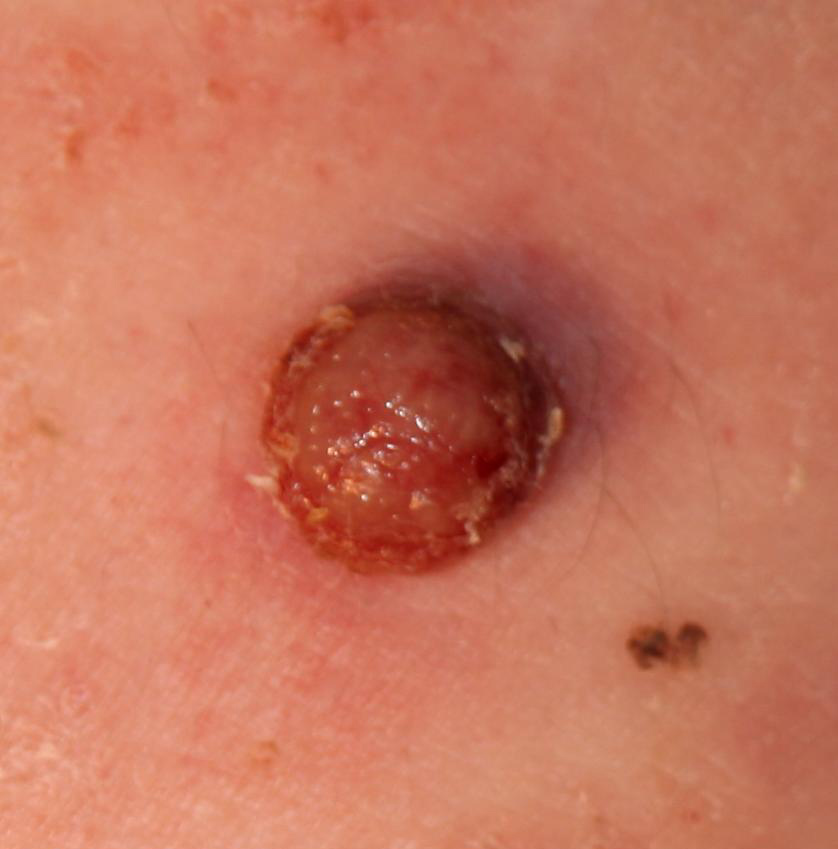
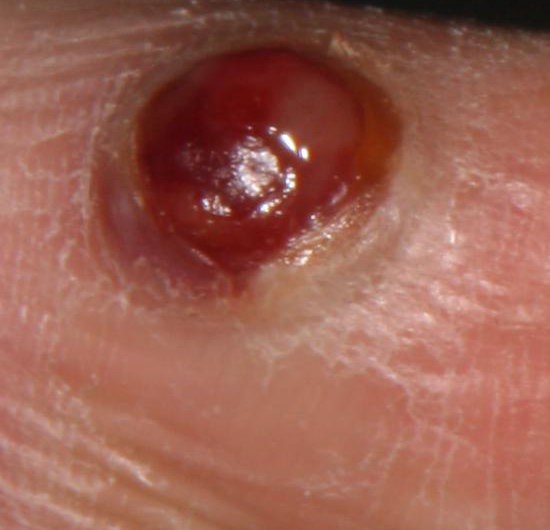
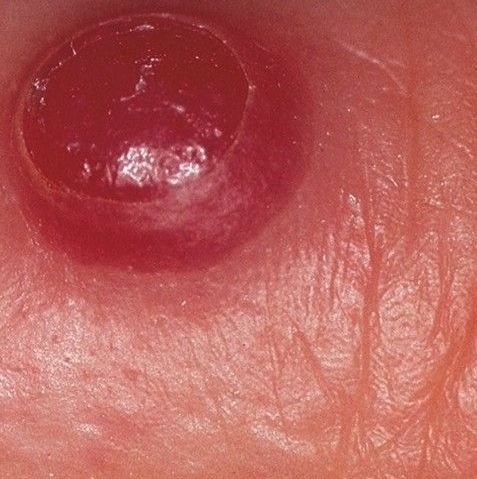
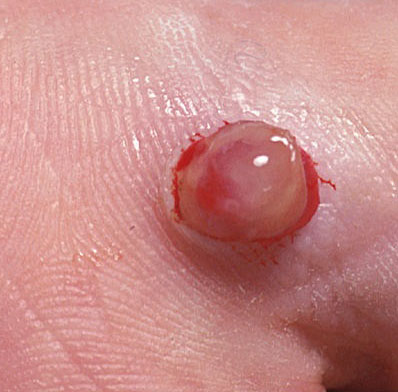
** Should you identify any copyright infringement regarding the images on this page, kindly reach out to us at info@skinive.com.
Furthermore, please be advised that these photos are not authorized for any purpose.